As an Amazon Associate we earn from qualifying purchases. Some links are paid. Disclosure
Our top picks
Heat for thawing
1. Lasko 754200 Ceramic Heater
Best for: A frozen section you can reach
Wrap for pipes and fittings
2. Frost King Fiberglass Pipe Wrap
Best for: Pipes and fittings, wrapped
Sleeves for small pipes
3. Duck Brand Foam Pipe Covers
Best for: Runs of 1/2 to 3/4 inch pipe
Here is how to thaw frozen pipes, from the American Red Cross and university extension guides: find the frozen section, keep the faucet open, apply heat the ways the Red Cross names, never an open flame, and call a licensed plumber if you cannot find, reach or thaw it. The Red Cross names an electric heating pad wrapped around the pipe, an electric hair dryer, a portable space heater (kept away from flammable materials) or towels soaked in hot water; for heat, our pick is the Lasko 754200 ceramic heater. Good to know: NC State Extension's Healthy Homes page says to shut off the water valves and call a plumber to thaw your pipes, since thawing them yourself can lead to greater damage and can be a hazard (Step 2 sets out where the sources differ).
Skip to the steps for thawing frozen pipes
The tools for the job
1. Lasko 754200 ceramic heater
A 1500 watt ceramic heater with a 900 watt low setting.
| Pick | What it is | Size | Job | Best for | Our verdict | Where to buy |
|---|---|---|---|---|---|---|
| 1. Lasko 754200 Ceramic HeaterHeat for thawing | Ceramic space heater | 1500 W high, 900 W low | Step 3, heat | A frozen section you can reach | A 1500 watt ceramic heater with a 900 watt low setting and a thermostat, by its listing. | Check price on Amazon |
| 2. Frost King Fiberglass Pipe WrapWrap for pipes and fittings | Foil backed fiberglass wrap | 1 in by 3 in by 25 ft | Insulating, before a freeze | Pipes and fittings, wrapped | A 1 inch thick, 3 inch wide, 25 foot roll of foil backed fiberglass, by its listing. | Check price on Amazon |
| 3. Duck Brand Foam Pipe CoversSleeves for small pipes | Pre-slit foam pipe covers | 6 sticks of 12 in, for 1/2 to 3/4 in pipe | Insulating, before a freeze | Runs of 1/2 to 3/4 inch pipe | Six 12 inch foam sleeves for 1/2 to 3/4 inch pipe, by their listing. | Check price on Amazon |
When we checked on November 21, 2026, every tool we link was in stock as new and sold by Amazon. How our guides are made sets out what we check.
The Lasko 754200 heater is the heater for Step 3: by its listing, a ceramic heater with 1500 watt high and 900 watt low settings, a fan only mode, an adjustable thermostat, automatic overheat protection, a 6 foot cord and an ETL listing; the CPSC's heater guide says a certified heater will have a safety certification mark. Good to know: Lasko's manual for model 754200 says this heater is not intended for use in wet or damp locations, or in bathrooms, laundry areas and similar indoor locations, and is not for use outdoors.
2. Frost King fiberglass pipe wrap: wrap for pipes and fittings
Best for: Pipes and fittings, wrapped
A 1 inch thick, 3 inch wide, 25 foot roll of foil backed fiberglass, by its listing.
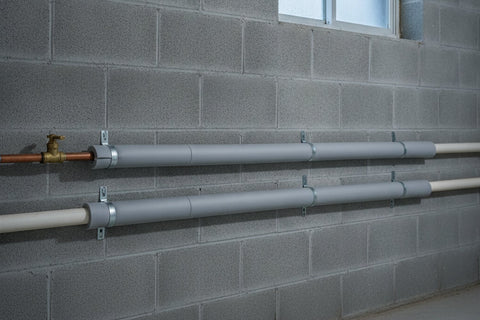
The Frost King fiberglass pipe wrap is a 1 inch by 3 inch by 25 foot roll of fiberglass pipe wrap with a foil backed vapor barrier, by its listing. Utah State University Extension names strips of foil faced fiberglass, wrapped around pipes and fixtures and secured in place with tape or wire, among its insulating options, and says insulation should fit snugly around the plumbing and be taped securely. Good to know: the listing gives the roll's size but not how far each turn overlaps the last, so the table shows the feet of pipe one roll covers as not stated.
3. Duck Brand foam pipe covers: sleeves for small pipes
Best for: Runs of 1/2 to 3/4 inch pipe
Six 12 inch foam sleeves for 1/2 to 3/4 inch pipe, by their listing.
The Duck Brand foam pipe covers are six pre-slit foam sticks, each 12 inches long, with self sealing edges and an R value of 3.6, for 1/2 to 3/4 inch pipes, by their listing. The Red Cross names a pipe sleeve among the products made to insulate water pipes, and Utah State describes pre-formed insulation sleeves that resemble tubes and come in varying diameters. Good to know: the listing gives 1/2 to 3/4 inch as the pipe sizes the covers fit, and names no larger size.
How to thaw frozen pipes, step by step
The Red Cross says water expands as it freezes, which puts tremendous pressure on whatever contains it, metal or plastic pipes included, and that expanding water can cause pipes to break. Illinois Extension says an eighth of an inch crack in a pipe can release up to 250 gallons of water a day.
Step 1: Find the frozen section
The Red Cross says that if you turn on a faucet and only a trickle comes out, to suspect a frozen pipe, and that likely places are against exterior walls or where your water service enters your home through the foundation; Portland's Water Bureau says that if some of your faucets are working and others are not, you may have a frozen pipe. The Red Cross lists the pipes that freeze most frequently: those exposed to severe cold, like outdoor hose bibs, swimming pool supply lines and water sprinkler lines; water supply pipes in unheated interior areas like basements, crawl spaces, attics, garages or kitchen cabinets; and pipes that run against exterior walls that have little or no insulation.
University of Missouri Extension says to locate the suspected frozen area immediately, and the Red Cross says to check all other faucets in your home, since if one pipe freezes, others may freeze too. Portland's Water Bureau says not to open the water meter box near the curb, since it could increase the chance of freezing water at the meter.
Step 2: The faucet and the main shutoff
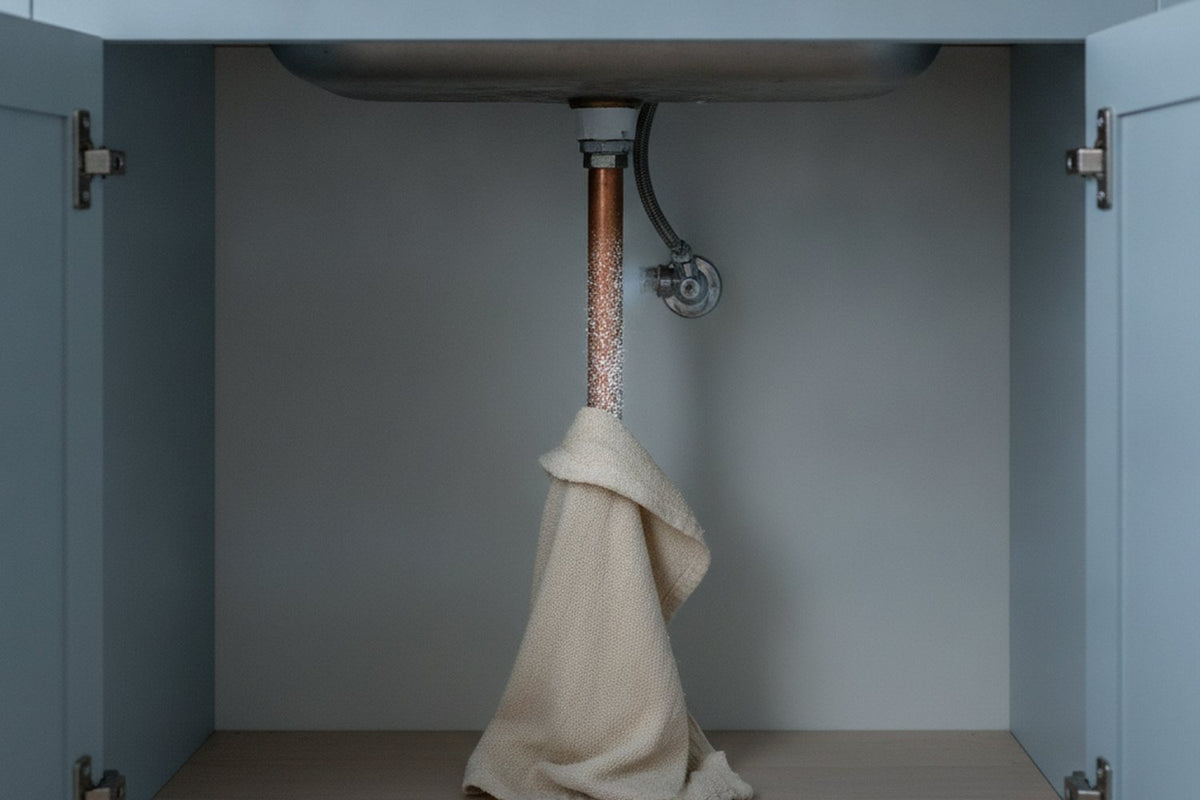
The Red Cross says to keep the faucet open: as you treat the frozen pipe and the frozen area begins to melt, water will begin to flow through it, and running water through the pipe will help melt ice in the pipe. Here the sources split. Utah State says a plumber may be your best contact, and that if you opt to do it yourself, to shut off the main supply line first, then open the faucet in the frozen line and begin thawing at the faucet. NC State says to shut off water valves, since stopping the flow of water can minimize the damage, and to call a plumber, because thawing yourself can lead to greater damage and can be a hazard; for anyone who does try, it says to always work from the open faucet toward the frozen area, which keeps steam from being trapped by ice and bursting the pipe.
Missouri Extension says to be prepared for water leaks from pipes that have been frozen for several hours, since they may have cracked and can leak once they are thawed, and to know how to turn off the water supply coming into your house. Utah State says that if there is a chance a frozen pipe will leak when it thaws, to open other faucets in the house to drain water from the plumbing system, and to keep buckets or other containers nearby to collect water.
Step 3: Heat, as the sources name it
The Red Cross says to apply heat to the section of pipe using an electric heating pad wrapped around the pipe, an electric hair dryer, a portable space heater (kept away from flammable materials), or towels soaked in hot water, and to apply heat until full water pressure is restored. Missouri Extension names the same tools except the heating pad. Utah State names a space heater, heat lamp, heat tape, hairdryer or towels soaked in hot water and wrapped around the pipes, and says to raise the temperature of the pipe gradually, so the trapped water will not boil and rubber or plastic faucet parts will not melt; Portland's Water Bureau names a hair dryer or heat lamp.
Three of the sources add cautions on electric heat near water. Utah State says to be cautious when using electrical appliances in wet locations; NC State says not to use ungrounded electrical appliances outdoors or near grounded water pipes, and to be careful of the potential for electric shock in and around water; Illinois Extension says to always be careful of the potential for electric shock in and around standing water.
For a portable heater, the CPSC's heater guide says never to leave the heater operating while unattended or while you are sleeping; to keep combustible material such as beds, sofas, curtains, papers and clothes at least 3 feet from the front, sides and rear of the heater; never to power it with an extension cord or power strip; to place it on a stable, level surface where it will not be knocked over; and, to prevent electrical shocks and electrocutions, to always keep electric heaters away from water and never touch one if you are wet. The sources differ on distance: Lasko's manual keeps combustible materials at least 3 feet from the front of the 754200 and at least 1 foot from the sides and rear. They also differ on damp places: the Red Cross names a portable space heater for this job, while Lasko's manual, as in pick 1, says the 754200 is not intended for wet or damp locations. Lasko's manual also says not to use the heater in areas where gasoline, paint or flammable liquids are used or stored, or in locations where flammable or explosive chemicals are stored. For heating a room rather than a pipe, our best space heater guide compares fan, infrared and oil filled heaters.
Step 4: What the sources rule out
The Red Cross says not to use a blowtorch, kerosene or propane heater, charcoal stove or other open flame device. Missouri Extension says a blowtorch can make water in a frozen pipe boil and cause the pipe to explode, and that all open flames in homes present a serious fire danger, as well as a severe risk of exposure to lethal carbon monoxide. Utah State says not to use an open flame to thaw frozen waterlines, due to the fire hazard, and, to avoid burns, not to use boiling water; Illinois Extension says never to try to thaw a pipe with an open flame or torch, and NC State says never to start a debris fire to warm pipes. This guide links no torch, open flame or fuel burning heater.
Step 5: When to call a plumber or shut off the main
The Red Cross says that if you are unable to locate the frozen area, if the frozen area is not accessible, or if you can not thaw the pipe, to call a licensed plumber. For pipes that break, Portland's Water Bureau, writing for its own customers, says to close your main water shutoff valve, which is most often where the water line enters the house: at the front of the house where you connect your hose, in the basement near the hot water heater, or inside the garage; that some older homes and manufactured homes do not have one; and that in an apartment or multifamily building, to contact your property manager to shut off the water. After shutting off the water, it says to turn off the water heater at the dedicated shutoff valve on the pipe where cold water enters the water heater, then to turn on all the faucets and flush the toilets to reduce the pressure from the burst pipe, and to contact a plumber or the property manager for repair work.
NC State says that if your pipes burst, to call a plumber and your insurance agent, and Illinois Extension says to call a plumber and contact your insurance agent; Utah State says that if a hot waterline or a main waterline serving the home freezes, it is often necessary to turn the water heater off.
How much power, and how much pipe?
The table works out what each pick draws or covers. Current = watts / volts: 1500 W / 120 V = 12.5 A on high, and 900 W / 120 V = 7.5 A on low. Clear space front plus rear = the front distance + the rear distance: 3 feet + 1 foot = 4 feet by Lasko's manual, and 3 feet + 3 feet = 6 feet by the CPSC. Pipe one pack of covers sleeves = sticks x length: 6 x 12 inches = 72 inches = 6 feet. The wrap's listing gives the roll, 3 inches wide and 25 feet long, but not how far each turn overlaps the last, so the feet of pipe one roll covers is not stated.
| Pick | Current at 120 V (computed) | Clear space front plus rear (computed) | Pipe one pack covers (computed) | Inputs (source) |
|---|---|---|---|---|
| Lasko 754200 heater (pick 1) | 12.5 A on high; 7.5 A on low | 4 ft by Lasko; 6 ft by the CPSC | Does not apply | 1500 W high, 900 W low (listing); 120 V wall outlet, 3 ft front, 1 ft sides and rear (Lasko's manual); 3 ft front, sides and rear (CPSC) |
| Frost King fiberglass pipe wrap (pick 2) | Does not apply | Does not apply | Not stated | 1 in by 3 in by 25 ft roll (listing); overlap not stated |
| Duck Brand foam pipe covers (pick 3) | Does not apply | Does not apply | 6 ft of 1/2 to 3/4 in pipe | 6 sticks, 12 in each, for 1/2 to 3/4 in pipes (listing) |
Before the next freeze
The Red Cross's steps before and during cold weather: add insulation to attics, basements and crawl spaces; insulate both hot and cold water pipes in unheated areas such as the garage and under kitchen and bathroom cabinets; consider a pipe sleeve or UL listed heat tape, heat cable or similar materials on exposed water pipes; keep garage doors closed if there are water supply lines in the garage; open kitchen and bathroom cabinet doors to let warmer air circulate around the plumbing, moving any harmful cleaners and household chemicals up out of the reach of children; let the cold water drip from the faucet served by exposed pipes; keep the thermostat at the same temperature day and night; and, when going away, leave the heat on, set no lower than 55 degrees F. Missouri Extension says pipes should be carefully wrapped, with ends butted tightly and joints wrapped with waterproof tape, and to follow the manufacturer's recommendations for installing and using these products. Utah State says to make sure there are no water leaks before installing insulation, since they will saturate it and render it ineffective, that insulation will not protect pipes from prolonged freezing temperatures unless there is some source of heat and/or periodic water flow, and to teach adults and older children where the main water shutoff is located and how to shut the water off. For outdoor faucets, our best outdoor faucet cover guide covers insulated covers and how to winterize an outdoor faucet before you cover it.
For heat tape and pipe heating cables, the CPSC's 1989 heat tape alert, written for mobile homes and homes with exposed substructures, says to inspect them each fall: unplug the tape or cable first, then check its entire length for cracked or charred insulation and bare wires, and replace it at once if you find them. The CPSC says to buy tape labeled for the diameter and length of the pipe; to always follow the manufacturer's directions; not to lap tape over itself unless the manufacturer's instructions permit it; not to wrap heat tapes over thermal insulation; not to cover heat tape with insulation unless the manufacturer's instructions suggest it, in which case it must be non-flammable, such as fibrous glass; and, for anyone wary of checking heat tape under a home, to consider a licensed electrician. Roof and gutter de-icing cable is a different product, which our best gutter heat tape guide covers.
How we picked these tools
We built the tool list from the frozen pipe pages of the American Red Cross, University of Missouri Extension and Utah State University Extension, and linked a product only where one of them names its kind: a portable space heater, a pipe sleeve and foil faced fiberglass. We also searched the US Consumer Product Safety Commission's recall database on November 21, 2026 for each brand and model we link and found no recall listed for any of these products. We make digging spades, not heaters or pipe insulation, so nothing on this page is ours. How our guides are made sets out the full process.
Also considered
Each was checked on November 21, 2026.
- Frost King pipe heat cables, 3 to 12 feet. Frost King's instruction sheet says its heat cable will prevent water filled pipes from freezing. The Red Cross, Missouri Extension, NC State and Illinois Extension name UL listed or UL approved heat tape and cables, and neither Frost King's product page, the text of that sheet nor the listings we read state a UL listing, so we do not link them. In stock and sold by Amazon.
- A hair dryer or an electric heating pad. The Red Cross names both for this job. The heating pads we read were not sold by Amazon, and we did not read a maker manual for either hair dryer we checked, so we link neither.
- Lasko 751320 ceramic heater. Another Lasko ceramic heater, in stock and sold by Amazon; this page links one heater.
Frequently asked questions
How do you fix frozen pipes?
By the Red Cross's steps: keep the faucet open, apply heat, never with an open flame, until full water pressure is restored, and call a licensed plumber if you cannot locate, reach or thaw the frozen area. For pipes that break, Portland's Water Bureau says to close the main water shutoff valve, and NC State and Illinois Extension say to call a plumber and your insurance agent.
Should you turn off the water when a pipe freezes?
The sources split. The Red Cross and Missouri Extension say to keep the faucet open, since running water helps melt the ice; Utah State, for anyone who opts to do it themselves, says to shut off the main supply line first, then open the faucet in the frozen line; NC State says to shut off water valves and call a plumber.
How long does it take to thaw a frozen pipe?
None of the sources we read gives a time. The Red Cross says to apply heat until full water pressure is restored, and Utah State says to raise the temperature of the pipe gradually, so the trapped water will not boil. Missouri Extension says to be prepared for water leaks from pipes that have been frozen for several hours.
Can you thaw a frozen pipe with a hair dryer?
The Red Cross, Missouri Extension, Utah State and Portland's Water Bureau all name an electric hair dryer. Utah State says to be cautious when using electrical appliances in wet locations, and NC State says not to use ungrounded electrical appliances near grounded water pipes.
Why not use a torch on a frozen pipe?
Missouri Extension says a blowtorch can make water in a frozen pipe boil and cause the pipe to explode, and that all open flames in homes present a serious fire danger, as well as a severe risk of exposure to lethal carbon monoxide. The Red Cross, Utah State, NC State and Illinois Extension all rule out an open flame.
Disclosure: Some links pay us a commission when you click or buy, and on some pages brands pay us through Amazon's creator program on links to their products.
Product prices and availability are accurate as of the date/time indicated and are subject to change. Any price and availability information displayed on Amazon.com at the time of purchase will apply to the purchase of this product.