As an Amazon Associate we earn from qualifying purchases. Some links are paid. Disclosure
Our top picks
Best overall
1. Frost King RC160 Roof and Gutter De-Icing Cable Kit
Best for: An asphalt shingle roof with gutters and ice along the eave
Best self-regulating cable
2. Radiant Solutions Heat Tape Pro
Best for: Metal, flat or other roofs, or cable that may cross itself
Best for a gutter and downspout alone
3. HEATIT HIRD Roof and Gutter De-Icing Cable, 60 ft
Best for: Ice in a gutter and downspout but not on the roof
The best gutter heat tape for most homes with an asphalt shingle roof is the Frost King RC160 Roof and Gutter De-Icing Cable Kit, a pre-assembled 160 foot plug-in cable whose owner's manual sets out a sizing formula and the outlet rules, starting with a grounded, ground-fault protected outdoor outlet. Heat tape does not fix what causes ice dams: makers and the Insurance Institute for Business and Home Safety (IBHS) say it keeps a channel open so meltwater can drain off the roof and out through the gutter, so read our guide to preventing ice dams for the fix that removes the cause.
If your roof is metal or flat, or you want a cable that may cross itself, the Radiant Solutions Heat Tape Pro is a self-regulating cable whose listing says it will not short or burn out if it overlaps. The third pick is a short kit for a gutter and downspout on their own. Below the picks we cover how the two kinds of cable differ, how to work out the length you need, what each pick draws from a circuit, the installation rules the makers, the electrical code and the CPSC set, when to switch it on, and what heat tape can and cannot do about ice dams.
Jump to: Constant wattage or self-regulating | How much you need | Watts and amps | Installation rules | When to switch it on | Does it stop ice dams?
Start here: which heat tape for your roof
- An asphalt shingle roof with gutters, ice along the eave: Frost King RC160 Roof and Gutter De-Icing Cable Kit (pick 1).
- A metal, flat or other roof the plug-in kits rule out, or a cable that may cross itself: Radiant Solutions Heat Tape Pro (pick 2).
- Ice only in a gutter and downspout, not on the roof: HEATIT HIRD Roof and Gutter De-Icing Cable, 60 ft (pick 3).
- One long roofline that needs more than 200 feet of cable: WarmlyYours Ice Shield Deicing Kit, 240 ft (pick 4).
Every pick needs a grounded, ground-fault protected outdoor outlet within reach of its cord, and none of their makers wants it run on an extension cord. If you do not have that outlet yet, read the safety rules before you buy, because the first step may be a call to a licensed electrician.
| Pick | Type | Output | Roofs | Best for | Our verdict | Where to buy |
|---|---|---|---|---|---|---|
| 1. Frost King RC160 Roof and Gutter De-Icing Cable KitBest overall | Constant wattage plug-in kit | 5 watts per foot, 800 in all | Asphalt shingles; not metal or flat | An asphalt shingle roof with gutters and ice along the eave | A pre-assembled 160 foot constant-wattage kit for asphalt shingle roofs, with a full owner's manual and a UL listing and CSA certification that hold when it is installed as the manual says. | Check price on Amazon |
| 2. Radiant Solutions Heat Tape ProBest self-regulating cable | Self-regulating plug-in cable | 6 watts per foot at 50F, 9.6 at 32F | Metal, flat, asphalt, wood, rubber (listing) | Metal, flat or other roofs, or cable that may cross itself | A self-regulating cable whose listing says it may overlap without shorting and suits metal and flat roofs, with a 10 year warranty. | Check price on Amazon |
| 3. HEATIT HIRD Roof and Gutter De-Icing Cable, 60 ftBest for a gutter and downspout alone | Constant wattage plug-in kit | 5 watts per foot, 300 in all | Noncombustible shingles; not metal or slate | Ice in a gutter and downspout but not on the roof | A 60 foot constant-wattage cable, sold from 20 to 240 feet, for a gutter and downspout on their own, with an ETL and CSA certified cable by its listing. | Check price on Amazon |
| 4. WarmlyYours Ice Shield Deicing Kit, 240 ftFor one long roofline | Constant wattage plug-in kit | 5 watts per foot, 1,200 in all | Asphalt shingles; not metal or steel | One long roofline that needs more than 200 feet of cable | A 240 foot constant-wattage kit on one plug for a long asphalt shingle roofline, cUL, CSA and cETLus listed by WarmlyYours. | Check price on Amazon |
The best gutter heat tape, by job
1. Frost King RC160 Roof and Gutter De-Icing Cable Kit: best overall
Best overall
Best for: An asphalt shingle roof with gutters and ice along the eave
Frost King RC160 Roof and Gutter De-Icing Cable Kit
- Type: Constant wattage plug-in kit
- Output: 5 watts per foot, 800 in all
- Roofs: Asphalt shingles; not metal or flat
A pre-assembled 160 foot constant-wattage kit for asphalt shingle roofs, with a full owner's manual and a UL listing and CSA certification that hold when it is installed as the manual says.
Frost King's RC kits are constant-wattage cables: they put out the same heat per foot whenever they are plugged in. The RC160 is 160 feet of heating cable at 120 volts and 800 watts by its listing, pre-assembled and ready to install. The box holds the cable, shingle clips, cable spacers, the instructions and labels for your electrical panel, by Frost King's instruction sheet, and the clips run the cable in triangles along the roof edge and the spacers hold it in the gutter and down the downspout. Frost King's instruction sheet lists the RC kits from 30 feet at 150 watts to 240 feet at 1,200 watts, and lengths from 30 to 200 feet sit on the same Amazon listing.
Why it is the pick: Frost King publishes a full owner's manual for the RC kits, with a sizing formula by roof overhang, the outlet rules and the season routine, and the manual says its UL listing and CSA certification are valid only if you install, run and maintain the kit by its instructions. Bob Vila's ice dam article, which quotes Steve Kuhl of the Ice Dam Company and Radiant Solutions Company, names Frost King's roof cable kit as a top option among the constant-wattage cables sold at home improvement stores and says they will work in a pinch. It is also the kit our ice dam guide uses for its sizing examples, so the two pages give you one set of numbers.
Good to know: it is made only for inclined roofs covered in noncombustible tab shingles like asphalt, with metal or plastic gutters and downspouts. The manual rules out wood shingle, rubber, tar and gravel and flat roofs and wooden gutters, and Frost King's instruction sheet says it is not suitable for metal roofs. The heated cable must never touch, cross or overlap itself, it cannot be cut or spliced, and it must not be attached to wooden parts of the eave. Frost King highly recommends a control that senses both temperature and moisture, such as its RS-2 Roof Sentry, one per cable (see when to switch it on). Kuhl, whose company makes self-regulating cable, says constant-wattage cable stays fully hot the whole time it is plugged in and carries only a one- to two-year warranty; Frost King's is two years. If 160 feet is the wrong length for your roof, work out yours with the formula below and pick that size on the same listing.
2. Radiant Solutions Heat Tape Pro: best self-regulating cable
Best self-regulating cable
Best for: Metal, flat or other roofs, or cable that may cross itself
Radiant Solutions Heat Tape Pro
- Type: Self-regulating plug-in cable
- Output: 6 watts per foot at 50F, 9.6 at 32F
- Roofs: Metal, flat, asphalt, wood, rubber (listing)
A self-regulating cable whose listing says it may overlap without shorting and suits metal and flat roofs, with a 10 year warranty.
Heat Tape Pro is a self-regulating cable: its output rises as the temperature falls, from 6 watts per foot at 50F to 9.6 watts per foot at 32F by Radiant Solutions' spec table. It comes plug-in ready with a 10 foot power cord and a lighted plug, and a GlowCap light on the far end shows that power is reaching the whole cable. Radiant sells it from 6 to 150 feet of heated length; the Amazon listing we link is the 50 foot cable, with other lengths on the same listing.
Why it is the pick: it is the one cable here whose listing says it will not short or burn out if it is overlapped, and that it is certified for flat, metal, asphalt, wood and rubber roofs. Every constant-wattage kit on this page forbids both. Its listing says it is UL Listed and carries a 10 year warranty, against two or three years on the constant-wattage picks. In his guest post for Structure Tech, a home inspection company, Kuhl argues that self-regulating cable lasts longer, can touch gutters and other metal, and adjusts its energy use to the weather; Bob Vila's ice dam article reports that he recommends it because it lasts longer, while constant-wattage cable is prone to burning out. Kuhl's company makes this cable, so read those comparisons as the maker's case, not an independent test.
Good to know: order clips with it. The listing reminds you to order Radiant's roof clips with the cable, and Radiant's manual says to fasten the cable only with approved clips, never nails, staples or screws. Radiant recommends a dedicated circuit, a properly wired GFCI outlet and no extension cord, and its manual calls for equipment ground-fault protection at 30 mA on each heating cable circuit, a qualified electrician for every electrical connection, and caution notices at the breaker panel and the cable's switch. Radiant's product page limits one circuit to 113 feet of cable in all on a 15 amp circuit and 150 feet on a 20 amp circuit. You cannot cut it to length either. Radiant says to protect any cable sticking out of the bottom of a downspout and asks for a "bi-annual inspection" of the system, plus a check after any roof work.
3. HEATIT HIRD Roof and Gutter De-Icing Cable, 60 ft: best for a gutter and downspout alone
Best for a gutter and downspout alone
Best for: Ice in a gutter and downspout but not on the roof
HEATIT HIRD Roof and Gutter De-Icing Cable, 60 ft
- Type: Constant wattage plug-in kit
- Output: 5 watts per foot, 300 in all
- Roofs: Noncombustible shingles; not metal or slate
A 60 foot constant-wattage cable, sold from 20 to 240 feet, for a gutter and downspout on their own, with an ETL and CSA certified cable by its listing.
HEATIT's HIRD is a constant-wattage cable at 5 watts per foot and 120 volts, sold in lengths from 20 to 240 feet by HEATIT's own product page, so a short gutter and downspout can get a short cable. Each one comes pre-assembled with a 6 foot cold lead and plug, and the listing says clips and spacers come in the box. We link the 60 foot length, which draws 2.5 amps by HEATIT's manual; the other lengths sit on the same Amazon listing.
Why it is the pick: HEATIT's manual covers the gutter-only job directly. If ice has only formed in the gutter and never on the roof, it says the cable belongs in the gutter and downspouts alone, laid in a double run, and if trouble spots are far apart, to give each spot its own cable rather than one long one. Its listing says the heating cable itself, not only the plug, is ETL and CSA certified, with a UL certified plug, and HEATIT gives it a three year limited warranty, the longest of the constant-wattage picks here.
Good to know: HEATIT says the HIRD has no built-in thermostat, so it heats whenever it is plugged in. Its product page rules out slate, stone, metal and ceramic roofs, as well as wood shingle, rubber, tar and gravel and flat roofs, and says those roofs need special installation or a self-regulating cable (pick 2). The manual wants 12 inches or more between the cable and any exhaust vent or chimney, half an inch of clearance from any gutter guard, and says never to run it on an extension cord or to use it once damaged. Install it only when the roof is clear of ice and snow; HEATIT puts its minimum installation temperature at 0C, which is 32F.
4. WarmlyYours Ice Shield Deicing Kit, 240 ft: for one long roofline
For one long roofline
Best for: One long roofline that needs more than 200 feet of cable
WarmlyYours Ice Shield Deicing Kit, 240 ft
- Type: Constant wattage plug-in kit
- Output: 5 watts per foot, 1,200 in all
- Roofs: Asphalt shingles; not metal or steel
A 240 foot constant-wattage kit on one plug for a long asphalt shingle roofline, cUL, CSA and cETLus listed by WarmlyYours.
WarmlyYours' Ice Shield kit is 240 feet of constant-wattage cable at 5 watts per foot, plus a separate 6 foot unheated power cord with a grounded 120 volt plug, with clips and spacers in the box, by its listing. WarmlyYours lists its Ice Shield plug-in kits as carrying cUL, CSA and cETLus listings and warrants this one for two years.
Why it is the pick: it is the longest kit we link, one 240 foot run on one plug, enough for roughly 55 feet of eave with a gutter, a 12 inch overhang and one 10 foot downspout by the overhang formula below. Its installation manual spells out when to run a constant-wattage cable: only while the roof's snow or ice is melting and the air sits between 15F and 35F, off again once that melt and freeze cycle stops. Its listing puts the power rules in plain terms: a grounded, GFCI-protected 120 volt outdoor outlet within reach of the 6 foot cord, no extension cord, and a check that the circuit can carry the kit.
Good to know: at full length it needs 10 amps by WarmlyYours' table, and its manual says to use no more than 80 percent of a circuit's rated capacity and never a breaker over 20 amps. On a 15 amp circuit that limit is 12 amps, so the kit leaves room for little else on that circuit (our arithmetic). Its listing limits it to inclined asphalt shingle roofs: no metal or steel roof, no flat roof, no slate, stone or ceramic, no wood shingle, rubber or tar and gravel, and no wooden gutters. The cable cannot be cut or spliced, and it must never overlap or cross itself. The listing says the kit is not designed to clear a whole roof of snow or remove an ice dam that has already formed.
How we chose these
We compared the roof and gutter cables in Amazon's catalog by kind (constant wattage or self-regulating), the roofs their makers allow, the heat they put out, the safety listing or certification their makers name, and their warranty, from each Amazon listing and the maker's own manual or product page: Frost King's RC owner's manual and instruction sheet, Radiant Solutions' Heat Tape Pro manual, product page and gutter guide, HEATIT's HIRD manual and product page, and WarmlyYours' Ice Shield manual and product page. We found no hands-on comparison test of roof heat cables. The most detailed comparison we found is Kuhl's guest post for Structure Tech, and he speaks for a maker of self-regulating cable; Bob Vila's ice dam article reports his advice. Each pick says whose word it rests on.
For the electrical and fire rules we read the heat tape guidelines of the Consumer Product Safety Commission (CPSC), the International Residential Code's rule for snow-melting and deicing equipment (section E4101.7), the National Electrical Code's ground-fault rule for the same equipment (section 426.28), and the IBHS. For whether to install cable at all we read IBHS and Clean Energy Resource Teams (CERTs), two of the sources behind our ice dam guide.
Our rules: each pick was in stock on Amazon on October 28, 2026, with a new offer in the buy box. Each one is a cable made for roofs and gutters, never a pipe heat tape, and each names a UL or CSA listing or certification in its listing or its maker's literature, two of the marks IBHS tells you to look for. Specs come from each listing and maker, named where they appear.
Also considered: cables that missed the list and why
EasyHeat ADKS roof and gutter kits. A constant-wattage kit that Kuhl names alongside Frost King. On October 27, 2026 most of the ADKS listings we found on Amazon were backordered or marked low in stock.
H&G lifestyles self-regulating roof heat cable. It met our floor, but its listing names no UL, ETL or CSA listing for the cable, and parts of it describe keeping pipes from freezing rather than roofs and gutters. We kept the picks to cables whose makers name a safety mark.
Eastrexon 50 foot self-regulating kit. It met our floor and its listing says it will not short out if it overlaps, but the listing names no safety listing or certification, and it suggests wrapping the same cable around water pipes too.
TOPDURE 200 foot roof cable. It met our floor and its listing claims ETL and CSA certification, but the same listing calls its cable self-regulating in one line and gives it a single output of 5 watts per foot in another, so we could not tell which kind of cable it is.
Plug-in controls. We link none; the switching section explains why.
Constant wattage or self-regulating: how each kind works
Roof and gutter cable comes in two kinds, and the difference decides which roofs you can use it on and how you lay it out. Pipe heat tape is a third product, and it does not belong in a gutter.
| Kind | How it heats | Roofs its makers allow | Can the cable touch or cross itself? | Picks |
|---|---|---|---|---|
| Constant-wattage plug-in kit | The same output per foot whenever it is plugged in: 5 watts per foot on all three picks of this kind. | Inclined roofs covered in noncombustible tab shingles like asphalt, with metal or plastic gutters; not metal, flat, wood shingle, rubber or tar and gravel roofs. | No. All three manuals forbid it, and none can be cut to length. | 1, 3, 4 |
| Self-regulating cable | Output rises as it gets colder: 6 watts per foot at 50F and 9.6 at 32F on pick 2, by Radiant Solutions. | Flat, metal, asphalt, wood and rubber roofs, by pick 2's listing. | Yes, by pick 2's listing and Radiant's gutter guide, which loops spare cable back in the gutter. | 2 |
| Pipe heat tape | Wraps a water pipe; many carry a thermostat. | None: the CPSC says a heat tape made for water pipes should never go on a gutter. | Only where its maker allows it. | None: we link no pipe heat tape |
What it shows: the constant-wattage kits are what most stores sell, by Kuhl's account and Bob Vila's article, and they come with the most rules about where they may go and how they may lie; the self-regulating cable relaxes those rules and carries the longest warranty here. Kuhl adds two claims for self-regulating cable that we could not check against an independent source: that it cannot set leaves or pine needles on fire and that it lasts about ten years. Both kinds still need a ground-fault protected outlet and both still need the gutters cleared, by their makers' own instructions.
Watch for listings that sell one cable for both jobs. Several listings we saw on Amazon describe the same cable as a pipe heat tape and a roof cable. The CPSC's heat tape guidance, re-issued in 1996 after a zoo fire that early reports tied to electric heat tapes, says a heat tape made for water pipes should never go on gutters, driveways or fuel lines, and HEATIT says its HIRD roof cable is for roofs only, not pipes. Frost King's manual likewise says not to use its roof kit to protect pipes.
How much heat tape do you need?
More than the length of your gutter. A plug-in kit cannot be cut, spliced or altered, so you buy the length the formula gives and lay it out to fit. Frost King's RC manual and HEATIT's HIRD manual use the same method:
- Along the roof: the length of roof edge to protect, times a multiplier for the overhang. With a gutter it is 4.0 for an overhang of 12 inches or less, 5.3 for 24 inches and 6.8 for 36 inches; without a gutter, 3.0, 4.3 and 5.8. For an 18 inch overhang with a gutter, the manual estimates about 4.7.
- Downspouts: the length of each downspout, times 2.
- Valleys: 6 feet per valley.
- Dormers: the distance around each dormer.
Then pick the kit. HEATIT says to choose the longer cable when your total falls between two sizes, or the shorter one if it is less than 5 feet over. Here is what the method gives on three example roofs (our arithmetic, not measurements of real houses):
| Example roof | Formula | Cable needed | Kit | Watts at 5 per foot | Amps |
|---|---|---|---|---|---|
| 20 ft of eave, overhang 12 in or less, gutter, one 10 ft downspout | 20 x 4.0 + 10 x 2 | 100 ft | 100 ft | 500 | 4.2 |
| 30 ft of eave, overhang 12 in or less, gutter, one 10 ft downspout | 30 x 4.0 + 10 x 2 | 140 ft | 160 ft (pick 1) | 800 | 6.7 |
| 50 ft of eave, overhang 12 in or less, gutter, one 10 ft downspout | 50 x 4.0 + 10 x 2 | 220 ft | 240 ft (pick 4) | 1,200 | 10 |
Amps are HEATIT's and WarmlyYours' figures for those kit lengths; watts are kit length times 5. If your problem spots are far apart, HEATIT's manual says to give each spot its own cable, and on a large roof separate cables for the roof and the gutter; a total past 240 feet, the longest kit length, means more than one cable in any case. Its clips are not made for triangles taller than 20 feet; for problem areas farther up the roof than that, it says to have a professional install commercial-grade cable.
Gutters only: if the ice has never formed on the roof itself, Frost King's and HEATIT's manuals say the cable goes in the gutter and downspouts alone. Radiant's gutter guide, for its self-regulating cable, puts one run in the gutter when there is cable on the roof above it and two runs when there is not, and two runs on any gutter in very cold or very snowy country. Radiant publishes its own length chart and calculator for its cable, so size pick 2 by Radiant's instructions, not by the table above.
Watts, amps and power use: what each pick draws
A roof cable is an electric heater stretched along the roof, and the circuit has to carry it. The table puts each pick, at the length we link, against its draw and a full day at full output (our arithmetic: watts times 24 hours, divided by 1,000; amps are watts divided by 120 volts where the maker gives no table).
| Pick, length we link | Watts | Amps | 24 hours at full output |
|---|---|---|---|
| 1. Frost King RC160, 160 ft | 800 (listing) | 6.7 | 19.2 kWh |
| 2. Radiant Solutions Heat Tape Pro, 50 ft | 300 at 50F, 480 at 32F (6 and 9.6 watts per foot) | 4.0 at 32F | 11.5 kWh at 32F |
| 3. HEATIT HIRD, 60 ft | 300 | 2.5 (HEATIT) | 7.2 kWh |
| 4. WarmlyYours Ice Shield, 240 ft | 1,200 | 10 (WarmlyYours) | 28.8 kWh |
What it shows: a long constant-wattage kit is a big load for one outlet. The 240 foot kit draws 1,200 watts, half again as much as the 160 foot kit, and its 10 amps come close to the 12 amp limit that rule sets for a 15 amp circuit. These are worst cases. The three constant-wattage makers say to run their kits only while the roof is melting and the air is between 15F and 35F, pick 2 turns its own output down as it warms, and the constant-wattage makers say never to run their cables above 50F, so a real winter uses far less; multiply the kWh by your own electric rate for a figure. CERTs counts the added energy cost as one reason not to install cable at all.
The circuit rules come from the manuals. HEATIT and WarmlyYours say never to put their cable on a breaker or fuse rated over 20 amps and to use no more than 80 percent of the circuit's capacity, and Radiant recommends a dedicated circuit, because anything else on it can trip the breaker and leave the cable off on the night you need it. If you have no circuit with the right rating, HEATIT and WarmlyYours say to call a licensed electrician.
Installing gutter heat tape: what the makers, the code and the CPSC say
Each manual opens with a warning that a cable installed, used or maintained the wrong way can cause electric shock or fire. These are the rules the named sources give, in the order you meet them.
- Buy roof and gutter cable, with a safety mark. IBHS says to check that a heating cable is "UL Listed, FM Approved, or CSA Certified", and the CPSC, writing about pipe heat tapes, urges replacing old uncertified tapes with ones certified to UL, CSA or Factory Mutual standards. Never put a pipe heat tape in a gutter (CPSC).
- Match the cable to the roof. The three constant-wattage picks are for inclined roofs with noncombustible shingles such as asphalt, with metal or plastic gutters, and none is for a metal roof. Pick 2's listing covers metal, flat and the other roofs. If you are unsure what your roof is made of, Frost King and HEATIT say to ask a professional roofing contractor.
- Ground-fault protection, every time. Frost King, HEATIT and WarmlyYours require a grounded outlet that is ground-fault protected, and Radiant wants a GFCI outlet plus equipment ground-fault protection at 30 mA on each heating cable circuit. The International Residential Code, in section E4101.7, and National Electrical Code section 426.28 require ground-fault protection of equipment for fixed outdoor deicing and snow-melting equipment. The CPSC's heat tape advice also says to plug a heat tape's 3-prong plug into a grounded 3-prong outlet protected by a GFCI.
- Use the right outlet, where the cord reaches. Frost King, HEATIT and WarmlyYours call for a 120 volt outdoor outlet with an on/off switch and an indicator light, protected from the weather (an in-use weatherproof cover is one way), within 6 feet of where the cable starts on the roof. The power cord should hang in a drip loop so meltwater does not run along it into the outlet. If you are unsure your outlet qualifies, they say to ask a licensed electrician or your local electrical inspector; Radiant says a qualified electrician must make every electrical connection, to your local codes.
- No extension cords. Radiant, HEATIT and WarmlyYours say not to use one, and Frost King recommends against it. WarmlyYours explains why: outdoor weather wears an extension cord down fast, which leads to voltage drops, short circuits and a serious fire risk, and the cable belongs in an outdoor GFCI outlet, plugged straight in.
- Never let constant-wattage cable touch itself. Frost King, HEATIT and WarmlyYours forbid the heated cable from touching, crossing or overlapping itself or another deicing cable, and Frost King warns against bending it tighter than a 1 inch radius. No plug-in cable here may be cut, spliced or shortened, pick 2 included.
- Keep heat and fuel away from it. Keep 12 inches or more between the cable and any exhaust vent or chimney (HEATIT and WarmlyYours), never attach it to wooden parts of the eave (Frost King), and leave at least half an inch between the cable and any gutter guard (Frost King, HEATIT and WarmlyYours). Clear leaves, needles, seeds and other windblown debris off the roof and out of the gutters before the season and as needed through the winter (WarmlyYours, Frost King).
- Fasten it with the clips made for it. HEATIT says to use only the kit's clips and spacers, never staples, nails, glue, caulk or adhesive, and Radiant says to use approved clips only, never nails, staples or screws. Lay the cable loosely between clips; Radiant warns that pulling it tight strains the clips and the cable over time.
- Install it in mild weather, on a clear roof. Frost King and HEATIT say to install only on a roof clear of ice and snow, ideally between 32F and 80F so shingle tabs lift without breaking or tearing. Frost King suggests hiring a professional if you are not comfortable on a ladder or the roof, and Radiant says the same about ladders.
- Inspect it every season. At the start of each winter WarmlyYours says to check that the cable has not moved, look over its whole length and the plug, and throw it away at any sign of cuts, charring, cracks, brittleness, discoloring or bare wire, then test the ground-fault device. It repeats the checks about once a month in winter. Radiant asks for a "bi-annual inspection" and a check after any roof work, and HEATIT says to take the cable down before any roof repair.
- If the ground-fault device trips, unplug first. WarmlyYours says a trip can mean a damaged cable or wet connections: unplug, inspect the whole cable, discard it if damaged, and if it trips again with no other explanation, call a licensed electrician. If the circuit breaker trips, it says to stop using the cable and call an electrical contractor.
- Label it. Radiant's manual requires caution notices at the breaker panel and at the cable's switch, and Frost King packs electrical panel labels in the RC kit, so whoever works on the house later knows the cable is there.
When to turn roof heat cable on and off
A constant-wattage kit has no thermostat of its own, so you, or a control, decide when it runs. Frost King's, HEATIT's and WarmlyYours' manuals give the same window: run it only while the roof's snow or ice is melting and the outside air sits between 15F and 35F. Below 15F, they say, little melting happens and the cable may not keep meltwater from refreezing; above about 35F, once the melt and freeze cycle stops, switch it off until it returns. Frost King, HEATIT and WarmlyYours all say not to run their cables in warm weather, above 50F, and HEATIT and WarmlyYours warn that switching one on in warm weather can overheat it and raise the risk of fire or shock. The cables can stay on the roof all year, unplugged.
Radiant's advice for its self-regulating cable runs the other way: switch it on before the temperature drops below 32F or before any freezing rain or snow, which it says makes a tripped circuit less likely. It still says to keep the gutters and downspouts clear before each winter.
Controls: Frost King highly recommends a control that senses both temperature and moisture, such as its RS-2 Roof Sentry, which switches the cable on only when conditions call for it, one for each cable. None of the RS-2 listings we found on Amazon on October 27, 2026 was sold by Frost King, Easy Heat or Amazon, so we link none. Two others we passed over: the Frost King thermostat sold on Amazon as model 099000 is the one Frost King's own site describes for its pipe heating cables, and HEATIT's ET-21 thermostat outlet listing says both indoor/outdoor use and only for dry locations. A thermostat outlet such as the ET-21 also switches on air temperature alone, while the control Frost King recommends senses moisture as well.
Does gutter heat tape prevent ice dams? What the sources say
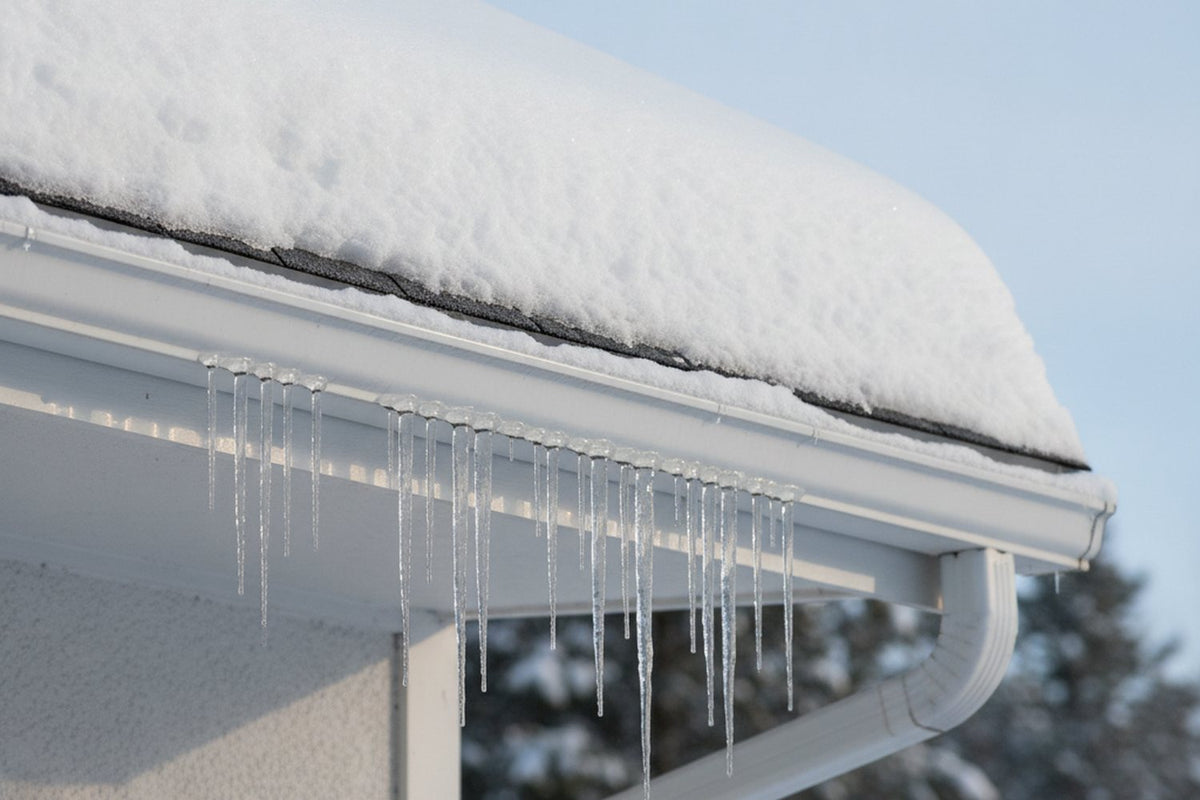
It manages them along the line of the cable; it does not remove the cause. Frost King and HEATIT describe their cables, properly installed and operated, as giving meltwater a way off the roof and down to the ground, and Frost King says its kit is designed to stop ice dams forming on the roof, in the gutters and in the downspouts. Frost King, HEATIT and WarmlyYours say their cables are not for melting snow and ice already on the roof or for clearing a roof, and Radiant says its cable creates ice-free pathways, not clear areas beside them. IBHS says a cable will not get rid of an ice dam but will open channels that let the water drain off safely, and it backs professionally installed, listed cable on eaves, gutters and downspouts.
Not everyone agrees cable is worth it. CERTs says not to install heating cables at all, because they shorten the life of the roof and add to energy costs. Frost King's own manual says better ventilation of the space under the roof can also reduce the chance of ice dams, and that the whole roof surface should stay at the outside air temperature to avoid them. Kuhl, in Bob Vila's article, makes the case for cable as a targeted fix for the problem area, for homeowners without the budget for attic work.
Our read matches our ice dam guide: seal the attic air leaks and insulate first, then put cable on the stretch of eave or the gutter where ice comes back every winter. Rake the roof after heavy snow either way, carefully, since Bob Vila's ice dam article notes that raking can knock clip-on cable loose; our roof rake guide compares rakes that reach from the ground.
Related guides
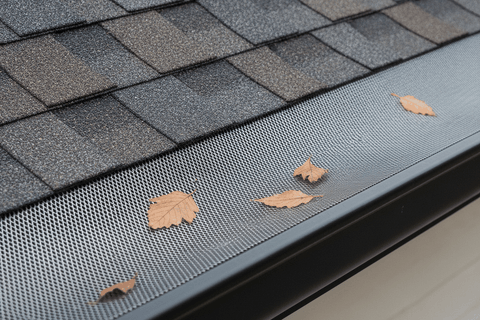
The makers tell you to clear leaves and debris before the season (Frost King, WarmlyYours), so our gutter cleaning tools guide covers clearing them from the ground, and our gutter guard guide compares guards that keep leaves out (leave half an inch between any guard and the cable). For the rest of winter's work, our snow removal tools guide points to our guide for each job, from shovels and snow blowers to ice melt and roof rakes.
Frequently asked questions
Does gutter heat tape prevent ice dams?
Not on its own. Makers say their cables keep a path open so meltwater can drain from the roof through the gutter to the ground, and IBHS says a cable will not get rid of an ice dam but opens channels that let the water drain off. The cause is heat from the house warming the roof, so seal and insulate the attic first and use cable where ice comes back every winter.
Does roof heat cable need a GFCI outlet?
Yes. Frost King, HEATIT and WarmlyYours require a grounded, ground-fault protected outdoor outlet, Radiant wants a GFCI outlet and equipment ground-fault protection at 30 mA, and the electrical code requires ground-fault protection of equipment for fixed outdoor deicing equipment. If your outlet does not meet the manual's list, have a licensed electrician fix that first.
Can I plug heat tape into an extension cord?
No. Radiant, HEATIT and WarmlyYours say not to use an extension cord with their cables, and Frost King recommends against one. WarmlyYours says outdoor weather wears extension cords down quickly, causing voltage drops, short circuits and a serious fire risk, and that the cable belongs in an outdoor GFCI outlet, plugged straight in, within reach of its own cord.
Can I use pipe heat tape in my gutters?
No. The CPSC says a heat tape made for water pipes should never go on gutters, driveways or fuel lines. Buy a cable made and listed for roofs and gutters, such as the picks here, and follow its own manual.
Is self-regulating heat cable better than constant wattage?
It is less restricted. By its listing, Radiant Solutions' self-regulating Heat Tape Pro can overlap without shorting and is certified for metal and flat roofs, which every constant-wattage kit here rules out, and it carries a 10 year warranty against two or three. The longer life and lower energy use are its maker's claims; no independent test we found compares the two.
Can I put heat tape on a metal roof?
Not a constant-wattage plug-in kit: Frost King, HEATIT and WarmlyYours all rule out metal roofs for theirs. HEATIT says those roofs need special installation or a self-regulating cable, and pick 2's listing says it is certified for metal roofs.
How much heat tape do I need for my gutters?
Usually several times the gutter length if the cable also runs on the roof. Frost King's and HEATIT's manuals multiply the length of roof edge by 4.0 for an overhang of 12 inches or less with a gutter, then add twice each downspout's length and 6 feet per valley, so 30 feet of eave with one 10 foot downspout needs about 140 feet, which means a 160 foot kit.
When should I turn roof heat cable on?
For a constant-wattage kit, Frost King, HEATIT and WarmlyYours say only while the roof's snow or ice is melting and the air sits between 15F and 35F, and every constant-wattage maker here says never to run it above 50F. Radiant says to switch its self-regulating cable on before the temperature drops below 32F or before freezing rain or snow.
Disclosure: Some links pay us a commission when you click or buy, and on some pages brands pay us through Amazon's creator program on links to their products. Availability was checked on Amazon on October 27, 2026 and can change.
Product prices and availability are accurate as of the date/time indicated and are subject to change. Any price and availability information displayed on Amazon.com at the time of purchase will apply to the purchase of this product.