As an Amazon Associate we earn from qualifying purchases. Some brands also pay us when you click or buy, so those links are ads. Full disclosure below
Our top picks
Best overall
1. The Andersons Barricade 0.48% Granular
Best for: Most lawns, spring and fall, on any common grass from bluegrass and fescue to Bermuda, zoysia, centipede or St. Augustine
Best for an early-spring start
2. Scotts Halts
Best for: Spreading in early spring, while snow or frost may still come and you cannot water it in right away
Best for spraying a big lawn
3. Quali-Pro Prodiamine 65 WDG
Best for: A big lawn and a pump or backpack sprayer
The best pre-emergent for most lawns is The Andersons Barricade 0.48% Granular, a prodiamine crabgrass preventer whose label gives 7 months of control at its low rate and lists 12 lawn grasses, from Kentucky bluegrass and tall fescue to Bermuda, zoysia, centipede and St. Augustine. It goes down in early spring for crabgrass, and again in late summer or early fall for annual bluegrass (Poa annua), henbit and chickweed. If you would rather spread a bag in early spring without rushing to water it in, Scotts Halts Crabgrass & Grassy Weed Preventer uses pendimethalin, and its label says rain, snow or a freeze after you spread it does not affect it.
A pre-emergent stops weed seeds as they sprout. It does nothing to a weed that is already growing, so the date you put it down is most of the job: the University of Minnesota's turf program says crabgrass preventers belong down before the top 1 to 2 inches of soil hold 55 degrees F for several days, and Texas A&M AgriLife Extension starts the fall round when soil cools to about 70 degrees. The other three picks cover spraying a big lawn, seeding in the same season, and catching crabgrass that has just come up. Every rate, wait and people-and-pets line about a product below comes from its EPA-registered label or its maker's page, because, as the EPA notes, pesticide labels are legally enforceable.
We also set the labels side by side in two tables: when to put each one down, spring and fall, and how far one container goes, how long it lasts and how long you must wait to seed.
Jump to: When to apply | Fall pre-emergent | Coverage and seeding waits | Seeding | How to apply | Weeds already up
Start here: which pre-emergent for your lawn
- Most lawns, spring and fall, on any common grass from bluegrass and fescue to Bermuda, zoysia, centipede or St. Augustine: The Andersons Barricade 0.48% Granular (pick 1).
- Spreading in early spring, while snow or frost may still come and you cannot water it in right away: Scotts Halts (pick 2).
- A big lawn and a pump or backpack sprayer: Quali-Pro Prodiamine 65 WDG (pick 3).
- Seeding or overseeding Kentucky bluegrass, tall fescue, perennial ryegrass or centipede this season: Syngenta Tenacity (pick 4), which its label lets you spray at seeding.
- Crabgrass seedlings already showing, no more than about 4 weeks after they sprouted: Preen Lawn Crabgrass Control (pick 5), at its early post-emergence rate.
- Weeds already established, such as dandelions, clover or crabgrass that has started to spread: a pre-emergent will not help; see what to use instead.
| Pick | Type | Active ingredient | Area per container | Wait before seeding | Best for | Our verdict | Where to buy |
|---|---|---|---|---|---|---|---|
| 1. The Andersons Barricade 0.48% GranularBest overall | Granular, spread with a spreader | Prodiamine 0.48% | About 12,880 sq ft (40 lb bag, low rate) | 5 months North, 4 transition zone and South (low rate) | Most lawns, spring and fall, on any common grass from bluegrass and fescue to Bermuda, zoysia, centipede or St. Augustine | Its label gives 7 months of crabgrass control at the low rate, covers fall annual bluegrass too and lists 12 lawn grasses. | Check price on Amazon |
| 2. Scotts HaltsBest for an early-spring start | Granular, spread with a spreader | Pendimethalin 1.71% | 10,000 sq ft (20.12 lb bag) | Four growing months | Spreading in early spring, while snow or frost may still come and you cannot water it in right away | LawnStarter's best overall goes on a dry lawn in early spring, and its label says rain, snow or a freeze afterward does not affect it. | Check price on Amazon |
| 3. Quali-Pro Prodiamine 65 WDGBest for spraying a big lawn | Granules you mix in water and spray | Prodiamine 65% | About 216,000 sq ft at 0.37 oz per 1,000 sq ft (5 lb bottle) | 5 months North, 4 transition zone and South (1 lb per acre) | A big lawn and a pump or backpack sprayer | The same prodiamine as pick 1 in a spray you mix, with the rate set by your grass and about 216,000 sq ft per bottle at 1 lb per acre. | Check price on Amazon |
| 4. Syngenta TenacityBest when you are seeding | Liquid concentrate you spray | Mesotrione 40% | 1 to 2 acres (8 fl oz bottle) | None for the listed grasses: it goes on at seeding | Seeding or overseeding Kentucky bluegrass, tall fescue, perennial ryegrass or centipede this season | Bob Vila's best pre-emergent is the one pick its label lets you spray at seeding, though it can whiten grass for several weeks and does not suit Bermuda or zoysia. | Check price on Amazon |
| 5. Preen Lawn Crabgrass ControlBest if crabgrass is already sprouting | Granular, spread with a spreader | Dithiopyr 0.19% | 5,000 sq ft (15 lb bag) | 10 weeks after one application | Crabgrass seedlings already showing, no more than about 4 weeks after they sprouted | Good Housekeeping's best overall can go down weeks after other preventers, since by its label it still controls crabgrass seedlings up to 4 weeks old. | Check price on Amazon |
The best pre-emergents, by job
1. The Andersons Barricade 0.48% Granular: best overall
Best overall
Best for: Most lawns, spring and fall, on any common grass from bluegrass and fescue to Bermuda, zoysia, centipede or St. Augustine
The Andersons Barricade 0.48% Granular
- Type: Granular, spread with a spreader
- Active ingredient: Prodiamine 0.48%
- Area per container: About 12,880 sq ft (40 lb bag, low rate)
Its label gives 7 months of crabgrass control at the low rate, covers fall annual bluegrass too and lists 12 lawn grasses.
A 40 lb bag of fine granules carrying prodiamine at 0.48%, registered with the EPA as "The Andersons 0.48% Granular Barricade Herbicide" (EPA Reg. No. 9198-214). At the label's low rate of 3.1 lb per 1,000 sq ft, the bag covers about 12,880 sq ft, the figure on the listing. By the label, control lasts 7 months at the low rate and 8 months at the 3.5 lb medium rate, and it lists more than 30 grassy and broadleaf weeds it controls, with crabgrass, goosegrass, foxtail, henbit, common chickweed, prostrate spurge, oxalis and annual bluegrass among them. Its turf table covers Bermudagrass, bahiagrass, centipedegrass, seashore paspalum, St. Augustinegrass, tall fescue and zoysia, then buffalograss, Kentucky bluegrass, perennial ryegrass, creeping red fescue and creeping bentgrass, each with its own yearly maximum.
Why it is the pick: LawnStarter's pre-emergent roundup names it the best pre-emergent for Bermudagrass, and Lawn Love's lists it third of six, noting that it has the same active ingredient as pick 3 but goes on as granules from a spreader. Neither roundup describes a hands-on test; the label is what puts it first. By the label, one spring spread at the low rate lasts 7 months, so an application in March is still working in September, and in many areas the label says a single application also controls goosegrass, where Halts' label calls for a second spread 8 weeks later. The same bag goes down again in fall for annual bluegrass: the label puts that at about August or September where annual bluegrass grows as a winter weed, and The Andersons says to spread it before soil temperatures drop below 70 degrees F for good, typically from mid-September to early October.
Good to know: Lawn Love's one complaint is that the granules are hard to spread evenly; the label asks for a properly calibrated spreader, and two passes in different directions help (see how to apply). Water it in: the label says it works best when 0.5 inch or more of rain or irrigation waters it in within 2 weeks of spreading (The Andersons' own product page says .2 inch; the label says 0.5, so use the label figure). It will not kill weeds already growing, and The Andersons says it will not prevent dandelions or clover. The label rules it out where dichondra, colonial or velvet bentgrass, or annual bluegrass is grass you want to keep, on putting greens, on creeping bentgrass mowed shorter than 0.5 inch, and on freshly laid sod before the next year. Seeding waits rise with the rate: at the low rate the label's table gives 5 months in the North and 4 in the transition zone and the South before you overseed, and at the medium rate 6, 5 and 5 months. On a lawn you have just seeded, let both 60 days and the second mowing pass before you spread it. The label says to keep people other than the applicator, and pets, off the area while you spread it, and not to enter until the dusts have settled; The Andersons says pets can go back after the watering-in, once the lawn is completely dry, and to sweep or blow granules off drives and walks back onto the grass.
2. Scotts Halts: best for an early-spring start
Best for an early-spring start
Best for: Spreading in early spring, while snow or frost may still come and you cannot water it in right away
Scotts Halts
- Type: Granular, spread with a spreader
- Active ingredient: Pendimethalin 1.71%
- Area per container: 10,000 sq ft (20.12 lb bag)
LawnStarter's best overall goes on a dry lawn in early spring, and its label says rain, snow or a freeze afterward does not affect it.
Sold in full as "Scotts Halts Crabgrass & Grassy Weed Preventer," this is a 20.12 lb bag of lawn granules with pendimethalin (1.71%) as the active ingredient (EPA Reg. No. 538-192). Scotts' label says the bag treats 10,000 sq ft and that a single application prevents crabgrass all season, along with foxtail, spurge, barnyardgrass and fall panicum; for goosegrass, which it lists with oxalis, the label says to repeat the application in 8 weeks. Spread from August to October, it stops chickweed, henbit, corn speedwell and Poa annua, plus moss outside California. It is for every grass type except dichondra and bentgrass. By the label it puts down 1.5 lb of pendimethalin per acre, the low end of the range Purdue University's turf program lists for pendimethalin.
Why it is the pick: LawnStarter names Scotts Halts its best pre-emergent overall, and The Spruce calls it the best pre-emergent in its crabgrass roundup. Its label suits an early start. Outside California you spread it in early spring, any time up to when dandelions reach the puffball stage, on a dry lawn, and the label says rain, snow or freezing weather after you spread it will not affect it. You do not have to water it in right away: for best results Scotts suggests a quarter to a half inch of water in the 2 or 3 days after, to rinse the granules off the grass blades.
Good to know: it does not control mature crabgrass or other weeds that are already up. Grass seed has to wait four growing months after you spread it, and sprigs 5 months; on a newly seeded lawn, wait until after the fourth mowing before you use it. The label says not to rake or aerate after spreading because either one disturbs the barrier in the soil, limits it to twice a year at least 2 months apart, warns that granules can stain concrete, stone, cars and garden furniture, and says to keep people and pets out during application and stay off until the dust has settled. The spring deadline moves in California: before March 1 in southern California, and before mid-March in northern California.
3. Quali-Pro Prodiamine 65 WDG: best for spraying a big lawn
Best for spraying a big lawn
Best for: A big lawn and a pump or backpack sprayer
Quali-Pro Prodiamine 65 WDG
- Type: Granules you mix in water and spray
- Active ingredient: Prodiamine 65%
- Area per container: About 216,000 sq ft at 0.37 oz per 1,000 sq ft (5 lb bottle)
The same prodiamine as pick 1 in a spray you mix, with the rate set by your grass and about 216,000 sq ft per bottle at 1 lb per acre.
The same active ingredient as pick 1, prodiamine, at 65% in dispersible granules that you mix in water and spray. The EPA-stamped label (EPA Reg. No. 53883-429) names the product Prodiamine 65 WG Herbicide and lists Quali-Pro Prodiamine 65 WDG as an alternate brand name. It calls for 0.5 gallon or more of carrier for every 1,000 sq ft, through a calibrated low-pressure sprayer, and its turf table gives rates from 0.185 to 0.83 oz a year on each 1,000 sq ft, depending on the grass. At 0.37 oz per 1,000 sq ft, which is 1 lb per acre, the 5 lb bottle covers about 216,000 sq ft, close to 5 acres (our arithmetic from the label's table).
Why it is the pick: LawnStarter names it the best crabgrass preventer in its roundup, and Lawn Love puts it first of six for its long-lasting control of grassy and broadleaf weeds. It is the spray-on form of pick 1's prodiamine, so the rate, and with it the length of control, is yours to set by grass: the label allows up to 0.83 oz per 1,000 sq ft a year on Bermuda, bahia, centipede, kikuyu, seashore paspalum, St. Augustine, tall fescue and zoysia, up to 0.55 oz on buffalograss, Kentucky bluegrass and perennial ryegrass, and up to 0.42 oz on fine fescue. Its label also describes a late-fall use for cool-season lawns: where the ground freezes in winter, a fall spray at 1.0 to 1.15 lb per acre, once the soil has cooled below 50 degrees F but before it freezes, controls crabgrass the following spring.
Good to know: you need a sprayer, and Lawn Love lists two drawbacks: it is weak on ragweed, and it can stain your clothes. The label says control is most effective when at least 0.5 inch of rain or irrigation, or shallow mixing into the soil, activates it within 14 days, before weed seeds sprout. It will not control weeds already up. The label rules it out where dichondra, colonial or velvet bentgrass, or annual bluegrass is wanted, on putting greens and on creeping bentgrass mowed under 0.5 inch, and on new sod before it has rooted and its open edges have filled in; it also warns against spraying grass under stress from drought, low fertility or pests. Seeding waits rise with the rate: at 1 lb per acre the label gives 5 months in the North and 4 in the transition zone and the South. After you seed, let both 60 days and the second mowing pass before you spray. For lawns and other non-farm uses, the label says no one should enter the treated area until the spray has dried. It also says not to blend it onto dry fertilizer or other granules, and not to apply it through an irrigation system.
4. Syngenta Tenacity: best when you are seeding
Best when you are seeding
Best for: Seeding or overseeding Kentucky bluegrass, tall fescue, perennial ryegrass or centipede this season
Syngenta Tenacity
- Type: Liquid concentrate you spray
- Active ingredient: Mesotrione 40%
- Area per container: 1 to 2 acres (8 fl oz bottle)
Bob Vila's best pre-emergent is the one pick its label lets you spray at seeding, though it can whiten grass for several weeks and does not suit Bermuda or zoysia.
An 8 oz bottle of liquid mesotrione (40%, EPA Reg. No. 100-1267) that works both before weeds come up and after. Its label lets you spray it before or after seeding tall fescue, Kentucky bluegrass, perennial ryegrass, buffalograss or centipedegrass, the one job the other four picks cannot do, since each of them holds back grass seed for weeks or months. The label rate is 4 to 8 fl oz per acre, mixed into 30 or more gallons of water for each acre, so the bottle treats 1 to 2 acres; per 1,000 sq ft that is roughly half a teaspoon to a little over one teaspoon of product (our arithmetic).
Why it is the pick: Bob Vila's crabgrass roundup names Tenacity its best pre-emergent, and Reviewed's weed killer guide calls it "one of the few preventers that will kill weeds without harming new grass seed." Reviewed also calls it tricky to work with. The label agrees on timing: apply it at grass seeding or close to it for best performance. Before weeds come up, the label lists it for crabgrass, yellow foxtail, purslane, lambsquarters and white clover among others; after they are up, for dandelion, clover, ground ivy and more, with a surfactant and a repeat spray 2 to 3 weeks later.
Good to know: the label says it can whiten lawn grass for a while: the whitening shows up 5 to 7 days after a spray and lasts several weeks. By the label, Bermudagrass, zoysiagrass, kikuyugrass, seashore paspalum, bentgrass and annual bluegrass are all sensitive to it, so it is not the pick for those lawns, and the label lists St. Augustinegrass only when it is grown for sod. With fine fescue seed it may thin the new stand; the label allows seed blends with less than 20% hard or fine fescue by weight. As a preventer in an established lawn, the label advises mixing it with a longer-lasting preemergence herbicide such as prodiamine for extended control of crabgrass and foxtail, while for a new seeding it is used without that partner. If 0.15 inch of rain has not fallen within 10 days of a spray made before weeds come up, water that much in. The label caps it at 8 fl oz per acre per spray and 16 fl oz per acre per year, with at least 14 days between sprays, and says to "keep people and pets off treated areas until spray has dried" (the label gives this as a step to reduce movement onto sensitive grasses such as bentgrass), and not to walk into treated areas before the spray dries unless you wear protective clothing. Clippings from sprayed grass should not go around trees or into vegetable or flower gardens as mulch, the label adds.
5. Preen Lawn Crabgrass Control: best if crabgrass is already sprouting
Best if crabgrass is already sprouting
Best for: Crabgrass seedlings already showing, no more than about 4 weeks after they sprouted
Preen Lawn Crabgrass Control
- Type: Granular, spread with a spreader
- Active ingredient: Dithiopyr 0.19%
- Area per container: 5,000 sq ft (15 lb bag)
Good Housekeeping's best overall can go down weeks after other preventers, since by its label it still controls crabgrass seedlings up to 4 weeks old.
A 15 lb bag of lawn granules carrying dithiopyr, the active ingredient sold as Dimension, at 0.19% by Preen's product page (EPA Reg. No. 961-417 on the label). Its label says it "can be applied up to 4 weeks later than other crabgrass preventers": as well as stopping seeds, it also controls young crabgrass during the first 4 weeks after it germinates, about the 3-leaf stage, when it first shows in the lawn. Preen says the bag covers 5,000 sq ft, which is the label's spreader rate of 3 lb per 1,000 sq ft. At the label's lowest northern rate, 1.5 lb per 1,000 sq ft, it gives 2 to 3 months of crabgrass control, and 2.1 lb gives 3 to 4 months. For the early post-emergence job the label calls for 2.7 to 6.0 lb per 1,000 sq ft, so one bag covers about 2,500 to 5,500 sq ft (our arithmetic). Its turf list runs from creeping bentgrass, Kentucky bluegrass, fine and tall fescue and perennial ryegrass to St. Augustinegrass, centipedegrass, Bermudagrass, zoysiagrass, bahiagrass, carpetgrass and buffalograss.
Why it is the pick: Good Housekeeping's crabgrass roundup names it best overall and calls it "the strongest all-around choice" if you want a single product for prevention and for early outbreaks; The Spruce's search listing also names Preen Crabgrass Control its best overall. Of the picks you put down with a spreader, it is the one whose label also controls young crabgrass, which makes it the fallback when you miss the spring window by a few weeks. Purdue University's turf program names dithiopyr, pendimethalin and prodiamine as "the three best performing preemergence active ingredients," and says that at the correct rate they give equivalent control in any given year.
Good to know: Good Housekeeping's one complaint is that it takes careful spreading to avoid uneven coverage. Do not apply it later than 4 weeks after crabgrass germinates; the label says it will not control crabgrass once the plants begin to tiller, or spread. Performance improves if a half inch of rain or irrigation follows the spreading, and the label warns of erratic control if nothing activates it within 30 days. Use it only on established lawns: on a new lawn, wait until after two mowings, except Kentucky bluegrass, perennial ryegrass or tall fescue, where the label allows it two weeks after the seed first sprouts. Reseeding within 10 weeks of one application, or 16 weeks after a split program totaling 6.0 lb per 1,000 sq ft or more, may keep new grass from establishing, and after a fall application the wait is 12 weeks. Core or spike aeration and verticutting go before you spread it, not after, and the label says to wait until the turf has recovered from them. The label says not to let people or pets onto the treated area until the dust has settled, and not to mulch vegetables or fruit trees with clippings from the treated lawn. It caps one application at 6.0 lb per 1,000 sq ft and a year at 18.0 lb, or 3.0 lb a year in New York, and asks you to keep it out of storm drains, drainage ditches, gutters and surface water. Its label lists a 0-0-7 analysis: 7% soluble potash and no nitrogen.
How we chose these
We compared the lawn pre-emergents in Amazon's catalog, granular bags, sprayable concentrates and the products sold for seeding, by the job each one does and what its label allows. For every pick we read the EPA-registered label, three of them from the EPA's own label archive, plus the maker's product page where there is one. Then we read the pre-emergent roundups by LawnStarter and Lawn Love, the crabgrass roundups by Bob Vila, The Spruce and Good Housekeeping, and Reviewed's weed killer guide. Each pick says whose recommendation it carries.
Each pick met our floor on October 26, 2026: in stock on Amazon, with a new offer in the buy box. Every rate, coverage, watering, seeding wait and re-entry line here comes from the product label or the maker's page, named where it appears. Timing advice comes from land-grant extension services and programs at Minnesota, Michigan State, Purdue, Texas A&M and Georgia, each named where it appears.
Also considered: other products we looked at
Hi-Yield Weed & Grass Stopper. Sold as "Hi-Yield Turf & Ornamental Weed & Grass Stopper," it carries dithiopyr, the active in pick 5; its label (EPA Reg. No. 62719-483-7401) makes the same claim of controlling young crabgrass up to 4 weeks after it germinates. None of the roundups we read covers it, while pick 5 is Good Housekeeping's and The Spruce's best overall. Its Amazon listing's title names oryzalin, a different pre-emergent; the 33030 label we read lists dithiopyr.
Espoma Organic Weed Preventer. Corn gluten meal that feeds the lawn and helps keep weed seeds from taking hold; it is Bob Vila's top pre-emergent herbicide and the best overall in its crabgrass roundup, and LawnStarter's organic pick. Bob Vila reports Espoma's rate as 20 lb per 1,000 sq ft for weed prevention.
BioAdvanced southern weed preventer. Sold as "Season Long Lawn Weed Killer Plus Preventer for Southern Lawns," it is LawnStarter's choice for southern lawns: it kills and prevents weeds, and LawnStarter says it suits Floratam St. Augustinegrass. For St. Augustine lawns, the labels of picks 1, 3 and 5 name St. Augustinegrass, and pick 2's label covers every grass type except dichondra and bentgrass.
Scotts Triple Action for seeding. Sold as "Scotts Turf Builder Triple Action Built for Seeding," it is mesotrione, the active in pick 4, at 0.08% on a starter fertilizer you spread when you plant grass; Scotts says it "prevents dandelion and crabgrass for up to 6 weeks without harming new grass," and its page lists tall fescue, Kentucky bluegrass, perennial ryegrass, the fine fescues and centipedegrass. It met our floor, but none of the roundups we read covers it, and pick 4 has two recommendations behind it. If you are seeding fine fescue, which pick 4's label cautions against, this is the Scotts route.
GreenView Crabgrass Control Plus Lawn Food. Dithiopyr, the active in pick 5, with a 26-0-4 feeding; its label makes the same claim of controlling young crabgrass in the first 4 weeks after it germinates. It met our floor, but none of the roundups we read covers it, and the University of Minnesota's turf program cautions that the right date for a crabgrass preventer may not be the right date to feed. Pick 5 does the same job without a nitrogen feeding: its label lists a 0-0-7 analysis.
When to put down pre-emergent: the spring and fall windows
Soil temperature, not the calendar, decides when weed seeds sprout, so the extension services give soil readings and local dates rather than one national day. Texas A&M AgriLife's turf specialist warns against using one fixed calendar date year after year and suggests a soil probe, even a probe-type meat thermometer, to check. Here is what each source says.
| Season | Source | When to apply | Weeds it targets |
|---|---|---|---|
| Spring | University of Minnesota (turf) | Before the top 1 to 2 inches of soil hold 55 degrees F for several days; in Minnesota, mid-April to mid-May | Crabgrass |
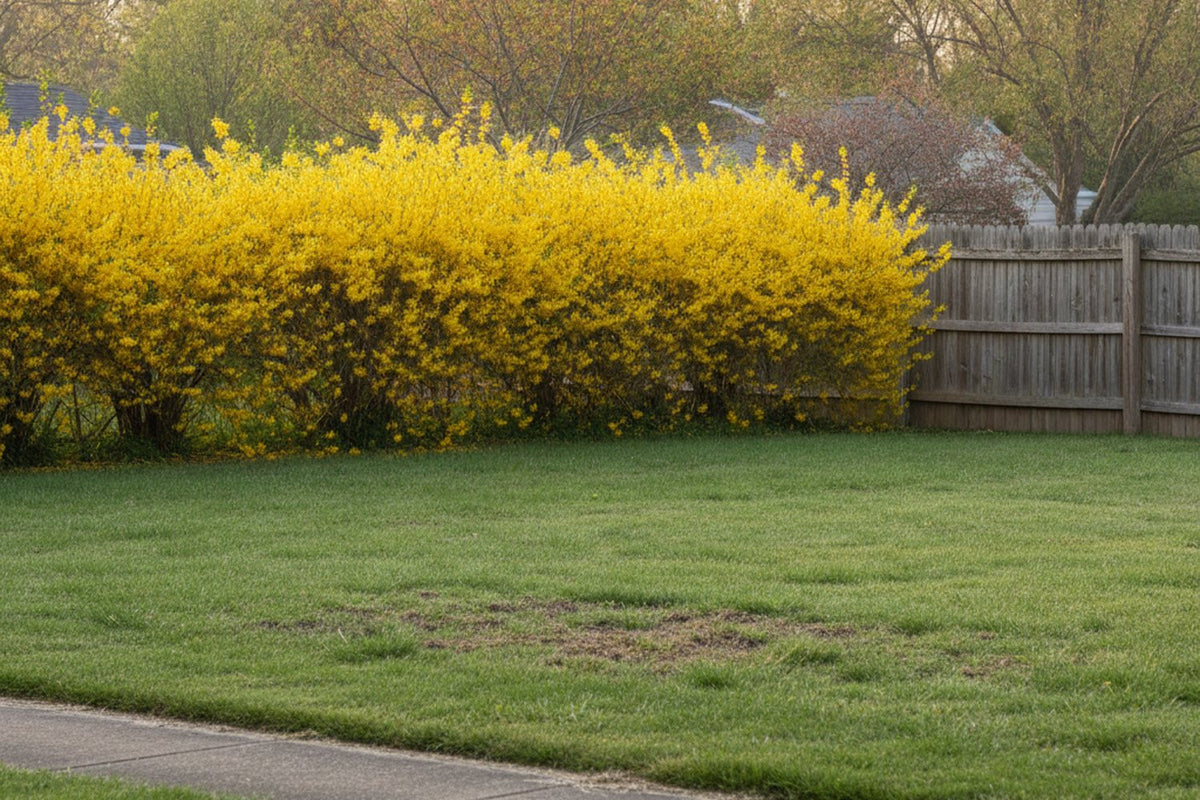
| Spring | Michigan State University Extension | Before the top 2 inches stay at 60 to 70 degrees F, the range in which eight of ten crabgrass seeds sprout; forsythia bloom is a handy cue | Crabgrass and other summer annual grasses |
| Spring | Texas A&M AgriLife | As soil reaches about 50 to 55 degrees, January to March depending on location | Summer weeds such as crabgrass and sandburs |
| Spring | UGA Extension, Bartow County | March 1 to 20 in North Georgia | Crabgrass, spotted spurge, pigweed, yellow foxtail |
| Spring | Pick 1 (The Andersons) | Early spring, before the soil reaches 55 degrees F at a depth of four inches | Summer annual weeds |
| Spring | Pick 2 (Halts label) | Early spring, up to dandelion puffball stage; before March 1 in southern California, mid-March in northern California | Crabgrass, foxtail, spurge, barnyardgrass, fall panicum |
| Fall | Texas A&M AgriLife | Starting when soil reaches about 70 degrees, generally September or October in Texas | Annual bluegrass, rescuegrass, henbit, chickweed, Carolina geranium, lawn burweed |
| Fall | UGA Extension, Bartow County | September 1 to 15 in North Georgia | Annual bluegrass, hop clover, henbit, chickweed, buttercup, catchweed bedstraw |
| Fall | Pick 1 (label and The Andersons) | About August or September where annual bluegrass grows as a winter weed; before soil drops below 70 degrees F, typically mid-September to early October | Annual bluegrass (Poa annua) |
| Fall | Pick 2 (Halts label) | August to October | Poa annua, henbit, corn speedwell, chickweed, moss (not in California) |
| Fall | Pick 5 (Preen label) | Late August through November, with a second application the following spring | Listed weeds, before they sprout; a spring application is still needed for season-long crabgrass control |
| Late fall | Pick 3 (label) | Where the ground freezes: after soil falls below 50 degrees F, before it freezes | Crabgrass the following spring (cool-season lawns) |
What it shows: the spring window opens earlier the farther south you are, from January in parts of Texas to mid-April in Minnesota, and the sources agree on the trigger, soil warming through the mid 50s. Michigan State's 60 to 70 degree range is when most crabgrass sprouts, so a preventer has to be down before then. The fall window is a separate job aimed at winter annuals, timed to soil cooling toward 70 degrees F, the point below which Texas A&M says annual bluegrass sprouts. For the best results, Texas A&M suggests a preemergence herbicide in both seasons: at least one spring application and one in fall.
Fall pre-emergent: is it too late this year?
Winter annual weeds, such as annual bluegrass, henbit and chickweed, sprout in fall, grow through the winter, flower and then die once it warms up, according to UGA Extension in Bartow County, Georgia. A fall pre-emergent is aimed at them, not at crabgrass. UGA's dates for North Georgia are September 1 to 15, and Texas A&M AgriLife starts when the soil is near 70 degrees, generally September or October in Texas. Once you can see the winter weeds, a pre-emergent will not touch them; UGA says missed weeds can be spot sprayed with a selective weed killer whose label lists your grass, ideally while they are small and before they flower.
Why bother: UGA notes that one annual bluegrass plant left to flower can produce more than 2,000 seeds, and one crabgrass plant 53,000. If it is late October or November where you are, there are still two label routes. Pick 5's label allows a fall application from late August through November, followed by a second application the next spring for season-long crabgrass control. In northern lawns where the ground freezes, pick 3's label allows a late-fall spray once the soil drops below 50 degrees F and before it freezes, aimed at next spring's crabgrass. Pick 1 and pick 2 have earlier fall windows on their labels, August to October for Halts and about August or September for Barricade's Poa annua use. Barricade's label also times its applications against shepherd's purse for late summer, fall or winter, before the seeds sprout, and lists rescuegrass as suppression only.
The catch is seeding. A fall pre-emergent and a fall overseeding do not mix: UGA advises against pre-emergents if you plan to reseed or resod within the next few months, until the lawn is fully established. If you are overseeding this fall, wait for spring, or use pick 4 at seeding.
How far one container goes, how long it lasts and when you can seed
Bags and bottles differ in size and in how much active ingredient they put down. The table works out the area one container treats at the rate its coverage is based on, the active ingredient per acre that rate applies (from the label, or our arithmetic: product per acre times the percentage), how long the label says control lasts, and the wait before seeding after a spring application.
| Pick and container | Area one container treats | Active ingredient per acre | Control the label gives | Wait before seeding (label) |
|---|---|---|---|---|
| 1. Barricade, 40 lb | About 12,880 sq ft at 3.1 lb per 1,000 sq ft (listing; label low rate) | About 0.65 lb prodiamine (computed: 135 lb of product per acre at 0.48%) | 7 months at the low rate, 8 at the medium rate | 5 months North, 4 transition zone and South (low rate) |
| 2. Scotts Halts, 20.12 lb | 10,000 sq ft, about 2.0 lb per 1,000 sq ft (label; rate computed) | 1.5 lb pendimethalin (label) | Crabgrass all season from one spring application; goosegrass needs a repeat in 8 weeks | Four growing months |
| 3. Quali-Pro Prodiamine 65 WDG, 5 lb | About 216,000 sq ft at 0.37 oz per 1,000 sq ft (computed) | About 0.65 lb prodiamine at 1 lb of product per acre (computed) | Longer at higher rates (label) | 5 months North, 4 transition zone and South (1 lb per acre) |
| 4. Syngenta Tenacity, 8 fl oz | 1 to 2 acres at 4 to 8 fl oz per acre (computed) | 0.125 to 0.25 lb mesotrione (label) | No length given; the label pairs it with a longer-lasting preemergent in established lawns | None for the listed grasses: it goes on at seeding (not fine fescue) |
| 5. Preen Lawn Crabgrass Control, 15 lb | 5,000 sq ft at 3 lb per 1,000 sq ft (maker; label spreader rate); about 2,500 to 5,500 sq ft at the 2.7 to 6.0 lb early post-emergence rate (computed) | 0.25 lb dithiopyr at 3.0 lb (label) | Up to 4 months; 2 to 3 months at 1.5 lb, 3 to 4 months at 2.1 lb (North) | 10 weeks after one application; 12 weeks after a fall one |
What it shows: picks 1 and 3 put down about the same amount of prodiamine at the rates above, about 0.65 lb per acre, which is the top of the range Purdue's turf program gives for prodiamine (0.38 to 0.65 lb per acre); Halts' 1.5 lb of pendimethalin is the bottom of Purdue's range for it (1.5 to 3.0 lb), and pick 5's 0.25 lb of dithiopyr at its bag rate is the top of Purdue's range for dithiopyr on fertilizer (0.125 to 0.25 lb), with the label's lowest northern rate, 0.128 lb, near the bottom. Purdue adds that it is usually not worth lowering the rate to save money, because control suffers. The seeding waits run from none (pick 4 at seeding) and 10 weeks, about 2.3 months (pick 5), to 5 months in the North for picks 1 and 3.
Can you seed after a pre-emergent?
Not soon, with most of them. A pre-emergent works by stopping seeds as they sprout, and the labels say grass seed is no exception: each sets a wait before you seed, from 10 weeks for pick 5 to four growing months for Halts and 5 months in the North for picks 1 and 3 at the rates above, longer at higher rates. Pick 4, Tenacity, is the exception for the grasses its label lists, because it is made to go on at seeding.
The other direction matters too. On grass you have just seeded, the labels want it established first: until after the fourth mowing for pick 2, both 60 days and the second mowing for picks 1 and 3, and two mowings for pick 5 (two weeks after the first sprouts on Kentucky bluegrass, perennial ryegrass or tall fescue). On newly set sod, pick 1's label says wait until the following year and pick 3's until the sod has rooted and its edges have filled in. If the lawn needs seed and weed prevention in the same spring, pick 4 is the one built for it.
How to apply a pre-emergent: spread it evenly, water it in, leave the soil alone
- Read the whole label first. The EPA notes that pesticide labels are legally enforceable, and each one carries the statement "It is a violation of Federal law to use this product in a manner inconsistent with its labeling."
- Mow first. Scotts suggests mowing before you spread pick 2, The Andersons says to mow and clear debris before pick 1, and pick 5's label says to spread it a few days after you mow and to hold off mowing again for a few days.
- Make two passes. UGA Extension suggests splitting the amount in half and spreading each half in a different direction, so you miss fewer strips where weeds could come through.
- Water it in. Picks 1 and 3: at least 0.5 inch of rain or irrigation within 2 weeks. Pick 2: not needed right away, but for best results a quarter to a half inch of water in the 2 or 3 days after. Pick 4: 0.15 inch within 10 days if no rain falls. Pick 5: performance improves with a half inch after spreading. Texas A&M AgriLife says granular pre-emergents typically need a quarter to a half inch of water to dissolve, and suggests running a sprinkler rather than counting on rain.
- Leave the barrier alone. Halts' label says not to rake or aerate after spreading, and pick 5's label says to aerate or verticut before you apply it. Pick 3's label warns that disturbing the barrier may reduce weed control.
- Keep it on the lawn. Sweep stray granules off drives and walks back onto the grass; Halts' label warns they can stain concrete, stone and cars.
- Keep people and pets off until it settles or dries. For the granular picks 1, 2 and 5, the labels say to stay off until the dust has settled; Tenacity's label says to keep people and pets off until the spray has dried as a step to protect sensitive grasses such as bentgrass (its entry line is not to walk into treated areas without protective clothing before the spray dries), and pick 3's says no one should enter until the spray has dried. Pick 1's label also says to keep people other than the applicator, and pets, away while you spread it.
- Switch products now and then. UGA Extension suggests changing herbicides each year, to one with a different mode of action, to avoid weed resistance.
Weeds already up? Pre-emergent, weed killer or weed and feed
A pre-emergent only prevents. Dandelions and other perennial weeds come back from their roots, which a preventer cannot reach, and crabgrass more than about 4 weeks past sprouting is beyond pick 5. Pick 4's label does list crabgrass among the weeds it kills after they come up, with best results on plants that have fewer than four tillers. For weeds that are already growing, our best weed killer guide compares selective lawn weed killers and crabgrass killers, label by label. UGA Extension says selective post-emergent herbicides work best on small weeds, before they flower and set seed.
If you also want to kill broadleaf weeds and feed the grass in the same pass, our weed and feed guide compares combination bags by grass type, including bags with a crabgrass preventer. The University of Minnesota's turf program points out the trade-off: in Minnesota, the window for crabgrass preventers runs mid-April to mid-May, while lawns are usually fertilized from mid-May to early June, so a fertilizer-plus-preventer bag can force one date or the other.
Related guides
Picks 1, 3 and 5 need watering in after you put them down; our lawn sprinkler guide covers sprinklers for the job. Once a pick's seeding wait is over, our guide to grass seed for shade covers seed for the low-light patches.
Frequently asked questions
When should I put down pre-emergent?
For crabgrass, in spring before the soil warms: the University of Minnesota says before the top 1 to 2 inches hold 55 degrees F for several days, and Michigan State points to forsythia bloom as a cue. For winter weeds such as annual bluegrass, henbit and chickweed, in late summer or early fall: Texas A&M AgriLife starts when the soil is near 70 degrees, and UGA gives September 1 to 15 for North Georgia.
Is it too late to apply pre-emergent in the fall?
Not always. Preen Lawn Crabgrass Control's label allows a fall application through November, followed by a spring one, and Quali-Pro Prodiamine 65 WDG's label allows a late-fall spray in areas where the ground freezes, once the soil is below 50 degrees F and before it freezes, to control crabgrass the next spring. A pre-emergent will not touch winter weeds that have already sprouted.
How long after pre-emergent can I plant grass seed?
By the labels: 10 weeks after one application of Preen Lawn Crabgrass Control, four growing months after Scotts Halts, and 5 months in the North after Barricade at its low rate or Quali-Pro Prodiamine at 1 lb per acre, with longer waits at higher rates. Syngenta Tenacity is the exception: its label lets you spray it at seeding for tall fescue, Kentucky bluegrass, perennial ryegrass, buffalograss and centipedegrass.
Does pre-emergent need to be watered in?
Most do. The Barricade and Quali-Pro labels call for at least 0.5 inch of rain or irrigation within 2 weeks, and Preen's label says a half inch improves performance. Scotts Halts does not need water right away; Scotts suggests a light watering within 2 to 3 days. Texas A&M AgriLife says granular pre-emergents typically need a quarter to a half inch of water to dissolve.
Will pre-emergent kill crabgrass that is already up?
Usually not. Barricade, Scotts Halts and Quali-Pro Prodiamine only stop seeds from sprouting. Preen Lawn Crabgrass Control's label adds control of young crabgrass in the first 4 weeks after it germinates, before it starts to spread, and Syngenta Tenacity's label lists young crabgrass among the weeds it kills after they come up, with a surfactant and a second spray.
How long should pets and kids stay off the lawn after pre-emergent?
For the granular products (Barricade, Scotts Halts and Preen), the labels say to stay off until the dust has settled. Syngenta Tenacity's label says not to walk into treated areas without protective clothing before the spray dries, and to keep people and pets off until it has dried to protect sensitive grasses such as bentgrass, and Quali-Pro Prodiamine's says no one should enter until the spray has dried. For Barricade, The Andersons says pets can go back after the watering-in, once the lawn is completely dry. Follow the label on the product you use.
What is the best pre-emergent for crabgrass?
For most lawns, The Andersons Barricade 0.48% Granular: its label gives 7 months of crabgrass control at the low rate. Scotts Halts suits an early-spring spread you cannot water in right away, Quali-Pro Prodiamine 65 WDG suits a big lawn and a sprayer, Syngenta Tenacity a lawn you are seeding, and Preen Lawn Crabgrass Control crabgrass that has just sprouted.
Disclosure: Our commissions do not change what we recommend or what you pay. Availability was checked on Amazon on October 26, 2026 and can change.
Product prices and availability are accurate as of the date/time indicated and are subject to change. Any price and availability information displayed on Amazon.com at the time of purchase will apply to the purchase of this product.