As an Amazon Associate we earn from qualifying purchases. Some links are paid. Disclosure
Our top picks
Best overall
1. Scotts GrubEx1 Season Long Grub Killer
Best for: A spring preventive, most lawns
Best for a summer preventive
2. Bonide Annual Grub Beater
Best for: A preventive later in summer
Best for grubs plus surface insects
3. BioAdvanced Complete Insect Killer for Soil and Turf
Best for: Grubs plus ants, fleas, ticks
The best grub killer for most lawns is the Scotts GrubEx1 Season Long Grub Killer, a preventive granule whose 14.35 pound bag treats 5,000 square feet, by its label, and that University of Maine Extension names as an example of a preventive, systemic compound. Picks 2 and 3 cover a preventive labeled for spring through summer and a granule that adds ants, fleas and ticks. Good to know: it fits a lawn treated before the grubs feed, since Maine's extension says chlorantraniliprole, its active ingredient, should go down about three weeks ahead of any feeding so it has time to get into the roots.
1. Scotts GrubEx1 Season Long Grub Killer
The chlorantraniliprole preventive that Maine's extension names by brand.
| Pick | Active ingredient | Grub rate | Bag covers | Best for | Our verdict | Where to buy |
|---|---|---|---|---|---|---|
| 1. Scotts GrubEx1 Season Long Grub KillerBest overall | Chlorantraniliprole | 2.87 lb per 1,000 sq ft | 5,000 sq ft | A spring preventive, most lawns | A chlorantraniliprole preventive you apply once a year, by Scotts. | Check price on Amazon |
| 2. Bonide Annual Grub BeaterBest for a summer preventive | Imidacloprid | 1.2 to 1.8 lb per 1,000 sq ft | Up to 5,000 sq ft | A preventive later in summer | An imidacloprid preventive labeled for spring through summer, by Bonide. | Check price on Amazon |
| 3. BioAdvanced Complete Insect Killer for Soil and TurfBest for grubs plus surface insects | Imidacloprid, beta-cyfluthrin | 2 to 3 lb per 1,000 sq ft | Up to 5,000 sq ft | Grubs plus ants, fleas, ticks | A two-way granule for grubs plus ants, fleas and ticks, by BioAdvanced. | Check price on Amazon |
When we checked on November 25, 2026, every pick we link was in stock as new and sold by Amazon. How our guides are made sets out what we check.
What is the best grub killer?
The one whose timing fits your grubs. For a preventive on most lawns, the Scotts GrubEx1 (pick 1): its bag label gives one active ingredient, chlorantraniliprole at 0.08 percent (EPA Reg. No. 538-306), a rate of 2.87 pounds per 1,000 square feet, one application a year in spring to early summer, and about an inch of water to activate it, and says one application kills and protects for 4 months. It names the larvae of Japanese beetles, European chafers, May and June beetles and northern masked chafers among the white grubs it kills, adds billbug grubs, crane fly larvae and caterpillars such as armyworms, and says it suppresses chinch bugs. In University of Wisconsin-Madison Extension's table of grub insecticides, Scotts GrubEx is listed under chlorantraniliprole, a diamide, as a preventive. It is sold by Amazon. Otherwise, for a preventive later in summer, the Bonide Annual Grub Beater (pick 2), labeled for spring through summer; for grubs plus ants, fleas and ticks, the BioAdvanced Complete (pick 3). If grubs are already feeding, you want a curative instead, and the timing section below names the active ingredients to look for.
Do you have grubs? How to check before you treat
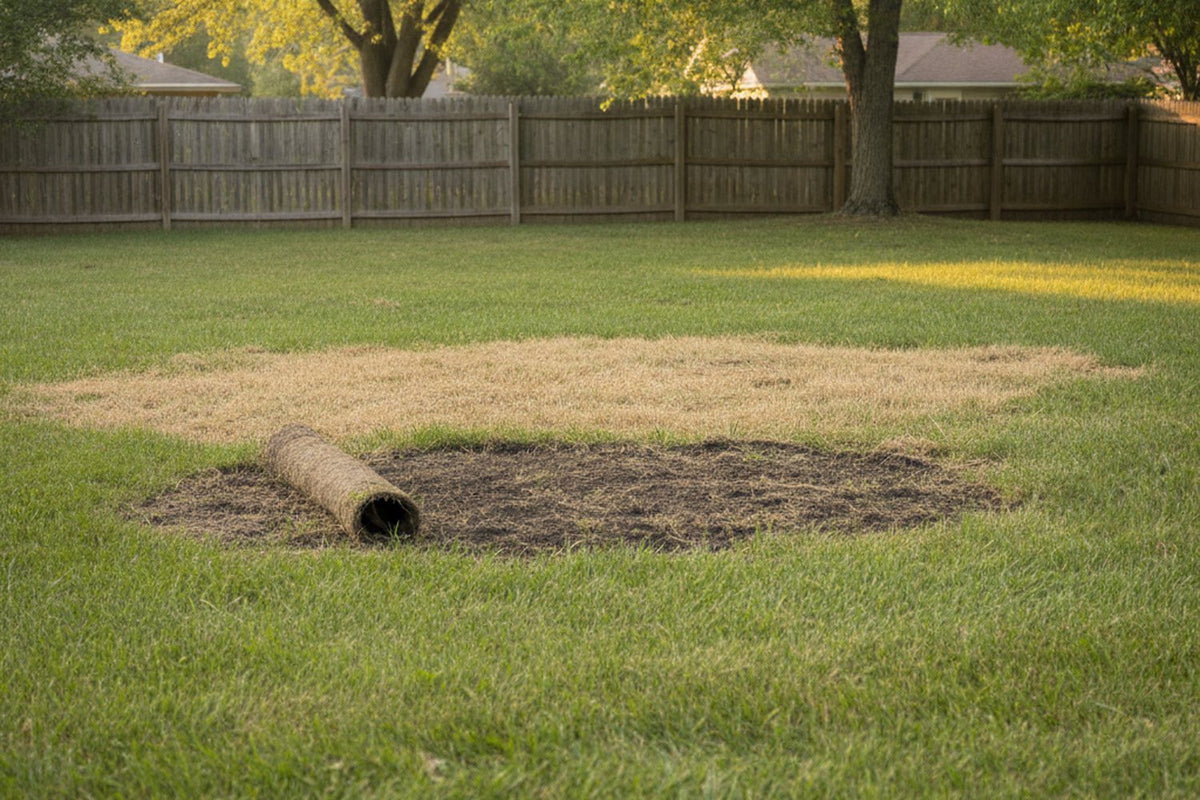
Dig before you buy. UW-Madison says most Wisconsin lawns are home to a few white grubs and, while their numbers stay low and the lawn is properly cared for, show no noticeable damage. When grubs are abundant, it describes irregular brownish patches of turf that, if damage is severe, can be rolled back like a carpet, plus more damage from skunks, raccoons, turkeys and crows digging for the grubs. White grubs have pale, C-shaped bodies, brownish-orange heads and three pairs of legs, by UW's description. To count them, University of Tennessee Extension gives this method:
- Pick your time: mid-July to early August, or in spring after the soil warms and the grubs are near the surface.
- With a spade, cut three sides of a 1 foot square, 2 or 3 inches deep, force the spade under the sod and lay it back on the uncut side.
- Loosen the soil on the roots with a trowel, count the grubs, and replace the sod.
- Do the same in several other parts of the lawn, then divide the grubs you counted by the number of squares: that is your grubs per square foot.
How many is too many depends on the grub. These are the extension figures:
| Grub | Treat at about, per sq ft | Whose figure |
|---|---|---|
| May or June beetle (a large grub) | 3 to 4 | University of Maine |
| European chafer | 5 to 8 | University of Maine |
| Oriental beetle | 8 | University of Maine, from NC State |
| Japanese beetle | 8 to 10 | University of Maine, from Michigan State |
| Annual white grubs (Japanese, Oriental, European chafer, Asiatic garden) | 5 to 10 | University of Tennessee |
| Masked chafer | 15 to 20 | University of Tennessee |
| Asiatic garden beetle | 18 to 20 | University of Maine |
Maine's extension says May and June beetle grubs grow large, so fewer of them do the same feeding damage, and that grass stressed by weather, too wet or too dry, shows significant damage at lower grub numbers; Tennessee's figures assume adequate growing conditions and no digging animals. Found no grubs but a torn-up lawn? Tennessee notes that moles, skunks and birds feed on grubs and may tear up the sod searching for them, and our mole and vole repellent guide covers moles.
Preventive or curative: when grub killer goes down
Before the grubs feed, for a preventive; while they feed, for a curative. UW-Madison says preventive insecticides give long-lasting protection, work best on small grubs and less well on older, larger ones, and should go down around the time of, or just before, egg-laying by the adult beetles. Curatives work for a short period and are used when grubs are present and damage is noted, often August to October. For either kind, UW says to apply about half an inch of water afterward to wash the insecticide into the root zone where the grubs are, and that watering in is needed for good control. Its timing for Wisconsin, by grub:
| Grub | Preventive | Curative |
|---|---|---|
| Japanese beetle | June to July | August to October |
| May or June beetle | May to early June | July to September |
| European chafer | Late May to mid-July | August to October |
| Northern masked chafer | June to July | August to October |
UW adds that curative treatments are most effective against smaller grubs toward the beginning of the window. Its table of grub insecticides lists carbaryl and trichlorfon as curative only, and clothianidin and thiamethoxam as preventive plus curative; Maine's extension says carbaryl is not consistently effective and, in its Maine guidance, that trichlorfon has to be applied by a licensed professional and kills, at best, 50 percent of the mature grubs. All three of our picks go down ahead of the grubs, by their labels: GrubEx1 in spring to early summer, the Grub Beater before the target grubs hatch, and Complete just before egg hatch, May through July. Maine's extension adds that chlorantraniliprole, GrubEx1's active ingredient, needs ample time to become incorporated into the roots, so it fits a lawn treated before damage shows: once the grass is dying or browning with grubs already feeding, it says, it is too late to use chlorantraniliprole and expect any control or improvement. Japanese beetle grubs, it adds, do most of their feeding in the fall and very little in spring. Your own dates depend on where you live: the Complete label says to contact your county extension agent for the ideal dates in your area.
Reading this between late fall and early spring? Plan for spring: UW's preventive windows run from May to July, and Tennessee notes that in winter the grubs go deeper into the soil.
How much grub killer does your lawn need?
About one bag per 5,000 square feet, by each label's grub rate. The table works it out: square feet per bag = bag weight in pounds / label rate in pounds per 1,000 square feet x 1,000, and bags for a lawn = lawn square feet x rate / 1,000 / bag weight, rounded up; where a label gives a range of rates, the table gives both ends. A 1,000 square foot patch is 20 by 50 feet, as the Complete label puts it. Not stated means the label we read gives no count.
| Grub killer | Square feet per bag | Bags for 5,000 sq ft | Bags for 10,000 sq ft | Bag (source) | Grub rate per 1,000 sq ft (source) | Applications a year |
|---|---|---|---|---|---|---|
| Scotts GrubEx1, 14.35 lb (pick 1) | 5,000 | 1 | 2 | 14.35 lb (label) | 2.87 lb (label) | 1 (label) |
| Bonide Annual Grub Beater (pick 2) | 3,333 to 5,000 | 1 to 2 | 2 to 3 | 6 lb (listing) | 1.2 to 1.8 lb (label) | 1 (label) |
| BioAdvanced Complete (pick 3) | 3,333 to 5,000 | 1 to 2 | 2 to 3 | 10 lb (label) | 2 to 3 lb (label) | not stated |
| Scotts GrubEx1, 28.7 lb (Also considered) | 10,000 | 1 | 1 | 28.7 lb (listing) | 2.87 lb (label) | 1 (label) |
What it shows: each pick's bag covers up to 5,000 square feet for grubs, the Grub Beater and Complete only at the low end of their rates. The Complete label says to use its top rate, 3 pounds per 1,000 square feet, if pest pressure is high, and its front panel's 10,000 square feet is the figure for ants, fleas and ticks; for grubs it covers up to 5,000. All three labels name drop or rotary spreaders, and our fertilizer spreader guide compares the two kinds.
Watering in, pets and repeat use, label by label
The labels differ most on pets and on how often. The four New York counties in the last row are Nassau, Suffolk, Kings and Queens.
| On the label | 1. GrubEx1 | 2. Grub Beater | 3. Complete |
|---|---|---|---|
| Water in | About 1 inch, to activate | Rain or irrigation within 24 hours | Thoroughly, within a day |
| People and pets | Back on once the grass has dried | No re-entry line on the label we read | Away until watered in and dry |
| How often | Once a year | Once a year; at most 80 lb per acre a year | At most 0.4 lb imidacloprid per acre a year |
| Water and wildlife | Toxic to aquatic invertebrates, oysters and shrimp | Highly toxic to aquatic invertebrates | Toxic to fish; not near ponds, streams or lakes |
| New York | Not in the four counties; 100 ft from water statewide | Not in the four counties | Not in the four counties |
Grub killer or lawn insect killer?
Look past the name to the active ingredient. Plenty of bags sold as lawn insect killers list grubs somewhere, and UW-Madison's table of insecticides for white grubs names carbaryl and trichlorfon as curatives; chlorantraniliprole, cyantraniliprole, dinotefuran and imidacloprid as preventives; and clothianidin and thiamethoxam as both. Before you buy any other lawn insect product for grubs, find its active ingredient on the label and check it against that list. Of the three picks, Complete (pick 3) is the one sold for lawn insects and grubs alike: its label calls it a 2-way formula that contains both a contact and a systemic insecticide, and of its two active ingredients, imidacloprid is the one on UW's grub list. GrubEx1's bag also lists caterpillars, including armyworms, cutworms and sod webworms. For fire ants, our fire ant killer guide compares baits and mound treatments.
Bees, water and state rules
Neonicotinoids are the bee question, and granules are the usual answer. UW-Madison says neonicotinoid insecticides used for grub control can pose risks to bees and other pollinators, and UW-Extension's pollinator guide says neonics are mainly used in lawns for preventive management of white grubs and lists Complete Brand Insect Killer for Soil and Turf (pick 3) among its imidacloprid trade names. Its advice: if blooming weeds such as white clover and dandelion are abundant, consider an herbicide to control them before you apply an insecticide; if you cannot control them, granular or pelleted products go directly into the soil following irrigation, leaving no residues in the flowers; and mowing right before spraying a liquid insecticide should remove more than 90 percent of the flowers. All three picks are granules. The same guide suggests turf managers consider Acelepryn, an anthranilic diamide it says has been shown to have no adverse effects on pollinators that ingest it; Maine's extension names Acelepryn and GrubEx1 as chlorantraniliprole products, but that finding is about Acelepryn, and the GrubEx1 bag label we read makes no pollinator statement.
Water is the line every label draws. GrubEx1's label calls it toxic to aquatic invertebrates, oysters and shrimp and, in New York State, says not to apply it within 100 feet of a water body such as a lake, pond, river, stream or wetland; the Grub Beater's label calls it highly toxic to aquatic invertebrates; and the Complete label calls it toxic to fish and says not to apply it near fish pools, ponds, streams or lakes. GrubEx1's label adds that applying in calm weather when no rain is predicted for 24 hours, and sweeping any product that lands on a driveway, sidewalk or street back onto the lawn, help keep it out of water bodies and drains. GrubEx1's and the Grub Beater's labels also carry a groundwater advisory: using them where soils are permeable, particularly where the water table is shallow, may result in groundwater contamination.
State law can go further than a label. Maine's 2021 rule, as University of Maine Extension describes it, prohibits dinotefuran, clothianidin, imidacloprid and thiamethoxam for use by all persons in outdoor residential landscapes such as lawns, which rules out picks 2 and 3 there. It has a few exemptions; the one Maine's extension names is for licensed treatment of emerging invasive pests on ornamental plants, and it says none of those pests is a white grub. All three labels say the product is not to be sold or used in the four New York counties. Check your own state's pesticide rules as well as the bag.
Milky spore and beneficial nematodes
UW-Madison lists three biological options for grubs: milky spore (Paenibacillus popilliae), the nematode Heterorhabditis bacteriophora (sold as Nemaseek) and Bacillus thuringiensis galleriae (sold as grubGONE! G). It says they often provide limited and highly variable control compared to chemical insecticides, and that milky spore has not been found to be effective for white grub control in recent university research. Maine's extension is warmer on nematodes: Hb nematodes applied in the last week of August are relatively effective compared to other available nematode varieties, though their effectiveness can be spotty, and it says Btg reportedly works well against all species of scarab grubs. Its simplest organic option is to let crows, skunks and raccoons dig up the grubs and replant the grass in late May, by which time most of the grubs will have pupated; our grass seed for overseeding guide covers filling the bare patches. None of these is a pick, because the extension services we read describe the results as limited, variable or spotty. Looking for the digging tool rather than the insect? Our grub hoe guide covers it.
The best grub killers, by job
2. Bonide Annual Grub Beater: best for a summer preventive
Best for: A preventive later in summer
An imidacloprid preventive labeled for spring through summer, by Bonide.
The Bonide Annual Grub Beater is the preventive with the longest labeled season: its bag says to apply once a year, anytime from spring through summer, and the listing gives late May through mid-August for best results. Its active ingredient is imidacloprid at 0.5 percent (EPA Reg. No. 53883-199-4). The label rate for grubs is 1.2 to 1.8 pounds per 1,000 square feet, applied before the target grubs hatch, with irrigation or rainfall within 24 hours to move it through the thatch, and the listing says the 6 pound bag covers up to 5,000 square feet. UW-Madison's timing puts preventive treatment for Japanese beetle and northern masked chafer grubs in June and July, inside that season. It is sold by Amazon. Good to know: imidacloprid is a neonicotinoid, which UW-Madison says can pose risks to bees and other pollinators (the bees section above covers granules), and Maine's rule bars it on residential lawns there; the label calls it highly toxic to aquatic invertebrates, says it is not to be sold or used in the four New York counties and says not to apply it to linden, basswood or other Tilia species, and the label we read has no line on when people and pets can go back on the lawn.
3. BioAdvanced Complete Insect Killer for Soil and Turf: best for grubs plus surface insects
Best for: Grubs plus ants, fleas, ticks
A two-way granule for grubs plus ants, fleas and ticks, by BioAdvanced.
The BioAdvanced Complete is the lawn insect killer of the three: its label pairs imidacloprid at 0.15 percent with beta-cyfluthrin at 0.05 percent (EPA Reg. No. 92564-13) and lists white grubs, chinch bugs, mole crickets and European crane fly larvae beside ants, fleas and ticks, including deer ticks. For white grubs it gives May through July, just before egg hatch, at 2 to 3 pounds per 1,000 square feet, and it says the granules kill listed soil insects for up to 3 months. Water thoroughly within a day after applying, the label says, and do not mow until the granules are thoroughly watered in. It is sold by Amazon. Good to know: the label says to keep people and pets away from the treated area until it has been watered and allowed to dry, not to apply it near fish pools, ponds, streams or lakes or during rain, and not to use it in vegetable gardens or on linden, basswood or other Tilia species; it calls the product toxic to fish, it is not to be sold or used in the four New York counties, and the neonicotinoid notes under pick 2 apply here too, Maine's rule included.
How we picked these grub killers
We compared each product's active ingredient, EPA registration number, grub rate, timing, watering, re-entry and repeat-use lines from its own label against the grub advice of University of Wisconsin-Madison Extension, University of Maine Cooperative Extension and University of Tennessee Extension, and worked out each bag's coverage at its label rate. For pick 1 we read the bag label Scotts links from its product page; for pick 2, Bonide's bag label; for pick 3, the BioAdvanced label in Washington State University's pesticide label database. Every rate, re-entry line and restriction on this page is the product label's, and every state rule is the extension service's, named where it appears; labels change, so check the bag you buy against the lines quoted here. Also considered names the other products we read and why each is not linked. We make digging spades, not lawn insecticides, so nothing on this page is ours. How our guides are made sets out the full process.
Also considered
Each was checked on November 24, 2026.
- Scotts GrubEx1, 28.7 pound bag. Sold by Amazon; the same product as pick 1 in a bag whose listing says it covers 10,000 square feet, which matches the label rate (the calculated table above). For a lawn that size it replaces two 14.35 pound bags.
- BioAdvanced 24 Hour Grub Killer Plus. A trichlorfon curative (9.3 percent, EPA Reg. No. 92564-40) whose label says to apply when grubs, insects or damage first appear. The 20 pound bag we read was in short supply from a third-party seller, and the 10 pound bag was out of stock, so we do not link it for now.
- Hi-Yield Grub Free Zone III. Imidacloprid at 0.5 percent, like pick 2; the bags we read were sold by third-party sellers, not by Amazon.
- Other BioAdvanced grub bags and Sevin insect killer granules. Sold by Amazon, but their labels were not among those we read, and this page quotes only labels we read.
- St. Gabriel milky spore. Sold by Amazon; not a pick, for the reason in the milky spore section.
Frequently asked questions
What is the best grub killer?
For most lawns, the Scotts GrubEx1 Season Long Grub Killer, a chlorantraniliprole preventive you spread once a year in spring or early summer and water in; its 14.35 pound bag treats 5,000 square feet. Otherwise, for a preventive later in summer, the Bonide Annual Grub Beater; for grubs plus ants, fleas and ticks, the BioAdvanced Complete Insect Killer for Soil and Turf. If grubs are already feeding, look for a curative active ingredient instead: UW-Madison lists carbaryl and trichlorfon.
When should you apply grub killer?
It depends on the kind. A preventive goes down around or just before the beetles lay eggs, which UW-Madison puts at May to July depending on the grub, and GrubEx1's bag says spring to early summer; Maine's extension says chlorantraniliprole should go down about three weeks before grubs feed. A curative goes down once grubs are present and damage is showing: UW gives July to October, depending on the grub.
Can you put down grub killer in the fall?
Only a curative, and early in the fall. UW-Madison gives August to October for curative treatment of Japanese beetle, European chafer and northern masked chafer grubs, and says curatives work best on smaller grubs early in that window. Later on, University of Tennessee Extension notes that grubs go deeper into the soil in winter. GrubEx1's bag gives one fall application, October to December, and it is for crane fly larvae.
How many grubs per square foot is too many?
It depends on the grub and the lawn. University of Maine Extension gives 3 to 4 per square foot for the large May and June beetle grubs, 8 to 10 for Japanese beetle and 18 to 20 for Asiatic garden beetle; University of Tennessee Extension gives 5 to 10 for annual white grubs in a lawn with adequate growing conditions and no digging animals. A stressed lawn shows damage at lower numbers, Maine's extension adds.
Do you have to water in grub killer?
Yes. Every label here calls for it: about an inch to activate GrubEx1, rain or irrigation within 24 hours for the Grub Beater, and thoroughly within a day for Complete. UW-Madison says about half an inch of water washes the insecticide into the root zone where the grubs are.
When can kids and pets go back on the lawn after grub killer?
Go by your label. GrubEx1's says people or pets may go back on once the grass has dried, and the Complete label says to keep people and pets away until the area has been watered and allowed to dry. The Grub Beater label we read has no line on it.
Disclosure: Some links pay us a commission when you click or buy, and on some pages brands pay us through Amazon's creator program on links to their products.
Product prices and availability are accurate as of the date/time indicated and are subject to change. Any price and availability information displayed on Amazon.com at the time of purchase will apply to the purchase of this product.