As an Amazon Associate we earn from qualifying purchases. Some brands also pay us when you click or buy, so those links are ads. Full disclosure below
The best fertilizer spreader for most lawns is a broadcast spreader whose side shield keeps product out of beds and off the driveway, with a hopper sized to how many refills you will tolerate. The six below are sorted by job and compared on their listed specs, from push and tow-behind broadcast spreaders to a handheld for small yards. For slopes and planting beds, use the chest-mount Solo 421.
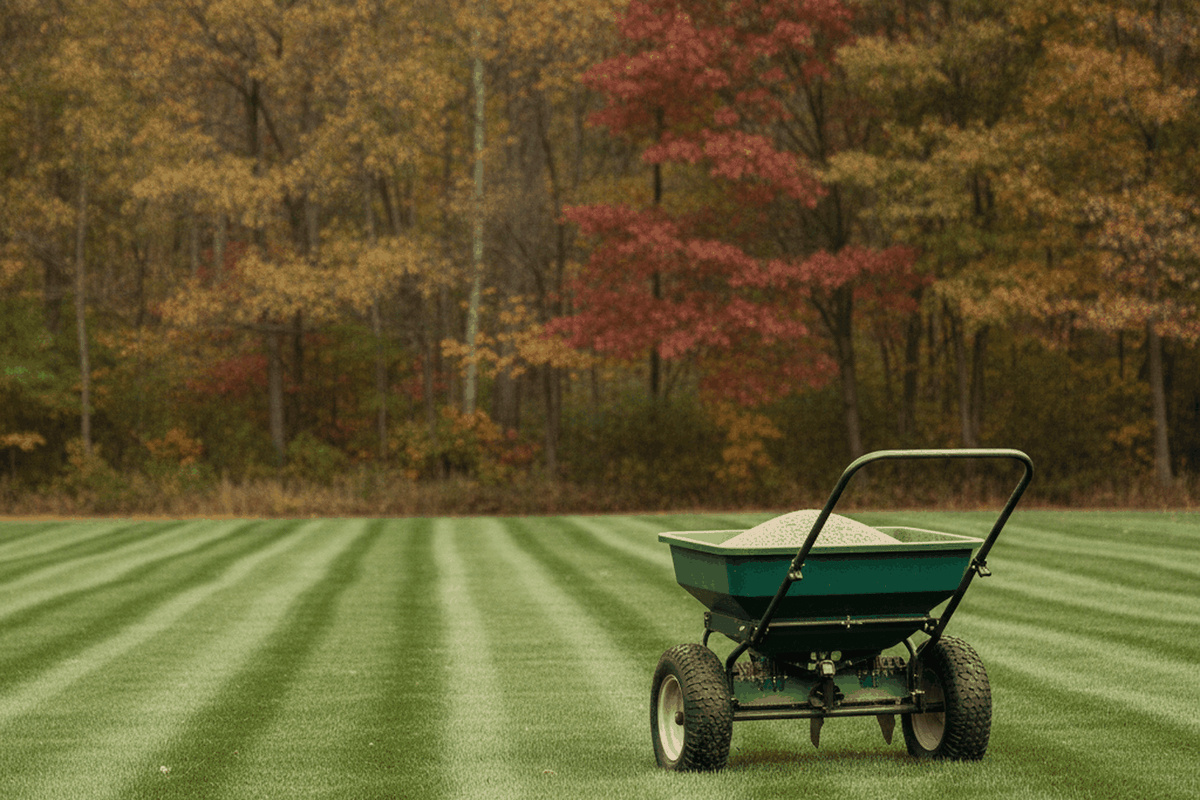
A broadcast spreader, also called a rotary spreader, drops granules onto a spinning plate that throws them in a fan several feet wide. A drop spreader lets product fall straight down between its wheels, in a band no wider than the hopper. That difference decides almost everything: the broadcast pattern covers ground three to four times faster, and because each pass overlaps the last, small errors in your pace blend away instead of showing up as stripes in October. This page is one stop on our fall yard cleanup tools checklist, which puts every fall job in order.
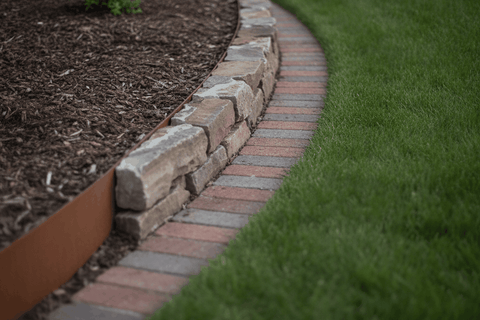
The drop spreader wins in one situation. Where the lawn ends at a pond, a vegetable bed, or a property line, it gives an edge you can steer to the inch, which a side shield approximates for far less walking.
One thing before the list: we make digging tools, not spreaders, so nothing here is ours. Each pick is judged on hopper capacity as the listing states it, edge control, and the lawn size it is sold for.
Fertilizer spreaders at a glance
| Spreader | Type | Holds | Suits | Where to buy |
|---|---|---|---|---|
| Scotts Turf Builder EdgeGuard Mini (not linked) | Broadcast, push | Up to 5,000 sq ft of Scotts product | Lawns that border beds and pavement | Out of stock on Amazon on October 19, 2026 |
| Scotts Turf Builder EdgeGuard DLX | Broadcast, push | Up to 15,000 sq ft of Scotts product | Larger lawns, fewer refills | Check price on Amazon |
| Agri-Fab Tow Behind Broadcast Spreader | Broadcast, tow behind | 85 lb, up to 14,000 sq ft per fill | Anyone with a riding mower | Check price on Amazon |
| Agri-Fab 50 lb Push Spreader | Broadcast, push | 50 lb hopper | Heavy use, season after season | Check price on Amazon |
| Scotts Whirl Hand-Powered Spreader | Handheld, crank | Up to 1,500 sq ft (Scotts product) | Spot repairs; lawns of 1,500 sq ft or less (Scotts' guide) | Check price on Amazon |
| Solo 421 Chest-Mount Spreader | Chest mount, crank | 20 lb hopper | Slopes and beds | Check price on Amazon |
What is the best fertilizer spreader?
For most lawns, a broadcast spreader with a side shield. Scotts' EdgeGuard shield blocks the right half of the pattern at the touch of a lever, which is what keeps fertilizer out of the flower bed and off the sidewalk, and a pre-calibrated hopper leaves only the setting number on your bag to decide. The EdgeGuard Mini was out of stock on Amazon on October 19, 2026, so it is not linked.
Two things change the answer. If a hopper that holds up to 5,000 square feet of Scotts product means three or four refills every feeding, the EdgeGuard DLX holds up to 15,000 square feet. If the ground is steep, planted, or unreachable on wheels, no push spreader helps, which is where the chest-mount Solo earns its place.
Broadcast vs drop spreader: which do you need?
Four designs, four jobs. The best lawn spreader and the best fertilizer spreader are the same machine, so the type is the real decision, and most gardeners end up owning two, a wheeled spreader and a small one.
| Type | How it spreads | Best for | The trade off |
|---|---|---|---|
| Broadcast, push | Spinning plate throws a wide fan | Nearly every home lawn | Product travels, so you need a side shield near beds |
| Drop | Falls straight down between the wheels | Tight borders, ponds, property lines | Narrow band, many passes, stripes if you miss a line |
| Handheld or chest mount | Hand crank spins a small plate | Slopes, beds, spot repairs, small yards | Pattern depends on your crank speed and your pace |
| Tow behind | Ground driven plate behind a tractor | Large properties with a riding mower | Wide turning circle, so tight corners need a smaller spreader |
None of the six picks below is a drop spreader, and that is deliberate. The wheeled drop spreaders listed on Amazon right now are mostly house brands, so rather than name one, here is what to shop for: a spread width that matches the border you are working to, a gate you can close from the handle, and enclosed gears. Browse the drop spreaders if your lawn is the one that needs the exact edge. Everyone else gets the same result from a shielded broadcast spreader with less walking.
What size spreader does your lawn need?
Hopper size is about how many refills you will tolerate.
- About 1,500 square feet or less, or all beds. A handheld or chest-mount spreader that stores in a bucket.
- A typical suburban lawn. A hopper of up to 5,000 square feet per fill, like the EdgeGuard Mini's (out of stock on Amazon on October 19, 2026), covers most in one or two loads.
- A big lawn fed twice each fall. The EdgeGuard DLX, or the 50 pound Agri-Fab push spreader.
- A quarter acre and up, with a tractor. The 85 pound Agri-Fab tow behind.
Scotts' own guide to choosing a spreader draws the lines by lawn size and layout: a broadcast spreader for medium to large lawns without many tight turns or obstacles, a drop spreader for yards broken up by beds, narrow strips and tight turns, and a handheld for lawns of about 1,500 square feet or less. For a yard with both, it pairs a broadcast spreader on the open lawn with a drop spreader along the edges. Virginia Cooperative Extension's publication Calibrating Your Lawn Spreader makes the same split: the drop type for limited spaces, where a wide throw would land on sidewalks and driveways, and the broadcast type for large areas.
The four jobs one spreader does in a year
A spreader earns its shelf space well past the fall feeding, worth remembering when you decide how much to spend. Aerate before you spread in fall, and our best lawn aerators guide picks the machine for that.
- Fall fertilizer, twice. The early feeding and the late winterizer pay off most, and our guide to the best fall lawn fertilizer covers which bag goes down when. The same weekend the winterizer goes down is a good one to winterize the beds as well.
- Grass seed in early fall. Overseeding is the other September job, and for the shady patches our best grass seed for shade guide picks the seed by hours of sun. Rake or dethatch first so seed reaches soil, and aerate the lawn if water beads on the surface instead of soaking in.
- Cover crop seed. Cereal rye, crimson clover, and vetch all broadcast easily, and a hand spreader beats flinging seed by the fistful. See our guide to cover crops for home gardens.
- Mole repellent granules. Castor oil mole granules are broadcast products meant to cover the whole affected zone rather than just the ridges, which is spreader work; water them in afterward. Our guide to the best mole repellent covers which bag, and how to tell a mole from a vole before you buy.
- Ice melt in winter. The three Scotts models and the Solo list ice melt as an approved material. Rinse and dry the hopper the same day, or use a dedicated salt spreader like the Chapin SaltPro 80 lb.
How to spread evenly without stripes or burn
The spreader is rarely the reason a lawn comes out striped. Technique is.
- Halve the rate, double the passes. Set the gate before you load the hopper, to half the number printed on the bag, and make two passes at right angles. The overlap covers what one heavy pass misses. If the bag is long gone, Scotts publishes a settings lookup by spreader model.
- Spread a header strip first. Walk one pass around the perimeter, then work back and forth inside it, so every turn happens on ground already covered.
- Close the gate before every turn and stop. Product piles up wherever the plate slows down, and that pile is what burns.
- Walk at one steady pace. Spreaders are calibrated to a normal walking speed. Slow down and you double the rate without touching the setting.
- Check a setting you distrust. Run the spreader over a tarp for a measured distance, sweep up what landed, and weigh it against what the bag says that much ground should get. It is the only way to know a used spreader is still spreading what its dial claims.
- Rinse and dry it every time. Fertilizer and salt are corrosive, and a hopper put away wet is how spreaders die.
For how much to put down, the standard target is about one pound of actual nitrogen per thousand square feet per feeding, and the University of Minnesota Extension lawn fertilizing guide turns that into pounds of product.
Fertilizer and seed spreaders, by job
These six cover the standard lawn, the big lawn, the tractor, rough ground, the spot repair, and the slope.
1. Scotts Turf Builder EdgeGuard Mini: shielded broadcast for typical lawns
The Scotts Turf Builder EdgeGuard Mini is a shielded broadcast spreader sized for a typical lawn. It ships assembled and pre-calibrated, so the only decision is the setting number on your bag, and the fold-down handle hangs flat in a garage. The hopper holds up to 5,000 square feet of Scotts lawn products, and the listing rates it for lawn food, grass seed, salt, and ice melt, so it works year round. The feature that matters is EdgeGuard, a shield that blocks the right side of the pattern so nothing lands in the beds or on the driveway. Where it fits: lawns its 5,000 square foot fill covers in one or two loads; with another brand's bag, use the setting printed on that bag.
When we checked on October 19, 2026, the Mini was out of stock on Amazon, and so were the other Mini listings we found there, so we do not link it for now. Pick 2, the EdgeGuard DLX, is the same pre-calibrated, shielded design with a hopper that holds up to 15,000 square feet of Scotts product.
2. Scotts Turf Builder EdgeGuard DLX: for larger lawns
The EdgeGuard DLX is the same idea with three times the coverage per fill: up to 15,000 square feet of Scotts product, pre-calibrated, the same side shield, the same rating for seed, fertilizer, salt, and ice melt. On a lawn where the Mini means four trips back to the bag, the DLX is one fill and one continuous set of passes, which is more even as well as faster, since every restart is a chance to lay a stripe. Scotts also sells the Elite, a dual rotor spreader rated to 20,000 square feet, but it has been unavailable on Amazon at every check, so it is not linked here. Where it fits: lawns large enough that a smaller hopper would mean several refills per feeding; for patches and small yards of about 1,500 square feet or less, the handheld at pick 5 suits better.
3. Agri-Fab 85 lb Tow Behind: if you already own a riding mower
The Agri-Fab tow behind hooks to a riding mower and turns fertilizing into another mowing lap. The 85 pound poly hopper covers up to 14,000 square feet, roughly a quarter acre, per fill, and the listing rates a spread width of up to 10 feet depending on material and speed. Cable flow control runs to the seat, so you open and close the gate without getting off, and 10 inch pneumatic tires roll over uneven lawn without bouncing product out. The gearbox is enclosed, and the listing says Agri-Fab builds it in Sullivan, Illinois, with global materials. Where it fits: open lawns you already mow with a riding mower or lawn tractor, while tight corners and narrow side yards are push or handheld work; the listing names the hopper cover, deflector and grate as optional accessories.
4. Agri-Fab 50 lb Push Spreader: heavy-duty walk behind
The Agri-Fab push spreader is built for durability more than edge control. The 50 pound hopper is rustproof poly and holds one fill for most lawns, the gearbox is enclosed and runs on bevel gears, and the 10 inch tire is flat free, so it never goes soft over a winter in the shed and does not skip out of a rut. Cable flow control works the gate from the handle, and assembly needs no tools. Where it fits: open lawns fed through the season. The listing describes a built-in side deflector for directing the spread and a fold-up kickstand for hanging it on a wall, and since it is not matched to one brand's bags, set the gate from the number your bag lists. If you want more hopper than this, EarthWay's 80 pound 2050P rides on pneumatic tires.
5. Scotts Whirl Hand-Powered Spreader: handheld for lawns of 1,500 sq ft or less
The Scotts Whirl is a hand spreader you crank, and it is right for the jobs a wheeled spreader is clumsy at: reseeding the strip by the mailbox, patching a thin spot, or feeding a narrow side yard. Its listing gives a capacity of up to 1,500 square feet of Scotts lawn products and rates it for grass seed, lawn fertilizer, salt and ice melt, so it works in every season, with an adjustable arm support for comfort. Scotts' own spreader guide places handheld spreaders on lawns of 1,500 square feet or less and in spaces too tight for a bigger spreader. It makes an easy second spreader alongside a wheeled one. Where it fits: patches, small yards and cover crop beds; a whole lawn goes faster with a wheeled spreader.
6. Solo 421 Chest-Mount 20 lb: best for slopes and beds
The Solo 421 straps a 20 pound hopper to your chest on an adjustable cross-shoulder strap, which leaves both hands free and puts the weight where your legs carry it. That makes it the pick for ground wheels cannot handle: a steep bank, a planted slope, a wooded edge, a garden path. An adjustable flow control and a direction fan set how much comes out and where it goes, so you can throw to one side only when working along a bed. The materials are chemical resistant, and the listing rates it for seed, fertilizer, and ice melt. Where it fits: slopes, beds and edges; for a whole open lawn, a wheeled spreader carries the load instead.
Fertilizer spreaders compared on listed specs
Hopper capacity, coverage per fill and edge control are the specs that separate these spreaders, and the listings state them in different units. Scotts gives coverage in square feet of its own lawn products, the Agri-Fab push spreader and the Solo give hopper weight in pounds, and the Agri-Fab tow behind gives both. The table sets each pick's listing side by side in the listing's own terms.
| Spreader | Type | Listed capacity | Edge or flow control | Listed materials |
|---|---|---|---|---|
| 1. Scotts EdgeGuard Mini (not linked) | Broadcast, push | Up to 5,000 sq ft (Scotts product) | EdgeGuard side shield | Lawn food, grass seed, salt, ice melt |
| 2. Scotts EdgeGuard DLX | Broadcast, push | Up to 15,000 sq ft (Scotts product) | EdgeGuard side shield | Seed, fertilizer, salt, ice melt |
| 3. Agri-Fab tow behind | Broadcast, tow behind | 85 lb, up to 14,000 sq ft | Cable flow control at the seat; spread width up to 10 ft | Seed, fertilizer |
| 4. Agri-Fab 50 lb push | Broadcast, push | 50 lb | Built-in side deflector; cable flow control | Seed, fertilizer |
| 5. Scotts Whirl | Handheld, crank; Scotts' guide: lawns of 1,500 sq ft or less | Up to 1,500 sq ft (Scotts product) | Not stated in the listing | Grass seed, fertilizer, salt, ice melt |
| 6. Solo 421 | Chest mount, crank | 20 lb | Adjustable flow control and direction fan | Grass seed, fertilizer, ice melt |
Which spreader is best for grass seed?
The same spreader that feeds the lawn. Scotts' own spreader guide says one spreader handles seed and fertilizer alike and only the dial setting changes, with the seed setting printed on the seed's label. So the choice follows the ground being seeded rather than the seed:
- Overseeding a whole lawn. A wheeled broadcast spreader, such as picks 2 and 4; both listings name seed.
- Bare patches and thin spots. A hand spreader such as the Scotts Whirl at pick 5, which holds up to 1,500 square feet of Scotts product; Scotts' own guide sizes handhelds for lawns of 1,500 square feet or less.
- Slopes and planted banks. The chest-mount Solo 421 at pick 6, which lists grass seed among its materials and leaves both hands free.
- Seed up to a bed line. A drop spreader, the type Scotts' guide suggests for the edges of a yard that also has open lawn.
- A quarter acre or more, with a riding mower. The Agri-Fab tow behind at pick 3, which lists seed and fertilizer for its 85 pound hopper.
How to set and calibrate a spreader
The setting comes from the bag. Scotts' spreader guide says every Scotts product label lists the dial setting for each Scotts spreader, and Agri-Fab's owner's manual for its 85 pound tow spreader opens the same way, by checking the material package for the setting and the application rate. Treat that number as the starting point: Virginia Cooperative Extension's publication Calibrating Your Lawn Spreader calls the printed settings approximate at best and recommends calibrating before the first use.
- Work out how much product the lawn needs. The extension formula is the pounds of nitrogen wanted per 1,000 square feet, times 100, divided by the nitrogen percentage on the bag. A pound of nitrogen from a 29-4-8 fertilizer comes to about 3.4 pounds of product per 1,000 square feet.
- Close the gate, then fill on pavement. Agri-Fab's manual moves the control lever to off before filling, on a flat walk or driveway, and Scotts' guide sets the dial before the hopper is loaded and sweeps up anything spilled.
- Check a drop spreader over 100 square feet. The extension method fixes a trough of heavy cardboard or gutter under the spreader, pushes it over 100 square feet at the suggested setting, and multiplies the weight caught by 10 to get the rate per 1,000 square feet.
- Check a broadcast spreader on a measured strip. Weigh out enough product for 200 square feet, measure how wide the spreader actually throws, mark a strip that wide and long enough to total 200 square feet (10 feet by 20 feet for a 10 foot throw), and spread it. Product left in the hopper means the setting is too low, and running out early means it is too high. Write down the number that works.
- Calibrate on the lawn, not the driveway. The extension publication points out that fertilizer thrown onto pavement washes into storm drains and creeks.
- Hold the pace you calibrated at. Agri-Fab's manual caps towing speed at 3 miles per hour, and Scotts' guide aims for about the same pace on foot.
How to choose a spreader
- Start with edge control. If your lawn touches beds, a driveway, or water, buy a shield you can switch on, or accept the extra passes a drop spreader takes.
- Size the hopper to your patience. Count the refills a feeding would take and buy one size up from annoying.
- Match the terrain, not the acreage. Slopes and beds want a chest mount, rutted ground wants big pneumatic tires, open turf wants wheels.
- Check that it takes salt. A spreader rated for ice melt does four jobs a year instead of two.
- Look for enclosed gears. That is the part that decides whether the spreader survives its fifth season.
- Buy a hand spreader if you only seed. The Scotts Whirl hand spreader holds up to 1,500 square feet of Scotts product, plenty for a small yard or a cover crop bed, and Scotts' own guide sizes handhelds for lawns of 1,500 square feet or less.
One job a spreader cannot do is prepare the ground it feeds. Bare patches need the dead sod stripped and the soil opened before seed goes down, and a sharp spade does both faster than a rake. Our D-handle garden spade cuts sod cleanly and slices the bed edge that tells you where to close the hopper, and the technique is in our bed edging guide.
Frequently asked questions
What is the difference between a broadcast spreader and a drop spreader?
A broadcast spreader throws granules in a fan several feet wide from a spinning plate, so it covers ground three to four times faster and its overlapping passes hide small errors in your pace. A drop spreader releases product straight down between its wheels, in a band no wider than the hopper, which gives an exact edge beside beds and property lines but leaves stripes wherever you miss a line.
What size fertilizer spreader do I need?
Match the hopper to how many refills you will tolerate. A spreader holding up to 5,000 square feet of product, like the Scotts EdgeGuard Mini (out of stock on Amazon on October 19, 2026), covers a typical suburban lawn in one or two fills. Bigger lawns are easier with the EdgeGuard DLX, which holds up to 15,000 square feet, and a quarter acre or more goes fastest behind a riding mower.
Can you use a fertilizer spreader for grass seed?
Yes. Every spreader in this guide is rated for seed as well as fertilizer, and fall overseeding is the most common reason homeowners buy one. Seed is lighter and finer than fertilizer granules, so use the setting the seed bag lists, spread half the seed in one direction and half at right angles, and open the gate wider only if seed is left in the hopper.
Can you use a fertilizer spreader for ice melt?
Most broadcast spreaders will spread salt, and both Scotts EdgeGuard models and the Solo 421 list ice melt among their approved materials. The catch is corrosion. Rinse and dry the hopper and the gate the same day you use it, or buy a dedicated salt spreader with a rust resistant hopper and enclosed gears, such as the Chapin SaltPro.
How do you keep a spreader from burning stripes into the lawn?
Stripes come from too much product in one pass, so set the gate to half the printed rate and make two passes at right angles. Keep a steady walking pace, close the gate before every turn and stop, and sweep granules off the pavement back onto the grass. Water the lawn afterward so the product moves off the blades and into the soil.
Which spreader works for a large lawn or an acre?
A tow behind, if you own a riding mower or lawn tractor. An acre is 43,560 square feet, and the Agri-Fab tow behind at pick 3 lists up to 14,000 square feet per fill, so an acre takes a little over three fills at the listed coverage. On foot, the EdgeGuard DLX lists up to 15,000 square feet of Scotts product per fill, just under three fills for an acre. Agri-Fab's owner's manual for its tow spreader spaces passes about 5 feet apart so each pattern overlaps the last.
Should you use a drop or broadcast spreader for grass seed?
Either can spread seed. Scotts' spreader guide says the same spreader handles seed and fertilizer, with the seed's own label giving the dial setting. Choose by the ground instead: Scotts puts broadcast spreaders on medium to large open lawns and drop spreaders where beds, narrow strips and tight turns break the lawn up, and for a yard with both it pairs a broadcast spreader on the open lawn with a drop spreader along the edges.
What is the best handheld fertilizer spreader?
For patches and small lawns, the Scotts Whirl at pick 5. Its listing rates it for grass seed, fertilizer, salt and ice melt with a capacity of up to 1,500 square feet of Scotts product, which matches the 1,500 square feet or less that Scotts' spreader guide gives for handheld spreaders. For slopes and beds where you want both hands free, the chest-mount Solo 421 at pick 6 carries a 20 pound hopper on a cross-shoulder strap. As with any spreader, read the product label first: Scotts' guide notes that most weed and insect control products are not labeled for hand-powered spreaders.
How do you clean and store a fertilizer spreader?
Empty it after every use, pour the leftover product back into its own bag, then rinse the spreader with water and let it dry completely. Virginia Cooperative Extension warns that fertilizer salts left in the hopper are corrosive enough to ruin a spreader and suggests a light machine oil on the working parts against rust. Agri-Fab's owner's manual for its tow spreader gives the same routine: empty it, wash and dry it after each use, put a few drops of oil on the moving parts as needed, and store it in a clean, dry place.
Is a fertilizer spreader worth it?
For more than a few patches, yes. Virginia Cooperative Extension notes that too much fertilizer can harm the lawn and lead to runoff or leaching into water, and a spreader set from the bag's number and checked on a measured strip is how a home lawn gets the amount the label calls for. Every spreader on this page also lists seed, and four of the six list ice melt, so one spreader handles the fall feeding, overseeding and winter.
The bottom line
Match the spreader to the property: a lawn big enough to make refills tedious points to a larger broadcast hopper, a tractor to the Agri-Fab tow behind, hard use to the Agri-Fab push spreader, slopes and beds to the Solo, and patches or a small yard to a handheld like the Scotts Whirl, which Scotts' own guide sizes for lawns of 1,500 square feet or less. The EdgeGuard Mini was out of stock on Amazon on October 19, 2026, so it is not linked. Then use it at half the rate in two crossing passes, with the gate closed on every turn. Pair it with the right bag from our guide to the best fall lawn fertilizer, and browse our garden guides for the seeding and aeration work that goes with it.
Disclosure: Our commissions do not change what we recommend or what you pay.
Product prices and availability are accurate as of the date/time indicated and are subject to change. Any price and availability information displayed on Amazon.com at the time of purchase will apply to the purchase of this product.