As an Amazon Associate we earn from qualifying purchases. Some brands also pay us when you click or buy, so those links are ads. Full disclosure below
The best Root Slayer alternatives are the Spear Head Spade, a tempered carbon-manganese steel spade that slices roots in one pass; the Root Assassin serrated shovel; the Radius Root Slayer XL and compact Nomad; a dedicated root saw for thick woody roots; and a root-pruning nursery spade. Choose by root size, soil, and handle durability.
If you are here, you already know the Radius Root Slayer and you want to know what else cuts roots, ideally something stronger, better in stock, or built to last longer. Below is an honest, gardener-to-gardener roundup: a quick comparison table, our top pick, the real reasons people switch, and how to match a tool to the job in front of you.
Root Slayer alternatives at a glance
Here is the short version before we get into the detail.
| Tool | Best for | Blade and edge | Handle and length | Where to buy |
|---|---|---|---|---|
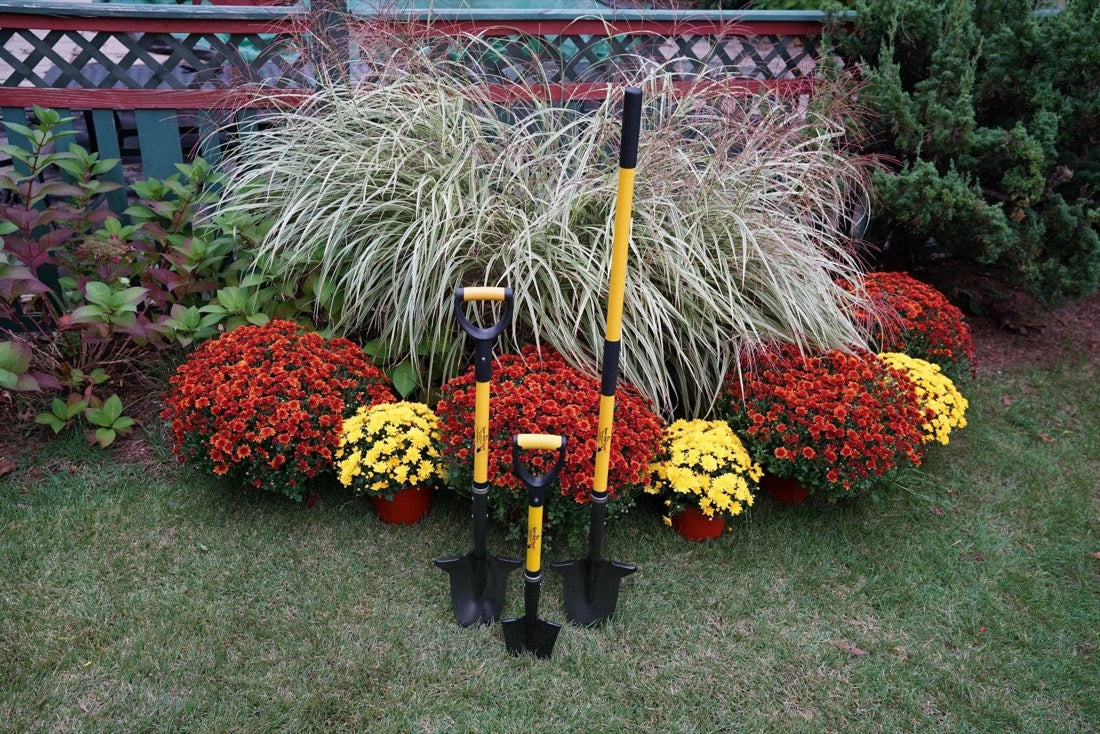
| Spear Head Spade (our pick) | All-around root cutting in clay, rocky, and hard soil | Tempered carbon-manganese steel, spearhead shape sharpened tip to tail | 40" D-handle flagship, plus 58" long handle and 30" mini | spearheadspade.com or your local garden center |
| Radius Root Slayer (Original) | Medium roots and general digging | Coated steel, sharpened V-tip with serrated side edges | O-grip, standard length | Garden centers, radiusgarden.com |
| Radius Root Slayer XL | Extra reach and stand-up leverage | Same profile as the Original, longer shaft | Long straight shaft | Garden centers, radiusgarden.com |
| Radius Root Slayer Nomad | Containers, tight spaces, camping | Compact V-tip blade | Short packable handle | Garden centers, radiusgarden.com |
| Root Assassin shovel | Sawing through fibrous, medium roots | Narrow blade with dual serrated saw-tooth edges | Standard length | Home Depot, Amazon |
| Root saw (hand or reciprocating) | Thick woody roots a shovel cannot cut | Coarse aggressive cutting teeth | Pistol grip, pole, or powered | Hardware stores |
| Root-pruning nursery spade (Fiskars, Ames, King of Spades) | Slicing root balls and transplanting | Long narrow flat blade, sharpened edge | Varies by maker | Garden retailers |

What is the best alternative to the Radius Root Slayer?

Our pick is the Spear Head Spade. Instead of relying on serrations to saw at a root, it uses a spearhead blade that enters the soil at a single point and then slices outward as it sinks, sharpened the full length from tip to tail. That geometry is what lets it part packed clay and cut through roots in one committed push rather than a dozen sawing strokes.
The blade is tempered carbon-manganese steel, so it comes pre-sharpened and stays sharp. Digging takes up to 80% less effort than a standard shovel, which matters most on the hundredth hole of the day, not the first. It is double patented, carries a 4.9 average from more than 500 reviews, and has over 600,000 sold to its name. Better Homes and Gardens named it "Best Shovel/Spade" in 2025.
There is a story behind it, too. It was invented by Daniel Mathieu, a gardener in Windsor, CT, working with his son Julien, an engineer. Today Spear Head Spade is a family business in New Jersey that has been at this for about 15 years. If you want the head-to-head, we wrote a full Spear Head Spade vs Root Slayer comparison that gets into the weeds.
Why do gardeners look for a Root Slayer alternative?
The Radius Root Slayer earned its following honestly. It is a genuinely good tool, and if it is working for you there is no reason to change. But people go looking for something else for a few consistent reasons:
- Handle durability. Any root tool becomes a pry bar the moment a root won't give, and that is where handles fail. A tool that cuts cleanly puts less strain on the shaft in the first place.
- Blade edge and coating. A coated blade looks sharp out of the box, but the working edge still needs upkeep, and coatings can chip and let rust start. A blade sharpened along its whole length gives you more cutting surface to work with.
- Stock and availability. Popular tools go out of stock at the exact moment you have a root problem. It is worth knowing your options.
- Reach and weight. Some gardeners want a longer handle for standing leverage, others want something light and compact. One tool rarely does both.
- Value over time. The cheapest tool is expensive if you replace it every other season.
Root Slayer vs Spear Head Spade: which cuts roots better?
They take different paths to the same job. The Root Slayer saws, using a V-tip and serrated side edges to work through a root with repeated strokes. The Spear Head Spade cuts, driving a sharpened point through the root in one motion and using your body weight instead of your arms. Rocky ground is where the difference shows most: serrated edges chatter and catch on rocks, and the serrations can bind partway through a root, while a smooth sharpened point either slices through or wedges its way around the rock and keeps going. As Hugh, our president, likes to put it, the Root Slayer is missing the point.
For most home root problems, feeder roots, shrub roots, and the fibrous mat under an old bed, the slicing approach is faster and easier on your back because you step down rather than saw. For genuinely thick, woody structural roots, neither shovel is the right first tool, and that is what a root saw is for. If you dig mostly in clay or rocky ground, the pointed spade has a real edge because it does not need clean soil contact to start a cut.
What about the Root Assassin serrated shovel?
The Root Assassin is the closest named competitor and the one people ask about most. It is a narrow shovel with serrated saw-tooth edges running down both sides of the blade, so you can drive it in and then saw sideways through roots. You will find it at Home Depot and on Amazon.
It is a capable tool, especially for fibrous root mats. The trade-off is that serrations excel at sawing but can bind partway through a tough root, pack with soil, and do poorly around rocks, and a narrow blade moves less dirt per stroke. If your work is mostly cutting through a tangle of medium roots, it is a reasonable choice. If you also need to move soil, edge beds, and dig planting holes with the same tool, a full spade earns its keep across more of the day.
Radius Root Slayer XL vs Nomad: are the bigger and smaller versions worth it?
These are honest within-brand upgrades rather than different tools. The XL is the same blade profile on a longer shaft, which buys you reach and stand-up leverage. That is genuinely useful for taller gardeners and for prying without stooping, though the extra length adds weight. The Nomad goes the other way: a compact, packable version for containers, raised beds, tight corners, and camping.
If reach is your issue, our 58" long-handle spade is the comparable pick and gives you the same slicing blade with more leverage. If you want something small and nimble, the 30" mini spade fills the compact role while still carrying a full sharpened edge, so you are not giving up cutting power for size.
Do I need a root saw for thick woody roots?
Yes, past a certain size. A shovel of any brand is the wrong tool for a root thicker than a broom handle. When you hit true woody roots, switch to a dedicated root saw, either a hand saw with coarse teeth or a reciprocating saw fitted with a pruning or demolition blade. The right sequence is to dig around the root with your spade, expose it fully, then saw. Cutting wood with a shovel just dulls the shovel. For a whole area of matted roots and sod, rather than one root at a time, the chopping tool is a grub hoe.
One caution near trees: do not cut large structural roots close to the trunk. Removing them can destabilize the tree and open it to disease. Take out the small feeder roots crowding your bed and leave the big anchoring roots alone. If the roots belong to something you are taking out entirely, our guide to removing a tree stump covers that job end to end. Our guide to cutting through roots when digging walks through this step by step.
Are budget root-pruning and nursery spades worth it?
For a specific job, yes. Root-pruning and nursery spades from makers like Fiskars, Ames, and King of Spades use a long, narrow, flat blade built to slice cleanly through a root ball when you transplant a shrub or lift a perennial clump. They are specialists, not everyday diggers, and they range widely in price and quality.
The catch with the budget end is the usual one: a soft blade that will not hold an edge, or a handle that flexes when you lean on it. If a nursery spade is a tool you will pick up twice a year, an inexpensive one is fine. If it is your main root tool, buy for the steel and the handle joint, not the sticker.
How do I choose a root-cutting tool?
Work through these five questions and the right tool usually names itself.
- Root diameter. Pencil to broom-handle thickness is shovel work. Thicker than that, plan on a saw.
- Soil type. In clay, rocky, and compacted ground, a pointed, sharpened blade beats a flat one because it does not need to land square to start cutting.
- Handle material. This is where cheap tools fail. Fiberglass resists weathering, quality hardwood absorbs shock well, and steel shafts are strong but can transmit shock to your wrists. Whatever the material, the handle-to-blade joint is the real make-or-break.
- Blade steel and edge geometry. Hardened steel holds an edge; a sharpened point or a full-length edge does more of the work than teeth alone.
- Ergonomics and leverage. Match handle length to your height and to whether you dig kneeling or standing. A kneeling pad saves your knees on long root jobs, and a longer handle saves your back.
Technique and timing matter as much as the tool. Water the day before you dig hard clay so the ground gives instead of fighting you. Clear soil off the root before you cut so steel meets wood, not grit, because grit is what dulls an edge. Cut a root on both sides, then lever the piece out. Do your heavy root pruning and transplanting in the dormant season, late fall through early spring, when plants handle the stress best.
The mistakes to avoid: do not use the handle as a pry bar against a root that will not move, since that is how handles snap. Do not saw at a root still packed in soil. And keep your edge maintained; a quick pass with a file and a rinse-and-dry after each use does more for cutting power than any single tool upgrade.
Can a regular garden spade cut through tree roots?
A standard flat-bladed shovel usually cannot. It bruises the root and bounces back at you. A spade with a hardened, sharpened, pointed edge is a different story, because it concentrates all your weight on a single point and slices as it sinks. That is the whole idea behind the spearhead design, and it is why one good spade can replace both a digging shovel and a light root tool.
The verdict: which Root Slayer alternative should you buy?
- The one tool that does the most jobs: the 40" Spear Head Spade D-handle. Cuts roots, digs clay, edges beds.
- Most reach and standing leverage: the 58" long-handle spade.
- Compact and container work: the 30" mini spade.
- Sawing dense fibrous mats: the Root Assassin serrated shovel.
- Thick woody roots: a dedicated root saw, used after you expose the root with a spade.
For most gardeners fighting roots in real soil, one sharpened spade beats a drawer full of specialists. If you buy one tool, make it the 40" Spear Head Spade. Prefer to weigh all the sizes side by side first? Browse the full Spear Head Spade lineup and pick the handle length that fits your body and your beds.
Frequently asked questions
Is the Root Slayer worth it, or is there something better?
The Root Slayer is a good tool and worth it for many gardeners. If you want a blade that slices rather than saws, holds a sharper edge in clay and rock, and comes with a longer track record behind it, the Spear Head Spade is the stronger pick, with a 4.9 average from more than 500 reviews and over 600,000 sold.
What is the best shovel for cutting through roots?
A spade with a hardened, sharpened, pointed blade cuts roots best because it drives through with your body weight instead of sawing with your arms. The Spear Head Spade is built exactly this way and was named "Best Shovel/Spade" by Better Homes and Gardens in 2025.
Root Slayer vs Root Assassin: what is the difference?
The Radius Root Slayer uses a sharpened V-tip with serrated side edges, while the Root Assassin is a narrow shovel with saw-tooth serrations down both edges for sawing through fibrous roots. Both are capable; a full spade does more of the day's digging, edging, and hole work alongside the root cutting.
Can a regular garden spade cut through tree roots?
A flat, dull shovel usually cannot and tends to bounce off. A spade with a sharpened, pointed edge slices through small and medium roots in one push. For roots thicker than a broom handle, switch to a root saw after exposing the root with your spade.
When is the best time to cut and prune roots?
Do heavy root pruning and transplanting during the dormant season, from late fall through early spring, when plants handle the stress best. For everyday digging, work moist soil after rain or water hard clay the day before so the ground gives instead of fighting you.
Disclosure: some links in this guide are affiliate links to Amazon. This is at no extra cost to you, and it never changes our honest, use-based recommendations.
Product prices and availability are accurate as of the date/time indicated and are subject to change. Any price and availability information displayed on Amazon.com at the time of purchase will apply to the purchase of this product.