As an Amazon Associate we earn from qualifying purchases. Some brands also pay us when you click or buy, so those links are ads. Full disclosure below
A garden hoe is a long-handled tool with a shaped metal blade used to cut weeds, loosen topsoil, and carve planting furrows. The main types of garden hoes differ by stroke: you pull a draw hoe, push a Dutch hoe, sweep a stirrup hoe, and chop with a grub hoe. Most gardeners need three: a draw hoe for everyday bed work, a stirrup hoe for clearing large beds fast, and a Dutch hoe for slicing weeds down open rows.
Our pick in each family: the Spear Head Hoe, the draw hoe we make; the Flexrake Hula-Ho stirrup hoe; and the DeWit Dutch push hoe. All three are in the Tools for this job list further down.
Two companion guides go deeper: our ranked best garden hoes for weeding, and the hula hoe (stirrup hoe) guide for the hula and scuffle family.
Choose the right hoe and weeding becomes a ten-minute standing job instead of an afternoon on your knees. This is the most complete garden hoe guide we could build: every named type worth knowing, grouped by how you move it, with a comparison table, a how-to, and honest job-by-job advice. If you just want the short answer, most gardeners choose between three hoes, and we call those out below. Start with a draw hoe: it covers the widest range of jobs on its own, and the stirrup and Dutch hoes earn their place in large, loose beds and long open rows.
What is a garden hoe used for?
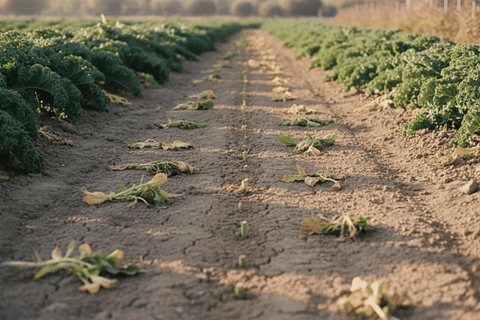
A garden hoe is one of the most versatile tools in the shed because a single blade handles several jobs. The five it does most often:
- Weeding: slicing or dragging young weeds off at the root line before they set seed.
- Cultivating: breaking up crusted topsoil so water, air, and nutrients reach plant roots.
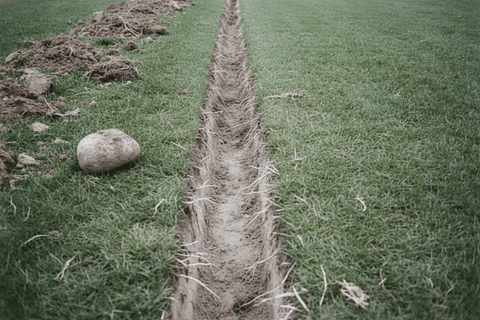
- Furrowing: drawing straight, shallow trenches for seeds, seed potatoes, or transplants.
- Hilling and mounding: pulling soil up around the base of crops like potatoes, leeks, and beans.
- Edging and leveling: tidying bed lines and knocking down clods before you plant.
The tool is deliberately simple, but which job it does best depends entirely on the blade shape and the direction you move it. That is why there is no single best garden hoe, only the right hoe for the job in front of you.

How do garden hoe movements differ (pull, push, chop, and sweep)?
Every hoe, whatever its name, is defined by one of four movements. Learn these and each named type below places itself:
- Pull (draw): the blade sits roughly perpendicular to the handle and you drag it back toward your feet. Draw and warren hoes work this way, giving the most control for weeding, furrowing, and hilling while you stand upright.
- Push: the blade angles forward and you push it away at the soil surface. The Dutch hoe is the classic pusher, ideal for slicing weeds as you back down an open row.
- Chop: you raise the hoe and bring it down. A draw hoe chops lightly to break clods; a heavy grub hoe chops harder in a mattock-style arc to dig and trench in compacted ground. Our grub hoe guide covers what it is for, how to swing it safely, and the three worth buying.
- Sweep (reciprocating): you work the blade back and forth in a shallow, skimming stroke. Stirrup and collinear hoes sweep just beneath the surface to sever weed roots with minimal soil disturbance.
Match the movement to the job and your body does far less work. Most gardeners want a pull-and-chop draw hoe for general beds, plus a stirrup hoe if they weed large open areas.

What are the main types of garden hoes?
There are dozens of named garden hoes, and most guides quietly cover only a handful. This one does not. Below is the full working set of genuinely distinct hoes, grouped by the four movements above. Nearly every other name you will see is a regional or brand synonym for one of these, and we map those at the end.
The three most common choices: a draw hoe for all-round bed work, a stirrup hoe for clearing open beds fast, and a Dutch hoe for slicing weeds down open rows. They are the first three rows of the comparison table below. Everything else covers a specific job, crop, or soil.
| Hoe | Working stroke | Best for | Soil and bed type | Skip it when |
|---|---|---|---|---|
| Draw hoe (paddle, field) (one of the three) | Pull toward you, chop lightly to break clods | All-round weeding, furrowing, hilling, and edging. The one hoe most gardens need, and the family the Spear Head Hoe belongs to | Mixed home beds, edges, and rows, in worked or crusted soil | You want to clear a large open bed in a single fast pass |
| Stirrup hoe (scuffle, hula) (one of the three) | Sweep back and forth, cutting on both the push and the pull | Fast surface weeding, slicing dozens of seedlings off at the root line in seconds | Large, loose, already cultivated beds and open ground | You need to furrow, hill, or dig, since the open loop does none of them |
| Dutch hoe (push hoe) (one of the three) | Push away from you, skimming just under the surface as you walk backward | Slicing weeds down open rows and along paths | Open rows, paths, and light soil that has already been worked | You are working close around plant stems, or you need to furrow or hill |
| Warren hoe (pointed) | Pull, with the point of the blade leading | Carving clean V furrows and weeding between closely spaced plants | Seed rows and tight plant spacing in beds you already cultivate | You are clearing broad areas, because the narrow head covers little ground per stroke |
| Collinear hoe | Shallow skimming draw, blade held nearly parallel to the soil | Precise weeding down tight vegetable rows and close plant spacing, while you stand upright | Close-spaced vegetable rows carrying small, young surface weeds | Weeds are established or the ground is hard, which the thin blade is not built for |
| Grub hoe (eye hoe, azada) | Raise it and chop down in a mattock-style arc | Breaking new ground, digging, and trenching | Compacted, rocky, or never-worked ground | The job is weeding. This is a digging tool, not a weeding tool |
Also worth knowing: the onion, swan-neck, and ridging hoes are draw-hoe variants; the diamond hoe, winged weeder, and wheel hoe push; the dego, Italian grape, and fork hoes chop; the circle hoe sweeps; and the nejiri gama and homi do the same work by hand. Each one is described in its section below.

Pull (draw) hoes
The draw hoe is the classic garden hoe most people picture: a blade set near a right angle to the handle that you pull toward you. It comes in two common blade patterns, a rectangular paddle and a pointed head, both pulled the same way, and it is sold under many regional names including paddle, American, pattern, planter, cotton, and field hoe. It weeds, chops clods, opens furrows, and hills soil, which is why it is the one hoe most gardens actually need. The warren hoe is a pointed draw hoe with an arrowhead or heart-shaped blade, made for carving clean V furrows and weeding between closely spaced plants. The onion hoe is a light, thin-bladed scraper for shallow work around onions, shallots, and other delicate, shallow-rooted crops, clipping tiny weeds without cutting the crop's own surface roots. The swan-neck hoe sets a draw blade on a curved neck so the blade lies almost flat to the soil, letting you slice weeds just under the surface while standing fully upright. The ridging or furrowing hoe uses a wide triangular or winged blade to throw soil to both sides, building the ridges and opening the furrows that potatoes and other root crops are grown in.
Push hoes
Push hoes cut on the forward stroke. The Dutch hoe, the classic pusher, has a flat blade angled forward that you skim just under the surface as you walk backward, slicing weeds in open rows and paths. In parts of the UK a Dutch hoe is itself called a scuffle hoe, a common source of confusion, because in North America scuffle usually means a stirrup hoe. The diamond hoe carries a thin, four-sided blade sharpened on every edge, so it cuts on both the push and the pull and works neatly into corners. The winged weeder is a modern flat blade with sharpened front and side wings that slices on the push and the draw. The wheel hoe mounts interchangeable blades on a one or two wheel push frame, letting you weed and cultivate long rows quickly at a walking pace with your back straight.
Chop hoes
Chop hoes are heavy tools you raise and bring down. The grub or grubbing hoe, also called an eye hoe or, in its Spanish form, an azada, has a thick, wide blade for digging, breaking new or hard ground, and trenching. It is a digging tool, not a weeding tool, and that distinction matters more than any other on this page. The dego hoe, sometimes called a half-moon hoe, is a heavy semicircular blade for chopping through tough weeds, matted roots, and rough ground. The Italian grape hoe, or vineyard hoe, has a wide, thin, forward-curved blade on a stout handle and is prized for moving soil and cultivating fast down rows. The fork hoe, also called a two-prong or Canterbury hoe, replaces a solid blade with two or three stout tines that bite into compacted or stony soil to break clods and loosen it without turning it fully. A mortar or mixing hoe, with its wide holed blade, is really a tool for mixing mortar, concrete, and soil amendments rather than a weeding hoe, but it shares the family and is worth knowing by name.
Sweep (skimming) hoes
Sweep hoes skim back and forth just beneath the surface with minimal soil disturbance. The stirrup hoe is the fast surface weeder, and it goes by more names than any other: hula, scuffle, oscillating, action, hoop, and loop hoe all share the same open, double-edged loop that cuts on both the push and the pull. The difference is in the loop itself, rigid on the classic hula and scuffle types, and hinged so it rocks slightly on the oscillating and action types. The collinear hoe has a narrow, thin blade held nearly parallel to the ground on a long handle, drawn in a shallow skimming cut for fast, precise weeding down tight vegetable rows while you stand upright. The circle hoe uses a small part-circle blade with a sharpened inner edge to weed close around plants and into corners a wider blade cannot reach.
Short-handled hand hoes
Not every hoe has a long handle. Short-handled hand hoes do the same cutting and dragging work up close, on your knees or in containers and raised beds. The Japanese nejiri gama, or hand hoe, has an angled, razor-sharp blade for slicing weeds one-handed. The Korean homi, or hand plow, is a forged, hooked blade that digs, furrows, and weeds in tight soil. A hand mattock or one-hand cultivator chops and loosens small areas. These trade reach for control, so they pair well with a long-handled hoe rather than replacing it. The popular CobraHead weeder belongs to this family too; our Spear Head Spade vs CobraHead comparison shows where a hand-scale claw fits alongside a full-size digging tool.
Other names you will see
Most of the several dozen hoe names in circulation are the same tools under different labels. Here is how the common ones map:
- Paddle, American, pattern, planter, cotton, field hoe: draw-hoe variants (blade shapes and regional names).
- Pointed, triangular, heart-shaped hoe: the warren hoe.
- Hula, scuffle (US), oscillating, action, hoop, loop hoe: the stirrup family.
- Scuffle (UK): usually a Dutch push hoe, not a stirrup.
- Eye hoe, azada, adze hoe: the grubbing family.
- Half-moon hoe: the dego chopping hoe (note that a half-moon can also mean a lawn-edging iron, which is not a hoe).
- Nejiri gama, homi, hand mattock: short-handled hand hoes for close work.
Which garden hoe is best for weeding?
The best garden hoe for weeding depends on the weeds and the bed. For fast, shallow weeding across a large, loose bed, a stirrup or Dutch hoe skims under the surface and slices dozens of seedlings in seconds. For everyday weeding in mixed beds, along edges, and between established plants, a sharp draw hoe is the most controllable choice: you pull weeds out at the root, work right up to a plant stem, and switch to furrowing or hilling without changing tools. Hoes are only part of the weeding arsenal; our best weeding tools guide covers stand-up pullers, hand weeders, and lawn tools too. Where you would rather stop weeds than cut them, on a gravel path or in a vegetable bed, our best weed barrier and landscape fabric picks cover the woven fabric that goes under gravel and the paper mulch that suits a vegetable bed.

The Spear Head Hoe: a draw hoe for weeding, cultivating, and furrowing
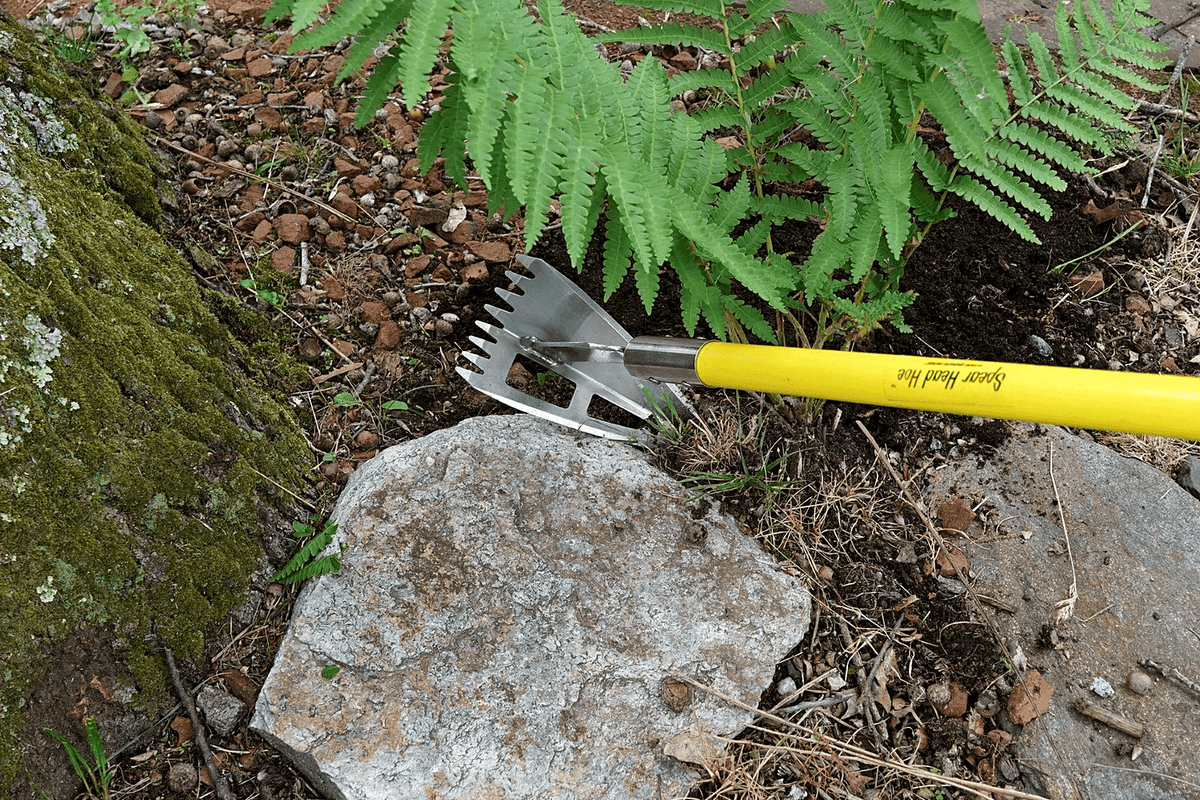
If you want a draw hoe that covers those everyday jobs, the Spear Head Hoe is built for exactly that. It is a weeding, cultivating, and furrowing hoe, not a stirrup hoe and not a grubbing hoe:
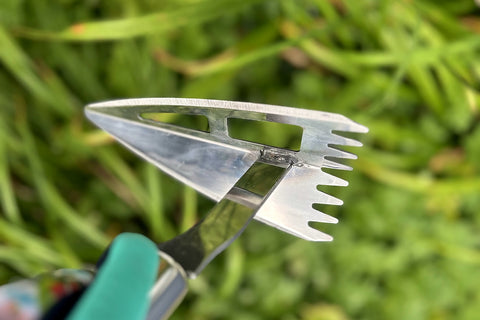
- Stainless steel, pre-sharpened blade that cuts weeds cleanly instead of tearing them, with a rake on the back for breaking clods and leveling the bed.
- 60-inch fiberglass handle that keeps you standing upright and will not rot or splinter like wood.
- Two cushioned grips that reduce hand fatigue over a long session.
Buy the Spear Head Hoe on Amazon. For digging, grubbing, or breaking new ground, that is not a draw-hoe job at all: reach for our Spear Head Spade instead.
Which hoe is best for cultivating and loosening soil?
Cultivating means breaking the crust that forms on topsoil so rain and air reach the roots, and chopping small clods into a fine seedbed. A draw hoe is the standard tool: you chop and drag to fracture the surface, then level it flat.
This is where the Spear Head Hoe earns its keep, because it has a rake on the back of the blade. You cut and loosen with the sharpened front edge, then flip the tool over and use the rake teeth to break clods, level the bed, and pull off debris, all without setting the hoe down. For deep tilling or turning a whole plot, though, reach for a spade or fork.
How do you make furrows and planting rows?
To sow seeds in straight rows you need a clean, shallow trench of consistent depth. The purpose-built tool is the warren hoe, whose pointed, arrowhead blade carves a neat V-shaped furrow. A standard draw hoe also makes excellent furrows: lead with a corner of the blade, or with the tip on a pointed draw hoe, then pull it along a string line to open the row.
The Spear Head Hoe handles furrowing well thanks to its rigid stainless blade, pointed head, and long handle, letting you draw a straight trench without stooping. Open the furrow with the blade's point, drop your seeds, then flip to the rake back to close and firm the row.
What is a heavy-duty garden hoe, and when do you need one?
A heavy-duty garden hoe is built to survive tough soil and years of hard use, not just a few seasons of light weeding. The traits that make one heavy-duty are a thick, high-quality blade that holds an edge, a strong rot-proof handle, and a solid connection between the two where cheap hoes fail first.

You want a heavy-duty tool when cutting through matted roots, working dense clay, or weeding a large area where a flimsy blade would flex, dull, or snap. The Spear Head Hoe is built to last for the jobs it is designed for: the stainless steel blade keeps its sharpened edge, and the fiberglass handle will not rot or splinter like wood. That said, heavy-duty for weeding is not the same as a grubbing hoe for digging. Breaking new ground or trenching calls for a dedicated digging tool, covered below.
Draw hoe vs. stirrup hoe vs. Dutch hoe: which should you choose?
These three are the hoes most gardeners weigh against each other, and for most gardens the choice really does come down to this short list:
- Draw hoe: the most versatile. Pull to weed, chop to cultivate, tilt to furrow, push soil to hill. Best single hoe for a mixed home garden with beds, edges, and rows, and the family the Spear Head Hoe belongs to.
- Stirrup (scuffle) hoe: the fastest surface weeder. Its double-edged loop cuts on both the push and the pull, so it clears large, loose beds quickly, but it does not furrow, hill, or dig.
- Dutch hoe: a comfortable one-direction pusher for slicing weeds in open rows and paths as you back away, but less precise near plants and no good for furrowing or hilling.
If you buy one hoe, a quality draw hoe covers the widest range of jobs. Add a stirrup hoe only if you regularly clear large expanses of loose, already-cultivated soil.
How do you use a garden hoe correctly (step by step)?
Most hoe fatigue and blisters come from using the tool like a shovel. Do it this way instead:
- Start with a sharp edge. A sharp hoe slices weeds with a light stroke; a dull one forces you to hack, which tires you out and churns the soil. Buy a hoe that comes pre-sharpened, like ours, or file a standard hoe blade sharp at the start of each season.
- Stand tall. Hold the handle like a broom, hands shoulder-width apart, and stand upright. A long handle should let you work without bending your back.
- Keep the blade shallow. Skim about one inch below the surface. Cutting roots while disturbing the seedbed as little as possible avoids bringing up new weed seeds.
- Use short, controlled strokes. Pull or push the blade in smooth, deliberate passes rather than big swings, and let the sharp edge do the cutting.
- Work backward. Move away from the area you have finished so you do not step on fresh soil or bury the weeds you just cut.
- Weed on a dry, sunny day. Weeds sliced off onto dry soil wither quickly; in wet soil they can re-root.
- Switch tasks without switching tools. With a draw hoe you can weed, tilt the blade to open a furrow, then hill soil around a crop, all in one pass.
A long handle and cushioned grips matter more than gardeners expect, especially for anyone with back, knee, or hand strain. For more on working comfortably, see our guide to ergonomic gardening.
How do you sharpen and care for a garden hoe?
A garden hoe is a cutting tool, and like any blade it works best kept sharp. Care is simple:
- Sharpen with a mill file. Clamp the hoe, then run a flat file along the existing bevel at a low angle, pushing away from you in one direction. Wear garden gloves while you file. A few strokes before each session keeps it slicing.
- Clean off soil after use so damp earth does not sit on the metal.
- Watch for rust on carbon-steel hoes. Traditional forged hoes need a wipe of oil to prevent rust. A stainless steel blade, like the one on the Spear Head Hoe, needs far less care, though occasional sharpening still keeps the edge keen.
- Store it dry and off the ground. Hang the hoe so the blade is not resting in moisture, and check that the head stays tight on the handle.
How often the file comes out depends on your soil: a hoe worked through stony ground loses its edge sooner than one kept in clean, worked beds, so check the edge whenever weeds start to tear instead of slicing cleanly. Our guide to cleaning, sharpening, and storing garden tools covers the hoe's bevel, the file to use, and winter storage in more detail.
How do you choose the right garden hoe for your garden?
Start from the job, not the tool:
- General home garden with beds, edges, and rows: a sharp draw hoe, such as the Spear Head Hoe, does the most jobs with one tool.
- Large, open, loose beds you weed often: add a stirrup or Dutch hoe for fast surface skimming.
- Raised beds and tight spaces: a collinear or onion hoe for precise, low-disturbance weeding.
- Gravel paths and walkways: a weed barrier under the stone does more than any hoe; our weed barrier and landscape fabric guide covers which fabric to use.
- Breaking new ground, digging, or trenching: not a weeding-hoe job at all, but work for a heavy grub hoe or a garden spade.
That last point is where honest advice matters. A garden hoe works the soil surface; it is not for digging, with one exception: the heavy grub hoe under Chop hoes above, which is a digging tool rather than a weeding hoe. To break new ground, turn a bed, or dig planting holes, the right tool for most gardeners is a garden spade. Our sibling Spear Head Spade is a D-handle garden spade built for that heavy digging, the flagship of a brand with over 600,000 sold. Both tools are sold by our family business in New Jersey, and our guide on spade vs. shovel helps you pick the right digging tool. Use a draw hoe for the surface, a spade for depth, keep the blade sharp, and one good hoe will serve for many seasons.
A quick fit check before you buy
Once the job has pointed you to a type, four physical checks decide whether a particular hoe suits you:
- Handle length: take your normal working grip with the blade where it cuts. If you have to bend at the waist to keep it there, the handle is too short for you, so compare the listed handle length with your own height before you buy.
- Blade width: the blade should fit between your rows or plants with room to spare. Narrow warren and collinear heads suit tight spacing, while a wider draw or stirrup blade covers more ground in open beds.
- Grip with gloves on: gloves change how a handle feels, so judge the grip in the gloves you actually garden in.
- Head-to-handle joint: the head should sit tight on the handle with no play; the heavy-duty section above explains why that joint matters. On a hoe you already own, tighten or replace a loose head before the next session.
Tools for this job
One hoe from each family the guide covers, starting with the draw hoe most gardens need.
A draw hoe with a stainless, pre-sharpened blade and a rake on the back, so one tool weeds, cultivates, furrows, and levels the bed.
Check price on AmazonFlexrake 1000L Hula-Ho Weeder Cultivator, 54 in
The classic rigid-loop stirrup hoe that cuts on both the push and the pull, the fastest way to skim weeds off a large, loose bed.
Check price on AmazonAmes True Temper Forged Warren Hoe
A pointed draw hoe whose arrowhead blade carves a clean V furrow and weeds between closely spaced plants.
Check price on AmazonAmes Razor Back Onion Hoe, 7 in
A light, thin-bladed hoe for raised beds and tight spaces that clips tiny weeds around shallow-rooted crops without cutting their surface roots.
Check price on AmazonThe classic push hoe with a forward-angled blade you skim just under the surface while walking backward down open rows and paths.
Check price on AmazonFrequently asked questions
What is a garden hoe used for?
A garden hoe cuts and pulls weeds at the root line, loosens and cultivates crusted topsoil, carves shallow furrows for planting, and hills soil up around crops. It is a surface tool for weeding and seedbed work, not a digging tool for breaking new ground, except for the heavy grub (eye) hoe, which is built to chop into and dig compacted or never-worked ground.
Can you dig with a garden hoe?
Not with an ordinary weeding hoe. Draw, stirrup, and Dutch hoes work near the surface, cutting weeds just below it, and the draw hoe also loosens crusted topsoil and opens shallow furrows. The heavy grub or eye hoe is the exception: it is a digging tool, swung in a chopping arc to break compacted or never-worked ground and to dig trenches. To turn a bed or dig planting holes, use a garden spade.
What are the parts of a garden hoe?
Most garden hoes have four parts: the blade or head that cuts, the neck or shank that sets the blade's angle to the soil, the socket, tang, or eye that fixes the head to the handle, and the handle itself. The blade's shape and angle, and the stroke they are built for, are what separate one type of hoe from another.
How many types of garden hoe are there?
There are dozens of named garden hoes, but they reduce to a handful of families defined by how you move the blade: pull (draw, warren, onion, swan-neck, ridging), push (Dutch, diamond, winged, wheel), chop (grub, dego, grape, fork), and sweep (stirrup, collinear, circle). Most other names are regional or brand synonyms for one of these.
What are the three main types of garden hoes?
The three most common are the draw hoe (a rectangular or pointed blade you pull toward you for all-purpose weeding and furrowing), the stirrup or scuffle hoe (a loop blade you push and pull to skim weeds off large beds), and the Dutch hoe (a flat blade you push away to slice weeds in open rows).
Which garden hoe is best for weeding?
For everyday weeding in mixed beds and along edges, a sharp draw hoe gives the most control. For fast, shallow weeding across large, loose beds, a stirrup or Dutch hoe is quicker. Whichever you choose, a sharp edge and a long handle make the biggest difference.
What is the difference between a draw hoe and a stirrup (scuffle) hoe?
A draw hoe has a blade set near 90 degrees to the handle that you pull toward you, and it also furrows and hills. A stirrup hoe has an open, double-edged loop blade that cuts on both the push and pull for fast surface weeding, but it does not furrow or hill.
Do you push or pull a garden hoe?
It depends on the type. You pull a draw hoe or warren hoe toward you, push a Dutch hoe away, and work a stirrup hoe back and forth in a skimming motion. The blade shape tells you which direction it is designed to cut.
What is a heavy-duty garden hoe?
A heavy-duty garden hoe has a thick, quality blade that holds an edge, a strong rot-proof handle, and a solid connection between head and handle. It is built for tough soil, matted roots, and years of hard use without flexing, dulling quickly, or breaking.
How do you keep a garden hoe sharp?
Run a flat mill file along the existing bevel a few strokes before each session, pushing away from you in one direction, and wear garden gloves while you file. Clean soil off after use and store it dry. A stainless steel blade needs less maintenance than traditional carbon steel.
What is the best garden hoe for a raised bed or small garden?
For raised beds and tight spaces, a lightweight, precise hoe works best. A collinear or onion hoe skims weeds with minimal soil disturbance, and a standard draw hoe works if you want one tool that also furrows and cultivates. Choose a comfortable handle length for your working height.
Where can you buy the Spear Head Hoe?
The Spear Head Hoe, a draw-style weeding and cultivating hoe with a 60-inch fiberglass handle and a stainless pre-sharpened blade, is available on Amazon. For digging or breaking new ground, choose the Spear Head Spade instead. And where the plan is to stop weeds before they start rather than cut them, our guide to weed barriers and landscape fabric covers what belongs under gravel and what does not belong under mulch.
Disclosure: some links in this guide are affiliate links to Amazon. This is at no extra cost to you, and it never changes our honest recommendations.
Product prices and availability are accurate as of the date/time indicated and are subject to change. Any price and availability information displayed on Amazon.com at the time of purchase will apply to the purchase of this product.