
Our top picks
Best long-fiber moss for most jobs
1. Better-Gro Long-Fiber Sphagnum Moss
Best for: Orchids, baskets and seedlings
Best for terrariums
2. Zoo Med New Zealand Sphagnum Moss
Best for: Terrariums and long-term mixes
Best for lining hanging baskets
3. SuperMoss Sphagnum Moss Mini Bale
Best for: Lining hanging baskets
The best sphagnum moss for most growers is Better-Gro Long-Fiber Sphagnum Moss, 240 grams a bag. Sphagnum moss, as sold in bags, is the dried moss plant; peat moss forms, an American Orchid Society (AOS) article says, when sphagnum moss falls through bog water to the bottom and stays there for centuries in a state of arrested decay. This guide sorts the moss by job: long-fiber moss for most uses, New Zealand moss for terrariums, a bale for lining baskets and milled moss for seed trays. Good to know: wear gloves when you handle it; the safety section below says why.
1. Better-Gro Long-Fiber Sphagnum Moss
Long-fibered dried sphagnum, 240 grams a bag, for orchids, baskets and seedlings.
| Pick | Kind | Water held | Size | Best for | Our verdict | Where to buy |
|---|---|---|---|---|---|---|
| 1. Better-Gro Long-Fiber Sphagnum MossBest long-fiber moss for most jobs | Long-fiber | Not stated | 240 g | Orchids, baskets and seedlings | Long-fibered dried sphagnum, 240 grams and 240 cubic inches a bag, for orchids, baskets and seedlings. | Check price on Amazon |
| 2. Zoo Med New Zealand Sphagnum MossBest for terrariums | New Zealand | Up to 20x dry weight | 80 cu in | Terrariums and long-term mixes | The one New Zealand sphagnum here, from a maker of terrarium supplies. | Check price on Amazon |
| 3. SuperMoss Sphagnum Moss Mini BaleBest for lining hanging baskets | Long-fiber | Up to 18x weight | 1 lb | Lining hanging baskets | A 1 pound mini bale of long fiber moss, the largest stated weight among the four picks. | Check price on Amazon |
| 4. Mosser Lee SucSeed Seed StarterBest for starting seeds | Milled | 20x weight | 244 cu in | Seed trays | Milled Wisconsin sphagnum, free of peat, sold as a seed starter. | Check price on Amazon |
When we checked on November 26, 2026, every pick we link was in stock as new, sold by Amazon. How our guides are made sets out what we check.
What is the best sphagnum moss?
A long-fibered dried moss for most jobs, with a different moss for a few. The Better-Gro long-fiber moss (pick 1) is the all-round one: its listing calls it long-fibered and highly absorbent, harvested from live plants in marshlands and not treated with any chemicals or additives, and names orchids, ferns and hostas, lining hanging baskets, growing seedlings and covering soil among its uses. Good to know: the listing does not say where the moss grew, which matters for a long-term mix (the kinds section below). For the other jobs: for terrariums and long-term mixes, the Zoo Med New Zealand moss (pick 2); for lining hanging baskets, the SuperMoss mini bale (pick 3); for starting seeds, the Mosser Lee SucSeed (pick 4).
Long-fiber, New Zealand, milled or peat: the kinds of sphagnum
Three things set sphagnum products apart: where the moss grew, whether the fibers are long or milled, and whether it is moss at all or peat.
- New Zealand and Chilean moss (pick 2). The International Carnivorous Plant Society (ICPS) says Chilean and New Zealand sphagnum break down very slowly and make a good long-term medium, highly recommended as part of a Nepenthes, Heliamphora or Darlingtonia mix, and that New Zealand sphagnum is grown in a sustainable manner. The AOS article above calls longer-fibered species such as New Zealand moss more desirable for their body and resilience.
- Dried long-fiber moss (picks 1 and 3). The AOS repotting page says dried sphagnum does not change the pH, while live sphagnum acidifies the medium.
- Milled moss (pick 4). Long-fiber moss ground fine and sold as a seed starter. The ICPS says dried Wisconsin sphagnum is not much better than a high class peat substitute, since it breaks apart too easily and does not hold water the way Chilean and New Zealand moss do, but that it is good for starting seeds.
- Sphagnum peat moss (not a pick). The decayed form. The ICPS says it is sold in bags and bales at every garden supply store and big box retailer in North America, and that the default carnivorous plant mix, which works for most carnivorous plants, is an equal mix of sphagnum peat and coarse sand.
How to use sphagnum moss: orchids, baskets, seeds and terrariums
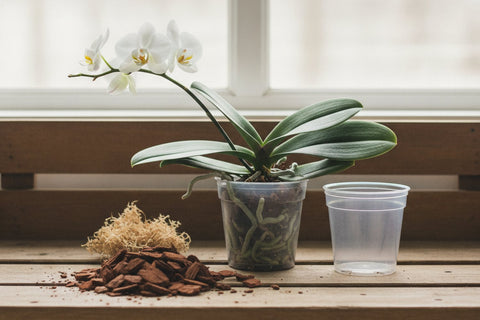
Orchids. The AOS repotting page says nearly all orchid mounts should be padded with sphagnum, and that once dry the moss repels water, so premoisten the sphagnum on top and water normally about 5 minutes later.
Hanging baskets. University of Illinois Extension lines a wire basket with sphagnum moss or a coir liner: wet the moss thoroughly first, then pack handfuls into the basket from the inside until the whole frame is lined, leaving a pocket in the center for the growing media. Lining the inside of the moss with plastic before filling reduces moisture loss, with a few holes punched in the bottom for drainage. It says to keep the moss moist after planting to help the plants root, and that moss lined baskets dry out quickly.
Starting seeds. Mosser Lee sells its milled moss as a seed starting medium on its own, with directions printed on the bag (pick 4). Our seed starting mix guide compares the bagged seed starting mixes for trays and soil blocks.
Terrariums and carnivorous plants. New Zealand moss is the terrarium pick here (pick 2). The ICPS uses sphagnum as a mulch for Heliamphora and in the soil mix for Nepenthes, Heliamphora and Darlingtonia, and says to grow your own live sphagnum where you can rather than buy it dried, buying bales from a large-scale reputable dealer when you cannot grow enough.
How much moss is in each bag
Each bag states its size by weight or by volume, and only pick 1 states both, so the table converts each size: grams from pounds at 453.6 grams a pound, liters from cubic inches at 0.0164 liters a cubic inch, and US dry quarts at 67.2 cubic inches. Where a maker or listing states how much water the moss holds as a multiple of its weight, and the bag's weight is stated, the table works out the water too, at 8.34 pounds to a US gallon.
| Moss | Grams | Cubic inches | Liters | Dry quarts | Water held at the stated multiple | Size as stated (source) |
|---|---|---|---|---|---|---|
| Better-Gro long-fiber moss (pick 1) | 240.0 | 240.0 | 3.9 | 3.6 | not stated | 240 grams and 240 cubic inches (listing title) |
| Zoo Med New Zealand moss (pick 2) | not stated | 80.0 | 1.3 | 1.2 | not stated | 80 cubic inches, item CF3-NZ (maker) |
| SuperMoss mini bale (pick 3) | 453.6 | not stated | not stated | not stated | up to 18 lb (8.2 kg, 2.2 gal) | 1 pound; its size field reads 1.1 pounds (listing) |
| Mosser Lee SucSeed (pick 4) | not stated | 244.0 | 4.0 | 3.6 | not stated | 244 cubic inches (4 liters) (maker and listing) |
Picks 1 and 4 hold about the same volume, 240 and 244 cubic inches, about 3.6 dry quarts each, though pick 4 is milled. Pick 2's 80 cubic inches is a third of pick 1's, the smallest stated volume here. Picks 2 and 4 state a water multiple, 20 times, but not the bag's weight, so their water cells read not stated.
Wear gloves: sphagnum moss and sporotrichosis
Sporotrichosis is a fungal infection, usually of the skin. The New York State Department of Health says people handling sphagnum moss contaminated with the fungus are at increased risk, that outbreaks have occurred among garden nursery workers handling it, and that the fungus enters through small cuts or pricks. The first symptom is a small painless bump like an insect bite, usually on the finger, hand or arm, which may appear 1 to 12 weeks after exposure, and it says a doctor should confirm the diagnosis. It advises avoiding skin contact with sphagnum moss, and gloves and long sleeves when handling plants that may cause minor skin breaks. The ICPS highly recommends gloves when handling North American sphagnum, calls them a good idea with any organic-based potting soil, and notes that nitrile single use gloves are readily available at hardware stores.
The best sphagnum moss, by job
2. Zoo Med New Zealand Sphagnum Moss: best for terrariums
Best for: Terrariums and long-term mixes
The one New Zealand sphagnum here, from a maker of terrarium supplies.
The Zoo Med New Zealand moss is the one New Zealand sphagnum here. Zoo Med's page says it is preferred over any other type of moss for terrarium use, can hold moisture up to 20 times its dry weight, and remains usable after other substrates have decomposed, so it can be washed and reused several times. It is sold by Amazon. Good to know: the listing gives no size; Zoo Med's page lists item CF3-NZ at 80 cubic inches, and the listing's model number, SZMCF3NZ, carries that item number.
3. SuperMoss Sphagnum Moss Mini Bale: best for lining hanging baskets
Best for: Lining hanging baskets
A 1 pound mini bale of long fiber moss, the largest stated weight among the four picks.
The SuperMoss mini bale has the largest stated weight among the four picks, 1 pound by its listing title against pick 1's 240 grams, for jobs that take a lot of moss: its listing says this long fiber moss absorbs up to 18 times its weight in water, calls it ideal for lining hanging baskets and as soil cover for potted plants, and says it is washed and cleaned to remove dust and small particles. It is sold by Amazon. Good to know: the listing names no place of harvest and no strand length, and where the moss grew matters for a long-term mix (the kinds section above); at 18 times its weight, the bale can take up to about 2.2 gallons of water (the table above), so soak what the job needs, not the whole bale.
4. Mosser Lee SucSeed Seed Starter: best for starting seeds
Best for: Seed trays
Milled Wisconsin sphagnum, free of peat, sold as a seed starter.
The Mosser Lee SucSeed is milled sphagnum for seed trays: Mosser Lee's page calls it milled long fibered sphagnum moss made from Wisconsin-grown moss and free of peat, says it holds and retains 20 times its weight in water, and sells it in a 244 cubic inch (4L) package; the listing says it is derived from milled live sphagnum moss, not peat. It is sold by Amazon. Good to know: it is Wisconsin moss, milled fine for seed trays, so keep it for seeds; the kinds section above gives the ICPS reasons.
How we picked these mosses
We compared each pick's kind, stated water holding and stated size from its Amazon listing and, for picks 2 and 4, its maker's page, took the use and safety advice from the International Carnivorous Plant Society, the American Orchid Society, University of Illinois Extension and the New York State Department of Health, checked every pick against its Amazon listing and the CPSC recall database, and worked out each bag's size in grams, cubic inches, liters and dry quarts, and the water pick 3 takes up at its stated multiple. Every pick we link was in stock as new when we checked, each sold by Amazon, and Also considered names the other mosses we read and why each is not linked. When we checked the CPSC's recall database on November 24, 2026, none of the four picks had a recall listed. We make digging spades, not moss, so nothing on this page is ours. How our guides are made sets out the full process.
Also considered
Each was checked on November 24, 2026.
- Besgrow New Zealand sphagnum. Every Besgrow listing we read was sold by a third-party seller, so none is linked here.
- Josh's Frogs Chilean sphagnum. Sold on Amazon by Josh's Frogs, not by Amazon.
- Gardenera sphagnum. Sold by a third-party seller.
- Better-Gro premium grade orchid moss. Sold by Amazon; its listing calls it imported orchid moss, in a 190 cubic inch bag, smaller than the same maker's long-fiber bag we link (pick 1).
- Mosser Lee long fibered sphagnum. Out of stock when we checked.
- SuperMoss small bale. Pick 3's moss also comes in a 2.1 pound small bale, sold by Amazon; we link the 1 pound mini bale.
Frequently asked questions
What is the best sphagnum moss?
A long-fibered dried sphagnum moss for most jobs, such as Better-Gro Long-Fiber Sphagnum Moss. For a long-term mix, the International Carnivorous Plant Society points to Chilean or New Zealand moss, which break down very slowly. By job: for terrariums, the Zoo Med New Zealand moss; for lining hanging baskets, the SuperMoss mini bale; for starting seeds, the Mosser Lee SucSeed.
Is sphagnum moss the same as peat moss?
No. An American Orchid Society article says peat moss forms when sphagnum moss falls through bog water to the bottom and stays there for centuries in a state of arrested decay. Long-fiber sphagnum is the dried moss itself, while peat is the decayed form sold in bags and bales at garden supply stores.
Is sphagnum moss safe to handle?
Wear gloves. The New York State Department of Health says people handling sphagnum moss contaminated with the fungus are at increased risk of sporotrichosis, a fungal skin infection, and advises avoiding skin contact with the moss; the International Carnivorous Plant Society highly recommends gloves when handling North American sphagnum.
How do you rehydrate dried sphagnum moss?
Soak it before you use it. An American Orchid Society article says to soak sphagnum before using it, since it is often difficult to rewet once it dries, and University of Illinois Extension wets the moss thoroughly before lining a basket.
As an Amazon Associate we earn from qualifying purchases. Some links are paid. Disclosure
Product prices and availability are accurate as of the date/time indicated and are subject to change. Any price and availability information displayed on Amazon.com at the time of purchase will apply to the purchase of this product.