As an Amazon Associate we earn from qualifying purchases. Some brands also pay us when you click or buy, so those links are ads. Full disclosure below
Our top picks
Best overall
1. Ortho GroundClear Weed & Grass Killer
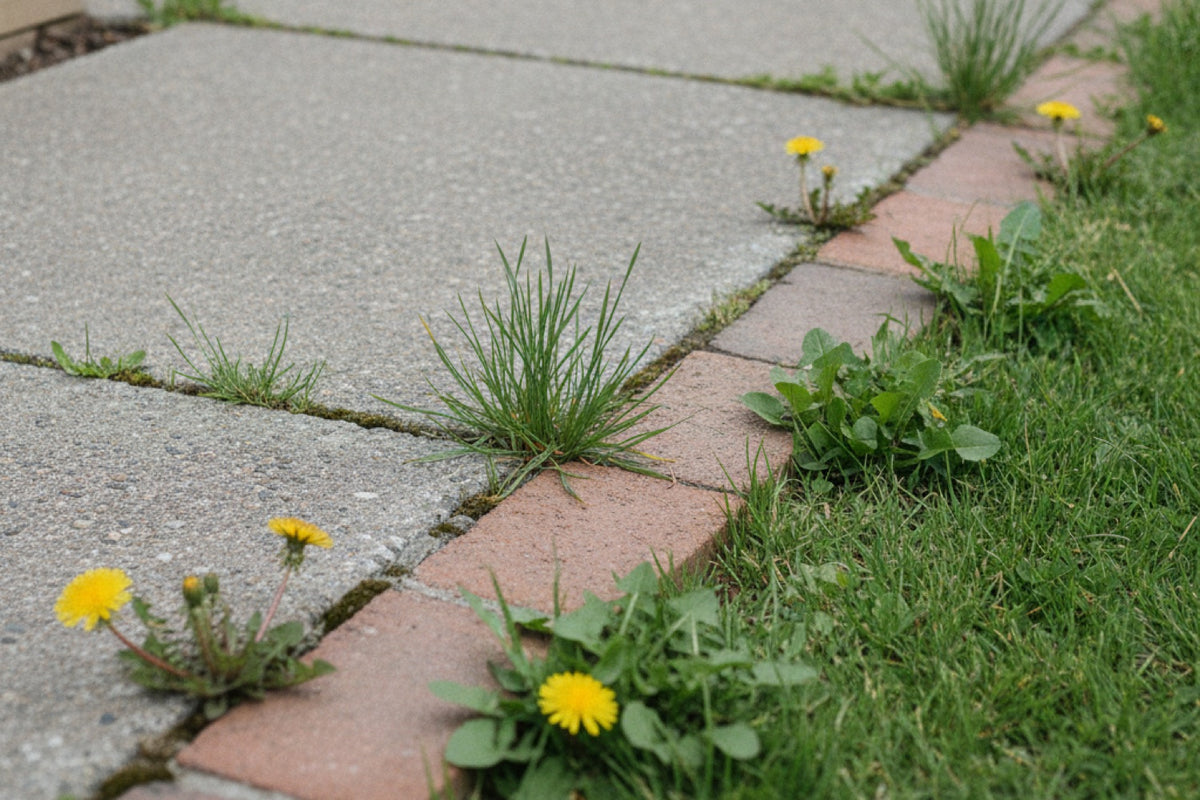
Best for: Weeds in cracks, gravel, paths and bed edges, gone fast
Best concentrate for big areas
2. Compare-N-Save 41% Glyphosate Concentrate
Best for: A long fence line, a big gravel area or tough perennial grasses
Best for lawns
3. Spectracide Weed Stop Plus Crabgrass Killer
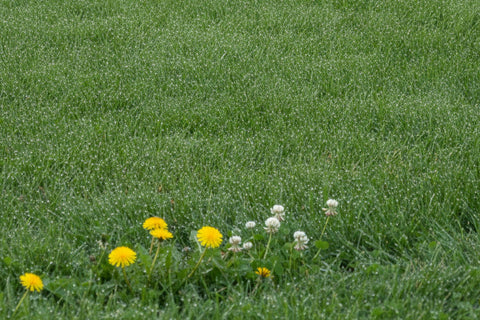
Best for: Dandelions, clover and crabgrass in a lawn you want to keep
The best weed killer for most patios, paths, driveway cracks and gravel is Ortho GroundClear Weed & Grass Killer, a ready-to-spray contact killer with a battery-powered wand that Bob Vila's testers named their best overall after watching weeds start to wilt within roughly 15 to 20 minutes. For big areas, long fence lines and tough perennial grasses, a concentrate you mix yourself goes much further: Compare-N-Save's 41% glyphosate concentrate, Popular Mechanics' top pick, makes about 85 gallons of spray per jug at its label's general rate.
Weeds in a lawn you want to keep need a selective product instead, one whose label names your grass. For that job the pick is Spectracide Weed Stop Plus Crabgrass Killer, the concentrate version of the lawn weed killer Reviewed calls one of its two favorites. The other four picks cover ground that should stay bare for up to a year, weed prevention in beds and in lawns, and brush and poison ivy. Every rate, wait and rainfast time below comes from the product's own label, maker page or listing, because, as the EPA puts it, "the label is the law."
We also set the labels side by side in one table: how much ground each container treats at its label rate, when rain stops mattering, how long each keeps working and how long you wait before planting or seeding.
Jump to: Coverage table | Will it kill my grass? | Driveways for good | When to spray | Roundup and glyphosate | Spraying carefully | Without spraying
Start here: which weed killer for which job
- Weeds in cracks, gravel, paths and bed edges, gone fast: Ortho GroundClear Weed & Grass Killer (pick 1), sprayed straight from its wand.
- A long fence line, a big gravel area or tough perennial grasses: Compare-N-Save 41% glyphosate concentrate (pick 2), mixed in your own tank sprayer.
- Dandelions, clover and crabgrass in a lawn you want to keep: Spectracide Weed Stop Plus Crabgrass Killer (pick 3), on the grass types its label lists.
- A driveway edge, gravel lot or the ground under a deck where nothing should grow for up to a year: Ortho GroundClear Year Long Vegetation Killer (pick 4), kept well away from tree and shrub roots.
- Stopping weeds from sprouting in flower and vegetable beds: Preen Garden Weed Preventer (pick 5).
- Stopping crabgrass before it comes up in a lawn: Scotts Halts Crabgrass & Grassy Weed Preventer (pick 6), spread in early spring.
- Poison ivy, brambles, kudzu and woody brush: BioAdvanced Brush Killer Plus Concentrate (pick 7).
| Pick | Type | Active ingredient | Area per container | Rainfast | Best for | Our verdict | Where to buy |
|---|---|---|---|---|---|---|---|
| 1. Ortho GroundClear Weed & Grass KillerBest overall | Non-selective contact spray, ready to use | Ammonium nonanoate 5.0% | Not listed | 2 hours once dry | Weeds in cracks, gravel, paths and bed edges, gone fast | Bob Vila's testers named it their best overall after weeds began to wilt within roughly 15 to 20 minutes, though by its label perennial weeds may need a repeat spray every 2 to 3 weeks. | Check price on Amazon |
| 2. Compare-N-Save 41% Glyphosate ConcentrateBest concentrate for big areas | Non-selective systemic concentrate | Glyphosate 41.0% | Up to 25,500 sq ft (label) | 2 hours | A long fence line, a big gravel area or tough perennial grasses | Popular Mechanics' top pick, covering up to 25,500 sq ft per jug by its label, though it takes 2 to 4 days to show and needs your own sprayer. | Check price on Amazon |
| 3. Spectracide Weed Stop Plus Crabgrass KillerBest for lawns | Selective lawn concentrate | 2,4-D, quinclorac, dicamba, sulfentrazone | 5,000 sq ft | 3 hours (listing) | Dandelions, clover and crabgrass in a lawn you want to keep | Reviewed's two lawn favorites include this line's ready-to-spray version, and Reviewed points to the concentrate for a very large lawn, though dense crabgrass may need a second spray 14 days later. | Check price on Amazon |
| 4. Ortho GroundClear Year Long Vegetation KillerBest for bare ground up to a year | Non-selective with soil activity, ready to use | Imazapyr 0.09%, pelargonic acid 2.00% | Up to 300 sq ft | 1 hour | Ground that should stay bare for up to a year | Keeps driveways and gravel bare for up to a year by its label, with strict limits near lawns, slopes and tree and shrub roots. | Check price on Amazon |
| 5. Preen Garden Weed PreventerBest weed preventer for garden beds | Pre-emergent granules for beds | Trifluralin 1.47% | 2,560 sq ft | Water or rake in within 24 hours | Stopping weeds from sprouting in flower and vegetable beds | This Old House recommends it, and its label covers vegetable gardens as well as flower beds, with each application lasting as long as 12 weeks. | Check price on Amazon |
| 6. Scotts Halts Crabgrass & Grassy Weed PreventerBest crabgrass preventer for lawns | Pre-emergent lawn granules | Pendimethalin 1.71% | 10,000 sq ft | Rain or snow after spreading does not affect it | Stopping crabgrass before it comes up in a lawn | The Spruce's best pre-emergent, covering 10,000 sq ft per bag, though no grass seed can go down for four growing months after. | Check price on Amazon |
| 7. BioAdvanced Brush Killer Plus ConcentrateBest for brush and poison ivy | Selective brush killer concentrate | Triclopyr 8.8% | Up to 4,000 sq ft | 4 hours | Poison ivy, brambles, kudzu and woody brush | Bob Vila's pick for dense brush in its ready-to-use form, covering up to 4,000 sq ft per bottle, though results take 1 to 6 weeks. | Check price on Amazon |
The best weed killers, by job
1. Ortho GroundClear Weed & Grass Killer: best overall
Best overall
Best for: Weeds in cracks, gravel, paths and bed edges, gone fast
Ortho GroundClear Weed & Grass Killer
- Type: Non-selective contact spray, ready to use
- Active ingredient: Ammonium nonanoate 5.0%
- Rainfast: 2 hours once dry
Bob Vila's testers named it their best overall after weeds began to wilt within roughly 15 to 20 minutes, though by its label perennial weeds may need a repeat spray every 2 to 3 weeks.
This is Ortho's ready-to-use contact killer in a 1.1 gallon jug with a battery-powered Comfort Wand. Its label lists a single active ingredient, ammonium nonanoate at 5.0%, and the label marks it OMRI listed for organic use. By the label, results show in 15 minutes and the spray is rainproof 2 hours after it dries. The label puts it on weeds in driveways, walkways and landscape beds and under trees, and Ortho's product page lists large crabgrass, annual bluegrass and perennial ryegrass among the grasses it controls.
Why it is the pick: Bob Vila's testers made it their best overall. They sprayed stubborn weeds in pavement cracks and along a lawn edge, saw wilting within roughly 15 to 20 minutes, and found many of the weeds brown after about an hour in the Florida sun. They also liked the wand: a button keeps it pressurized, so there is no pumping or trigger squeezing, and its reach made it easy to hit weeds in gravel and driveway cracks without bending or drifting onto plants nearby. Reviewed makes it its spot-treatment pick for patios, walkways and driveways, and LawnStarter includes it in its roundup. All three link the 1 gallon jug, which was unavailable on Amazon on October 23, 2026, so we link Ortho's 1.1 gallon size of the same product, also sold with the Comfort Wand.
Good to know: it kills only the green growth it wets. The label says it does not travel through the soil or inside the plant, leaves no residual control, and that perennial or well-established weeds may need a repeat spray every 2 to 3 weeks; it flags dandelion, Bermudagrass, yellow nutsedge and ragweed as needing several applications. Reviewed also notes mature weeds can take more than one spray, and LawnStarter points out that the roots survive. It kills lawn grass, so the label advises against spot treatment in lawns, and it is not for food plants. The label gives no coverage figure per jug.
2. Compare-N-Save 41% Glyphosate Concentrate: best concentrate for big areas
Best concentrate for big areas
Best for: A long fence line, a big gravel area or tough perennial grasses
Compare-N-Save 41% Glyphosate Concentrate
- Type: Non-selective systemic concentrate
- Active ingredient: Glyphosate 41.0%
- Area per container: Up to 25,500 sq ft (label)
Popular Mechanics' top pick, covering up to 25,500 sq ft per jug by its label, though it takes 2 to 4 days to show and needs your own sprayer.
A 1 gallon jug of concentrate with one active ingredient, glyphosate (isopropylamine salt) at 41.0%. The label's general rate is 1.5 fl oz (3 tablespoons) in a gallon of water, which covers 300 sq ft; for perennials and brush it calls for 2.5 fl oz (5 tablespoons) per gallon. At the general rate one jug makes about 85 gallons of spray, enough for up to 25,500 sq ft, the label's own figure, or about 15,360 sq ft at the stronger mix (our arithmetic from the label). Ragan and Massey says the leaves take it up and carry it down to the roots, so the whole plant dies, and the label says rain 2 hours after spraying will not wash it off.
Why it is the pick: Popular Mechanics names it best overall in its weed killer roundup, and This Old House lists it first of the three weed products it recommends. The University of Maryland Extension gives the reason a glyphosate concentrate suits this job: it says "No other herbicide works as well on perennial grasses as glyphosate does, particularly late in the season," and that glyphosate has no residual activity in soil, so the ground can be seeded or planted soon after. The label's waits bear that out: as little as 1 day in ornamental areas, 7 days for lawn grass, 1 or 3 days for the vegetables it lists, and 30 days for tomato transplants and any crop it does not list.
Good to know: it is slow to show. The maker says most weeds begin to look sick within 2 to 4 days and are dead within 1 to 2 weeks, and bigger weeds can take up to 4 weeks; the label adds that hard-to-control weeds such as Bermudagrass may need a second spray. You need your own sprayer, and the maker says not to mix or store it in galvanized or unlined steel sprayers. It kills lawn grass too, so it is not for spot spraying a lawn. Around fruit or nut trees and grapevines the label asks you to wait 21 days before eating the crop. On Amazon it is sold by Ragan and Massey, the company the label says it is made for.
3. Spectracide Weed Stop Plus Crabgrass Killer: best for lawns
Best for lawns
Best for: Dandelions, clover and crabgrass in a lawn you want to keep
Spectracide Weed Stop Plus Crabgrass Killer
- Type: Selective lawn concentrate
- Active ingredient: 2,4-D, quinclorac, dicamba, sulfentrazone
- Area per container: 5,000 sq ft
Reviewed's two lawn favorites include this line's ready-to-spray version, and Reviewed points to the concentrate for a very large lawn, though dense crabgrass may need a second spray 14 days later.
Sold in full as "Weed Stop for Lawns Plus Crabgrass Killer Concentrate," this is a 32 oz lawn concentrate with four active ingredients, by the label: 2,4-D (3.74%), quinclorac (1.79%), dicamba (0.43%) and sulfentrazone (0.22%). Spectracide says it kills more than 470 listed weed types, crabgrass, dandelion, clover and yellow nutsedge among them, without harming the lawn when used as directed. The label's pump-sprayer rate is 6.4 fl oz in a gallon of water per 1,000 sq ft, so the bottle treats 5,000 sq ft, the same figure Spectracide gives. Visible results come in 5 hours, by the label.
The label is specific about grass. It is for Kentucky bluegrass, perennial ryegrass, tall, red and fine fescues, zoysiagrass, Bermudagrass and buffalograss, and it rules out lawns with St. Augustinegrass, centipedegrass, bahiagrass, bentgrass or carpetgrass, dichondra, and lawns where you want to keep clover. Zoysia just coming out of dormancy can be damaged, and Bermudagrass may yellow for a while before it recovers.
Why it is the pick: Reviewed names the ready-to-spray version of Spectracide's "Weed Stop for Lawns Plus Crabgrass Killer" one of its two favorites for lawns, for a mix of selective herbicides that takes out crabgrass and other tough weeds without killing the turf, and says it would opt for the concentrated version, the one linked here, for a very large lawn, though it says you will want to add a surfactant. Iowa State University Extension makes the case for a mix: it says the most effective broadleaf products combine two or three herbicides, since no single compound controls every broadleaf weed.
Good to know: lawn weed killers work slowly and may need a second round. Reviewed says it can take more than one dose and works less well on mature weeds, and the label calls for two sprays 14 days apart on dense crabgrass or foxtail, and two on yellow nutsedge every time. Catch crabgrass young: the label says from the first time you see it until it has six leaves or stands 3 to 4 inches tall. By Spectracide's directions, spray when the day's temperature sits between 45 and 90 degrees F, skip mowing for 2 days before and after, and wait 4 weeks before seeding the listed grasses. Spectracide's listing calls it rainproof after 3 hours, while the label asks you not to water the lawn for 24 hours for best results. Yahoo's lawn tester ran the 40 oz hose-end size of this same product, which Spectracide sells on the same product page as this 32 oz bottle, and found the test plot still weedy a week later.
4. Ortho GroundClear Year Long Vegetation Killer: best for bare ground up to a year
Best for bare ground up to a year
Best for: Ground that should stay bare for up to a year
Ortho GroundClear Year Long Vegetation Killer
- Type: Non-selective with soil activity, ready to use
- Active ingredient: Imazapyr 0.09%, pelargonic acid 2.00%
- Area per container: Up to 300 sq ft
Keeps driveways and gravel bare for up to a year by its label, with strict limits near lawns, slopes and tree and shrub roots.
A ready-to-use jug with the battery-powered wand and two active ingredients, imazapyr (0.09%) and pelargonic acid with related fatty acids (2.00%). The label says it kills weeds and grasses and keeps working in the soil for as long as a year, or longer in heavy clay. Results show in 1 hour and it is rainproof in 1 hour. The 1 gallon jug treats up to 300 sq ft. The label's list of places to use it runs from driveways, sidewalks and paver patios to gravel, rock and desert landscapes, the ground under decks, parking areas and the edges of fences and curbs, and it can go down before a patio, asphalt drive or play area is surfaced.
Why it is the pick: LawnStarter includes it in its weed killer roundup for driveways and parking areas where nothing should grow, and its label claims the longest control of any pick here, up to a year from one spray.
Good to know: that year in the soil is the reason for a long list of label restrictions. Keep it off lawns, away from fruits, vegetables and flowers, and off the roots of trees and shrubs: the label says to stay at least twice the distance from trunk to drip line, because roots can reach that far. Do not use it on slopes, where it can wash down to plants you want, or along a fence with plants on the other side, and do not plant anything in the treated spot for up to a year. One application a year is the limit. Cut weeds taller than 6 inches first, water the day before if the soil is dry, and spray on a sunny day above 60 degrees F. At 300 sq ft per jug, a long driveway edge can take more than one. If weeds come back, the label suggests spot-treating them with pick 1.
5. Preen Garden Weed Preventer: best weed preventer for garden beds
Best weed preventer for garden beds
Best for: Stopping weeds from sprouting in flower and vegetable beds
Preen Garden Weed Preventer
- Type: Pre-emergent granules for beds
- Active ingredient: Trifluralin 1.47%
- Area per container: 2,560 sq ft
This Old House recommends it, and its label covers vegetable gardens as well as flower beds, with each application lasting as long as 12 weeks.
Granules in a 16 lb pail that, by the listing, comes with an applicator scoop, and one active ingredient, trifluralin at 1.47%. Preen's label says it keeps most weeds from sprouting in flower beds, vegetable plots and ground covers and around shrubs and trees, and that it does not kill weeds that are already growing. You sprinkle 1 oz over every 10 sq ft of soil or mulch, so the pail covers 2,560 sq ft, Preen's own figure. Preen says each application lasts as long as 12 weeks, and to keep beds clear all season it suggests reapplying every 9 to 12 weeks.
Why it is the pick: This Old House names it one of the three weed products it recommends, noting that it keeps working in the soil for three months. Unlike pick 6 and Preen's own Extended Control formula, its label covers vegetable gardens, with crops such as broccoli, carrots and cucumbers listed alongside rates and timing, and Preen says it can go around more than 200 established plants.
Good to know: pull existing weeds first, since it only stops seeds. The label requires it to be worked into the soil within 24 hours, by at least half an inch of rain or irrigation or by raking, and says disturbing the soil afterward can make control patchy. Preen says not to use it on flower seeds, only once seedlings are 2 to 3 inches tall. It is not for lawns, not for soils with more than 10% organic matter, and not for ajuga, myrtle or pachysandra until they are established. Preen's label says to sweep stray granules off concrete and stone so they do not stain, and to keep people and pets out until the dust settles, or, if you water it in, until watering is done and the surface is dry.
6. Scotts Halts Crabgrass & Grassy Weed Preventer: best crabgrass preventer for lawns
Best crabgrass preventer for lawns
Best for: Stopping crabgrass before it comes up in a lawn
Scotts Halts Crabgrass & Grassy Weed Preventer
- Type: Pre-emergent lawn granules
- Active ingredient: Pendimethalin 1.71%
- Area per container: 10,000 sq ft
The Spruce's best pre-emergent, covering 10,000 sq ft per bag, though no grass seed can go down for four growing months after.
A 20.12 lb bag of lawn granules with pendimethalin (1.71%) as the active ingredient. Scotts' label says the bag treats 10,000 sq ft and that a single application prevents crabgrass all season, along with foxtail, spurge, barnyardgrass and fall panicum; for goosegrass, which it lists with oxalis, the label says to repeat the application in 8 weeks; spread from August to October, it stops chickweed, henbit, corn speedwell and Poa annua, plus moss outside California. It is for every grass type except dichondra and bentgrass, and by the label, rain, snow or a freeze after spreading does not affect it.
Why it is the pick: The Spruce names it its best pre-emergent in its crabgrass roundup. Its label lists pendimethalin as the only active ingredient, and it is sold as the preventer alone, which helps with timing: the University of Minnesota's turf extension points out that fertilizer-plus-preventer products make the right date harder to hit, because the crabgrass window often comes before a lawn is ready to be fed.
Good to know: timing decides whether it works. The label says to spread it in early spring, by the time dandelions reach the puffball stage everywhere outside California, and that it does not control crabgrass already up. You need a spreader; the label gives settings for Scotts broadcast and drop spreaders. Grass seed has to wait four growing months, and the label says not to rake or aerate after spreading because either disturbs the barrier, so it does not suit a lawn you plan to overseed the same season. The label limits it to twice a year at least 2 months apart, warns that granules can stain concrete, stone and cars, and says to keep people and pets off until the dust settles.
7. BioAdvanced Brush Killer Plus Concentrate: best for brush and poison ivy
Best for brush and poison ivy
Best for: Poison ivy, brambles, kudzu and woody brush
BioAdvanced Brush Killer Plus Concentrate
- Type: Selective brush killer concentrate
- Active ingredient: Triclopyr 8.8%
- Area per container: Up to 4,000 sq ft
Bob Vila's pick for dense brush in its ready-to-use form, covering up to 4,000 sq ft per bottle, though results take 1 to 6 weeks.
A 32 oz concentrate of triclopyr (triethylamine salt, 8.8%), a systemic herbicide that, by the label, gets in through leaves, green or cut shoots and roots and spreads through the whole plant. The label lists poison ivy, poison oak, kudzu and blackberry among more than 70 plants it kills. Mix 4 fl oz per gallon of water for every 500 sq ft, so the bottle treats up to 4,000 sq ft, the label's own figure, and the label says to use it undiluted on stumps. Rain 4 hours after spraying will not wash it off.
Why it is the pick: Bob Vila picks the ready-to-use version of Brush Killer Plus for dense brush, chosen after comparing ingredients, for its strength against poison ivy and poison oak, kudzu and blackberries, and notes it dries quickly enough to resist rain. Its label's only caution about grass is that some warm-season grasses may yellow for a while if sprayed too heavily, though it still says the product is not for lawns.
Good to know: it is slow. The label puts visible wilting and yellowing at 1 to 6 weeks, and very hard-to-kill plants may need a second spray. Spray when the plants are fully leafed out and growing. The label caps use at 17 fl oz per 500 sq ft a year and says people and pets should stay away from sprayed areas until the spray dries.
How we chose these
We compared the weed and grass killers, selective lawn products, pre-emergent preventers and brush killers in Amazon's catalog by the job each one does, then read the product label, maker page or safety data sheet for every pick and for the main alternatives: the labels for all seven picks and for Spectracide's Weed & Grass Killer concentrate and Preen's Extended Control, plus Roundup's safety data sheet and its Dual Action product page. Then we read the independent testers who applied weed killers themselves: Bob Vila's weed killer test and Yahoo's lawn weed killer test by a gardening teacher. Reviewed's lawn weed killer guide, whose writer has used most kinds of weed killer, and roundups that choose from research told us which products come up most: Popular Mechanics, LawnStarter, This Old House, Bob Vila's brush killer guide and The Spruce's crabgrass roundup.
Each pick was in stock on Amazon on October 23, 2026, sold new by Amazon or, for pick 2, by the company the label names, with a long record of owner ratings. Where a tester or roundup covered another size or form of what we link (the 1 gallon jug of pick 1 that Bob Vila, Reviewed and LawnStarter link; Bob Vila's ready-to-use Brush Killer Plus for pick 7; Reviewed's ready-to-spray Weed Stop and Yahoo's 40 oz hose-end bottle for pick 3), we say so in that pick. Every rate, rainfast time, residual and planting wait here comes from the label, the maker's page or the maker's listing, named where it appears, and where a label is silent the table says so. Timing and technique come from land-grant extension services at Iowa State, Minnesota, Michigan State and Maryland, and the EPA, each named where it appears.
Also considered: products that missed the list and why
Spectracide Weed & Grass Killer Concentrate2. Ready-to-use versions of this line are LawnStarter's top pick and Popular Mechanics' choice for sidewalks. The concentrate's label lists diquat (2.30%), fluazifop (1.15%) and dicamba (0.77%), with no glyphosate; Spectracide says it is rainproof in 15 minutes and shows results within about 3 hours, and the label allows planting ornamentals a day later and seed or sod after 7 days. At its weed rate of 5 fl oz per gallon for 300 sq ft, the 40 oz bottle covers about 2,400 sq ft and the gallon about 7,680 (our arithmetic), and the label allows two applications a year at least three months apart. Pick 2 took the concentrate job because two roundups named it and a jug treats more ground at its label rate; this one is rainproof sooner.
Roundup Dual Action with 4 Month Preventer. Michigan State University Extension says it adds imazapic to triclopyr, fluazifop and diquat for longer-lasting control, and Roundup says it prevents new weeds for up to 4 months, with planting allowed 4 months after use. It sits between pick 1 and pick 4; none of the testers we read covered it, and pick 4 covers the long-lasting job. More on what changed in Roundup below.
Southern Ag Amine 2,4-D and PBI Gordon 2,4-D Amine. Yahoo's lawn tester named Southern Ag's quart its best lawn concentrate, noting 2,4-D has killed broadleaf weeds while sparing grasses since the 1940s. On October 23, 2026 its Amazon offer came from a third-party seller we could not confirm as an authorized dealer. PBI Gordon's gallon of 2,4-D amine is sold by Amazon, but its listing describes farm uses such as corn and small grains, and as a single active ingredient it is not the two-or-three-herbicide mix Iowa State says the most effective broadleaf products use; pick 3 carries four.
Syngenta Tenacity. Bob Vila's best pre-emergent for crabgrass and one of Reviewed's two lawn favorites; Reviewed says it is one of the few preventers you can spray and then seed right away. The Amazon listing sold by Amazon had too short a record of owner ratings to meet our floor on October 23, 2026, and the other offers came from third-party sellers.
Preen Extended Control Weed Preventer. Preen adds isoxaben (0.375%) to trifluralin (1.500%) in this formula, and its label claims up to 6 months of prevention, but it is not for vegetable gardens or lawns. For flower and shrub beds alone it lasts longer by its label; pick 5 stays because it also covers vegetables.
Ortho GroundClear Poison Ivy and Tough Brush Killer. A ready-to-use wand alternative to pick 7; Ortho's listing gives visible results in 1 hour and rainproofing in 2. None of the testers we read covered it, and pick 7 has Bob Vila's choice of its ready-to-use sibling behind it.
Vinegar and salt sprays: Natural Armor and Green Gobbler. Bob Vila's testers found Natural Armor's vinegar product dried out most weeds in a gravel driveway by the next day, and The Spruce names Green Gobbler's vinegar-based spray its best overall. On October 23, 2026 both had records of owner ratings on Amazon below our floor. See what extension research says about vinegar.
How much ground does one container treat? The labels side by side
Container sizes and mix rates vary so widely that the size on the jug says little about how far it goes. The table works out how much ground each container treats at its label rate (our arithmetic where the label gives a rate; the label's own figure where it states one) and puts each label's rainfast time, how long the product keeps working and the wait before you plant or seed next to it. Where a label is silent, the cell says so.
| Pick and container | Label rate | Area one container treats | Rainfast (label or maker) | How long it keeps working | Wait before planting or seeding |
|---|---|---|---|---|---|
| 1. Ortho GroundClear Weed & Grass Killer, 1.1 gal jug with wand | Spray until weeds are fully wet | No figure on the label | 2 hours, once dry | No residual control; repeat every 2 to 3 weeks on perennials | Not stated on the label |
| 2. Compare-N-Save 41% Glyphosate, 1 gal concentrate | 1.5 fl oz per gallon of water per 300 sq ft (2.5 fl oz for perennials and brush) | Up to 25,500 sq ft (label); about 15,360 at the stronger mix, computed | 2 hours | No residual activity | Ornamentals as little as 1 day; lawn grass 7 days; listed vegetables 1 or 3 days; tomato transplants and unlisted crops 30 days |
| 3. Spectracide Weed Stop Plus Crabgrass Killer, 32 fl oz concentrate | 6.4 fl oz per gallon of water per 1,000 sq ft | 5,000 sq ft, computed (Spectracide also says 5,000) | 3 hours (listing); label asks for no watering for 24 hours | Kills growing weeds; second spray after 14 days on dense crabgrass | Seed listed grasses 4 weeks after |
| 4. Ortho GroundClear Year Long Vegetation Killer, 1 gal jug with wand | Spray weeds until wet; spray the ground for prevention | Up to 300 sq ft (label) | 1 hour | Up to 1 year, longer in heavy clay | Do not plant for up to 1 year |
| 5. Preen Garden Weed Preventer, 16 lb | 1 oz per 10 sq ft | 2,560 sq ft, computed (Preen also says 2,560) | Must be watered or raked in within 24 hours; Preen says rain does not wash it out of the soil | Up to 12 weeks | Not on flower seeds; seedlings once 2 to 3 inches tall |
| 6. Scotts Halts, 20.12 lb | Scotts spreader settings on the label | 10,000 sq ft (label) | Rain, snow or freezing after spreading does not affect it | Crabgrass all season from one spring application; repeat in 8 weeks for goosegrass | No grass seed for four growing months |
| 7. BioAdvanced Brush Killer Plus, 32 fl oz concentrate | 4 fl oz per gallon of water per 500 sq ft | 4,000 sq ft, computed (label also says 4,000) | 4 hours | Not stated; symptoms show in 1 to 6 weeks | Not stated on the label |
| Also considered: Spectracide Weed & Grass Killer Concentrate2, 40 fl oz | 5 fl oz per gallon of water per 300 sq ft (7 fl oz for heavy growth) | About 2,400 sq ft (about 7,680 for the 1 gal size), computed | 15 minutes | At most two applications a year, three months apart | Ornamentals 1 day; seed or sod 7 days |
What it shows: the Compare-N-Save jug goes furthest of the products here, up to 25,500 sq ft by its label, and the Halts bag covers 10,000; the two ready-to-use wand jugs are spot tools, and Ortho's year-long formula treats 300 sq ft per jug. The planting waits differ just as widely; the FAQ below lists them.
Will it kill my grass? Selective vs non-selective weed killers
Non-selective products kill any green plant they wet, grass included. Picks 1, 2 and 4 are non-selective: the labels for picks 1 and 2 warn against spot treatment in a lawn, and pick 4's says not to use it on lawns at all. Selective products are made to spare listed grasses: pick 3 targets broadleaf weeds, crabgrass and nutsedge in the turf grasses its label names, and pick 7's triclopyr goes after broadleaf and woody plants, though its label still keeps it off lawns. The two preventers, picks 5 and 6, do not kill growing plants; they stop seeds from sprouting, which is why the Halts label rules out grass seed for four growing months and Preen says not to use its preventer on flower seeds.
Read the grass list before you buy a lawn product. Pick 3's label rules out St. Augustinegrass, centipedegrass, bahiagrass, bentgrass and carpetgrass, and Michigan State University Extension notes that lawns in the southern US are mostly warm-season grasses such as Bermudagrass, centipedegrass and bahiagrass. Halts covers every grass type except dichondra and bentgrass.
What kills weeds in a driveway or patio for good?
It depends on how long "for good" needs to be. A contact spray like pick 1 browns the leaves within the hour but, by its label, leaves the roots and the soil alone, so perennials come back and need repeat sprays. A systemic spray like pick 2 travels to the roots and kills the whole plant over 1 to 2 weeks, but leaves nothing in the soil, so new seeds can still sprout in the cracks. To kill what is there and keep new growth out, you need a product that stays active in the soil, like pick 4 for up to a year (or, for a season, Roundup's Dual Action 4 Month formula in Also considered), and its label restrictions on lawns, root zones and slopes come with that.
Vinegar-type sprays work the same way as pick 1; see what the University of Maryland Extension says about them.
When should you spray lawn weeds? Fall for broadleaf, spring for crabgrass
Iowa State University Extension calls fall the best time for perennial broadleaf weeds such as dandelion and creeping Charlie: the weeds are sending food down to their roots ahead of winter, and a herbicide sprayed then goes down with it. For Iowa it gives mid-September to early November. Creeping Charlie usually takes at least two sprays, the first in mid to late September and the second a month later. Pick 3's label agrees, with fall for henbit, chickweed, white clover and ground ivy and spring for dandelion and plantain.
Crabgrass is an annual, so you either stop the seed or catch the seedling. The University of Minnesota's turf extension says to put a preventer down before the top 1 to 2 inches of soil reach 55 degrees F for several days. Michigan State University Extension notes that most crabgrass germination, eight seedlings in ten, happens once the top 2 inches stay between 60 and 70 degrees F, and points to forsythia bloom as a handy cue. The Halts label uses another: before dandelions go to puffballs. A preventer will not touch crabgrass that is already up; that is pick 3's job, sprayed before the crabgrass passes 3 to 4 inches.
Does Roundup still contain glyphosate?
Not in the home-use products Bayer sells now, according to Michigan State University Extension, though older Roundup bottles that may still be around can contain it. MSU says Bayer took glyphosate out of every Roundup product sold for home use while keeping the product names and nearly identical bottles. The safety data sheet for Roundup Weed & Grass Killer4 lists triclopyr, fluazifop and diquat. MSU explains that triclopyr works on broadleaf plants, fluazifop on grasses and diquat on any plant, giving the quick burn that shows it is working. As with any Roundup product, MSU says to read the label for where it may be used and any replanting restriction. Roundup for Lawns never contained glyphosate, MSU adds. If you want glyphosate, look for it in the active ingredients on the label, as with pick 2, whose label lists it at 41.0%.
How to spray weed killer without hurting what you want to keep
A few habits from the labels and from extension services help keep the spray where you want it:
- Read the whole label first. The EPA notes that pesticide labels are legally enforceable, which is why every one says that using the product against its labeling breaks federal law.
- Spray on a calm day. Iowa State advises against spraying when wind tops 5 mph or when temperatures above 85 degrees F are forecast within 24 hours, and suggests coarse droplets at low pressure with the nozzle close to the ground.
- Shield plants you want. The Compare-N-Save label and Spectracide's Weed & Grass concentrate suggest holding cardboard or plastic between the spray and nearby plants, and rinsing a plant with water right away if it gets hit.
- Mind the rain. Iowa State says not to spray lawn weeds when rain is forecast within 24 hours; each product's rainfast time is in the table above.
- Leave the mower parked. Iowa State suggests no mowing for 2 to 3 days before spraying lawn weeds and 3 to 4 days after; pick 3's label says 2 days either side.
- Keep people and pets off until it dries. Every spray label among these picks says to stay out of treated areas until the spray has dried (those for picks 1, 2, 3 and 7 name pets as well), and the labels for picks 3 and 4 add that people and pets should stay out of the area while you apply. The granule labels say until the dust settles.
- Keep it out of drains. The labels we read say not to let these products run into storm drains, gutters or surface water, and not to pour leftovers down any drain; your local solid waste agency handles partly full containers.
If you would rather not spray
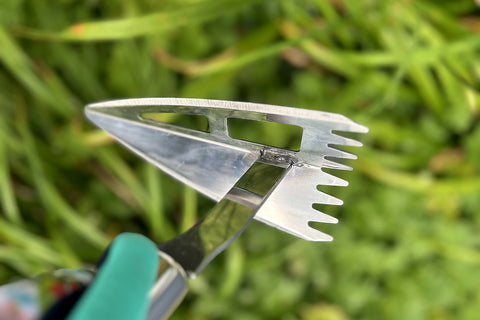
Plenty of weeds come out by hand, and our guide to the best weeding tools compares the tools made for it. Iowa State suggests pulling or digging once a good rain or a long watering has softened the soil, and getting the whole root so the weed does not resprout. For long rows and open beds, try a hoe: see our best garden hoe picks and the guide to hoe types and what each one does.
Vinegar sprays are contact killers too. The University of Maryland Extension says herbicidal vinegar runs 10 to 20% acetic acid against 5% for kitchen vinegar, and that it burns only the foliage it touches and leaves the roots alive, so larger and perennial weeds regrow and need repeat sprays; small weeds with only one or two leaves are the ones it controls well. It also warns that vinegar at 11% acetic acid or stronger can burn skin and cause severe eye injury.
Related guides
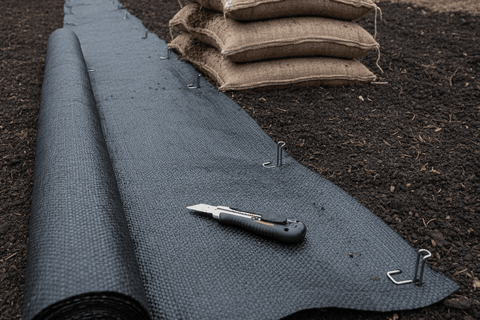
If you are reseeding thin, shady patches once a weed killer's seeding wait is up (see the table), our guide to grass seed for shade covers seed for low light. For shrub and perennial beds, our weed barrier and landscape fabric guide compares fabrics to lay under mulch.
Frequently asked questions
What is the strongest weed killer?
No single product is strongest at every job. To kill whole plants, roots included, across a big area, a glyphosate concentrate such as pick 2 fits: the University of Maryland Extension says "No other herbicide works as well on perennial grasses as glyphosate does." To keep ground bare, pick 4's soil activity lasts up to a year by its label, the longest of these picks. For brush and poison ivy, pick 7's label lists poison ivy, poison oak, kudzu and blackberry among the plants it kills.
What weed killer kills weeds but not grass?
A selective lawn product used on the grasses its label lists. Pick 3 kills listed broadleaf weeds, crabgrass and yellow nutsedge in Kentucky bluegrass, perennial ryegrass, fescues, zoysiagrass, Bermudagrass and buffalograss, by its label, and should not go on St. Augustinegrass, centipedegrass, bahiagrass, bentgrass or carpetgrass. Non-selective products such as picks 1, 2 and 4 kill grass too.
How long after spraying weed killer can I plant?
The label sets the wait, and it varies widely. Compare-N-Save allows ornamentals in as little as a day and lawn grass after 7 days; Spectracide's lawn concentrate allows seeding the listed grasses after 4 weeks; Halts says no grass seed for four growing months; and Ortho's year-long formula says not to plant at all for up to a year.
How long should pets and kids stay off after spraying weed killer?
Until the spray has dried, by every spray label among these picks (those for picks 1, 2, 3 and 7 name pets as well), and the labels for picks 3 and 4 also say people and pets should stay away while you apply. For granules, the Preen and Scotts labels say until the dust settles, and Preen's adds that if you water it in, wait until the watering is done and the surface is dry. Follow the label on the product you use.
Will rain wash away weed killer?
Only if it falls before the product is rainfast. The labels put that at 1 hour for Ortho's year-long formula, 2 hours for Ortho GroundClear (once dry) and Compare-N-Save, and 4 hours for BioAdvanced Brush Killer Plus; Spectracide's listing gives 3 hours for its lawn concentrate, though its label asks for no watering for 24 hours. Preventers work the other way: Preen has to be watered in within 24 hours, and Scotts says rain or snow after spreading does not affect Halts.
Does vinegar kill weeds permanently?
Usually not on established weeds. The University of Maryland Extension says vinegar sprays burn only the leaves they hit and leave the roots alive, so perennial and larger weeds regrow and need repeat sprays; it works best on young weeds with one or two leaves.
Is it better to spray weeds in spring or fall?
For perennial broadleaf weeds in a lawn, fall: Iowa State University Extension says herbicides sprayed then move down to the roots with the plant's food stores, and gives mid-September to early November for Iowa. For crabgrass, spring: a preventer goes down before the soil warms to 55 degrees F, per the University of Minnesota, and a killer like pick 3 goes on young crabgrass.
Disclosure: Our commissions do not change what we recommend or what you pay. Availability was checked on Amazon on October 23, 2026 and can change.
Product prices and availability are accurate as of the date/time indicated and are subject to change. Any price and availability information displayed on Amazon.com at the time of purchase will apply to the purchase of this product.