As an Amazon Associate we earn from qualifying purchases. Some brands also pay us when you click or buy, so those links are ads. Full disclosure below
The best garden hoe for weeding is a sharp, long-handled draw hoe, and for most gardens that means the Spear Head Hoe: it cuts weeds at the root line while you stand upright, then cultivates and furrows without a tool change. A stirrup hoe wins on big open beds, a Dutch hoe on paths.
Weeds are the one garden job that never finishes, so the hoe garden tool you reach for decides how long each pass takes and how much you stoop. This guide ranks the five garden hoes we would buy for weeding, each matched to a job, with the tradeoffs stated plainly.
We make the top pick, so expect bias and check the reasoning. Every hoe here is judged on whether it cuts the root rather than the leaves, how much control it gives near plants, and whether you can use it for an hour without stooping.
Best garden hoes for weeding at a glance
| Pick | Best for | Why it wins | Where to buy |
|---|---|---|---|
| Spear Head Hoe (best overall) | Everyday weeding in mixed beds, along edges, and between plants | Pre-sharpened stainless blade cuts weeds at the root line; rake on the back breaks clods and levels the bed; 60 inch fiberglass handle | Check price on Amazon |
| Flexrake 1000L Hula-Ho (stirrup hoe) | Fast, shallow weeding across big open beds | Loop blade cuts on the push and the pull with almost no soil disturbance | Check price on Amazon |
| DeWit Original Dutch Push Hoe | Paths, gravel, and open rows you weed walking backward | Forged blade skims just under the surface on the forward stroke; ash handle with a P-grip | Check price on Amazon |
| Ames True Temper Forged Warren Hoe | Furrows, hilling, and weeding between closely spaced plants | Pointed forged head reaches where a wide blade cannot; 54 inch handle with a cushioned grip | Check price on Amazon |
| Ames Razor Back Onion Hoe | Raised beds and shallow-rooted crops | Light 7 inch blade clips tiny weeds without cutting the crop's surface roots | Check price on Amazon |
What is the best garden hoe for weeding?
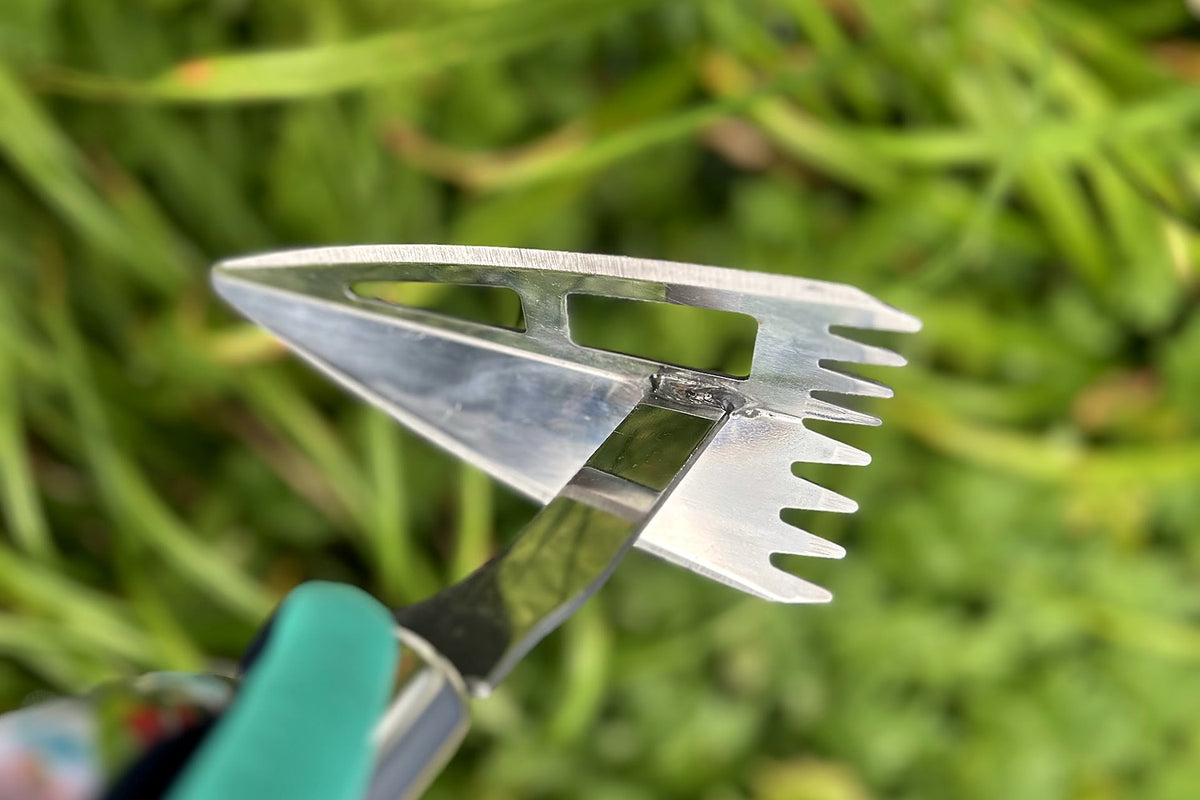
The best garden hoe for weeding is the Spear Head Hoe: a draw hoe with a pre-sharpened stainless steel blade, a rake on the back of the head, and a 60 inch fiberglass handle. It cuts weeds at the root line while you stand upright, then cultivates and furrows with the same head.
Why a draw hoe and not a stirrup? Control. A stirrup hoe is faster across open ground, but most weeding happens between plants, along edges, and around stems, where a blade you pull toward you with a clear view of the edge wins.
The handle matters as much as the blade. Sixty inches of fiberglass keeps you upright through a long pass and will not rot or splinter like wood, and two cushioned grips reduce hand fatigue over a long session. We are a family business in New Jersey. The Spear Head Spade is the flagship of our brand, with over 600,000 sold. The hoe sells only on Amazon. Full specs are on our Spear Head Hoe product page, and our garden hoe types and uses guide maps every hoe shape.
The 5 best garden hoes for weeding
No single hoe wins every bed. These five cover the weeding jobs most gardens actually have.
1. Spear Head Hoe: best garden hoe for weeding mixed beds
The Spear Head Hoe is the hoe we use for the weeding most gardens need: working down a border, cleaning the edge of a vegetable bed, and slicing the weeds between established plants. The stainless steel blade arrives sharpened, so from the first stroke it cuts a weed cleanly instead of tearing off the top and leaving the root to regrow. Pulled toward you, the pointed head reaches between stems where a wide blade would clip the plant you want to keep.
The rake on the back is the part people underestimate. After a pass the bed is littered with cut weeds and clods, so you flip the head, rake the debris off, and level the surface with the same tool. In spring the rake breaks clods before sowing and the point opens a furrow. Store the hoe in the shed or garage after use, and see the FAQ below for what to do if a rock nicks an edge.
Where it loses: on a large, open plot you strip of weeds weekly, the stirrup hoe below is faster, and on a lawn no hoe belongs at all. It is on Amazon.
2. Flexrake 1000L Hula-Ho: best stirrup hoe for big open beds
Across a wide, open bed with plants on generous spacing, a stirrup hoe clears seedlings faster than any draw hoe, ours included. The Flexrake 1000L Hula-Ho is the classic version of the shape, a steel loop on a 54 inch wood handle that cuts on both the push and the pull. You work it back and forth about an inch under the surface, severing roots with almost no soil disturbance, which matters because turned soil brings buried weed seed up to germinate.
Its limits are the flip side of its speed. The sweeping stroke is blind near stems, so in tight plantings and against established weeds it becomes a liability, and it does not furrow, hill, or rake. If you weed a wide-spaced vegetable garden weekly, own one alongside a draw hoe rather than instead of it. For a heavier build than the Flexrake, there is the Hoss stirrup hoe. Our hula hoe guide covers how to use one and where it fails.
3. DeWit Original Dutch Push Hoe: best for paths and open rows
A Dutch hoe cuts on the forward stroke: the blade angles ahead of the handle and you push it just under the surface while walking backward, so you never step on ground you have just cleaned. That makes it the weeding hoe for long open rows, gravel paths, and the strip between a bed and a lawn. The DeWit Original Dutch Push Hoe is the one we would buy: a forged tempered boron steel head on a long ash handle, with a P-grip that gives your upper hand real leverage on the push.
The cost is precision and price. A push stroke is less controllable near plants than a pull stroke, and a Dutch hoe cannot furrow or hill, so it stays a second hoe. The DeWit is a tool you buy once. For less, the Berry and Bird Dutch hoe puts a stainless steel head on a wood handle.
4. Ames True Temper Forged Warren Hoe: best for furrows and tight rows
A warren hoe is a draw hoe with a pointed, arrowhead blade. Pulled toward you, the point carves a clean V furrow for seed, and tipped on its side it hills soil around potatoes, leeks, and beans. For weeding, the narrow point gets between plants on close spacing, where a full-width blade would cut the crop. The Ames True Temper forged warren hoe puts a forged steel head on a 54 inch hardwood shaft with a cushioned end grip. Until October 13, 2026 this slot went to the Bully Tools 12-gauge warren hoe on a fiberglass handle, which was out of stock on Amazon when we checked that day, so we no longer link it.
Because the blade is pointed, a warren hoe clears less ground per stroke than a rectangular draw hoe, so weeding a whole bed with one is slow. Buy it for row crops and furrowing, and let a wider blade handle the open ground. The Truper Tru Pro forged warren hoe is the other forged warren hoe we would buy: a 5 inch head on a 54 inch white ash handle.
5. Ames Razor Back Onion Hoe: best for raised beds and delicate crops
An onion hoe is a light draw hoe with a thin, wide, shallow blade, built to skim tiny weeds off around onions, shallots, lettuce, and other shallow-rooted crops without slicing the crop's own surface roots. That lightness also makes it the best hoe for weeding a raised bed, where you work loose soil at waist height. The Ames Razor Back onion hoe has a 7 inch blade.
An onion hoe is a precision tool, not a workhorse. Against established weeds, clay, or a taproot, a thin blade skates rather than cuts, and it does little cultivating. For a forged head on an ash handle, step up to the Truper TruPro forged onion hoe.
How to choose a garden hoe for weeding
Start from the bed, not the catalog. Four questions settle most purchases.
- How are your plants spaced? Mixed beds, borders, and close plantings call for a draw hoe you pull with a clear view of the edge. Wide rows and open ground reward a stirrup or Dutch hoe that covers more soil per stroke.
- Do you need it to do more than weed? A draw hoe furrows, hills, and cultivates; with a rake on the back it levels too. Stirrup, Dutch, and onion hoes weed and little else, fine for a second hoe and limiting for the only one.
- How long is the handle? A weeding hoe should let you work standing fully upright: 54 inches at the minimum, 60 for comfort. Fiberglass will not rot or splinter; ash must be kept dry.
- Is the blade sharp, and will it stay that way? A hoe is a cutting tool. Thin stamped steel dulls and flexes; forged or thick-gauge heads hold an edge longer. Buy one that arrives sharpened, or plan on filing a standard blade every season, because a dull hoe turns weeding into hacking.
How do you weed with a hoe so the weeds stay dead?
Hoe on a dry, sunny day when weeds are small, keep the blade about an inch under the surface, and cut the root below the crown rather than chopping at leaves. Work backward so you do not tread on cleared soil, and leave the cut weeds to wither on top. Wet soil lets them re-root.
Two habits do more than any tool. Weed little and often: a seedling sliced at two inches dies where it lies, while a weed that has flowered needs pulling by hand, root and all. Once the bed is clean, mulch it; two or three inches stops most of the next generation, and the hoe gives way to a hand weeder for strays. Our best weeding tools guide covers hand weeders and stand-up pullers for the weeds a hoe cannot reach.
Frequently asked questions
What is the best hoe for weeding?
For most gardens, a sharp long-handled draw hoe: the Spear Head Hoe cuts weeds at the root line while you stand upright and also cultivates and furrows. A stirrup hoe is faster on large, open beds, and a Dutch hoe suits paths and rows. Match the blade to your plant spacing and the choice makes itself.
What is the difference between a weeding hoe and a garden hoe?
There is no formal difference. Any garden hoe weeds, but the shapes sold as weeding hoes, the stirrup, Dutch, and collinear types, are built only to skim weeds off just under the surface. A general garden hoe, meaning a draw hoe, weeds too and also furrows, hills, and breaks up soil, so it is the more versatile buy.
Is a stirrup hoe or a draw hoe better for weeding?
A stirrup hoe is faster across big, open, loosely planted beds because it cuts on both the push and the pull. A draw hoe is better between plants, along edges, and on weeds with real roots, because you pull it with control. Buy a draw hoe first and add a stirrup hoe if you weed a large plot weekly.
What is the best hoe for weeding a raised bed?
A light, thin-bladed hoe such as an onion hoe, which skims weeds off loose soil at waist height without disturbing the roots of the crop around them. A draw hoe with a pointed head also works well if you want one tool that furrows and levels too. Skip heavy chopping hoes; nothing in a raised bed needs them.
How do you keep a garden hoe sharp?
Most hoes need a few strokes of a flat mill file along the existing bevel at the start of each session, then a wipe to clean off soil. The Spear Head Hoe arrives pre-sharpened; if rocks or pebbles nick the edges, run a knife sharpener or metal file down either long side, and wear garden gloves while you do it.
Where can you buy the Spear Head Hoe?
The Spear Head Hoe sells only on Amazon. It is a draw hoe with a pre-sharpened stainless steel blade, a rake on the back of the head, a 60 inch fiberglass handle, and two cushioned grips. For digging or breaking new ground, choose the Spear Head Spade instead.
The bottom line
One good draw hoe covers most weeding, and the Spear Head Hoe is the one we reach for: it cuts clean, keeps you upright, and the rake on the back finishes the bed. Add a second hoe only when your garden votes for it: a stirrup hoe for a big open plot, a Dutch hoe for paths and rows, a warren hoe for furrows and close rows, or an onion hoe for raised beds. Start with the Spear Head Hoe, and for everything beyond weeding, our essential garden tools list ranks the rest of the shed.
Disclosure: some links in this guide are affiliate links to Amazon. This is at no extra cost to you, and it never changes our honest, use-based recommendations.
Product prices and availability are accurate as of the date/time indicated and are subject to change. Any price and availability information displayed on Amazon.com at the time of purchase will apply to the purchase of this product.