As an Amazon Associate we earn from qualifying purchases. Some links are paid. Disclosure
Our top picks
Best overall
1. Flame King YSN340K
Best for: Driveway cracks, pavers and gravel, off a 20 pound tank
Best for cracks and small jobs
2. Flame King YSNPQ810CGA
Best for: A few cracks or a short path, with no tank to carry
Best lower-output torch for paths and bare soil
3. Red Dragon Weed Dragon VT 2-23 C
Best for: A lower output with a regulator, for paths and bare soil before planting
The best weed torch for most yards is the Flame King YSN340K, a 32 inch propane torch on a 10 foot hose that runs off a 20 pound propane tank and lights with a push button. It was the best overall pick of the eight weed torches Bob Vila's tester used, and Flame King gives its output as 340,000 BTU. For cracks in a patio or a few weeds along a path, the Flame King YSNPQ810CGA is a 33 inch wand that screws onto a 1 pound propane cylinder, with no hose or tank to carry.
A weed torch is not meant to set weeds on fire. Iowa State University Extension says the heat makes the water and sap inside a plant's cells boil and burst the cell walls, and that flaming works best on small, young weeds where no plants you want are close by, such as the cracks of driveways and patios. Fire departments in Strongsville, Ohio, and Charlotte, Michigan, have warned residents after fires they linked to weed torches, so this guide is as much about where not to use one: near the house, fences, decks, mulch and dry grass. The other two picks are Flame Engineering kits: the 100,000 BTU Weed Dragon with a regulator, for paths and bare soil, and the 500,000 BTU Red Dragon with a squeeze valve, for long gravel drives.
Jump to: How a torch kills weeds | Where a torch belongs | Fire safety | Tanks, hoses and output | How to flame weeds | What a torch will not fix
Start here: which weed torch for you
- Driveway cracks, pavers and gravel, off a 20 pound tank: Flame King YSN340K (pick 1).
- A few cracks or a short path, with no tank to carry: Flame King YSNPQ810CGA (pick 2), on a 1 pound cylinder.
- A lower output with a regulator, for paths and bare soil before planting: Red Dragon Weed Dragon VT 2-23 C (pick 3). Pick 1 does these jobs too, with more output and a push-button start.
- Long gravel drives and large bare areas, with a pilot flame between passes: Red Dragon VT 3-30 SVC (pick 4).
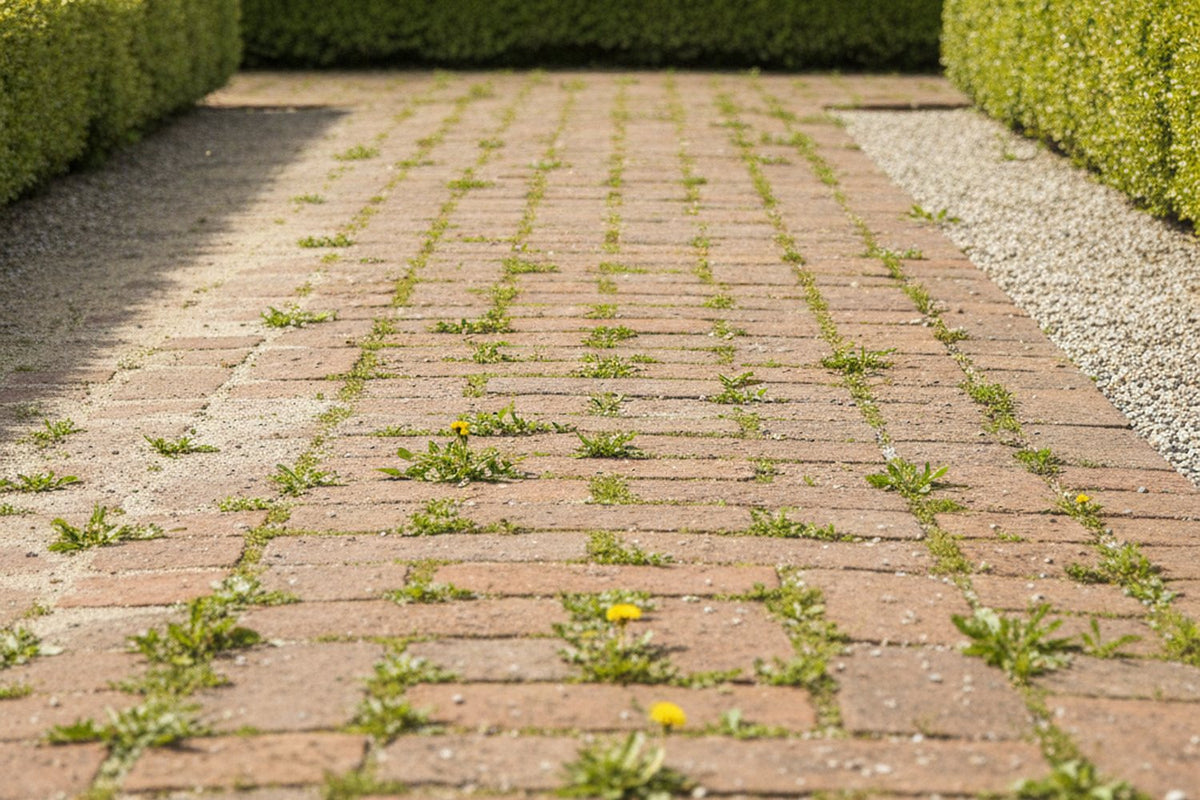
Before you buy one, look at where the weeds are. Strongsville's fire department tells residents to keep propane torches and other open flames away from homes, fences, decks, mulch, shrubs and landscaping, and Iowa State says never to use one around dry grasses or anything else that could easily ignite. Check your local burn rules too, as Flame King's listing for pick 1 says. The places the sources do name for a torch are bare and hard: the cracks of driveways and patios, gravel, pavers, and bare soil before you plant.
| Pick | Fuel | Output | Lighting | Hose | Best for | Our verdict | Where to buy |
|---|---|---|---|---|---|---|---|
| 1. Flame King YSN340KBest overall | 5 to 100 lb tank, 20 lb or larger recommended | 340,000 BTU | Push-button igniter | 10 ft | Driveway cracks, pavers and gravel, off a 20 pound tank | A 32 inch, 340,000 BTU propane torch on a 10 foot hose with a push-button igniter and a boost lever, and Bob Vila's best overall of the eight torches its tester used; the tank is not included. | Check price on Amazon |
| 2. Flame King YSNPQ810CGABest for cracks and small jobs | 1 lb cylinder | 24,000 BTU | Built-in igniter | None | A few cracks or a short path, with no tank to carry | A 33 inch, 24,000 BTU wand that screws onto a 1 pound propane cylinder, with a self-lighting igniter; Flame King says to hold it between the 6 and 8 o'clock positions. | Check price on Amazon |
| 3. Red Dragon Weed Dragon VT 2-23 CBest lower-output torch for paths and bare soil | Tank of 10 lb or more | 100,000 BTU | Spark lighter | 10 ft | A lower output with a regulator, for paths and bare soil before planting | Flame Engineering's 100,000 BTU homeowner kit, pre-assembled with a needle valve, a regulator preset to 18 PSI, a 10 foot hose and a spark lighter. | Check price on Amazon |
| 4. Red Dragon VT 3-30 SVCBest for long gravel drives and large bare areas | Tank of 20 lb or more | 500,000 BTU | Spark lighter | 10 ft | Long gravel drives and large bare areas, with a pilot flame between passes | A 500,000 BTU Red Dragon torch with a squeeze valve and adjustable pilot, a 10 foot hose and a spark lighter; it needs a tank of at least 20 pounds and some assembly. | Check price on Amazon |
The best weed torches, by job
1. Flame King YSN340K: best overall
Best overall
Best for: Driveway cracks, pavers and gravel, off a 20 pound tank
Flame King YSN340K
- Fuel: 5 to 100 lb tank, 20 lb or larger recommended
- Output: 340,000 BTU
- Lighting: Push-button igniter
A 32 inch, 340,000 BTU propane torch on a 10 foot hose with a push-button igniter and a boost lever, and Bob Vila's best overall of the eight torches its tester used; the tank is not included.
Flame King's YSN340K is a 32 inch torch on a 10 foot hose that connects to a propane tank of 5 to 100 pounds, by its listing; Flame King recommends a 20 pound tank or larger and says it is not for 1 pound cylinders. It arrives assembled, lights with a built-in push-button igniter, and has a boost lever: press it for the full flame and release it to drop back to idle. The listing gives a flame up to 28 inches long and an output of 340,000 BTU.
Why it is the pick: Bob Vila's tester, Mark Wolfe, used eight torches on plots of lawn, vegetable garden and landscape bed with similar weed cover, passed each flame over the weed leaves and stems at a slow walk without stopping, and checked the plots 3, 7 and 14 days later; he made this torch his best overall. Of the three heavy-duty torches in that test, he preferred it because the kit is only a hose and a wand, compact to store for a tool most people use a few times a year, and he found it easy to start with a very strong flame. Outdoor Life's tester, Scott Einsmann, named a 340,000 BTU Flame King his best value after using it on the cracks of a brick walkway and on garden beds he had just readied for planting.
Good to know: both testers describe a 6 foot hose (Bob Vila puts the reach at 9 feet: the hose plus a 3 foot wand); the listing linked here and Flame King's own page give 10 feet, so the kit may have changed since they tested it. Either way you carry the tank or set it down as you go, which Bob Vila's tester found heavy and awkward on longer jobs. Flame King's manual says to open the tank valve slowly, because the hose fitting has a built-in excess flow valve that restricts the gas, and gives a weak flame, if the valve is opened too quickly. It adds that cold weather lowers tank pressure and flame size. The tank is not included.
2. Flame King YSNPQ810CGA: best for cracks and small jobs
Best for cracks and small jobs
Best for: A few cracks or a short path, with no tank to carry
Flame King YSNPQ810CGA
- Fuel: 1 lb cylinder
- Output: 24,000 BTU
- Lighting: Built-in igniter
A 33 inch, 24,000 BTU wand that screws onto a 1 pound propane cylinder, with a self-lighting igniter; Flame King says to hold it between the 6 and 8 o'clock positions.
The YSNPQ810CGA is a 33 inch wand that screws straight onto a propane cylinder, with a flame control valve, a non-slip rubber handle and a self-lighting igniter, by its listing. Flame King's manual gives its output as 24,000 BTU and says to use standard 1 pound cylinders with a capacity of at least 14.0 ounces. It arrives assembled, and the cylinder is sold separately.
Why it is the pick: Bob Vila's tester named it the list's "Best Bang for the Buck," wrote that it "performed nearly identically to our Best Overall pick," and found that its pinpoint flame hit single weeds with high heat without harming the plants next to them. With no hose and no 20 pound tank to carry, it is the one to keep for a patio, a walkway or the cracks along a drive, the places Iowa State says flaming suits best.
Good to know: hold it the way Flame King says. Its manual says to work with the torch between the 6 and 8 o'clock positions and never to tip it past 8 o'clock, since that can blow out the flame or let liquid propane into the valve; if it happens, close the valve, return the torch to 6 o'clock and let it sit 10 to 15 minutes before relighting. Iowa State suggests torches that can be worked upside down, such as plumbing torches, and this one is not built for that. Bob Vila's tester found the igniter sometimes needed several clicks and the small flame slow going. After use, Flame King says to remove the cylinder, let the torch bell cool for at least 30 minutes on a surface that will not burn, and keep the cylinder disconnected in storage, indoors or out.
3. Red Dragon Weed Dragon VT 2-23 C: best lower-output torch for paths and bare soil
Best lower-output torch for paths and bare soil
Best for: A lower output with a regulator, for paths and bare soil before planting
Red Dragon Weed Dragon VT 2-23 C
- Fuel: Tank of 10 lb or more
- Output: 100,000 BTU
- Lighting: Spark lighter
Flame Engineering's 100,000 BTU homeowner kit, pre-assembled with a needle valve, a regulator preset to 18 PSI, a 10 foot hose and a spark lighter.
The Weed Dragon is Flame Engineering's homeowner kit: a 100,000 BTU vapor torch with a flame adjusting needle valve, a regulator, a 10 foot UL listed hose, a hand-tighten tank fitting and a spark lighter, by Flame Engineering's page. It is 27 1/2 inches long with a 23 inch handle, and it comes pre-assembled. Flame Engineering says it set the flame and output lower for homeowners who do not need a farm torch's power, and that barbecue cylinders work well with it; its manual asks for a vapor-withdrawal tank of at least 10 pounds and says the torch runs on a regulator preset to 18 PSI.
Why it is the pick: for most yard weeds you do not need the big numbers. Bob Vila's buying advice is that most weed burners make at least 20,000 BTU, that a torch of 20,000 to 100,000 BTU is often more than enough, and that heavy-duty output up to 500,000 BTU usually is not needed for common yard weeds. This kit sits at the top of that range, with the pressure set by its regulator, a flame you turn up or down with the needle valve, and a manual whose weeding tips include a quick check of the kill: squeeze a flamed leaf between your fingers, and a fingerprint left behind usually means a good kill.
Good to know: there is no built-in igniter. Flame Engineering's manual says to light it with the flint spark lighter in the kit and never with matches or a cigarette lighter, and to keep your hands and body out of the burner's path. Outdoor Life's roundup includes the squeeze-valve version of this torch, the VT 2-23 SVC, which did not meet our stock rule when we checked. Flame Engineering's page says the kit is for outdoor use only.
4. Red Dragon VT 3-30 SVC: best for long gravel drives and large bare areas
Best for long gravel drives and large bare areas
Best for: Long gravel drives and large bare areas, with a pilot flame between passes
Red Dragon VT 3-30 SVC
- Fuel: Tank of 20 lb or more
- Output: 500,000 BTU
- Lighting: Spark lighter
A 500,000 BTU Red Dragon torch with a squeeze valve and adjustable pilot, a 10 foot hose and a spark lighter; it needs a tank of at least 20 pounds and some assembly.
The VT 3-30 SVC is Flame Engineering's 500,000 BTU Red Dragon vapor torch with a squeeze valve and adjustable pilot, a rubber grip handle, a 10 foot UL listed hose, an excess flow tank fitting and a spark lighter, by Flame Engineering's page. The bell is 3 inches across, the handle 28 inches and the whole torch 33 1/2 inches. You put it together yourself: the manual's five steps join the torch, a male adaptor, the squeeze valve, the handle grip and the hose with the thread compound in the kit. The manual asks for a propane tank of at least 20 pounds.
Why it is the pick: the squeeze valve changes how a big torch is used. You set a small pilot flame with the round knob, then squeeze the handle for the full working flame, by the manual, and Flame Engineering says the squeeze valve and pilot suit spot weeding, where a full flame is not needed all the time, and save propane when you work that way. On a long gravel drive that means the full flame on each patch of weeds and only the pilot as you walk between them. Bob Vila's heavy-duty pick was Red Dragon's 400,000 BTU backpack kit, the BP 2512 SVC, which the same Flame Engineering manual covers; it did not meet our stock rule when we checked.
Good to know: it is more torch than most yards need, by Bob Vila's advice above, and it burns propane fast: Flame Engineering gives 10.13 pounds an hour at its normal 30 PSI, so a full 20 pound tank lasts about 2 hours at that setting. Its manual's safety list adds a line the other three picks' manuals do not carry: "Maintain a fire watch for at least 2 hours." Light it with the spark lighter, never with matches.
How we chose these
We compared the propane weed torches and burners that turned up in our Amazon searches against what extension services, fire departments and the makers' manuals say about flaming weeds. Each pick's maker publishes an instruction manual, and we read each one through before writing what the torch does or how to use it: Flame King's for picks 1 and 2, and Flame Engineering's Weed Dragon and Red Dragon manuals for picks 3 and 4. For how the torches work in a yard, we used two hands-on roundups that describe their testing: Bob Vila's, in which Mark Wolfe used eight torches on plots of lawn, vegetable garden and landscape bed and checked them 3, 7 and 14 days later, and Outdoor Life's, in which Scott Einsmann used torches on garden beds, walkways and his driveway.
For the flaming itself, we read Iowa State University Extension's "How to Utilize Flame Weeding for Weed Control", University of Vermont Extension's Flaming Stale Seedbeds for Weed Control and University of Maryland Extension's Flaming as a Weed Management Tool. For fire risk, we read the Strongsville Fire Department's warning about propane weed torches and the Charlotte Fire Department's advice as reported by WILX.
Our rules: each pick was in stock on Amazon on November 11, 2026, with a new offer in the buy box, and runs on propane from a cylinder its maker names. We make no promise about fire or injury: the safety steps on this page are the makers', the extension services' and the fire departments', named where they appear, and the claims about what a torch includes or does come from its maker or its listing.
Also considered: torches that missed the list and why
Flame King YSNPQ820S wide-flame torch. Bob Vila's pick for pavers: a 1 pound cylinder torch with a flame about 5 inches wide, which in Bob Vila's test cleared 250 square feet of weeds in 12 minutes against an average of 23 minutes for the pinpoint torches, with less regrowth at 3, 7 and 14 days. Its tester also found the wide flame harder to aim at single weeds without hitting the plants around them. It met our stock rule; pick 2 keeps the 1 pound cylinder slot for its pinpoint flame, and this is the one Bob Vila's tester liked for smallish paved areas.
Red Dragon backpack kits, BP 2512 SVC and BP 2512 C. Bob Vila's heavy-duty pick carries a 10 pound tank on a backpack frame. Neither listing met our stock rule when we checked.
Flame King YSN500K. A 39 inch, 500,000 BTU torch on a 10 foot hose with a flint striker, by its listing. It met our stock rule; pick 4 does the same large-area job with a squeeze valve and pilot flame.
Flame King YSN340K with a backpack carrier. Pick 1's torch sold with a backpack carrier for a 10 pound tank, which is sold separately; that kit's listing gives a 6 foot hose, and a 10 pound tank is under the 20 pound size Flame King recommends for this torch. If carrying the tank is your problem, it answers the one complaint Bob Vila's tester had about pick 1.
Bernzomatic JT850. A self-igniting torch with a trigger start and a 36 inch reach that burns propane or MAPP gas, by its listing. We could not find its instruction manual on Bernzomatic's site, so pick 2, whose manual we read, takes the small-job slot.
Very high output kits. The REHOSEUP kit's listing advertises 2,500,000 BTU. We found no maker manual for it, and Bob Vila's advice is that 20,000 to 100,000 BTU is often more than enough for yard weeds.
Electric weed burners. Plug-in hot air wands are also sold as weed burners, such as a 1500 watt, 120 volt wand from NAWESRVA, which needs no propane tank and makes its heat without an exposed flame, by its listing. We found no maker manual for one to check it against, so none is a pick.
How a weed torch kills weeds, and which ones
Flaming works by heat, not fire. Iowa State says a brief, intense heat bursts the plant's cell walls: right after a pass the weed turns a dull green and wilts slightly, and over the following hours or days it wilts completely and dies. University of Vermont Extension describes the same thing, cell sap expanding and breaking the cell walls, with the weeds wilting within several hours or days, and University of Maryland Extension notes that flaming differs from burning because the plant tissue is heated, not incinerated. Flame Engineering's manual puts it plainly: you do not need to burn weeds to a crisp, and a weed burned to a crisp can grow back from its unharmed root a few days later.
How well it works depends on the weed. Here is what the sources say, weed by weed.
| Weeds | What the sources say | Whose word |
|---|---|---|
| Small broadleaf seedlings | Most open to flaming while small, ideally under a couple of inches tall; broadleaf weeds die more readily than grasses | University of Vermont; Iowa State |
| Grasses | Many keep their growing point under the soil or inside a sheath, so they often regrow; leaves can turn white after a pass and new ones appear within a week; they may need repeat passes, days or weeks apart | University of Vermont; University of Maryland |
| Perennials and established weeds | Need repeat flaming about every two weeks to kill new growth and exhaust the roots; flaming with cultivation works better than flaming alone | Iowa State |
| Purslane | Fairly tolerant of flaming unless the torch moves very slowly | University of Vermont |
| Large or flowering weeds | Bigger plants need more heat and a longer pass; Outdoor Life's tester burned only the flowers off grown weeds, so they would not go to seed, and does not recommend "burning weeds taller than a few inches" | University of Maryland; Outdoor Life |
| Weeds wet with dew | Water on the leaves insulates them, so give them a longer pass; dew can make flaming less effective | Flame Engineering; University of Maryland |
| Poison ivy and poison oak | Do not flame them: the smoke carries the plant's irritants to skin, eyes and lungs | Flame Engineering; Bob Vila |
What it shows: a torch is a tool for small weeds, and for repeat visits. Flame Engineering says to catch weeds early, at 1 to 4 inches. University of Vermont Extension says to flame broadleaf weeds by the 3-leaf stage, before they grow too large and hard to kill, and University of Maryland Extension reports studies in which plants were more sensitive to heat in the afternoon than early in the morning.
Where a weed torch belongs, and where it does not
Iowa State calls flaming non-selective: it hits any plant nearby, and Flame Engineering's manual says the torch does not tell wanted plants from weeds. So the question is less which torch than where you point it.
| Place | Use a torch? | Whose word |
|---|---|---|
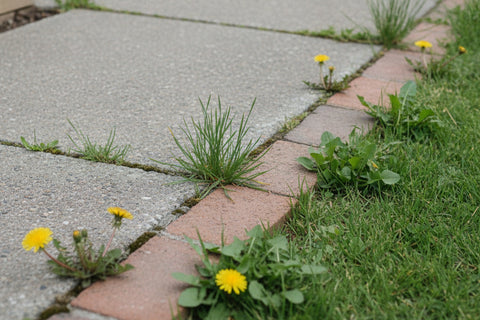
| Cracks in driveways, patios and walks | Yes, where no wanted plants are nearby, and well away from the house, fences and decks: the places Iowa State says flaming suits best | Iowa State; Outdoor Life (a brick walkway); Strongsville and Charlotte fire departments |
| Gravel drives and paved areas | Yes, with a larger torch for a large area, well away from structures and vehicles | Bob Vila; Charlotte Fire Department |
| Bare soil before planting | Yes: flaming a prepared seedbed kills the first flush of weed seedlings without stirring up new seeds | University of Vermont; Iowa State; University of Maryland |
| In the lawn | No: the flame does not tell weeds from grass | Iowa State; Flame Engineering |
| Mulched beds | No: fires can start by smoldering beneath mulch before anyone sees them | Strongsville Fire Department; Outdoor Life; Bob Vila |
| Near the house, fences, decks and vehicles | No | Strongsville and Charlotte fire departments |
| Dry grass, leaves, pine needles and evergreens | No: pine needles catch easily, and conifers are very flammable | Iowa State; Flame Engineering; Bob Vila |
| Windy, hot or dry days | No | Iowa State; Strongsville and Charlotte fire departments |
What it shows: the torch jobs and the fire risks sit side by side. The crack along the driveway is a torch job; the mulch bed beside it is not, and Outdoor Life's tester writes that he started a small fire when he used a torch on or near mulch. Bob Vila calls using any torch in a mulched flower bed a bad idea, and Strongsville's fire department says heat can stay trapped in mulch, roots and wood chips for a long time before it ignites.
Fire safety: before, during and after
Every pick's manual carries the same warning: "You are using an intense open flame," and the torch makes "an extremely hot and nearly invisible flame." Here is what the manuals and the fire departments ask for, step by step.
| When | What to do | Whose word |
|---|---|---|
| Before you buy or light it | Check local burn rules | Flame King's listing for pick 1 |
| Before you light it | Keep a type ABC fire extinguisher at the work site, within easy reach, and a charged garden hose nearby | Flame King and Flame Engineering manuals; Charlotte Fire Department |
| Before you light it | Wear gloves the whole time; long sleeves, long pants and boots are recommended; the pick 1 listing adds goggles | Flame King and Flame Engineering manuals; Flame King's listing |
| Before you light it | Check every connection for leaks with soapy water, never a match or an open flame | Flame King and Flame Engineering manuals |
| While it is lit | Work against the breeze, and not on windy days | University of Vermont; Iowa State |
| While it is lit | Never leave it unattended, never point it at a person or animal, and keep the cylinder upright | Flame King and Flame Engineering manuals; Strongsville and Charlotte fire departments |
| After | Soak the area and keep watching it for 30 minutes or more | Charlotte Fire Department |
| After | Do not assume watering removes the danger; keep watching | Strongsville Fire Department |
| After | "Maintain a fire watch for at least 2 hours" | Flame Engineering's Red Dragon manual (pick 4) |
| Storing it | Never store it hot; indoors, disconnect the tank and store the cylinder as the propane storage standard NFPA 58 sets out; pick 2's manual says to disconnect it outdoors too | Flame King and Flame Engineering manuals |
What it shows: the after is as long as the job. The watch times differ, 30 minutes from Charlotte's fire department and 2 hours in the Red Dragon manual, and Strongsville's fire department says only to keep watching. Outdoor Life's tester adds that the flame of the torch he used was hard to see in bright sunlight. Strongsville's fire department goes further than the others: it asks residents to use mechanical or chemical weed control whenever they can, and to keep open-flame torches away from homes and other buildings. If a fire starts, it says to call 911 right away, because even a small fire can spread fast.
Tanks, hoses and output: the four picks side by side
Here is what each maker says each pick runs on and comes with.
| Detail | Pick 1: Flame King YSN340K | Pick 2: Flame King YSNPQ810CGA | Pick 3: Weed Dragon VT 2-23 C | Pick 4: Red Dragon VT 3-30 SVC |
|---|---|---|---|---|
| Propane cylinder | 5 to 100 pound tank, 20 pound or larger recommended; not 1 pound | 1 pound cylinder, capacity of at least 14.0 ounces | Tank of at least 10 pounds | Tank of at least 20 pounds |
| Output, by the maker | 340,000 BTU | 24,000 BTU | 100,000 BTU | 500,000 BTU |
| Hose | 10 feet | None: screws onto the cylinder | 10 feet | 10 feet |
| Lighting | Built-in push-button igniter | Built-in igniter | Spark lighter in the kit | Spark lighter in the kit |
| Flame control | Knob, plus a boost lever | Flame control valve | Needle valve; regulator preset to 18 PSI | Knob for the pilot; squeeze valve for the full flame |
| Out of the box | Assembled | Assembled | Pre-assembled | Five assembly steps with thread compound |
| Length | 32 inches | 33 inches | 27 1/2 inches | 33 1/2 inches |
What it shows: picks 1, 3 and 4 run off a tank on a hose, and pick 2 is the only one that carries its fuel on the wand. The three hose kits connect with a tank fitting that has a built-in excess flow valve, so open the tank slowly or the valve trips and the flame stays weak. Flame King's manual says to close the tank valve, wait 30 to 60 seconds and reopen it slowly; Flame Engineering's Red Dragon manual says to open the tank knob just a crack, 1/8 to 1/4 turn, and give the hose 10 seconds to fill before you open the torch valve.
Use the kind of cylinder the manual names. Every pick's manual says the torch is made for vapor-withdrawal cylinders only and to keep the cylinder level and upright, never on its side. Flame King's listing for pick 1 calls the 5 to 100 pound tanks it fits standard vapor-withdrawal cylinders, and Flame Engineering says barbecue cylinders work well with the Weed Dragon.
On output, the two testers disagree. Bob Vila's advice is that 20,000 to 100,000 BTU is often more than enough for yard weeds, while Outdoor Life's buying guide says "A 300,000 to 500,000 BTU torch is ideal for controlling weeds." Outdoor Life adds that a bigger flame works faster and wind bothers it less, but it empties the tank sooner. Flame Engineering gives the fuel use: 2.25 pounds of propane an hour for the Weed Dragon at 18 PSI and 10.13 pounds an hour for the VT 3-30 SVC at 30 PSI, so a full 20 pound tank lasts about 9 hours on pick 3 and about 2 hours on pick 4 at those settings.
How to flame weeds, step by step
The manuals, the extension services and the testers agree on more than they differ. In order:
- Pick the day. Calm, and not hot and dry (Iowa State; Strongsville Fire Department). Bob Vila suggests "a wind-still day after a good soaking rain." Check your burn rules.
- Clear the area. Rake away leaves and debris, which burn much faster than weeds (Bob Vila), and dead vegetation and mulch buildup near the house (Strongsville Fire Department).
- Set up. Stand the tank level and upright, check every connection with soapy water, and have the extinguisher and a charged hose at hand (the manuals; Charlotte Fire Department).
- Light it as your manual says. Open the tank valve slowly, let a little gas through the torch, then use the built-in igniter or the kit's spark lighter, never matches, with your hands and body out of the burner's path.
- Pass, do not linger. Walk slowly and pass the flame over the leaves without stopping, as Bob Vila's tester did; Flame Engineering says walking pace is usually right and a split second of heat should do it. If the flame goes out, Flame Engineering says the torch is probably too close to the ground or the weeds.
- Check the kill. Squeeze a flamed leaf between your fingers; in the Flame King and Flame Engineering manuals' words, "A fingerprint usually indicates a good kill."
- Shut it off. For the hose kits, close the tank valve first, let the gas burn out of the hose, then close the torch valve (the manuals). For pick 2, close the flame valve and wait for the flame to go out, which Flame King says can take up to 60 seconds.
- Wet it and watch it. Charlotte's fire department says to soak the area and keep watching it for 30 minutes or more; the Red Dragon manual asks for a 2 hour fire watch.
- Come back. Iowa State says perennial or established weeds need flaming about every two weeks; Bob Vila's tester treated each plot a second time after 14 days.
- Store it cold. Never store a hot torch, and disconnect the tank before you store it indoors (the manuals); pick 2's manual says to keep it disconnected outdoors too.
What a weed torch will not fix
"Flaming is not a cure-all," as the Flame King and Flame Engineering manuals both put it: you may need to repeat it several times a year, depending on the weeds and on whether new seeds sprout through the season. University of Maryland Extension lists the main drawbacks of flame weeding as no lasting control after the pass, no way to spare wanted plants, slow going, the cost of running it, and the risk to the person using it. Outdoor Life's tester puts the size limit simply: "Burning a fully grown dandelion to the ground will take longer than pulling it out."
So a torch is one tool among several. Weeds among plants you want to keep need a hand tool, lawn weeds need a lawn product, and a path or bed you want to stay clear needs something under it to stop weeds coming through.
Related guides
For weeds in beds and borders, our weeding tools guide compares hoes, hand weeders and pullers. For weeds in the lawn and on patios, our weed killer guide sets out the products by job. For paths and beds you want to keep clear, our weed barrier and landscape fabric guide compares what goes under the mulch or gravel.
Frequently asked questions
What is the best weed torch?
For most yards, the Flame King YSN340K, a 340,000 BTU torch on a 10 foot hose that runs off a 20 pound tank and was Bob Vila's best overall of the eight torches its tester used. For a few cracks or a short path, the Flame King YSNPQ810CGA screws onto a 1 pound cylinder. For a lower output with a regulator, the Red Dragon Weed Dragon VT 2-23 C, and for long gravel drives, the 500,000 BTU Red Dragon VT 3-30 SVC with its squeeze valve and pilot flame.
Does a weed torch kill weeds permanently?
Not on its own. Iowa State University Extension says flaming works best on small, young weeds and that perennial or established weeds need repeat passes about every two weeks to exhaust their roots. University of Vermont Extension says many grasses regrow after flaming because their growing point is below ground or in a sheath, and the Flame King and Flame Engineering manuals say flaming is not a cure-all and may need repeating several times a year.
Do you have to burn weeds to ash?
No. Iowa State says the goal is not to set weeds on fire but a brief, intense heat that bursts the plant's cells, after which the weed wilts and dies within hours or a few days. Flame Engineering's manual says a split second of heat at a slow walk should do it, and that a weed burned to a crisp can grow back from its unharmed root.
Can you use a weed torch near mulch or the house?
The fire departments that have dealt with weed torch fires say no. Strongsville, Ohio, tells residents not to use propane torches near homes, fences, decks, mulch, shrubs or landscaping, and says fires can start by smoldering beneath mulch before they are seen. Charlotte, Michigan, says to keep well clear of buildings, fences, decks, vehicles and plantings, to wet the area after use and to keep watching it for 30 minutes or more.
How many BTU does a weed torch need?
The testers disagree. Bob Vila's buying advice is that a torch of 20,000 to 100,000 BTU is often more than enough for common yard weeds, while Outdoor Life's says 300,000 to 500,000 BTU is ideal. A bigger flame works faster and stands up to wind better, Outdoor Life adds, but uses more propane: Flame Engineering gives 2.25 pounds an hour for its 100,000 BTU Weed Dragon and 10.13 pounds an hour for its 500,000 BTU VT 3-30 SVC at their normal pressures.
What size propane tank does a weed torch use?
It depends on the torch, so go by its manual. Flame King's YSN340K works with tanks of 5 to 100 pounds and recommends 20 pounds or larger, not 1 pound cylinders; its YSNPQ810CGA uses standard 1 pound cylinders. Flame Engineering's manuals ask for a tank of at least 10 pounds for the Weed Dragon and at least 20 pounds for the VT 3-30 SVC. Each manual says to use a vapor-withdrawal cylinder only.
Can you burn poison ivy with a weed torch?
No. The Flame King and Flame Engineering manuals say not to flame poison oak, poison ivy or any plant that can cause a skin rash, because the smoke carries skin irritants, and Bob Vila says the oil in poison ivy rides the smoke and can reach the lungs.
When is the best time to use a weed torch?
When the weeds are small and the day is calm. Flame Engineering says to catch weeds at 1 to 4 inches, University of Vermont Extension says to flame broadleaf weeds before they pass the 3-leaf stage, and Bob Vila suggests "a wind-still day after a good soaking rain." University of Maryland Extension reports studies in which flaming worked better in the afternoon than early in the morning.
Disclosure: Some links pay us a commission when you click or buy, and on some pages brands pay us through Amazon's creator program on links to their products. Availability was checked on Amazon on November 11, 2026 and can change.
Product prices and availability are accurate as of the date/time indicated and are subject to change. Any price and availability information displayed on Amazon.com at the time of purchase will apply to the purchase of this product.