
As an Amazon Associate we earn from qualifying purchases. Some brands also pay us when you click or buy, so those links are ads. Full disclosure below
Our top picks
Best overall
1. ComfortBilt HP22
Best for: A freestanding stove for the main living space, in a house with reliable power
Best for power outages
2. Freedom Stoves PS21
Best for: Heat that keeps running through a power outage without a generator
Best pellet stove insert
3. ComfortBilt HP22i
Best for: An existing wood-burning fireplace with a chimney for the liner
The best pellet stove for most homes, of the EPA-certified stoves you can order on Amazon, is the ComfortBilt HP22: Popular Mechanics names it the best overall pellet stove, Consumer Reports lists it among the pellet stoves it has run through its lab, and ComfortBilt's manual gives it a heating area as large as 2,800 square feet and a 55 pound hopper. If the heat has to keep coming during a power outage, the Freedom Stoves PS21 takes a 24 volt battery backup, and for an existing wood-burning fireplace there is ComfortBilt's HP22i insert.
Every pellet stove here feeds pellets from a hopper with an electric auger and fans, so it needs an outlet and a vent to the outside, and each maker's manual calls for a carbon monoxide detector near the stove. Both ComfortBilt manuals say the stove should not be a home's only heat source, because an outage or routine maintenance stops it cold. The sections after the picks cover sizing, pellet use, outages, venting, fuel and cleaning from the makers' manuals, the EPA, the CPSC, NFPA, the US Fire Administration and Consumer Reports.
Jump to: Pellet or wood | What size | How long a hopper lasts | Power outages | Venting and installation | Pellets | Cleaning and ash | Alarms
Start here: which pellet stove for you
- A freestanding stove for the main living space, in a house with reliable power: the ComfortBilt HP22 (pick 1).
- Heat that keeps running through a power outage without a generator: the Freedom Stoves PS21 (pick 2), with its two 12 volt batteries bought separately.
- An existing wood-burning fireplace you want to heat with pellets: the ComfortBilt HP22i (pick 3).
- No power at all, such as an off-grid cabin: a gravity-fed stove that needs no electricity. The US Stove Wiseway is the one the roundups name, and it missed our bar this season (see Also considered).
- Every buyer: a battery or battery-backup carbon monoxide alarm on every level of the house, which the CPSC asks for, and the alarms each stove's manual calls for near the stove.
| Pick | Heat output (EPA test) | Heating area (maker or listing) | Hopper and low burn time | In a power outage | Best for | Our verdict | Where to buy |
|---|---|---|---|---|---|---|---|
| 1. ComfortBilt HP22Best overall | 9,696 to 40,689 BTU an hour | Up to 2,800 sq ft | 55 lb (40 to 45 usable), up to 20 hr | Shuts down; pure sine wave backup only | A freestanding stove for the main living space, in a house with reliable power | Popular Mechanics' best overall pellet stove and on Consumer Reports' list of lab-tested stoves, for a main living space in a house with reliable power. | Check price on Amazon |
| 2. Freedom Stoves PS21Best for power outages | 8,526 to 27,884 BTU an hour | 800 to 1,800 sq ft (listing) | 40 lb, about 32.5 hr | Runs on two 12 volt batteries, over 40 hr (listing) | Heat that keeps running through a power outage without a generator | The one pick with a battery backup, two 12 volt batteries bought separately that its listing puts at over 40 hours, and the longest hopper time on low of the three at about 32.5 hours. | Check price on Amazon |
| 3. ComfortBilt HP22iBest pellet stove insert | 9,696 to 40,689 BTU an hour | Up to 2,800 sq ft | 47 lb, up to 18 hr | Shuts down; pure sine wave backup only | An existing wood-burning fireplace with a chimney for the liner | Pick 1's EPA test figures in a fireplace insert, with a 47 pound hopper and a finishing shroud, an ash vacuum and a remote in the box. | Check price on Amazon |
The best pellet stoves, by job
Three stoves for three different jobs. All three carry EPA certification in their makers' test tables, at 1.01 to 1.58 grams of smoke an hour against EPA's 2020 limit of 2.0, all three take a 3 inch or 4 inch pellet vent, and all three burn wood pellets only.
1. ComfortBilt HP22 Pellet Stove: best overall
Best overall
Best for: A freestanding stove for the main living space, in a house with reliable power
ComfortBilt HP22
- Heat output (EPA test): 9,696 to 40,689 BTU an hour
- Heating area (maker or listing): Up to 2,800 sq ft
- Hopper and low burn time: 55 lb (40 to 45 usable), up to 20 hr
Popular Mechanics' best overall pellet stove and on Consumer Reports' list of lab-tested stoves, for a main living space in a house with reliable power.
The HP22 is ComfortBilt's freestanding steel stove with a large bay window, a 55 pound hopper and an ash pan that the ashes drop into. ComfortBilt's 2024 manual prints its EPA certification table: 1.01 grams of smoke an hour, 80.5 percent efficiency on the higher heating value and a heat output of 9,696 to 40,689 BTU an hour, and it puts the heating capacity at 2,800 square feet at most. The manual counts 40 to 45 of the 55 pounds as usable and gives up to 20 hours on the lowest of its five power settings. The Amazon listing adds a remote control, automatic ignition and a programmable thermostat, and ComfortBilt's page gives the size as 24 by 25 inches and 32.5 inches tall, with a 3 inch exhaust and a 2 inch air intake at the back. ComfortBilt covers the electrical parts and burn pot for 1 year and the steel for 5 years.
Why it is the pick: it is the one stove on our list with support from more than one independent source. Popular Mechanics, which built its list from research, names this exact listing its best overall pellet stove for heating a large area, and Consumer Reports includes the HP22 among the pellet stoves it has tested in its lab, where it scores heat-up speed, capacity, loading, cleaning and controls (the scores are for members). Of the pellet stoves we checked on Amazon, it also has the longest record of owner ratings. The manual allows it in a mobile home if it is fixed to the floor, grounded to the chassis and given an outside air supply.
Good to know: it runs on a 115 volt outlet. The manual recommends a dedicated 15 amp breaker and no GFCI outlet, requires a surge protector, and says any generator, UPS or battery system feeding it must put out a pure sine wave. In an outage it shuts itself down and will not restart on its own when the power returns. Popular Mechanics notes the hopper opening is small, and it gives 50,000 BTU where ComfortBilt's manual tops out at 40,689; this page uses the manual's figure.
2. Freedom Stoves PS21 Pellet Stove: best for power outages
Best for power outages
Best for: Heat that keeps running through a power outage without a generator
Freedom Stoves PS21
- Heat output (EPA test): 8,526 to 27,884 BTU an hour
- Heating area (maker or listing): 800 to 1,800 sq ft (listing)
- Hopper and low burn time: 40 lb, about 32.5 hr
The one pick with a battery backup, two 12 volt batteries bought separately that its listing puts at over 40 hours, and the longest hopper time on low of the three at about 32.5 hours.
The PS21, which Freedom Stoves calls the Independence, is a narrow freestanding stove: 18 inches wide, 37 inches tall (41 with the optional legs) and 21 deep, at 225 pounds, by its manual. The manual's EPA table puts its smoke at 1.58 grams an hour and its overall efficiency at 77.9 percent, with a tested heat output from 8,526 BTU an hour on low to 27,884 on high; its input rating is 34,700 BTU. It holds 40 pounds of pellets, burns 1.2 pounds an hour on its lowest setting and runs about 32.5 hours a hopper there. The Amazon listing gives a heating area of 800 to 1,800 square feet, a touchscreen, a Wi-Fi app and a remote, and a 5 year limited warranty, and the side panels take 12 by 12 inch ceramic tile if you want to change the look.
Why it is the pick: it is the one stove on our list built to keep burning through an outage. Its 24 volt battery backup runs on two 12 volt batteries that you buy separately, and the listing and Pellethead, the dealer that sells it on Amazon, put the run time at more than 40 hours. The manual says the stove keeps the batteries charged while it runs on house power, and that without a backup battery it will not run in an outage. It also asks you to test the backup every month. Its 32.5 hours a hopper on low is also the longest of the three picks, well over a day. Freedom's manual approves it for mobile homes when it is bolted to the floor, grounded to the chassis, has an outside air inlet and is not in a sleeping room, and Freedom's dealer list names Pellethead's company, Earth Sense Energy Systems.
Good to know: the batteries are not in the box, and the 40 hour figure is the seller's, not a measured result we could find. With the backup fitted, the manual warns that the on/off switch alone does not cut all power to the stove, so it tells you to unplug the cord and disconnect the batteries before any maintenance. Its heating range is the listing's 800 to 1,800 square feet, so it is sized for a smaller home or one floor. We found no independent review of this model, so the figures here are Freedom's and its dealer's.
3. ComfortBilt HP22i Fireplace Insert: best pellet stove insert
Best pellet stove insert
Best for: An existing wood-burning fireplace with a chimney for the liner
ComfortBilt HP22i
- Heat output (EPA test): 9,696 to 40,689 BTU an hour
- Heating area (maker or listing): Up to 2,800 sq ft
- Hopper and low burn time: 47 lb, up to 18 hr
Pick 1's EPA test figures in a fireplace insert, with a 47 pound hopper and a finishing shroud, an ash vacuum and a remote in the box.
The HP22i is ComfortBilt's insert for an existing fireplace, and its manual carries the same EPA emissions report as the HP22: 1.01 grams an hour, 80.5 percent efficiency, 9,696 to 40,689 BTU an hour and the same 2,800 square foot heating figure. Its hopper holds 47 pounds, which ComfortBilt says lasts up to 18 hours on the lowest setting. It needs a fireplace opening of at least 21 inches wide, 18 deep and 24.5 high, and it ships with a 43 by 33 inch finishing shroud, an ash vacuum and a remote control, by ComfortBilt's page.
Why it is the pick: an insert lets the existing chimney carry the vent, where the EPA notes a freestanding stove vents through an outside wall or the ceiling. It is the one pellet insert that cleared our bar on Amazon, and it brings pick 1's EPA test figures into a fireplace, with an ash vacuum in the box for the weekly clean.
Good to know: the manual's fireplace rules are specific. Leave the bricks and masonry in place, take out the fireplace damper or fix it open, run a pellet liner down the chimney to a clean-out tee on the back of the insert, and fix a label on the fireplace's back wall saying it was altered for an insert. ComfortBilt recommends a flexible liner so the insert can be pulled out for cleaning, and asks for a non-combustible hearth reaching at least 6 inches in front and to each side. The manual says not to install it in a sleeping room, because the stove uses the room's oxygen. Like pick 1, it needs a 115 volt outlet, any backup power must be pure sine wave, and ComfortBilt warns that lighting it on battery backup will drain the battery hard. Consumer Reports' ratings cover freestanding stoves, not inserts.
How we chose these
We compared about two dozen pellet stoves and pellet inserts sold on Amazon on their listings, stock and owner ratings, then read the makers' product pages and owner's manuals for the three that cleared our bar: ComfortBilt's 2024 HP22 manual and its HP22i manual, an earlier HP22 manual for the burn rate, and Freedom Stoves' PS21 owner's manual. EPA test figures come from the certification tables printed in those manuals. We then read what independent reviewers found. Consumer Reports tests pellet stoves in its lab and lists the HP22 among them. Popular Mechanics and Field and Stream built their lists from research. Bob Vila installed and ran a ComfortBilt HP42 Alpine for its review.
Every numbered pick was in stock on Amazon on October 14, 2026, sold new by its maker or by a dealer the maker lists, matched by model number to the stove in its manual, and backed by an established record of owner ratings. Few pellet stoves on Amazon clear that bar this season, so this list has three picks, each for a different job, rather than a longer list padded with weaker ones. Safety rules on this page come from the makers' manuals and from the EPA, the Consumer Product Safety Commission, NFPA and the US Fire Administration, with installation advice from Consumer Reports, and we name the source each time.
Also considered: stoves that missed the list and why
ComfortBilt HP42 Alpine. The stove Bob Vila installed through an exterior wall and ran; its 120 pound hopper went three days without a refill with the stove set to 68F. Consumer Reports also lists it among its tested stoves. It missed because its record of owner ratings on Amazon is below our bar.
ComfortBilt HP22-N. Field and Stream's best overall pick and one of Bob Vila's two ComfortBilt picks in its brand list, an 80 pound hopper version of pick 1 covered in the same earlier manual. It was not in stock on Amazon on October 14, 2026.
ComfortBilt HP50. Bob Vila's best overall in its research list of pellet stoves. Its record of owner ratings on Amazon is below our bar.
US Stove GW1949 Wiseway. A gravity-fed stove that needs no electricity, the non-electric pick of Popular Mechanics, Field and Stream and Bob Vila; the EPA notes that gravity stoves heat without power. Amazon showed it only in limited stock on October 14, 2026, and its record of owner ratings is below our bar.
Cleveland Iron Works Mini (PS20W) and Bayfront (PSBF66W). Popular Mechanics' picks for small spaces and for Wi-Fi; Field and Stream and Bob Vila also pick the Mini for small spaces. Both were in limited stock on October 14, 2026, below our bar on owner ratings.
PelPro PP60B. Popular Mechanics' budget pick, also on Consumer Reports' tested list. It was not in stock on Amazon on October 14, 2026.
Castle Serenity 41278. Field and Stream's budget pick, also on Consumer Reports' tested list. It was in limited stock on October 14, 2026, below our bar on owner ratings.
PelPro PP150 and Cleveland Iron Works PS130W. Two large-hopper stoves: the PP150 has too short a record of owner ratings so far, and the PS130W was in limited stock on October 14, 2026.
Dealer brands. Hearth retailers such as Embers Living feature brands like Hampton, Harman, Osburn, Quadra-Fire and Regency. This page covers stoves you can order on Amazon.
Pellet stove or wood stove: which is right for you?
The EPA describes pellet stoves as usually cleaner and more efficient than wood stoves, and says that used correctly they make very little smoke or creosote, the main cause of chimney fires. You pour pellets into a hopper and the stove feeds itself, with no cutting, splitting, stacking or drying of wood. EPA-certified pellet stoves usually run 70 to 83 percent efficient.
Consumer Reports sets out the trade. A wood stove keeps heating in an outage, while a pellet stove stops without a generator or a power station. A pellet stove brings a whirring auger and fan where a wood stove crackles, and its motorized parts are ones a wood stove does not have, which is why CR says wood stoves tend to last longer. Firewood can also be cheaper than pellets, or free, if you cut your own. Choose a pellet stove for steady, thermostat-controlled heat with little tending, and a wood stove if heat without power matters most and you have the wood.
What size pellet stove do you need?
Makers sell pellet stoves by square footage, and each maker here hedges the figure. ComfortBilt's HP22 figure is 2,800 square feet at most, and only in mild temperatures; Freedom's dealer gives the PS21 a range of 800 to 1,800 and says insulation, windows and the temperatures inside and out all change it. Consumer Reports notes that some experts find makers' square footage figures too inconsistent to be useful, and a hearth salesperson it interviewed puts about 40,000 BTU an hour as enough for a medium-sized room in a typical home, depending on layout, insulation and region.
The firmer number is the heat output from each stove's EPA certification test, printed in its manual: 9,696 to 40,689 BTU an hour for both ComfortBilts and 8,526 to 27,884 for the PS21. EPA puts the range across certified pellet stoves at 8,000 to 90,000 BTU an hour, so all three sit in the lower half of it. For a large open living area, start from the ComfortBilt figures; for a smaller home or one floor, the PS21's range fits. If the stove will heat the whole house, read the next two sections first.
To check a stove's certification yourself, search its maker or model name in EPA's Certified Wood Heater Database. EPA says the database lets you look up a heater's efficiency, emission rate and carbon monoxide values, its fuel type, and whether it is certified to the 2020 Step 2 limit, which for pellet stoves is 2.0 grams of smoke an hour.
How long does a hopper of pellets last?
Pellets usually come in 40 pound bags, Consumer Reports notes, and the makers give enough burn figures to work out how long a fill lasts and how many bags a day each stove goes through. The table uses the makers' own rates; the hours on high and the bags per day are our arithmetic.
| Stove | Hopper (maker) | Burn rate, low and high (maker) | Hours per hopper on low (maker) | Hours per hopper on high (computed) | 40 lb bags per 24 hours (computed) |
|---|---|---|---|---|---|
| 1. ComfortBilt HP22 | 55 lb, 40 to 45 usable | Low not listed; 4.8 lb an hour at most (earlier HP22 manual) | Up to 20 | About 8.3 to 9.4, on the usable 40 to 45 lb | About 2.9 at the top rate |
| 2. Freedom Stoves PS21 | 40 lb | 1.2 lb an hour low (manual); 4.8 high (dealer page) | About 32.5 | About 8.3 | About 0.7 on low, about 2.9 on high |
| 3. ComfortBilt HP22i | 47 lb | Not listed | Up to 18 | Not listed | Not listed |
What it means: at the top rate either freestanding stove empties a hopper in about eight or nine hours and goes through nearly three bags a day, so on the coldest days plan on filling it close to three times. On low, the PS21 takes about three quarters of a bag a day. For comparison, a dealer told Consumer Reports that a stove run every day goes through about a bag a day, about 3 tons over five months, which falls between the low and high figures above. Freedom's manual adds that feed rates can vary by as much as 20 percent with pellet size, and ComfortBilt's earlier manual says pellet brand, quality and moisture all change how much a stove burns, so treat these as planning numbers.
Will a pellet stove work in a power outage?
Not on its own, unless it has a battery backup. The EPA explains that pellet stoves need electricity for the motors that feed the fire and blow out the hot air, that some models can take backup batteries, and that a less common kind, the gravity-fed stove, needs no electricity. Both ComfortBilt manuals say their stoves shut down safely in an outage, ask you to keep the door and ash pan closed so the vent can draft on its own, and note the stove will not restart when power returns. Freedom's manual says that without its battery backup the PS21 will not run in an outage, and that if smoke spills into the room you should open a window.
Here is what each manual says each stove draws, and what that means for backup power. The watts and watt-hours are our arithmetic from the manuals' amps and voltage, before any inverter losses.
| Stove | Power (manual) | Starting draw | Running draw | Watt-hours for 8 hours of running (computed) | In an outage |
|---|---|---|---|---|---|
| 1. ComfortBilt HP22 | 115 volts; pure sine wave backup only | 4.3 amps, about 495 watts | 1.8 amps, about 207 watts | About 1,660 | Shuts down; restart by hand |
| 2. Freedom Stoves PS21 | 120 volts, plus a 24 volt battery backup | 4.8 amps, about 576 watts | 0.6 amps, at most about 72 watts | At most about 576 | Runs on two 12 volt batteries, over 40 hours by the listing |
| 3. ComfortBilt HP22i | 115 volts; pure sine wave backup only | 4.3 amps, about 495 watts | 1.8 amps on high, about 207 watts | About 1,660 | Shuts down; restart by hand |
The PS21's 0.6 amps appears in its manual's 120 volt table, while Pellethead's page describes the same 0.6 amps as a DC draw on the battery system; the 72 watts above is the higher of the two readings. Compare the running watts with the generators in our best generator for home backup guide and the inverter generator guide, and the watt-hours with the stations in our portable power station guide. Wherever the power comes from, the CPSC rule for generators applies: never run one inside a home or garage, even with the doors and windows open; run it outside, at least 20 feet from the house, with the exhaust pointed away. For refilling a battery from the sun through a longer outage, our solar generator guide works out how many hours of sun each battery and panel kit takes to fill.
Venting and installation: what the manuals require
These are the makers' rules, not ours, and Freedom's manual says the installation must also meet local codes. Every manual here tells you to ask your building or fire department whether you need a permit and an inspection, and to check with your insurer. ComfortBilt wants a qualified service person to install and repair its stoves, and Consumer Reports advises leaving installation to a professional, noting that some stoves weigh upward of 300 pounds. Bob Vila's reviewer did a ComfortBilt install by cutting through an exterior wall and buying vent pipe, an adapter, a wall thimble and an outside cap, and suggests a professional for anyone unfamiliar with basic construction.
- Vent pipe. Both ComfortBilt manuals call for 3 or 4 inch Type L or PL pellet vent. The HP22 manual recommends 4 inch above 5,000 feet of elevation and caps a horizontal run at 4 feet; the HP22i manual calls for 4 inch where the flue is taller than 12 feet. Freedom recommends at least 5 feet of vertical vent, preferably ending above the roof line, to reduce the chance of reverse drafting when the stove shuts down.
- No damper, no shared flue. All three manuals say not to fit a flue damper in the exhaust and not to connect the stove to a chimney flue that serves another appliance.
- Outside air. All three manuals require an outside air connection in a mobile home. ComfortBilt recommends one in tightly sealed homes, homes with kitchen or bath exhaust fans and basements; Freedom requires it in airtight homes as well and recommends it in every installation.
- Outside the house. The ComfortBilt manuals say to keep grass, leaves and other combustibles at least 3 feet from the vent outlet outside.
- The standard behind it. NFPA 211, the "Standard for Chimneys, Fireplaces, Vents, and Solid Fuel-Burning Appliances," is the code Freedom's manual points to for clearance reductions.
| Stove | Wall clearances (manual) | Floor protector (manual) | Mobile home (manual) |
|---|---|---|---|
| 1. ComfortBilt HP22 | 2 in from the back wall, 7 in from a side wall, 5 in at the rear corners | Non-combustible, at least 6 in in front of the glass and on both sides | Allowed: fixed to the floor, grounded to the chassis, outside air; not in a sleeping room |
| 2. Freedom Stoves PS21 | 2 in from the back wall, a side wall and in a corner | Non-combustible, 2 in behind and 6 in on the sides and in front | Allowed: grounded to the chassis, bolted to the floor, outside air inlet; not in a sleeping room |
| 3. ComfortBilt HP22i | Fits a fireplace opening at least 21 in wide, 18 deep and 24.5 high | Non-combustible hearth at least 6 in in front and to each side | Allowed: fixed to the floor, grounded, outside air; never in a sleeping room |
Which pellets should you buy, and how should you store them?
Both makers point you to pellets graded by the Pellet Fuels Institute. ComfortBilt's manuals say to use only pellets that "meet or exceed PFI standards for premium fuels," and Freedom recommends PFI-certified fuel. The EPA describes the PFI Standards Program as third-party accreditation that lets you find consistent pellets, with regular inspection and lab testing of the producers, and PFI says EPA's rule for new wood heaters requires new pellet appliances to burn pellets graded through a program such as its own. PFI's 2011 standard specification sets three grades: Premium allows no more than 1 percent ash and 8 percent moisture, Standard up to 2 percent ash, and Utility up to 6 percent. More ash means more cleaning, and ComfortBilt notes that poor fuel forms clinkers in the burn pot.
Both makers also want pellets kept dry. ComfortBilt's manual warns that damp air and condensation make pellets swell and break down into fuel the stove cannot use, and Freedom's manual says not to store fuel within the stove's clearances. Consumer Reports adds that pellets should be stored dry and off the ground.
Cleaning and ash: what the manuals ask
A pellet stove needs routine cleaning, and the schedules are in the manuals. ComfortBilt's earlier HP22 manual asks you to empty and clear the burn pot every day, dump the ash pan up to three times a week depending on how much you burn, vacuum the firebox weekly and clean the exhaust chambers monthly or every 2 to 3 tons of pellets. Freedom's manual puts the PS21's ash pan at every 2 to 3 days and asks for a qualified person to inspect the chimney and connector every year or every ton of pellets.
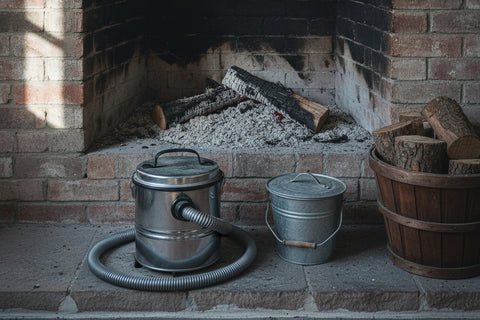
ComfortBilt's earlier HP22 manual and Freedom's PS21 manual both say ashes belong in a lidded metal can that seals tightly, set on a surface that cannot burn or out on bare ground, clear of anything flammable; ComfortBilt's earlier manual adds that ashes headed for burial stay in the closed can until every cinder has cooled, and Freedom's says, "DO NOT put ashes in trashcan." ComfortBilt's earlier manual explains that ash vacuums have a metal body and are built to hold soot; our ash vacuum guide covers models for pellet stoves. For the yearly service, the EPA says to have a pellet stove professionally cleaned at least annually, the US Fire Administration wants heating equipment and chimneys professionally cleaned and inspected every year, and every manual here asks for an inspection at least annually.
Carbon monoxide and smoke alarms
Freedom's manual puts it plainly: "BURNING FUEL CREATES CARBON MONOXIDE AND CAN BE HAZARDOUS TO YOUR HEALTH IF NOT PROPERLY VENTED." The CPSC wants a carbon monoxide alarm that runs on batteries, or has battery backup, on each floor of the house and outside the bedrooms, ideally linked so they all sound at once. The manuals add their own rules near the stove: ComfortBilt's HP22 manual says to install carbon monoxide and smoke detectors near the stove, its HP22i manual asks for a smoke detector on each floor and separate carbon monoxide monitors near the stove, and Freedom recommends a smoke and carbon monoxide detector in the stove's room and on each floor.
Fire is the other risk. NFPA counts heating equipment among the top causes of deaths in home fires, with an estimated 37,365 heating equipment fires a year from 2020 to 2024, 11 percent of reported home fires. The US Fire Administration says: "Keep anything that can burn at least 3 feet from all heat sources," and ComfortBilt's HP22 manual asks for a fire extinguisher nearby and a fire escape plan that everyone in the house has practised.
Related guides
For backup power that keeps a pellet stove's motors turning, see our best generator for home backup guide, our best inverter generator guide and our best portable power station guide. For the weekly clean, our best ash vacuum guide covers models with pellet stove hoses. For a heater that needs no power at all in an outage, our best kerosene heater guide covers the models and the rules for running one indoors.
Frequently asked questions
Can a pellet stove heat a whole house?
It can heat much of one, but the ComfortBilt manuals say not to make it the only heat. The EPA says a pellet stove can supplement a home's heating system or serve as its only heat source, and ComfortBilt's HP22 figure is 2,800 square feet at most, but both ComfortBilt manuals warn that a power outage or routine maintenance means a total loss of heat. Consumer Reports adds that an open floor plan can make heating the whole house with one stove easier.
Do pellet stoves work without electricity?
Most do not. The EPA notes that pellet stoves need electricity for the motors that feed the pellets and blow the heat, though some models can take backup batteries and gravity-fed stoves need no power. Of the picks here, only the Freedom Stoves PS21 has a battery backup, two 12 volt batteries bought separately, which its listing puts at over 40 hours. The ComfortBilt HP22 and HP22i shut down in an outage and need a pure sine wave generator or power station to keep running.
How long does a 40 lb bag of pellets last in a pellet stove?
About 33 hours at the Freedom PS21's lowest rate of 1.2 pounds an hour, and about 8.3 hours at 4.8 pounds an hour, the top rate both the PS21's dealer page and ComfortBilt's earlier HP22 manual give. That is our arithmetic from the makers' rates. Freedom's manual says feed rates can vary by as much as 20 percent, and pellet quality and moisture change it too.
Does a pellet stove need a chimney?
A freestanding one does not need a masonry chimney. The EPA explains that a freestanding pellet stove vents through an outside wall or the ceiling, while an insert can use your existing chimney. The manuals here call for 3 or 4 inch Type L or PL pellet vent pipe, and an insert such as the ComfortBilt HP22i needs a pellet liner run down the chimney.
Can you burn wood or other fuels in a pellet stove?
Not in these stoves. ComfortBilt's HP22 manual approves it for wood pellets alone and says burning anything else voids the warranty, and Freedom's safety label reads "FOR USE ONLY WITH PELLETIZED WOOD." The EPA notes that some other pellet stoves can burn corn or nutshells, so check your own manual.
Do pellet stoves give off carbon monoxide?
Yes. Freedom's manual warns that burning fuel creates carbon monoxide, which can harm your health if the stove is not properly vented. The CPSC wants battery or battery-backup carbon monoxide alarms on each floor of the house and outside the bedrooms, and each manual here asks for carbon monoxide detection near the stove.
What is the best pellet stove brand?
ComfortBilt comes up most in the sources we read: Bob Vila ranks it first in its list of pellet stove brands, Popular Mechanics and Field and Stream both pick a ComfortBilt as their best overall, and two of our three picks are ComfortBilts. For battery backup, the one stove here that offers it is from Freedom Stoves.
The bottom line
For most homes with reliable power, the ComfortBilt HP22 is the pellet stove to start with; if outages are the worry, the Freedom Stoves PS21 and its battery backup; and for an existing fireplace, the ComfortBilt HP22i insert. Whichever you choose, the manuals ask you to check permit and inspection rules with your local building or fire officials, follow their vent and clearance rules and burn PFI-graded pellets kept dry, and the CPSC asks for carbon monoxide alarms on every level of the house.
Disclosure: Our commissions do not change what we recommend or what you pay. Availability was checked on Amazon on October 14, 2026 and can change.