As an Amazon Associate we earn from qualifying purchases. Some brands also pay us when you click or buy, so those links are ads. Full disclosure below
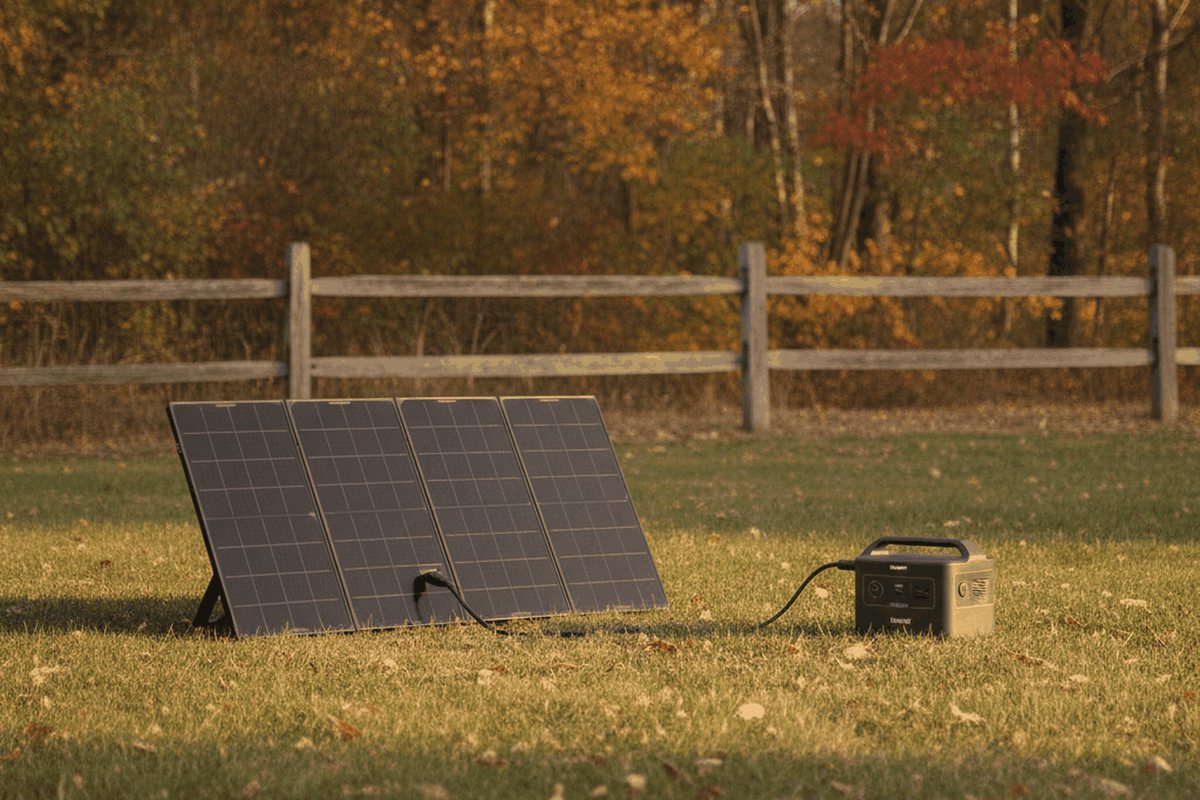
The best solar generator for most people is the EcoFlow DELTA 3 Classic with its 220W bifacial panel: 1,024Wh and 1,800W of output, switching over in under ten milliseconds when the power drops, with room for more than double the panel it ships with. On this page no other model here sells solar more cheaply with a battery attached; the only listing that matches it is a duplicate of this same kit. Its maker's stated recharge time is also one of the few here a calculator does not contradict. For home backup through outages that run for days, step up to a larger battery paired with two panels, and for camping, take a light station with a panel that folds into its own case. We checked every price and every stock status on Amazon on 2026-09-19.
A solar generator is two products sold as one: a battery, and the panel that refills it. Almost every roundup grades the battery and prints the panel's wattage as a footnote. That is the wrong way round, because the battery is bought once and the panel decides whether you are still running on day three.
So this guide does one thing no competing page does. It takes each battery's capacity and the rated watts of the panel in the same box and works out how many hours of sun it actually takes to fill, at a derating figure taken from a tester's published planning assumption and checked against four makers' own numbers. Across all fourteen kits here whose maker states a capacity, not one refills from empty in a five hour day of sun.
One thing before the list: we make digging spades, not solar panels, so nothing here is ours. Every figure below traces to an Amazon listing pulled on 2026-09-19, to a maker's own spec page, or to a named test team's published results.
The best solar generator kits at a glance
| Solar generator | Best for | Stored energy / rated output | Solar in the box | Hours of sun to fill (computed) | Station weight | Tested by |
|---|---|---|---|---|---|---|
| EcoFlow DELTA 3 Classic with 220W panel | Most people | 1,024Wh / 1,800W | 220W | 5.8 hours | 26.7 lb | Outdoor Life measured the panel |
| EcoFlow RIVER 2 Pro with 160W panel | A weekend away in a car | 768Wh / 800W | 160W | 6.0 hours | 18.2 lb | OutdoorGearLab measured the station |
| Jackery Solar Generator 1000 v2 with 200W panel | A kit a tester has actually run | 1,070Wh / 1,500W | 200W | 6.7 hours | 23.8 lb | Popular Mechanics, OutdoorGearLab |
| BLUETTI Elite 200 V2 with two 200W panels | A fridge and the router through an outage | 2,073.6Wh / 2,600W | 400W | 6.5 hours | 53.4 lb | Popular Science ran the station |
| BLUETTI Elite 400 with two 200W panels | An outage that runs past a day | 3,840Wh / 2,600W | 400W | 12.0 hours | Not stated | Nobody we read |
| Goal Zero Yeti 1500 with Nomad 200 | Kit that lives outdoors | 1,505Wh / 2,000W | 200W | 9.4 hours | 52.75 lb | Popular Mechanics, OutdoorGearLab |
| EcoFlow 220W bifacial panel | You already own a station | No battery | 220W | Not applicable | 15.4 lb, panel | Outdoor Life measured 197W |
Weights are the maker's own figure where one exists, converted where the maker publishes kilograms. The hours column is ours, computed below, and it is the number this page exists to give you: nothing here refills in a five hour day of sun. One buying note for almost every row: the panel ships in its own parcel, so check both have arrived before you need them.
How we chose these
We pulled every listing through Amazon's product API on 2026-09-19 for price, stock and stated specifications, then read four independent teams: Outdoor Life, which tests panels and batteries separately and publishes measured output for both, OutdoorGearLab, which publishes measured usable capacity for fourteen batteries plus the solar assumptions it plans with, Popular Mechanics, which publishes measured solar input for named pairings, and Popular Science, whose verdicts come from living with the units rather than from a bench.
We then pulled the maker's own product page for every pick and for six of the eight models in the second tier, and checked each listing figure against it. Where the two disagree the maker's figure wins and the page says so, which among the picks happened once, on pick 2's weight. Two maker pages, BLUETTI's Elite 400 and Apex 300, rendered as little more than navigation, so those two rest on the Amazon listing alone.
Where a tester ran the battery on its own rather than the kit we link, or ran a close sibling, we say so in that pick instead of borrowing the award. One pick, the Elite 400, has no tester behind it at all. A second, the DELTA 3 Classic, has none for the battery itself, though Outdoor Life measured the panel in its box and OutdoorGearLab measured its Delta 3 sibling.
The best solar generators, by job
1. EcoFlow DELTA 3 Classic with a 220W panel: the best solar generator overall
EcoFlow DELTA 3 Classic with 220W Solar Panel. The listing states 1,024Wh, 1,800W of AC output with a 3,600W surge, a UPS switchover under 10 milliseconds, and a 220W bifacial panel rated at up to 25 percent conversion using N type cells. EcoFlow's own page adds 26.7 lb and a figure the Amazon listing leaves out: the station takes up to 500W of solar, more than double the panel it ships with. No other model here sells solar more cheaply with a battery attached; the only listing that matches it is a duplicate of this same kit.
It leads on two things. Outdoor Life measured an EcoFlow 220W bifacial panel at 197W in clear sun, and the listing it links for that panel is the one we link as pick 7, so the panel here is a known quantity rather than a claim. And EcoFlow's numbers survive checking: its stated 5.8 hours is what a 220W panel does at about four fifths of its rating, and it quotes the same honest figure on its 110W version, its two panel version and its DELTA Pro.
Where it loses: no roundup covers the DELTA 3 Classic itself. OutdoorGearLab measured its Delta 3 sibling, the same stated 1,024Wh and 1,800W, giving back 870Wh usable, which is the closest thing to an independent capacity figure this kit has. And Amazon carries a second listing of the same stated kit, so either will do but check the title before you click.
2. EcoFlow RIVER 2 Pro with a 160W panel: for camping and weekends away
EcoFlow Solar Generator RIVER 2 Pro and 160W Portable Solar Panel. 768Wh, a panel that folds into its own bag, and a box that includes the kickstand case and both charging cables. EcoFlow's spec sheet puts the station at 18.2 lb where the Amazon listing says 17.2 lb; we use EcoFlow's, and it is still the lightest kit here whose weight anyone publishes. EcoFlow also gives it a 220W solar ceiling, so the 160W panel in the box is not the most it will take.
A clear day puts about 640 watt hours back, which is comfortably more than phones, lights and a fan will take for a weekend. The load that decides the trip is a 12V cooler, and none of our sources measures one, so size that from its own label: at 27 watts it runs on the sun alone, and much above that it starts eating the battery. A 45 watt cooler wants about 2,160Wh over two nights where this kit supplies about 1,408Wh with a clear day, so that trip needs the car charger too. On a grey day the same panel returns about 176Wh, which is the number to plan a wet weekend on.
Where it loses: its rated AC output is 800W. The listing leads with "up to 1600W", but EcoFlow's spec sheet is clearer, 800W total with 1,600W as a surge, so a space heater or a full size corded tool is out. OutdoorGearLab measured it giving back 620Wh of its stated 768Wh, the lowest usable share on this page at 81 percent. Its own 4.8 hour recharge claim assumes a panel at 100 percent of its rating, which the table below deals with.
It was out of stock on Amazon when we checked on October 18, 2026, so we do not link it for now.
3. Jackery Solar Generator 1000 v2 with a 200W panel: best for buying what a tester actually ran
Jackery Solar Generator 1000 v2 and 200W Solar Panel. Popular Mechanics makes this exact listing its Best Value pick, and OutdoorGearLab measured the station giving back 910Wh of its stated 1,070Wh, an 85 percent usable share. 1,500W AC with a 3,000W surge, 23.8 lb, and an LFP battery the listing says holds over 70 percent of capacity after 4,000 cycles.
The cheaper listing, and what to do about it. Amazon carries a second, cheaper listing of the same stated 1,070Wh station with the same 200W panel. We link this one because it is the listing Popular Mechanics tested, and because of the two Jackery listings it is the only one that itemises what is in the box, states five years of coverage and states a solar recharge figure; the cheaper listing states none of the three. That is a real difference in what you are promised, not a difference in the machine. If none of it moves you, buy the cheaper listing: it is the same kit, and on measured capacity it is the better value.
Where it loses: it ships 200W of panel against a battery that wants 214W on the rule of five.
4. BLUETTI Elite 200 V2 with two 200W panels: for keeping the house essentials running
BLUETTI Elite 200 V2 Solar Generator and 2x200W Solar Panel. 2,073.6Wh, 2,600W continuous with what the listing calls a 3,900W power lifting mode, and 400W of panel, more than any cheaper kit here ships. BLUETTI's own page adds 53.4 lb and a 1,000W solar ceiling. The listing claims a 10W standby draw, which matters more than it sounds: a battery that idles low still has something in it on the second morning.
Popular Science names the Elite 200 V2 its best overall, though it tested the station alone rather than this two panel kit. Its stated reservation is exactly why this is the essentials pick and not the whole house one: Popular Science lists as a drawback that it is not large enough for an RV or whole home backup.
Where it loses: BLUETTI's own numbers do not agree with each other. The same listing says a full solar charge takes 5.5 hours on 400W of panel and 2.4 hours on 1,000W, which imply 94 and 86 percent of rating. Nobody we read has measured its usable capacity, so it is absent from the measured table below.
Amazon listed it for preorder only, not in stock, when we checked on October 18, 2026, so we do not link it for now.
5. BLUETTI Elite 400 with two 200W panels: for an outage that lasts days
BLUETTI Elite 400 Solar Generator with 2x200W Solar Panel. 3,840Wh is the most stored energy on this page, and per stated watt hour it is the cheapest of the fourteen models here whose maker states a capacity, by a clear margin. 2,600W of output with a 3,900W surge, a 15 millisecond switchover, and a trolley so you roll it rather than lift it. On the fridge arithmetic below it covers 2.4 days of a 67 watt fridge on the battery alone and 3.4 with a clear day of sun on the panels.
Where it loses: this is the one pick no tester has touched, and BLUETTI's own product page renders no specifications, so everything here except the price is the Amazon listing's own word. Its stated 9.5 hour fast end is one of three claims on this page that need a panel above its nameplate, alongside the Elite 300 and the Elite 100 V2 below. It states no weight, and at this size that matters.
It was out of stock on Amazon when we checked on October 12, 2026, so we do not link it for now.
6. Goal Zero Yeti 1500 with the Nomad 200: for rough weather and rough handling
Goal Zero Yeti 1500 Power Station and Nomad 200 Solar Generator. The only kit here a tester ran with the panel that ships in its own box: Popular Mechanics did hands on testing on this exact listing, simulated a blackout running a cable modem and router, a lamp, a TV and a tower fan while charging a phone and a laptop, reported enough power for over two days of that, and makes it their most durable pick for outdoor use.
The build is the argument: an aluminium casing rather than plastic, rubber bumpers, an IPX4 rating, port shields, vibration testing, a 2,000W inverter with a 3,600W surge and 4,000 cycles. The listing states 1,505Wh of capacity and Goal Zero's own page gives 52.75 lb, while Popular Mechanics adds that its two solar inputs accept 600W and 300W and can run at once for up to 900W of panel.
Where it loses: per stored watt hour and per watt hour OutdoorGearLab could actually get out of it, this is the dearest energy on the page by both measures. Popular Mechanics liked it and still logged two complaints: it is heavy, and its Bluetooth needed manually pairing every time, which it called annoying. And its maker's own refill claim is the one the next section pulls apart.
When we checked on October 18, 2026, its Amazon listing had no customer ratings yet, short of the 100 we look for before we link a pick, so we do not link it for now.
7. EcoFlow 220W bifacial panel: best panel to add to a station you already own
EcoFlow 220W Portable Solar Panel, bifacial. Outdoor Life measured four portable panels and this is the one whose exact Amazon listing you can still buy at the wattage it tested: 197W of a stated 220W in clear sun, 46W under cloud. Of the other three, the Anker SOLIX PS200 and the Jackery SolarSaga 200W are out of stock today, and the one Outdoor Life labels a Bluetti PV120 links to a listing whose Amazon title is a BLUETTI 200W panel, a different wattage from the panel named in the link. EcoFlow states a 30 to 60 degree bracket with a built in angle guide, an IP68 rating, N type TOPCon cells and 15.4 lb.
Where it loses: it is real money for a panel and cheaper watts exist. The SOKIOVOLA 200W costs less per rated watt and ships five in one connectors for EcoFlow, Jackery, BLUETTI and Anker stations, which is the more useful set if your battery is not an EcoFlow. Nobody has measured it. If you want the panel a tester put a meter on, buy the EcoFlow; if you want the most rated watts for the money and will accept an unmeasured brand, the SOKIOVOLA costs far less.
Also considered: models that missed the list and why
BLUETTI Apex 300 with 350W panel. The only model two testers give a top award to: Popular Mechanics makes it best overall and Popular Science makes the station its off grid pick. 2,764.8Wh with a listing claiming 2,400W of solar input. It missed because the listing came back with only seven left in stock when we checked, and because it loses to pick 5 on both cost per stored watt hour and cost per solar watt. Popular Mechanics also notes it has no DC output and weighs 84 pounds.
BLUETTI Elite 300 with 350W panel. Popular Mechanics reviewed this exact kit and reported pairing the station with a 250W portable panel and seeing around 260W of input on a fully sunny day, the only measurement in our sources where a panel beat its own rating. 3,014.4Wh for less money than pick 5, but 826Wh less stored, and its own 8 hour fast end needs 350W of panel to beat its rating too.
Jackery Generator 1000 v2 with 200W Panel. The same stated kit as pick 3 for less, and the better value on measured capacity. Pick 3 sets out the trade and tells you when to buy this one instead. For the battery on its own, see our best portable power stations guide.
Jackery HomePower 3000 with two 200W panels. Popular Science's home backup pick, at 3,072Wh and 3,600W of output. Its claim of charging to 80% in 9 hours on 400W is the most conservative solar figure on the page and the one we would trust first. It missed because pick 5 stores 768Wh more. Pick 5 is not linked for now, and our home backup answer below points to the Jackery HomePower 3000 for outages that run for days.
EcoFlow DELTA 3 Classic with 220W Solar Panel. This is the listing pick 1 links to. Amazon also sells this kit under a second listing, down to the same stated 1,024Wh, the same 5.8 hour recharge claim and the same 25 percent N type bifacial panel. It is here because the two are easy to confuse, so check the title before you click.
EcoFlow Solar Generator 3.6kWh DELTA Pro with 400W Portable Solar Panel. Popular Mechanics' pick for connecting to the house, and the only model here OutdoorGearLab clocks at nearly fifteen hours of refrigerator. Writing about the same station with two 220W panels, Popular Mechanics says outright that you will probably not refill it in one day, the only place a tester states on the record what this page's table shows throughout. It costs far more per stored watt hour than pick 5.
Anker SOLIX C2000 Gen 2 with 200W bifacial panel. Cheaper stored energy than pick 4, with a listing claiming a dual door fridge for up to 32 hours. It missed because it ships half the panel, costs more per solar watt than pick 4, and states no solar recharge figure at all. Popular Mechanics measured 125 to 145W going into a C2000 from a 200W Anker panel, which ties the Nomad 200 in pick 6 for the lowest real world panel output in our sources, though Popular Mechanics calls that range pretty good for the type. Note that the listing Popular Mechanics links from its summary list under an Anker Solix F2000 heading is this C2000 listing, and the two Anker listings its product cards link are both out of stock today.
BLUETTI Elite 100 V2 with 100W Solar Panel. The clearest example of the problem this page is built around. The listing says the kit fully charges in seven hours, but a 100W panel running flat out for seven hours produces 700 watt hours and the battery holds 1,024Wh, so the claim needs 146 percent of the panel's rating. The same maker sells the same station with a 200W panel for a little more and quotes the same seven hours. Of the two, buy the 200W one.
Compare solar generator kits: battery, surge and charging
This table lines up what each kit's own Amazon listing says about the things the glance table at the top leaves out: the battery chemistry and how long it is said to last, the peak output for a motor or compressor starting up, how fast it fills from a wall outlet, and how quickly it takes over when the power drops. Where a cell says not stated, the listing gives no figure, which is not the same as a poor one. Pick 7 is left out because it is a panel with no battery.
| Solar generator kit | Battery (per listing) | Peak output (per listing) | Wall charging (per listing) | Outage switchover (per listing) |
|---|---|---|---|---|
| 1. EcoFlow DELTA 3 Classic with 220W panel | LiFePO4 cells, rated by the listing for more than 10 years of daily use | 3,600W surge; X-Boost runs loads up to 2,600W | 0 to 80 percent in 45 minutes on X-Stream AC charging | Under 10 milliseconds (UPS) |
| 2. EcoFlow RIVER 2 Pro with 160W panel (not in stock on Amazon for now) | LFP, over 3,000 charge cycles before it falls to 80 percent | 800W AC outlets, up to 1,600W | Full in 70 minutes from an AC outlet | Not stated |
| 3. Jackery Solar Generator 1000 v2 with 200W panel | LFP, over 70 percent of its capacity after 4,000 cycles | 3,000W surge peak | Full in 1 hour with emergency charging turned on in the Jackery app; 1.7 hours by default | Not stated |
| 4. BLUETTI Elite 200 V2 with two 200W panels (not in stock on Amazon for now) | LiFePO4, over 6,000 cycles | 3,900W in power lifting mode | 0 to 80 percent in 50 minutes on AC and DC charging together | Not stated |
| 5. BLUETTI Elite 400 with two 200W panels (not in stock on Amazon for now) | LiFePO4, no cycle figure stated | 3,900W surge | Not stated | 15 milliseconds |
| 6. Goal Zero Yeti 1500 with Nomad 200 (not linked for now) | LiFePO4, 4,000 cycles | 3,600W surge | 0 to 80 percent in under an hour from a wall outlet | Not stated |
Four of the six listings state a wall charge of an hour or less, either to 80 percent or to full, so the wall outlet is the quick way to top up before a storm and the panel is what keeps a kit going once the power is out. For anything with a motor, read the peak column as closely as the capacity: Outdoor Life warns that a fridge's draw can surge to 800 watts as it runs.
Who makes the best solar generator?
No single maker leads every job on this page, so the useful answer is which brand leads which pick. EcoFlow makes three of the seven: pick 1 (the overall pick), pick 2 (for camping) and pick 7, the panel Outdoor Life measured at 197W of its stated 220W. EcoFlow's stated 5.8 hour recharge for pick 1 matches our own arithmetic. Jackery makes pick 3, the exact listing Popular Mechanics tested and named its Best Value pick. BLUETTI makes the two biggest batteries among the picks, picks 4 and 5, though neither was in stock on Amazon when we checked on October 18, 2026. Goal Zero makes pick 6, whose IPX4 rating is the only weather rating any battery here states. Anker's SOLIX C2000 Gen 2 sits in our second tier.
A brand can sell the same station with panels of several sizes, and the panel decides how long a refill takes. The hours of sun table further down sets each maker's recharge claim beside our own arithmetic, kit by kit.
What a solar generator costs, per watt hour and per solar watt
Two numbers decide whether a kit is good value, and no competing page prints either. Cost per stored watt hour tells you what the battery costs. Cost per rated solar watt tells you what the refill costs. To get them, divide the current price on each listing by the stated figures below; the rankings on this page come from that arithmetic on each listing's price on 2026-09-19. Read them within a form factor: the panel only row has no battery, so it has no watt hour figure and its solar watt figure is not comparable with a kit that includes one.
| Model | Tier | Stated capacity | Solar in the box |
|---|---|---|---|
| BLUETTI Elite 400 with 2x200W | Pick 5 | 3,840Wh | 400W |
| EcoFlow DELTA 3 Classic with 220W | Pick 1 | 1,024Wh | 220W |
| BLUETTI Elite 200 V2 with 2x200W | Pick 4 | 2,073.6Wh | 400W |
| EcoFlow RIVER 2 Pro with 160W | Pick 2 | 768Wh | 160W |
| Jackery Solar Generator 1000 v2 with 200W | Pick 3 | 1,070Wh | 200W |
| Goal Zero Yeti 1500 with Nomad 200 | Pick 6 | 1,505Wh | 200W |
| EcoFlow 220W bifacial panel | Pick 7 | No battery | 220W |
| BLUETTI Elite 300 with 350W | Also considered | 3,014.4Wh | 350W |
| Anker SOLIX C2000 Gen 2 with 200W | Also considered | 2,048Wh | 200W |
| Jackery Generator 1000 v2 with 200W | Also considered | 1,070Wh | 200W |
| BLUETTI Elite 100 V2 with 100W | Also considered | 1,024Wh | 100W |
| EcoFlow DELTA 3 Classic with 220W, second listing | Also considered | 1,024Wh | 220W |
| Jackery HomePower 3000 with 2x200W | Also considered | 3,072Wh | 400W |
| BLUETTI Apex 300 with 350W | Also considered | 2,764.8Wh | 350W |
| EcoFlow DELTA Pro 3.6kWh with 400W | Also considered | 3,600Wh | 400W |
The takeaway is not that bigger is cheaper, because it is not: the 3,600Wh DELTA Pro costs more per watt hour than the 1,024Wh Elite 100 V2. The takeaway is that the price tells you almost nothing about how much sun you are buying. The DELTA Pro and the far cheaper Elite 200 V2 ship the same 400W of panel. The Goal Zero and the far cheaper Jackery ship the same 200W. And the gap between the cheapest stored watt hour here and the dearest is wide, which is a question of which listing you land on rather than which technology you buy.
One caveat applies to every row above, and one tester has done the work to put a number on it. OutdoorGearLab measured the usable capacity of fourteen batteries and reports that usable power did not match the claimed figure on any product it tested, running from as little as 60 percent of claimed to as high as 93. Seven of the models on this page are in that test, counting one sibling, so for those we can show what the battery actually gives back and what the kit costs per watt hour you can really use.
| Model | Tier | Stated capacity | Measured usable Wh (OutdoorGearLab) | Usable share |
|---|---|---|---|---|
| EcoFlow DELTA 3 Classic with 220W | Pick 1, Delta 3 sibling measured | 1,024Wh | 870Wh | 85 percent |
| EcoFlow RIVER 2 Pro with 160W | Pick 2 | 768Wh | 620Wh | 81 percent |
| Jackery Solar Generator 1000 v2 with 200W | Pick 3 | 1,070Wh | 910Wh | 85 percent |
| Goal Zero Yeti 1500 with Nomad 200 | Pick 6 | 1,505Wh | 1,320Wh | 88 percent |
| Jackery Generator 1000 v2 with 200W | Also considered | 1,070Wh | 910Wh | 85 percent |
| BLUETTI Elite 100 V2 with 100W | Also considered | 1,024Wh | 890Wh | 87 percent |
| EcoFlow DELTA Pro 3.6kWh with 400W | Also considered | 3,600Wh | 2,950Wh | 82 percent |
Two things fall out of this. Every kit costs meaningfully more per watt hour you can use than per watt hour on the box, so read the table above it as a ranking rather than a budget: the RIVER 2 Pro gives back the lowest share here, and the Goal Zero has the dearest usable watt hour here. The shares are OutdoorGearLab's own published figures; on the Goal Zero its stated 89 percent and the two watt hour figures beside it work out to 88, and we print the computed number.
How long does it take to charge a solar generator?
Longer than a five hour day of sun, on every kit here. That is arithmetic rather than opinion, and it needs two assumptions, both taken from sources rather than invented.
A panel delivers about four fifths of its rated watts in clear sun. OutdoorGearLab, which has tested portable panels for charging efficiency, plans its own charge times at 80 percent efficiency and says its results ranged from as low as 50 to as high as 90 percent. EcoFlow's own pages land within half a point of that on three different bundles, at 79.6, 80.2 and 80.3 percent. Outdoor Life, which measured four panels, found 79 to 92 percent of stated output in clear sun. Popular Mechanics, which measured two 200W pairings, saw 125 to 145 watts from them and says an average of about 70 percent is good for a portable panel. So four fifths is the figure a tester plans with, and it is at the optimistic end of what Popular Mechanics actually recorded.
A clear day gives about five usable hours. OutdoorGearLab plans on 4 to 6 hours of peak sun on a clear day. Goal Zero's Director of Product Development, Ben Pattison, gives the same answer a different way in Outdoor Life's roundup: his rule of five says a 4,000Wh station needs 800W of solar to charge during the day, which is five hours of full output. We use five, the middle of OutdoorGearLab's range. The cloudy column below is computed at 22 percent of rating over the same five hours, the round figure from Outdoor Life's four cloud measurements, which ran 20.8 to 24.5 percent.
| Solar generator | Capacity | Panel | Hours of clear sun to fill (computed) | One clear day returns (computed) | One cloudy day returns (computed) | What the maker claims, and what it implies |
|---|---|---|---|---|---|---|
| EcoFlow DELTA 3 Classic with 220W | 1,024Wh | 220W | 5.8 hours | 880Wh | 242Wh | 5.8 hours, which is four fifths of rating and agrees with ours |
| EcoFlow RIVER 2 Pro with 160W | 768Wh | 160W | 6.0 hours | 640Wh | 176Wh | 4.8 hours, which needs 100 percent of rating |
| Jackery Solar Generator 1000 v2 with 200W | 1,070Wh | 200W | 6.7 hours | 800Wh | 220Wh | 7.5 hours on Jackery's own page, 71 percent, more cautious than ours |
| BLUETTI Elite 200 V2 with 2x200W | 2,073.6Wh | 400W | 6.5 hours | 1,600Wh | 440Wh | 5.5 hours, which needs 94 percent of rating |
| BLUETTI Elite 400 with 2x200W | 3,840Wh | 400W | 12.0 hours | 1,600Wh | 440Wh | 9.5 to 19 hours; the fast end needs the panels to beat their nameplate |
| Goal Zero Yeti 1500 with Nomad 200 | 1,505Wh | 200W | 9.4 hours | 800Wh | 220Wh | 9 to 18 hours on the Nomad 200, per its listing; the fast end needs about 84 percent of rating |
Read the last column, because it is why this section exists. Of the six kits whose makers state both a capacity and a recharge time, one lands on our figure, one is more cautious than ours, one is optimistic but inside what testers have measured, one assumes more than Outdoor Life or OutdoorGearLab recorded on any panel, one needs the panel at its full rating and one needs it above, which in all our sources has happened exactly once.
The Goal Zero row is where this gets useful. Goal Zero's Amazon listing for this kit gives 9 to 18 hours for the Nomad 200 to fill the Yeti 1500 from empty, naming that exact panel, and the fast end needs about 84 percent of the panel's rating. Popular Mechanics put a meter on the same pairing, measured the Nomad 200 delivering 125 to 145 watts on a sunny cloudless day, and calculated at least 10.5 hours to refill from 5 percent. That is the maker's fast end and the tester, on one kit and one panel, an hour and a half apart. Our arithmetic lands at 9.4 hours, between them. Whenever a maker's fastest figure and a tester disagree on this page, the tester's number is the longer one.
What size solar generator do you need?
Start with your own loads. List each appliance you want to keep running, take its running watts from its label or manual, multiply by the hours a day it runs, and add up the watt hours: that total is what the battery and a day of sun have to cover. Then add up, separately, the running watts of everything that will be on at the same time, which has to fit under the kit's rated output, and check each motor's startup draw against the peak output. The first row uses the fridge figure the rest of this section plans with.
| Appliance | Running watts (label or manual) | Hours a day | Watt hours a day | Startup draw (manual) |
|---|---|---|---|---|
| Fridge, at Outdoor Life's planning figure | 67W average | 24 | 1,608Wh | Can surge to 800W, per Outdoor Life |
| Your next appliance | From its label | Your estimate | Watts times hours | From its manual |
| Totals | Everything on at once: keep it under the rated output | Not applicable | The whole day: compare with the capacity and a day of sun | The largest startup: keep it under the peak output |
Read any runtime worked out from a stated capacity as a ceiling before losses, not a measured result. For pick 3, the stated 1,070Wh divided by a steady 67 watts is about 16 hours, while OutdoorGearLab's measured 910Wh usable from the same station gives about 13.6 hours on the same arithmetic. Both are calculations, and a real fridge cycles on and off as its compressor runs.
A refrigerator is the load almost everyone is sizing for, and it is the hardest one on this page to pin down. Outdoor Life plans at 67 watts average and warns elsewhere that the draw is uneven and can surge to 800 watts. OutdoorGearLab builds its runtime table around a 600 watt home refrigerator and gets three to seven hours out of batteries this size. Popular Mechanics adds that the draw swings between 10 and 300 watts as the compressor cycles. The table gives both our arithmetic at Outdoor Life's 67 watts and OutdoorGearLab's own measured runtimes, so you can see the spread rather than a single flattering number.
| Solar generator | Stated capacity | A 67W fridge, our arithmetic | Home fridge, OutdoorGearLab measured | Days of fridge: battery alone, then plus one clear day | A 1,400W heater (computed) |
|---|---|---|---|---|---|
| EcoFlow RIVER 2 Pro with 160W | 768Wh | 11 hours | 3.1 hours | 0.5, then 0.9 | Will not run: 800W rated |
| EcoFlow DELTA 3 Classic with 220W | 1,024Wh | 15 hours | 4.4 hours, Delta 3 sibling | 0.6, then 1.2 | 44 minutes |
| Jackery Solar Generator 1000 v2 with 200W | 1,070Wh | 16 hours | 4.6 hours | 0.7, then 1.2 | 46 minutes |
| Goal Zero Yeti 1500 with Nomad 200 | 1,505Wh | 22 hours | 6.6 hours | 0.9, then 1.4 | 1.1 hours |
| BLUETTI Elite 200 V2 with 2x200W | 2,073.6Wh | 31 hours | Not measured | 1.3, then 2.3 | 1.5 hours |
| BLUETTI Elite 400 with 2x200W | 3,840Wh | 57 hours | Not measured | 2.4, then 3.4 | 2.7 hours |
The days column is the one to buy on, and it carries the whole page in a line: 400W of panel returns about 1,600Wh on a clear day and a 67 watt fridge eats about 1,608Wh a day, so at 400W the sun roughly covers the fridge and the battery covers everything else. At 200W it covers half of it. On a cloudy day at 440Wh it covers a quarter. Your fridge sits somewhere between the two fridge columns, and we size our recommendations at the cautious end.
Then size the panel, not just the battery. Of the fourteen kits here whose maker states a capacity, only three ship the panel their own battery calls for on the rule of five, and two of those three are the same kit listed twice.
What is the best solar generator for home backup?
For an outage measured in hours, pick 1, the EcoFlow DELTA 3 Classic with its 220W panel. Its listing states a UPS switchover under 10 milliseconds, which is what a router or a computer needs when the power drops, and on Outdoor Life's 67 watt average its 1,024Wh keeps a fridge going for about 15 hours. If you would rather buy the exact listing a tester ran, pick 3, the Jackery 1000 v2 kit, gives about 16 hours on the same arithmetic, or about 13.6 on the 910Wh OutdoorGearLab measured as usable.
For an outage measured in days, the Jackery HomePower 3000 with two 200W panels from our second tier, which is Popular Science's home backup pick. On the same 67 watt average its 3,072Wh covers a fridge for just under two days; against the 600 watt home refrigerator OutdoorGearLab sizes with, about five hours. OutdoorGearLab did not measure this model, so both figures are our arithmetic on its stated capacity, not its bench. Either way its 400W of panel puts about 1,600Wh back on a clear day, which is roughly a fridge's daily appetite, so the sun carries the fridge and the battery carries the rest. The larger BLUETTI kits in picks 4 and 5 hold 2,073.6Wh and 3,840Wh, but we do not link either for now: Amazon listed pick 4 for preorder only on October 18, 2026, and pick 5 was out of stock on October 12, 2026.
None of these is a whole house solution and we will not sell any of them as one. Popular Science says as much about the Elite 200 V2 outright. What they will do is keep a fridge cold, a router up, phones charged and a few lamps on for as long as the sun shows up for part of each day. Wiring panels into the house is the DELTA Pro's territory and a different kind of project.
What is the best solar generator for camping or an RV?
Pick 2, the EcoFlow RIVER 2 Pro with the 160W panel, for anything up to a long weekend, though it was out of stock on Amazon on October 18, 2026. An 18.2 lb station and a panel that folds into its own case is a kit you will actually take, which matters more than a spec sheet. For an RV, where the roof or the awning can hold a bigger panel all day, step up to pick 1 or pick 3 for the capacity.
If you are going somewhere genuinely rough, pick 6's aluminium case, rubber bumpers and IPX4 rating are the only weather rating any battery here states, though we do not link that kit for now. Popular Mechanics warns that the Anker C2000 in our second tier carries no IPX rating at all and says it would not leave that one out if the weather turned.
Does a solar generator work on a cloudy day?
Yes, and badly. Outdoor Life measured the same four panels under cloud that it measured in clear sun: a 200W Anker panel fell from 158W to 42W, a 120W BLUETTI from 110W to 25W, the 220W EcoFlow from 197W to 46W, and a 200W Jackery SolarSaga from 184W to 49W. That is 20.8 to 24.5 percent of rating, and it is remarkably consistent across four panels and two cell technologies.
So a cloudy day gives a 200W panel about 220 watt hours, roughly a quarter of a clear day, which is the cloudy column in the table above. A run of grey days is what catches people out, and it is the argument for buying more panel than the rule of five demands rather than more battery.
How to choose a solar generator
Four checks, in the order that matters. Size the panel from the battery, not the other way round, on the rule of five in the questions below. Divide the capacity by the panel watts before you believe any recharge claim, because that is the fastest it can possibly fill. Compare kits on cost per stored watt hour, the one number that makes the cheapest kit here and the dearest comparable, and here the spread is wide. And check rated output separately from capacity: watt hours say how long it runs, watts say what it can run at all, so a 1,400W heater needs a rated output above 1,400W no matter how big the battery is.
Our best chainsaws guide covers the limbs a storm drops before the power goes, our best firewood racks guide the heat that needs no electricity at all, and our how to winterize your garden guide the jobs worth finishing before the first outage of the season. Our fall yard cleanup tools checklist puts the season in order. When the ground itself is the job, that is where we live: we make double patented digging spades, and our spade finder says which size fits your soil.
Common questions
Can a solar generator run a refrigerator?
Yes, and it is the most common reason people buy one, but the honest answer is a range because our sources do not agree on what a fridge draws. Outdoor Life plans at 67 watts average, says a 2,000Wh station typically has enough to run a fridge for a day, and warns elsewhere that the draw is uneven and can surge to 800 watts. OutdoorGearLab builds its runtime table around a 600 watt home refrigerator and gets three to seven hours out of batteries this size. Popular Mechanics adds that the swing runs 10 to 300 watts as the compressor cycles. The sizing table above prints both ends for every pick, and the number that settles it is the panel: 400W returns about 1,600Wh on a clear day, which is roughly what a 67 watt fridge uses in one.
How many solar panels do you need?
Goal Zero's Director of Product Development gives the rule of five, reported by Outdoor Life: divide the battery's watt hours by five to get the panel watts. A 2,000Wh station wants 400W of panel, a 4,000Wh station wants 800W. Most kits sold as bundles ship less than that, which is why the recharge times on this page run past a single day.
Is a solar generator worth it?
Outdoor Life's own answer is that they are expensive, and that for many people the peace of mind is worth it, because compared with gas generators they are quieter, lighter and free to refill. The narrower version for a buyer: a solar generator is worth it if your outages run from hours to a few days and you want no fuel, no fumes and no noise. It is not a like for like replacement for a gas generator on output per dollar, and nothing at this price backs a whole house.
Can you use a solar generator indoors?
These are batteries rather than engines, so there is no exhaust, and the makers describe indoor jobs directly: the BLUETTI Elite 100 V2 listing says it runs silently at a library level 30 decibels while keeping a router and a PC up through an outage, and the Elite 300 listing names routers, TVs and CPAP machines among what it keeps running. The panels are the part that goes outside. On weather, Popular Mechanics notes the Anker C2000 carries no IPX rating and says it would not leave that station outside if the weather turned wet, while pick 6 states an IPX4 rating. Check the manual in your box and your local code before installing anything permanently.
Should you buy the panel with the station or separately?
Buy the bundle if the maker sells one at a sensible price, because here the bundled panel is usually the cheaper route: BLUETTI's Elite 200 V2 kit adds two 200W panels to the station's own listing for less than buying its 200W panel sold alone twice. Buy separately when you already own a station, when the bundle ships less panel than the rule of five wants, or when the numbers are simply wrong, as with the 100W Elite 100 V2 kit above.
What is the best home solar generator?
For most homes, pick 1, the EcoFlow DELTA 3 Classic with its 220W panel. Its listing gives a UPS switchover of under 10 milliseconds, the feature that matters for a router or a computer, and its 1,024Wh runs a 67 watt fridge for about 15 hours on the arithmetic in the sizing table. For a bigger battery, the Jackery HomePower 3000 with two 200W panels in our second tier holds 3,072Wh, is Popular Science's home backup pick, and runs that fridge for just under two days on the same arithmetic. The larger kits in picks 4, 5 and 6 are not linked for now, and each pick's own section says why.
Can a solar generator power a whole house?
Not the picks on this page. Popular Science lists as a drawback of the Elite 200 V2 that it is not large enough for whole home backup, and even the largest battery among the picks, pick 5's 3,840Wh (not in stock on Amazon for now), runs a 1,400 watt space heater for only about 2.7 hours on the arithmetic in the sizing table. What these kits do well is keep the essentials going through an outage: a fridge, a router, phones and a few lamps. Backing up a whole house means wiring stored power into the home's circuits, which is a bigger project; in our second tier, the EcoFlow DELTA Pro is Popular Mechanics' pick for connecting to the house.
What is the best rated solar generator?
It depends which rating you mean. If you mean rated by the people who test them, pick 3 carries a named tester's award on the exact listing we link: Popular Mechanics' Best Value pick. Popular Mechanics also makes the Goal Zero kit in pick 6 its most durable pick for outdoor use, and Popular Science names the Elite 200 V2, the station in pick 4, its best overall, though we do not link either kit for now. If you mean the ratings printed on the box, read stored watt hours for how long a kit runs and rated output for what it can run at all, and treat a panel's rating as a ceiling: Outdoor Life measured the EcoFlow 220W panel at 197W in clear sun.
Will any solar panel work with any solar generator?
Not on connector fit alone. Before pairing a panel from one brand with a station from another, check four things in both manuals. First, the station's solar input limits in volts and amps against the panel's open circuit voltage and short circuit current. Second, the most solar watts the station accepts, which can be well above the panel in the box: EcoFlow states 500W for pick 1, BLUETTI 1,000W for the Elite 200 V2 in pick 4, and Popular Mechanics reports up to 900W across the two inputs of pick 6's Yeti 1500. Third, whether two panels may be wired in series or in parallel. Fourth, the cable or adapter the station needs: the SOKIOVOLA panel named under pick 7, for one, ships a set of connectors for EcoFlow, Jackery, BLUETTI and Anker stations. Each station's manual states its own limits, so never assume one model's figure applies to another.
The bottom line
Buy the EcoFlow DELTA 3 Classic with the 220W panel if you want the most solar for the money from a maker whose own numbers check out. Buy the EcoFlow RIVER 2 Pro kit if it is going camping, though it was out of stock on Amazon on October 18, 2026. If the outages where you live run past a day, buy the Jackery HomePower 3000 with two 200W panels from our second tier, since pick 5, the BLUETTI Elite 400, was out of stock on Amazon on October 12, 2026. Whichever you buy, size the panel first and expect more than one day of sun to fill it.
Disclosure: Our commissions do not change what we recommend or what you pay. Prices and availability were checked on 2026-09-19 and can change.