Dividing perennials means digging up an established clump and splitting it into smaller sections, each with its own roots and shoots, then replanting them. Do it every 3 to 5 years, ideally on a cool, overcast day in early spring or fall. Division rejuvenates crowded plants, keeps their size in check, and gives you free plants.
Disclosure: some links in this guide are affiliate links to Amazon. As an Amazon Associate, Spear Head Spade earns from qualifying purchases. This is at no extra cost to you, and it never changes our honest, use-based recommendations.
If you have ever stood over a tired, floppy clump with a spade in your hand and thought "I am going to kill this thing," relax. Dividing perennials is one of the most forgiving jobs in the garden. Plants want to survive. Your job is just to give each new piece roots, a growing point, and a decent place to land. Do that and most perennials shrug the whole thing off. Below is how we do it, from reading the clump to settling the divisions back in.
What does dividing perennials mean, and why bother?
A perennial spends years spreading outward from its center. Over time the clump gets crowded, competing with itself for water, light, and nutrients. Dividing is simply resetting that clock. You lift the whole plant, break it into sections, and replant the healthy outer pieces. Peonies are the exception that resents being moved; our peony planting guide covers when dividing them is worth it.
There are four good reasons to do it:
- Rejuvenation. An overcrowded clump loses vigor. Splitting it sends each division back to strong, young growth.
- Size control. That hosta or daylily that has eaten its corner of the bed gets reined back in.
- More blooms. Crowded roots put on leaves instead of flowers. Give them room and the flower count climbs again.
- Free plants. One mature clump can become three, five, even a dozen new plants for other beds or to share. This is the cheapest nursery you will ever run.

How do you know when a perennial needs dividing?
Plants tell you when they are ready. Watch for these signs:
- A dead or bald center. The classic "doughnut," where the middle of the clump has died out and all the life is around the edges. That is the plant asking to be divided.
- Fewer or smaller flowers. A perennial that bloomed hard three years ago and now looks stingy is usually root-bound against itself.
- Floppy, overcrowded growth. Stems that splay open from the center or flop over neighbors often mean the crown is too dense.
- Outgrowing its space. When a plant is crowding the ones around it, division is easier than fighting it every season.
As a rule of thumb, most vigorous perennials benefit from division every 3 to 5 years. Fast spreaders like bee balm or some ornamental grasses may want it sooner. Slow, sulky plants can go a decade or more.
When is the best time to divide perennials, spring or fall?
Here is the rule that clears up most of the confusion: divide a perennial in the season opposite to when it blooms.

- Spring and summer bloomers get divided in fall, so they can pour energy into roots instead of flowers.
- Fall bloomers get divided in early spring, before they put on their show.
The logic is simple. You want the plant spending its energy on re-rooting, not on flowering or on surviving heat. Cool soil, mild air, and reliable moisture are what a fresh division needs. That is why early spring and early fall are the two windows almost everything fits into.
Bearded iris is the famous exception. It prefers division in mid to late summer, about 6 to 8 weeks after it blooms, when the rhizomes are firm and the roots are gearing up for a second flush.
| Season | What to divide | Why |
|---|---|---|
| Early spring | Fall bloomers (asters, mums, ornamental grasses, sedum) | Divide before bloom so roots settle first; cool, moist soil eases recovery |
| Late summer | Bearded iris | Rhizomes are firm 6 to 8 weeks after bloom |
| Early fall | Spring and summer bloomers (hosta, daylily, peony, coneflower) | Warm soil, cooling air, and fall rains help roots establish before winter |
| Avoid | Peak summer heat and hard-frost windows | Heat stresses new divisions; frozen or waterlogged soil tears roots |
Working in fall? Our companion piece on cutting through roots when digging pairs well with this one, since half of dividing is clean root work. And if you are moving whole shrubs this season, our fall transplanting guide walks through timing and root balls step by step.
What tools do you need to divide perennials?
You do not need much, but the right tool for each step makes the difference between a clean division and a mangled one.
| Job | Tool | Why it matters |
|---|---|---|
| Lift the clump | Garden spade | A sharp spade cuts a clean circle and slides under the root ball to lever it out whole |
| Split matted roots | Two forks, back to back | Levered apart, they tease dense clumps into sections without slicing every root |
| Cut a tough crown | Sharp knife or hori-hori | Woody crowns (peony, astilbe) split cleanest with a decisive cut |
| Save your knees | Kneeling pad | Division is close, low work; a pad keeps you comfortable through a long session |
The spade is where a job like this is won or lost. A blunt shovel bruises roots and forces you to hack. A sharp, well-shaped blade slices. This is exactly what we built the 40 inch D-Handle spade to do. Its spearhead blade penetrates the soil at a point, then slices outward as it sinks, and it is sharpened from tip to tail in tempered carbon-manganese steel. That shape cuts a crisp circle around a clump and glides under the root ball, so digging takes up to 80 percent less effort than a standard shovel. In hard, clay, or rocky soil, where most division jobs turn into a fight, that difference is the whole game.
For big clumps that need real leverage to pop free, the 58 inch Long Handle spade gives you more reach and saves your back. For lifting a single plant out of a tight, crowded bed without disturbing its neighbors, the 30 inch Mini spade works almost like a surgical tool. And because division is done on your knees at ground level, a Garden Kneeler pad earns its keep on a long afternoon.
How do you divide perennials without killing them?
This is the part people fear, and it is the easiest to get right once you know the sequence. Work in order:

- Water deeply the day before. A hydrated plant handles the move far better than a thirsty one, and moist soil releases the root ball more cleanly.
- Cut back the foliage. Trim top growth by a third to a half. This reduces moisture loss while the roots recover and gives you a clear view of the crown.
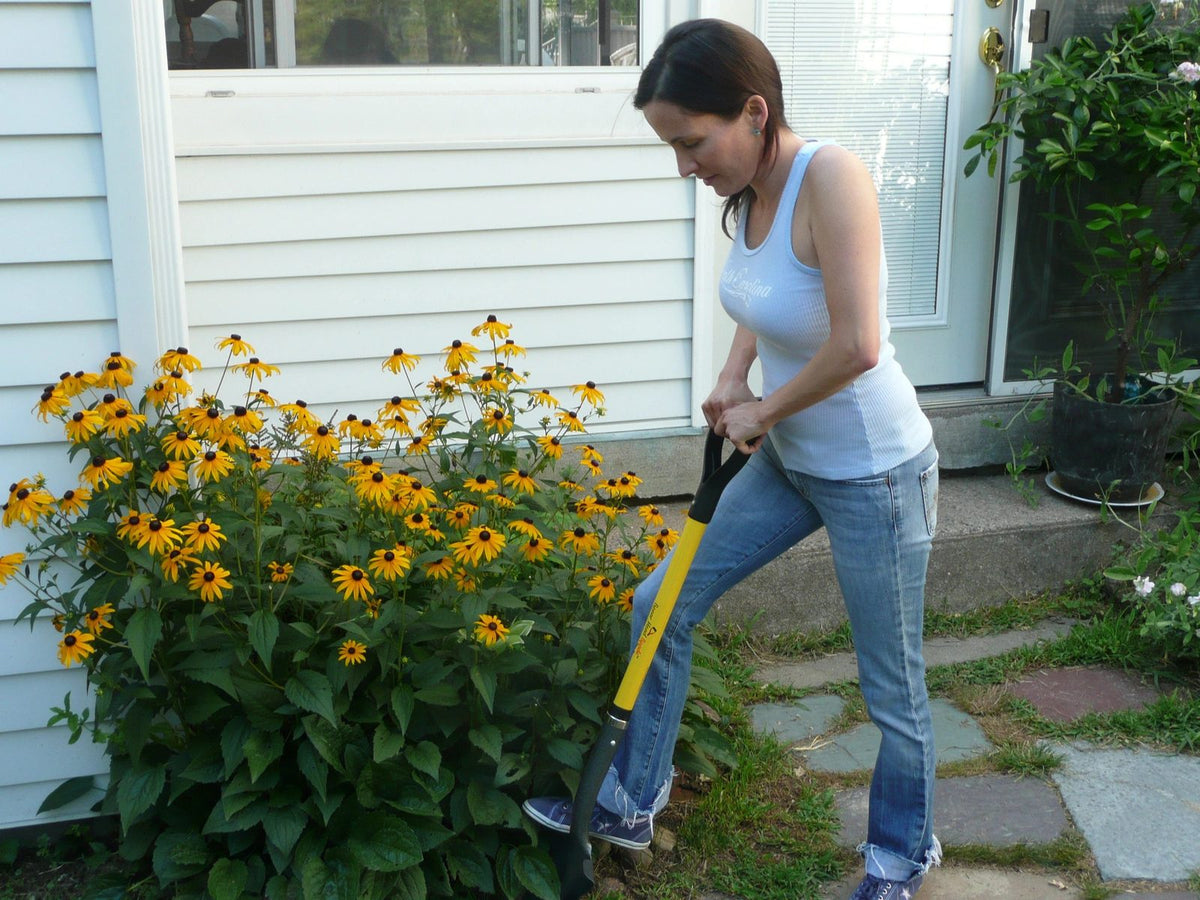
- Dig the full root ball. Drive your spade in a circle a few inches outside the outer edge of the clump, then angle it under and lever the whole plant up. Get as many roots as you can.
- Clear the soil. Shake or hose off enough dirt to see the crown, the roots, and the natural seams where the clump wants to break.
- Split into sections. Soft, fibrous clumps often pull apart by hand. Matted ones separate with two forks levered back to back. Dense or woody crowns get a clean cut with a knife or the edge of your spade. Every division needs healthy roots plus at least two or three shoots, eyes, or growing points. Throw out the dead woody center.
- Replant at the same depth. Set each division back in at the depth it grew before, no deeper. Firm the soil around the roots to close air pockets.
- Water in well. Soak each new planting to settle the soil and connect roots to moisture.
The single most common mistake is planting too deep. Crowns buried below their original line rot or refuse to bloom. Peony is the strictest about this: its eyes must sit only 1 to 2 inches below the surface or you will get leaves and no flowers.
Which perennials to divide, and how? A plant-by-plant cheat sheet
Method and timing shift a little by plant. Here are the common ones:
| Plant | Best time | Method |
|---|---|---|
| Hosta | Spring or early fall | Very forgiving. Lift and split with a spade or two forks; each piece needs 2 to 3 eyes. |
| Daylily | Spring or after bloom | Tough as nails. Dig the clump and tease or cut into fans, each with roots attached. |
| Coreopsis | Early spring | Short-lived, so divide every 2 to 3 years to keep it going. Pull apart by hand; keep several shoots per piece. |
| Bearded iris | Mid to late summer | Lift rhizomes, snap or cut into pieces each with a leaf fan and firm rhizome, discard the old woody center, trim leaves to a fan. |
| Ornamental grasses | Early spring | Divide as new growth starts. Big warm-season clumps may need a sharp spade or saw; each division a good handful. |
| Peony | Early fall | Resents disturbance but tolerates it. Cut into pieces of 3 to 5 eyes; replant eyes only 1 to 2 inches deep. |
| Astilbe | Spring or fall | Every 3 to 4 years. Cut the crown into sections, each with roots and buds; keep them moist. |
| Sedum (upright) | Early spring | Easy. Pull or cut the clump into sections as new shoots appear. |
| Coneflower | Spring or early fall | Divide while young; mature plants prefer to be left alone. Each piece needs roots and a growing point. |
Which perennials should you never divide?
Some plants do not want to be split, and forcing it usually kills them. The tell is the root system. Plants with a single deep taproot or a woody crown do not have the fibrous, spreading roots that make division work. Cut the taproot and you often lose the plant.
Leave these alone:
- Baptisia (false indigo)
- Lupine
- Oriental poppy
- Columbine
- Butterfly weed (Asclepias)
- Lavender
- Russian sage
If you want more of these, propagate them the way they prefer instead: by seed, or from stem cuttings for the woody ones like lavender and Russian sage. Give a taproot plant a permanent spot from the start and it will reward you for years without ever being lifted.
How do you care for divided perennials to prevent transplant shock?
Aftercare is where "without killing them" is actually decided. A division is a plant with a fraction of its roots, so your whole job for the next few weeks is to lower its stress.
- Time it for a cool, overcast day. Better yet, just before a stretch of mild, damp weather. Bright heat right after division is the hardest thing on a fresh transplant.
- Keep the soil consistently moist. Not soggy, but never bone dry. New roots cannot chase water they cannot reach. Water deeply, then let the top settle before the next soak.
- Mulch 2 to 3 inches. Mulch holds moisture and steadies soil temperature. Keep it off the crown so the base does not rot.
- Give temporary shade. For the first week or two, an upturned pot, a bit of row cover, or a shade cloth over the most exposed divisions buys them recovery time.
- Hold off on fertilizer. Do not push top growth before the roots can support it. Wait until you see new growth, a sign the plant has re-rooted, before you feed.
Done on a mild day with steady water, most divisions barely notice the move. If a plant wilts for a few days then perks up, that is normal recovery, not failure. For more on working low and long without paying for it later, see our guide to ergonomic gardening that saves your back, knees, and wrists.
When and how to divide hostas
Divide hostas in early spring as the pointed pips push through the soil, or in early fall about 4 to 6 weeks before your first hard frost. Spring divisions get a full season to fill out. Fall divisions root in warm soil while the air is cooling. Either window beats splitting a hosta in midsummer heat.
1. Water the clump the day before
A hosta comes out of moist soil in one piece and out of dry soil in pieces. Give it a deep soak the evening before you plan to dig, and trim the leaves back by about a third at the same time so you can see the crown you are about to cut.
2. Dig the whole clump, about 6 inches out
Drive the spade straight down in a full circle roughly 6 inches outside the outer leaves, then angle the blade underneath and lever the clump up whole. Hosta roots are shallow and fleshy, so you rarely need to go deeper than 8 to 10 inches to get all of them.
3. Lift it out and clear the soil
Set the clump on a tarp and shake or hose the soil off the roots until you can see what you are working with. A rinsed crown shows you the eyes, which are the pointed growing buds, and the natural seams where the clump already wants to come apart.
4. Cut into sections with 3 to 5 eyes each
Young clumps often pull apart in your hands. Older ones need a decisive cut straight down through the crown with a sharp spade or a knife. Aim for 3 to 5 eyes per division with a fair share of roots attached, and discard any soft or hollow center.
5. Replant at the same depth and water in
Set each division back so the crown sits level with the soil surface, at exactly the depth it grew before. Firm the soil around the roots to close air pockets, water deeply to settle it, then keep the soil evenly moist for the next few weeks while new roots take hold.
A Spear Head Spade cuts a crisp circle around the clump and glides under the root ball, so lifting a mature hosta takes up to 80 percent less effort than a standard shovel.
The right spade turns a dreaded chore into an easy one
Every step of dividing perennials comes back to a clean cut: circling the clump, lifting the root ball whole, and slicing dense crowns without shredding them. That is precisely the work the Spear Head Spade 40 inch D-Handle was designed for. Its sharpened spearhead blade cuts through roots and hard clay with up to 80 percent less effort than a standard shovel, so the part of the job people dread becomes the part they stop thinking about.
It comes from a family business that has been at this for about 15 years, it is double patented, and Better Homes and Gardens named it "Best Shovel/Spade" in 2025. With a 4.9 average from more than 500 reviews and over 600,000 sold, it ships from a family business in New Jersey, ready to dig. Have a look at the 40 inch D-Handle spade, or browse the full lineup in all products, and make this season's dividing the easiest it has ever been.
Tools for this job
The tools from the table above, one pick for each job.

Spear Head Spade 40 inch D-Handle Garden Spade
Cuts a crisp circle around the clump and glides under the root ball to lever it out whole, with up to 80% less effort than a standard shovel.
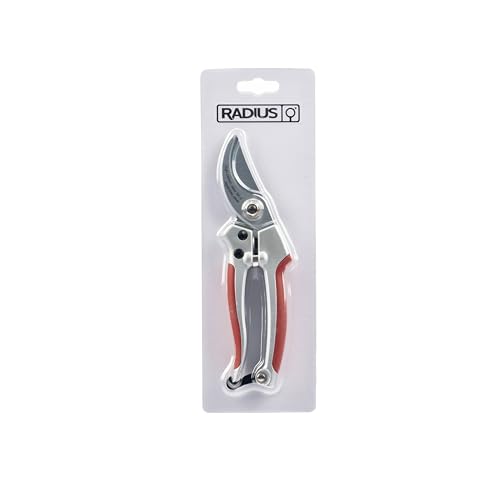
Radius Garden PRO digging fork
Levered back to back with a second fork, it teases a dense, matted clump into sections without slicing every root.
amazon
A decisive cut through woody crowns like peony and astilbe, where the guide says a sharp knife splits cleanest.
amazon
Trims the foliage back by a third to a half before you lift, which cuts moisture loss and clears your view of the crown.
amazon
Spear Head Spade Garden Kneeler
Division is close, low work at ground level, and a kneeling pad keeps you comfortable through a long session.
Frequently asked questions
Can you divide perennials in summer?
You can, but it is the hardest window because heat stresses fresh divisions. If you must, wait for a cool, overcast spell, cut the foliage back hard, keep the soil moist, and shade the divisions for a couple of weeks. Bearded iris is the one plant that actually prefers late-summer division.
How many pieces can I split one plant into?
As many as you like, within reason, as long as each division has healthy roots and at least two or three shoots or growing points. Bigger divisions recover faster and may bloom the same year. Smaller ones establish more slowly but give you more plants. For a fast-filling bed, go bigger; for maximum free plants, go smaller.
Will a divided perennial bloom the first year?
Often, but not always. Larger divisions frequently flower the same season. Smaller pieces, and slow-to-settle plants like peony, may spend the first year on roots and bloom the next. Give it time. A quiet first year is normal, not a sign you did anything wrong.
Can I pot up the extra divisions?
Absolutely, and it is one of the best reasons to divide. Pot the spares in good soil, keep them watered and lightly shaded until roots fill the container, then plant them elsewhere or give them away. This is how one clump becomes a whole border, or a stack of gifts for gardeners you know.
Do I really have to divide perennials, or can I leave them?
You never have to divide, but leaving a crowded clump alone means fewer flowers and a dead center over time. Some plants, especially taproot types like baptisia and lupine, prefer never to be moved. For the vigorous clumpers, dividing every 3 to 5 years keeps them healthy and blooming.