
As an Amazon Associate we earn from qualifying purchases. Some brands also pay us when you click or buy, so those links are ads. Full disclosure below
The best leaf vacuum mulcher for most yards is a corded 3-in-1 like the WORX WG509 TRIVAC, which moves 350 cfm and shreds 18 bags of leaves down to one. If you need to work away from an outlet, the WORX WG583 40V is the same idea on batteries, at a lower mulch ratio.
A leaf vacuum mulcher is the most misunderstood tool in fall cleanup. People buy one expecting it to replace the rake and the blower across a half acre, find it slow on open lawn, and quit on it. Used for what it is good at, which is beds, gravel, corners, and turning the pile into mulch instead of curbside bags, it saves real time. Here are five leaf vacuum mulchers by job, plus one standalone leaf shredder for yards where the leaves already end up in piles, and the specs that separate them. This page is one stop on our fall yard cleanup tools checklist, which puts every fall job in order.
Best leaf vacuum mulchers and leaf shredders at a glance
| Pick | Power | Airflow | Mulch ratio | Best for | Our verdict | Where to buy |
|---|---|---|---|---|---|---|
| 1. WORX WG509 TRIVACBest leaf vacuum mulcher overall | Corded, 12 amp | 350 CFM | 18:1 | Most yards, beds and hard surfaces | The highest listed mulch ratio here at 18:1, with variable speed and corded power that holds its output as long as you work, though the listing does not specify a metal impeller. | Check price on Amazon |
| 2. WORX WG583 40VCordless leaf vacuum | Battery, 40V from two 20V packs; dual charger included | 340 CFM | 12:1 | Working with no outlet in reach | The cordless pick arrives ready to work, with two batteries, a dual charger and a wheeled vacuum tube in the box, though its listed 12:1 mulch ratio is lower than the WG509's 18:1. | Check price on Amazon |
| 3. BLACK+DECKER BV6600Sold with tie-and-toss bags | Corded, 12 amp | Not listed | Up to 16:1 | Quick cleanup into disposable bags | BLACK+DECKER lists a high impact metal fan that it says prevents clogging when mulching, with variable speed and, in this listing, disposable bags you tie off and drop, though it gives no airflow figure. | Check price on Amazon |
| 4. WORX WG512 TRIVACBest for large leaf volume | Electric, 12 amp | 600 CFM | 16:1 | Big leaf volume, long sessions | The most listed airflow here at 600 CFM with a metal impeller, sold as a kit with the WORX LeafPro that sends shredded leaves into a waste can of up to 96 gallons, though its 16:1 ratio trails the WG509. | Check price on Amazon |
| 5. BLACK+DECKER BV3600Handheld for beds | Corded, 12 amp | Not listed | Up to 10:1 | Flower beds, with two speed selections | A simple corded start with a low speed for flower beds and a concentrator nozzle for corners, though its listed 10:1 mulch ratio is the lowest here. | Check price on Amazon |
| 6. WORX WG430Best standalone leaf shredder | Electric, 13 amp | Not a vacuum | 11:1 | Shredding piles you have already raked or blown | The leaf mulcher for leaves already in piles, listed at up to 53 gallons a minute, though it picks nothing up and the box holds no bag, so plan on your own. | Check price on Amazon |
What is the best leaf vacuum mulcher?
The best leaf vacuum mulcher overall is the WORX WG509 TRIVAC. It blows, vacuums, and mulches in one tool, moves 350 cfm at 210 mph, and its 18:1 mulch ratio is the highest of the picks here.
The 12 amp motor runs as long as the leaves keep falling, the speed is variable rather than a two-position switch, and the bag releases one-handed. The compromise is the cord, and for work near the house a cord is a smaller problem than a dead battery.
When a leaf vacuum mulcher beats raking or blowing
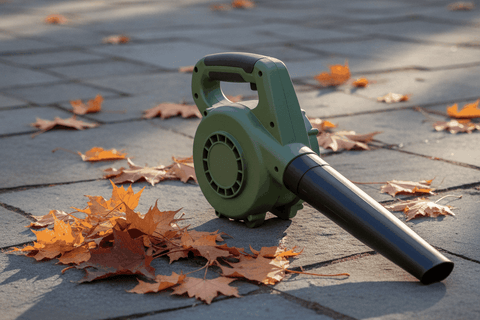
On open lawn a blower wins and it is not close. A vacuum takes in one narrow strip at walking pace, so a big lawn is slow work. It is a finishing tool, not a replacement. To choose the blower itself, start with our best leaf blower guide.
It wins everywhere you cannot push debris to. In planting beds a blower scatters your bark mulch with the leaves and a leaf rake snags on perennial crowns, while a vacuum lifts leaves from between plants and leaves the mulch behind. On gravel paths, raking drags stones into the lawn. Around downspouts, window wells, fence lines, and patio furniture, leaves pack into corners no rake reaches. In a small yard there is often nowhere to make a pile at all.
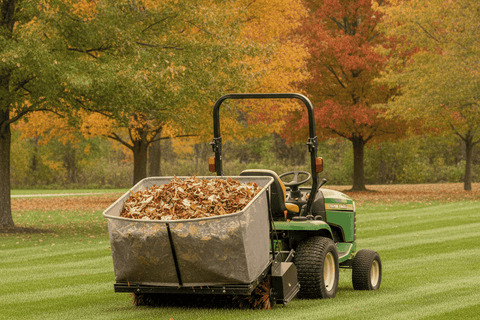
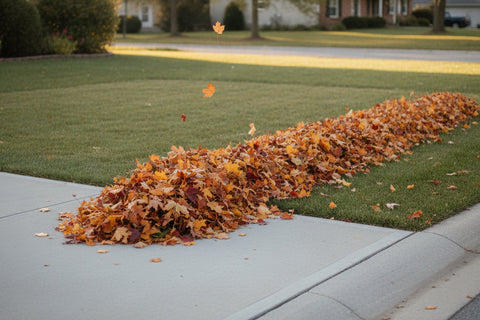
The second reason is the output. Shredded litter takes a fraction of the volume of whole leaves, so fewer bags reach the curb and you get free mulch for the beds you just cleaned. The fastest routine is to blow the open lawn into a windrow with a cordless leaf blower, then vacuum the pile, the beds, and the hard surfaces. On a big open lawn the collecting is the slow half rather than the shredding, and our lawn sweeper picks cover the wheeled hoppers that gather a whole yard in passes instead of armfuls. For blowing rather than vacuuming, see the best gas leaf blowers, and for branches rather than leaves, the best wood chippers.
What mulch ratio means
Mulch ratio, sometimes printed as reduction ratio, is the manufacturer figure for how far the impeller shrinks a load of leaves. An 18:1 ratio is the maker's figure for 18 bags of loose leaves reduced to one bag of shredded litter. Across these picks the listed range runs from 10:1 to 18:1.
Treat it as a way to compare models, not a promise about your yard, which is why some of these listings print it as an up-to number. Wet or matted leaves resist shredding, sticks and acorns should stay out of the tube, and an overstuffed bag stops feeding no matter what the ratio says. A higher ratio means the maker claims more reduction in volume, which the WORX listings say makes disposal and composting easier, whether the mulch goes on a bed or into a compost bin.
Leaf vacuum mulcher or standalone leaf mulcher?
Leaf mulcher and leaf shredder usually name the same machine: a standalone unit you feed from the top, with a spinning cutting line inside that works like a string trimmer in a drum. It shreds, but it does not collect. A leaf vacuum mulcher does both, pulling leaves up a tube and shredding them on the way into the bag.
That split decides which one you want. If your leaves end up in piles anyway, from a rake, a blower or a lawn sweeper, a standalone shredder takes the pile by the armful instead of one tube width at a time. If your leaves sit in beds, on gravel and in corners, the vacuum is the tool, because a shredder cannot pick anything up. Pick 6 below is the standalone option.
If your leaves are usually wet when you get to them, look at the Flowtron electric leaf mulcher and shredder as well: its listing says it mulches wet or dry leaves, with a lever that sets the output anywhere from 8:1 to 30:1 and a 21 inch funnel.
What is the best leaf shredder?
The best leaf shredder for most yards is the WORX WG430 (pick 6), a 13 amp electric shredder that WORX lists at up to 53 gallons of leaves a minute with an 11:1 mulch ratio. You feed it from the top, a spinning cutting line does the shredding in place of a metal blade, and it comes apart without tools for storage once the season ends.
When you compare standalone shredders, four things matter. The opening: a wide hopper takes leaves by the armful, a narrow one a handful at a time. The cutter: a line works like a string trimmer in a drum, and the lines are the part you replace. The ratio: it is the same maker's figure for volume reduction as on a vacuum. And where the mulch lands: into a bag hung underneath, or on the ground below the machine for spreading.
A shredder only earns its place once the leaves are gathered, so pair it with whatever already makes your piles. If the leaves are still spread through beds and over gravel, a leaf vacuum mulcher like the WG509 lifts them and shreds them in one pass.
What is the best leaf vacuum mulcher for a large yard?
For a large yard under mature trees, the best handheld leaf vacuum mulcher is the WORX WG512 TRIVAC (pick 4). Its listed 600 cfm is the most airflow any pick here lists, and this kit adds the WORX LeafPro, which sends the shredded leaves into an outdoor waste can of up to 96 gallons. Even so, on a big lawn a handheld vacuum is the finishing tool, not the whole job, because it clears one tube width at walking pace.
The faster large-yard routine splits the work. Blow the open lawn into windrows with a walk-behind leaf blower or a backpack leaf blower, shred the piles with the standalone WG430 (pick 6), and save the WG512 for beds, gravel and corners. Where the layer is light, a mower with mulching blades chops leaves back into the lawn and nothing gets gathered at all.
If you want one machine that vacuums the open lawn itself, that is a wheeled, gas-powered lawn vacuum, a different class from everything on this list. The Billy Goat KV601 lists a 190 cc Briggs engine, a 40 gallon bag, and a five-blade serrated impeller that sucks up debris and cuts it down in size. Its height adjusts for turf or paving. It takes far more storage room than any handheld here, so it makes sense for acreage, not a suburban lot.
What is the best walk-behind leaf vacuum mulcher?
A walk-behind leaf vacuum mulcher, often sold as a lawn vacuum or yard vacuum, is the wheeled, gas-powered class described just above, and none of the six numbered picks is one. Five are handhelds you carry and the WG430 is a shredder that stands in one place. A walk-behind rolls over the ground on its own engine, draws leaves in through a wide intake, shreds them in its impeller and fills a large bag.
When you compare walk-behind models, five things matter. Engine size, because the engine turns the impeller that does both the lifting and the shredding. Bag volume, because it sets how far you get between trips to the pile. The impeller itself: one with cutting edges shreds as it lifts. Height adjustment, so the intake can sit lower on paving than on turf. And storage, since a walk-behind needs floor space like a mower, which no handheld does.
For most suburban lots a walk-behind is more machine than the job needs. Blowing the open lawn into windrows and finishing the beds and corners with a handheld vacuum mulcher, as in the routine above, covers the same ground with tools that hang on a wall. A walk-behind makes sense on acreage under big trees, where leaves keep coming down for weeks. Do not confuse it with a walk-behind leaf blower, which pushes air across the lawn and cannot pick anything up or shred it.
How to choose a leaf vacuum mulcher
Five specs decide almost everything about which is the best leaf vacuum for your yard.
- Airflow, in cfm, does the lifting. Cubic feet per minute is the volume of air the machine moves, and it does the pulling. Miles per hour matters for blowing, less for vacuuming. These listings run 340 cfm to 600 cfm where they publish the figure, and the difference shows on deep leaf cover.
- Mulch ratio is the maker's figure for volume reduction. These listings run from 10:1 to 18:1, and how often you actually empty the bag also depends on the bag and on how wet the leaves are.
- Bag capacity and where the weight sits. A handheld unit hangs the filling bag off your shoulder, so the bag feels different full than empty. Look for a quick-release bag if you empty often and a shoulder strap for long sessions.
- Corded still wins on power and runtime. The corded WG509 carries the best mulch ratio here. The cordless WG583 comes with two batteries and a charger, and it moves slightly less air at a lower ratio. Cordless earns its place when no outlet reaches the work, or when dragging a cord through beds is the part you hate. Otherwise corded gets you more machine.
- Impeller material, as each maker states it. BLACK+DECKER lists a high impact metal fan on the BV6600, and the WG512 kit listing names a metal impeller. The WG509, WG583 and BV3600 listings do not state a material, including the BV3600's anti-clog vortex impeller. None of these listings says a metal fan is made for stones, acorns or sticks, so keep them out of the tube whatever the impeller.
Habits matter as much as specs. Vacuum leaves that are dry or barely damp, keep stones and green sticks out of the tube, and empty the bag before it is packed tight, because a full bag chokes the airflow the machine depends on.
Compare leaf vacuum mulchers: bags, speeds and what comes in the box
The table at the top of this page compares power, airflow and mulch ratio. This one lines up the parts you handle every time you use the machine: the bag, the speed control and what arrives in the box, as each pick's own Amazon listing states them. Where a cell says a detail is not stated, the listing does not give it.
| Pick | Bag (per listing) | Speed control (per listing) | In the box (per listing) |
|---|---|---|---|
| 1. WORX WG509 TRIVAC | 42 liter collection bag | Variable speed | The blower and its collection bag |
| 2. WORX WG583 40V | Collection bag, size not stated | Two speeds | Blower, collection bag, blower tube, wheeled vacuum tube, two batteries and a dual charger |
| 3. BLACK+DECKER BV6600 | BV-008 disposable bags that you tie off and toss | Variable speed | The BV6600 with BV-008 disposable bags |
| 4. WORX WG512 TRIVAC | Easy-release bag, or the LeafPro hose and hood into a waste can of up to 96 gallons | Not stated | The Trivac plus the WORX LeafPro: an 8 foot hose and a mesh hood with a drawstring |
| 5. BLACK+DECKER BV3600 | Collection bag, size not stated | Two speeds | Blower vac, concentrator, blow tube, vacuum tube and collection bag |
| 6. WORX WG430 (shredder) | Drops mulch into your own bag, hung under it on the included support ring | Not stated | The mulcher, 24 cutting lines and a bag support ring |
What is the best leaf vacuum with a bag?
Every vacuum pick on this page comes with a way to bag what it collects, so the real question is which bag suits how you work. For most yards it is the WORX WG509 (pick 1). Its listing gives a 42 liter collection bag, the only bag size the numbered picks' listings state, and its 18:1 mulch ratio is the highest listed here.
Two listings handle the bag differently. The BLACK+DECKER BV6600 listing pairs the machine with BV-008 disposable bags, so you tie off a full bag and set it out instead of tipping a fabric sack. The WORX WG512 kit adds the LeafPro, a hose and hood that send the shredded leaves straight into an outdoor waste can of up to 96 gallons instead of the machine's own bag, which suits big piles near the can more than scattered beds.
The standalone WG430 (pick 6) is the exception: it drops its mulch into a bag you supply, hung under it on the included support ring. And if by leaf collector you mean a machine that gathers a whole lawn, that is a lawn sweeper or a walk-behind lawn vacuum, both covered above.
The best leaf vacuum mulchers and leaf shredders, by job
1. WORX WG509 TRIVAC: best leaf vacuum mulcher overall
Best leaf vacuum mulcher overall
Best for: Most yards, beds and hard surfaces
WORX WG509 TRIVAC
- Power: Corded, 12 amp
- Airflow: 350 CFM
- Mulch ratio: 18:1
The highest listed mulch ratio here at 18:1, with variable speed and corded power that holds its output as long as you work, though the listing does not specify a metal impeller.
The WG509 is the one to buy if you are buying one. Its listed 18:1 mulch ratio is the highest here, and on a heavy leaf day that is the spec you feel. The 12 amp motor delivers 350 cfm at 210 mph, and because it is corded it holds that output as long as you want to work.
Speed is variable instead of a two-position switch, so you can back off for a bed of hostas and open it up on the driveway. The bag releases one-handed. WORX lists it as reaching under patio and lawn furniture, which is where a rake gives up.
Where it loses: it is corded, and the listing does not specify a metal impeller. If you want a metal impeller, BLACK+DECKER lists one on the BV6600 and the WG512 kit listing names one too.
2. WORX WG583 40V: cordless leaf vacuum
Cordless leaf vacuum
Best for: Working with no outlet in reach
WORX WG583 40V
- Power: Battery, 40V from two 20V packs; dual charger included
- Airflow: 340 CFM
- Mulch ratio: 12:1
The cordless pick arrives ready to work, with two batteries, a dual charger and a wheeled vacuum tube in the box, though its listed 12:1 mulch ratio is lower than the WG509's 18:1.
The WG583 is the cordless pick because it arrives ready to work: two 20V 4.0Ah batteries and a dual port charger are in the box, a complete tool rather than a bare tool plus a battery bill. The brushless motor moves 340 cfm at 210 mph and a two-stage impeller gives a 12:1 mulch ratio.
Its listing points it at larger lawns and yard areas. The vacuum tube carries a wheel so you can rest its weight on the ground and steer, and a low speed setting handles light sweeping around beds and hard surfaces. Both 20V packs mount together to make the 40V, and the dual port charger refills the pair at once.
Where it loses: the listed 12:1 ratio is well below the corded WG509's 18:1. If you already run Greenworks 40V batteries, the Greenworks 40V blower and vacuum would be the one to look at: it comes as a bare tool with no battery or charger and lists 340 cfm with turbo, a six-speed dial, and a 21 minute runtime. When we checked on October 18, 2026 its main Amazon offer was a used unit, so we do not link it until a new one is back.
3. BLACK+DECKER BV6600: sold with tie-and-toss bags
Sold with tie-and-toss bags
Best for: Quick cleanup into disposable bags
BLACK+DECKER BV6600
- Power: Corded, 12 amp
- Mulch ratio: Up to 16:1
BLACK+DECKER lists a high impact metal fan that it says prevents clogging when mulching, with variable speed and, in this listing, disposable bags you tie off and drop, though it gives no airflow figure.
The BV6600 is the tie-and-toss option on this list. BLACK+DECKER lists a high impact metal fan that it says prevents clogging when mulching, and it grinds up to 16 bags of leaves down to one. It blows at up to 250 mph from a 12 amp motor, though neither the listing nor BLACK+DECKER gives an airflow figure.
Its other trick is disposal. This listing pairs it with BLACK+DECKER's BV-008 disposable bags, so you tie off a full bag and drop it instead of wrestling wet litter out of a fabric sack. Variable speed selections cover flower beds to matted leaves, a cord retainer keeps the extension plugged in, and BLACK+DECKER lists it as 50 percent quieter than its older LH4500 model.
Where it loses: the disposable bags are a small ongoing cost, and with no published airflow figure you cannot compare its pull with the WORX picks on paper.
Until October 18, 2026 this slot went to the BLACK+DECKER BV6000, which also lists a high impact metal fan and comes with a disposable bag system. We could not confirm its stock on Amazon when we checked that day, so we no longer link it.
4. WORX WG512 TRIVAC: best for large leaf volume
Best for large leaf volume
Best for: Big leaf volume, long sessions
WORX WG512 TRIVAC
- Power: Electric, 12 amp
- Airflow: 600 CFM
- Mulch ratio: 16:1
The most listed airflow here at 600 CFM with a metal impeller, sold as a kit with the WORX LeafPro that sends shredded leaves into a waste can of up to 96 gallons, though its 16:1 ratio trails the WG509.
If you have mature trees and six weeks of falling leaves, airflow becomes the constraint, and the WG512 answers with 600 cfm from its 12 amp motor, the most any pick here lists. Airflow is what pulls leaves off the ground, so the extra air helps most where the cover is deep. Soaked leaves still pack and clog whatever the number says.
It backs that up with a metal impeller whose shredder blade cuts in two stages, for a 16:1 mulch ratio, and a bag that comes off with an easy release. This listing sells it as a kit with the WORX LeafPro, an 8 foot hose and a mesh hood with a drawstring that send the shredded leaves into an outdoor waste can of up to 96 gallons instead of the machine's own bag.
Where it loses: the LeafPro sends shredded leaves to the can through its hose, so for scattered beds the bag may suit you better. The 16:1 ratio also trails the WG509's 18:1.
5. BLACK+DECKER BV3600: handheld for beds
Handheld for beds
Best for: Flower beds, with two speed selections
BLACK+DECKER BV3600
- Power: Corded, 12 amp
- Mulch ratio: Up to 10:1
A simple corded start with a low speed for flower beds and a concentrator nozzle for corners, though its listed 10:1 mulch ratio is the lowest here.
The BV3600 is a 12 amp handheld that BLACK+DECKER describes as having two speed selections for flower beds and enough power for matted leaves.
It converts between blower, vacuum, and mulcher with no tools, includes a concentrator nozzle for driving debris out of corners, and has a cord retainer so the extension cord stops unplugging itself mid-row. The anti-clog vortex impeller grinds up to 10 bags down to one.
Where it loses: 10:1 is the lowest listed mulch ratio in this guide, and the listing does not claim a metal fan.
6. WORX WG430: best standalone leaf shredder
Best standalone leaf shredder
Best for: Shredding piles you have already raked or blown
WORX WG430
- Power: Electric, 13 amp
- Airflow: Not a vacuum
- Mulch ratio: 11:1
The leaf mulcher for leaves already in piles, listed at up to 53 gallons a minute, though it picks nothing up and the box holds no bag, so plan on your own.
The WORX WG430 is the leaf mulcher to buy if your leaves already end up in a pile. It is a 13 amp electric shredder: you drop leaves in the top, a bladeless line cutting system shreds them, and the mulch falls into a bag mounted underneath. WORX lists it at up to 53 gallons of leaves a minute and an 11:1 mulch ratio, 11 bags down to one. It assembles and comes apart without tools, which matters for a machine that spends most of the year in the garage.
Where it loses: it picks nothing up, so it only earns its place after a rake, blower or sweeper has done the gathering. Its 11:1 ratio trails every vacuum pick here except the BV3600. The listing says the box holds the mulcher, 24 cutting lines and a bag support ring, so plan on your own bag, and the lines are the part you replace.
Frequently asked questions
Are leaf vacuums worth it?
Yes, if your leaves land in beds, on gravel, or in corners rather than on open lawn. A vacuum mulcher lifts leaves out from between plants, shreds them to a fraction of their volume, and turns curbside bagging into free mulch. On a big open lawn a blower and a rake are still faster.
Can a leaf vacuum pick up wet leaves?
Damp leaves, usually yes. Soaked, matted leaves are the hardest thing you can ask of one, because water makes them pack instead of flow, which clogs the tube and drops the mulch ratio. Higher airflow helps. Otherwise let them dry a day, or blow them into a loose pile first.
What is a mulch ratio?
Mulch ratio is the manufacturer figure for how much the impeller shrinks a load of leaves. An 18:1 ratio means 18 bags of loose leaves reduce to one bag of shredded litter. It is a figure for comparing models: how often you empty the bag also depends on the bag and on how wet the leaves are.
What is the best leaf mulcher?
For leaves you have already raked into piles, the best leaf mulcher is a standalone unit such as the WORX WG430, which lists up to 53 gallons of leaves a minute at an 11:1 ratio. For leaves in beds, on gravel and in corners, a leaf vacuum mulcher like the WORX WG509 collects and shreds in one pass at 18:1.
Is a corded or cordless leaf vacuum better?
Corded models still win on power, with unlimited runtime and the best mulch ratios. Cordless is worth it when no outlet reaches the work, or when dragging an extension cord through beds and gravel is the part you dread.
Can you use mulched leaves on garden beds?
Yes, and it is the best reason to own one. Spread shredded leaves two to three inches over beds, keeping them off plant crowns, and they insulate roots and feed the soil as they break down. Shredded leaves are also the brown carbon a compost pile needs. Whole leaves mat down and shed water instead.
What is the best corded leaf vacuum mulcher?
The WORX WG509 TRIVAC is the best corded leaf vacuum mulcher for most yards. It is a 12 amp blower, vacuum and mulcher with variable speed, 350 cfm and an 18:1 mulch ratio, the highest of the picks here. Being corded, it keeps working as long as you do, with no battery to recharge halfway through the beds.
What is the best leaf blower vacuum mulcher?
A leaf blower vacuum mulcher, often sold as a 3-in-1, blows, vacuums and shreds in one tool, and five of the six picks here are built that way. The WORX WG509 is the best of them for most yards: it moves 350 cfm at 210 mph as a blower, then switches to vacuuming with a lever and no tools, and shreds what it collects at 18:1. On open lawn the routine above still applies: blow the leaves into a windrow first, then vacuum the pile.
Should you buy the WORX WG509 or the WG512?
Buy the WG509 if mulch ratio matters most: its listed 18:1 is the higher of the two, and its speed is variable. Buy the WG512 kit if deep leaf cover is the problem: it lists 600 cfm against the WG509's 350, a metal impeller, and the LeafPro that sends shredded leaves into a waste can of up to 96 gallons. Both are 12 amp electric 3-in-1 machines from WORX.
The bottom line
Buy the WORX WG509 if you want the best all-round leaf vacuum mulcher, the WG583 if you need to cut the cord, the BV6600 for tie-and-toss bags, and the WG512 if your trees bury the yard every November. If your leaves already end up in piles, the WG430 shreds them without a vacuum. Then use the output: shredded leaves belong on your beds, not at the curb. Our fall garden checklist covers what else to finish before the ground freezes.
A quick word on us: Spear Head Spade is a family business in New Jersey. We sell the double-patented digging spade the site is named for, with over 600,000 sold. Shredded leaves are the point rather than the byproduct, and our guide to mulching leaves covers where to put them. Digging shredded leaves into a heavy bed is a spade job, and ours is the 40 inch D-grip spade.
Disclosure: some links in this guide are affiliate links to Amazon. This is at no extra cost to you, and it never changes our honest recommendations.