As an Amazon Associate we earn from qualifying purchases. Some brands also pay us when you click or buy, so those links are ads. Full disclosure below
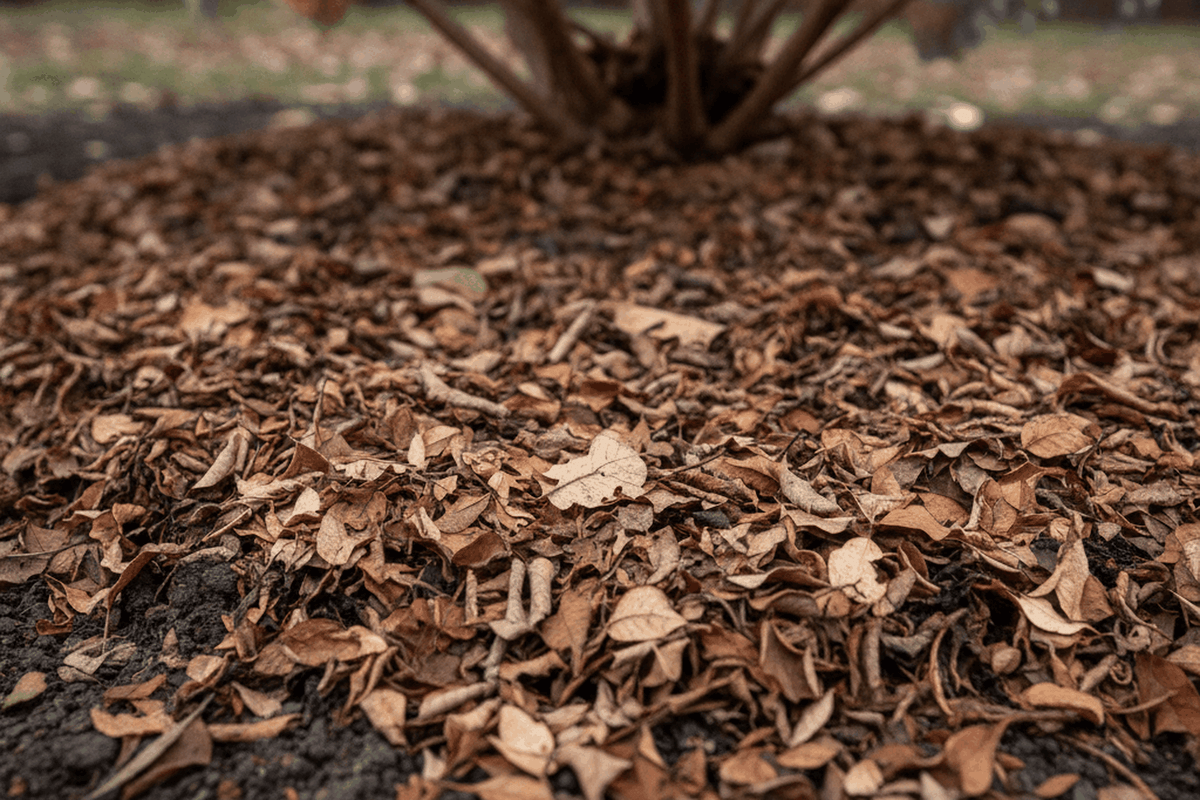
Mulching leaves means shredding them so they break down instead of matting. The quickest method is a mower: raise the deck, run over dry leaves in several passes until the pieces are dime-sized, and leave no more than an inch on the lawn. The surplus becomes leaf mulch for beds or a leaf mold pile.
Spear Head Spade is a family business in New Jersey that sells the Spear Head Spade digging tools, with over 600,000 sold. When the finished leaf mold goes back into a bed, our 40 inch D-Handle Spear Head Spade is the tool that opens the ground and turns it in.
Every fall a yard produces a free soil amendment and most of it goes to a landfill. The trick is chopping the leaves small enough that they behave like mulch rather than a tarp. The rest of the fall bed work is in our garden winterizing checklist. The leaves packed in the gutters came off the same trees and shred just as well once they are down, and our gutter cleaning tool picks cover the ways to get them out without standing on a ladder. This page is one stop on our fall yard cleanup tools checklist, which puts every fall job in order.
Why shredded leaves beat bagging them
Leaves carry the minerals a tree drew out of deep soil all season. Shredded and left in place, they do four things at once.
- They feed the soil for free. Leaf litter is what forest soil is made of. Earthworms pull the pieces down, fungi and bacteria finish the job, and you get the dark crumbly structure bagged amendments are sold as.
- They hold water. Two to three inches on a bed slows evaporation and buffers the soil against the freeze and thaw cycles that heave shallow roots.
- They suppress weeds. A closed mulch layer blocks the light most weed seeds need to germinate.
- They cost nothing and go nowhere. No bags, no curb, no purchase. On heavy clay this is the cheapest long-term fix there is, and it stacks with everything in our clay soil guide.
The one thing you cannot skip is the shredding. Whole leaves, especially big flat ones like maple and sycamore, glue themselves into wet sheets that shed water and sit on grass crowns all winter. That is the actual reason people were told to rake.
Three ways to shred leaves
A mower, with or without the bag
This is the default and it is hard to beat. Any rotary mower chops leaves; a mulching blade and a plugged discharge chute just do it faster. Run with the bag off and the pieces stay on the lawn. Run with the bag on and you collect ready-made mulch for the beds, which is the better plan when the drop is heavy.
A bagging mower also gets you the ideal mix: clippings and shredded leaves compost far faster than leaves alone, because the clippings bring the nitrogen leaves are short on.
A leaf vacuum mulcher
A handheld blower and vacuum that shreds as it collects earns its place where a mower cannot go: fence lines, under shrubs, gravel, decks and window wells. The corded WORX WG509 TRIVAC is our pick there, moving 350 cfm with an 18:1 mulch ratio, so leaves go into the bag already shredded. Our leaf vacuum mulcher picks compare the corded and cordless options. To gather the leaves first, a backpack leaf blower does it fastest, and any branches in the same pile go through a wood chipper instead. For a handheld or backpack that runs on gas, our gas leaf blower guide compares them by air volume and air speed.
A trash can and a string trimmer
The improvised method, and it genuinely works. Fill a sturdy plastic can a third full of dry leaves, lower a string trimmer in, and run it until the volume collapses. Wear eye protection and gloves. Slow for a whole yard, right for a few buckets of fine mulch for containers.
How to mulch leaves into the lawn with a mower
Five steps, and the order matters more than the equipment.
1. Wait for dry leaves
Dry leaves shatter; wet leaves smear. Mow in the afternoon after the dew has burned off, and skip the day after rain. Wet leaves pack under the deck, choke the blade, and leave clumps that kill the grass under them.
2. Raise the deck to a high setting
Set the mower near its highest cut. A high deck gives the blade room to lift leaves, circulate them and cut them repeatedly before they drop, which is what shreds them. A low deck scalps the lawn and presses leaves flat.
3. Make several passes until the pieces are dime-sized
One pass rarely finishes the job. Cross the same ground two or three times, changing direction each time, until the pieces are about the size of a dime. That is the size that falls between grass blades and reaches the soil. Anything still recognizable as a whole leaf is not done, and walking slower helps as much as another pass.
4. Keep coverage under about an inch
You should still see grass through the shredded layer. About an inch is the working limit; past that the layer closes over and the lawn goes into winter under a lid. If grass disappears, bag the excess and move it to beds rather than grinding it into the turf.
5. Mow through the fall instead of waiting for the last leaf
This is the step people skip. Mulch every week or so as leaves come down and each pass has a manageable amount to chop. Wait for bare trees and you are grinding a packed, rain-flattened mat that no mower handles well.
Leaf mulch for garden beds
Beds are where the material is worth the most, because a bed is bare soil that would otherwise winter exposed. Spread two to three inches of shredded leaves over perennial beds, around shrubs, and on vegetable beds you have finished harvesting.
Three rules keep it working:
- Shred them if you have a mower. Whole leaves will insulate a bed and they do break down, but they mat into sheets that shed rain and take much longer to disappear. One mower pass is the difference between mulch and a lid.
- Keep it off the crowns. Pull the mulch a few inches back from the center of perennials and away from tree and shrub trunks. Mulch held against a crown or bark invites rot and voles.
- Wait for cold on perennial beds. Winter mulch is there to keep soil evenly cold, not warm. Putting it down before the ground has chilled gives rodents an insulated place to spend the winter next to your plants.
Vegetable beds are the exception to the timing rule. Cover them as soon as they are clear, to stop erosion and keep winter weeds out. Pull the layer aside a couple of weeks before planting so the bed can warm and dry.
Spreading goes faster with something that both drags and levels. Our Spear Head Hoe, sold on Amazon, is a draw hoe with a pre-sharpened stainless steel blade and a rake on the back of the head, so you pull mulch off the pile with one face and level it with the other. The 60 inch handle means you do it standing up.
How to make leaf mold
Leaf mold is what you get when leaves break down on their own, without the nitrogen, heat and turning of a compost pile. It is fungal rather than bacterial work, it takes patience instead of management, and the result is a dark crumbly material that holds several times its weight in water. Use it as a soil conditioner or in a seed starting mix.
Two ways to make it:
- A wire ring. Circle a length of wire fencing into a bin three feet or so across, in shade if you have it, and fill it with shredded leaves. Water as you fill so it is damp all the way through, then leave it.
- Black plastic bags. Stuff bags with damp shredded leaves, punch a handful of air holes, tie them loosely and put them behind the shed. Bags work where a pile has nowhere to go, and they hold moisture better in a dry climate.
Shredded leaves finish in about six to twelve months. Whole leaves take a year or more, which is the single biggest reason to run them over first. Turning the pile once in spring speeds it up, and forgetting still gets you leaf mold.
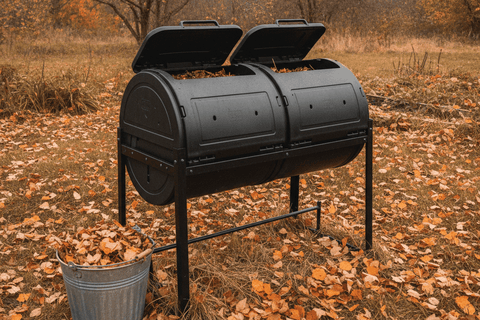
How it differs from compost. Compost is a hot bacterial process fed by green and brown material, and it wants turning and balancing; our guide to the best compost tumblers covers the drums that do the turning for you. Leaf mold is all brown, stays cool, and asks for nothing but time. Compost carries more nutrients; leaf mold does more for soil structure and water holding. Our compost bin guide covers the containers.
Which leaves to avoid or limit
Almost every leaf in a yard is fine once it is shredded. The exceptions are short.
Black walnut. The one to take seriously. Black walnut contains juglone, which inhibits tomatoes, peppers, eggplant, potatoes and a long list of ornamentals. Hulls, roots and buds hold the most and leaves less. Juglone breaks down as the material decomposes, faster in a hot compost pile than a cool leaf pile, but there is no reason to gamble a vegetable bed on the timing. Send walnut leaves to municipal collection.
Thick waxy leaves. Magnolia, holly, live oak and similar leathery leaves shred fine and then sit there a season or two longer than maple. They are not harmful and they make durable path mulch. Shred them small and do not expect them to vanish on schedule.
Oak, and the acidity myth. Oak leaves and pine needles measure mildly acidic when fresh, and that has been repeated into a rule that they acidify soil. They do not, in any amount a yard produces. The acids break down with the material and finished leaf mold lands close to neutral. Deciduous oak is one of the better leaves to have, since it holds its structure and resists matting. Moving pH is a job for lime or sulfur.
Diseased leaves. Leaves off a tree or a rose with active leaf spot, rust or scab belong in municipal collection, not on your beds. A cool leaf mold pile will not reliably kill the spores.
When raking still wins
Mulching in place is the default, not a rule. Reach for a rake when:
The leaves that land in the gutters are a separate job. Our best gutter guards guide covers the DIY kits that keep them out, priced by the foot.
- The drop is too heavy to grind. Under a mature maple or oak the layer can be several inches deep. Rake most of it off to the beds or the leaf mold pile, then mulch the rest.
- They are wet and packed. A rain-flattened mat has to be spread out to dry before any machine will shred it.
- The leaves are not on grass. Gravel, mulch beds, ground cover, decks and gutters all need hand work or a blower.
- You want the material somewhere specific. Raking onto a tarp and dragging it is still the fastest way to move a big volume.
A rake with an adjustable head covers both jobs, wide open on lawn and narrowed for working between plants. Our leaf rake picks go through the head widths and tine materials that matter. Past about a quarter acre the gathering itself becomes the work rather than the shredding, which is where a wheeled hopper earns its shed space, and our lawn sweeper picks cover what to buy. Under a quarter acre, a battery blower can do the gathering instead, and our cordless leaf blower guide picks one by yard size.
Tools for this job
The gear that turns a yard full of leaves into mulch, and holds the surplus while it breaks down.
WORX Trivac WG509 3-in-1 leaf blower, vacuum and mulcher
Blows, vacuums and mulches from one body, so leaves along fence lines and under shrubs go into the bag already shredded. Corded, 350 cfm, 18:1 ratio.
Check price on AmazonTABOR TOOLS J16A adjustable metal leaf rake
The head expands from 8 to 23 inches, so one rake clears open lawn and then narrows to work between plants. Telescoping handle.
Check price on AmazonMTB Supply garden wire compost bin, 30 by 30 by 24 inches
A plain wire ring is all leaf mold needs. At 30 by 30 by 24 inches it holds a season of shredded leaves.
Check price on AmazonRocky Mountain Goods 30 gallon brown paper leaf bags
For the walnut and diseased leaves that go to municipal collection, and for holding shredded leaves where a pile has nowhere to sit.
Check price on AmazonCARTMAN 10 by 12 foot waterproof poly tarp Moving the pile is cart work, and our best garden carts guide says how many bags of mulch each one really carries.
Rake onto the tarp and drag. Still the fastest way to move a heavy drop across a yard. Ten by twelve feet.
Check price on AmazonCommon questions
Can you leave leaves on the lawn?
Yes, as long as you shred them first and keep the layer thin. Whole leaves mat into a wet blanket that blocks light and air and can smother grass over winter. Mowed into dime-sized pieces at about an inch of coverage or less, they filter down to the soil and feed it.
Is leaf mulch good for the garden?
Yes. Shredded leaves hold moisture, moderate soil temperature, suppress weeds and feed earthworms and soil microbes as they break down. Two to three inches on a bed does the same job as bought mulch for nothing. Shred them first so they do not mat, and keep them off plant crowns.
Do shredded leaves make soil acidic?
No, not in any way that matters. Oak leaves and pine needles are mildly acidic while they are fresh, but the effect fades as they decompose, and finished leaf mold sits close to neutral. If your pH genuinely needs moving, that is a job for lime or sulfur, not leaves.
How long does leaf mulch take to break down?
Shredded leaves spread on a bed usually disappear into the soil over a single growing season. Whole leaves take a year or more and mat together while they wait. Piled in a wire ring as leaf mold, shredded leaves become dark and crumbly in six to twelve months.
Can you mulch wet leaves?
You can, but it goes badly. Wet leaves pack under a mower deck and clog a vacuum mulcher's tube instead of flowing through it, and they clump rather than shred. Wait for a dry day, or at least until the morning dew burns off. If a pile is soaked, spread it to dry first.
The bottom line
Shred the leaves, keep about an inch or less on the lawn, put the surplus two to three inches deep on beds, and pile the rest in a wire ring for leaf mold. Skip black walnut and anything diseased, ignore the acidity worry, and work through the fall instead of one afternoon at the end of it.
Disclosure: some links in this guide are affiliate links to Amazon. This is at no extra cost to you, and it never changes our honest recommendations.
Product prices and availability are accurate as of the date/time indicated and are subject to change. Any price and availability information displayed on Amazon.com at the time of purchase will apply to the purchase of this product.