As an Amazon Associate we earn from qualifying purchases. Some brands also pay us when you click or buy, so those links are ads. Full disclosure below
The best compost bin depends on where it has to live. Outdoors, a dual chamber tumbler like the Miracle-Gro is the one to beat: it makes finished compost in weeks rather than months, and the closed drum keeps rats and raccoons out. For a whole fall leaf drop, an expandable 246 gallon ring bin wins on volume. In the kitchen, a lidded caddy like the OXO is the one that stays in use.
Composting is the rare garden upgrade that pays you twice: it shrinks your trash and it feeds your beds for free. But the bin decides whether the habit sticks. An open heap in the corner works in theory and stalls in practice, because turning it is heavy work and every raccoon in the county knows what is in it. This guide picks the best compost bins by job, from a family kitchen caddy to a quarter-ton leaf ring, and is honest about how long each one really takes to make soil. Fall is when the bin fills fastest; our garden winterizing checklist covers what goes in and what stays out. Shredded leaves are the easiest brown material to keep on hand; our leaf vacuum mulcher picks cover the machines that shred them as they collect. Woody prunings break down far faster once chipped, and our best wood chippers guide covers the machines. This page is one stop on our fall yard cleanup tools checklist, which puts every fall job in order.
Best compost bins at a glance
| Bin | Best for | Why it works | Capacity | Where to buy |
|---|---|---|---|---|
| Miracle-Gro dual chamber tumbler (best overall) | Most yards: steady kitchen scraps plus garden waste | Two chambers on a turning drum: one side cooks while you load the other | 37 gallons (2 x 18.5) | Check price on Amazon |
| VIVOSUN dual-chamber tumbler | First bin on a budget | Same two-chamber batch system at an entry price | 43 gallons | Check price on Amazon |
| GEOBIN expandable ring | Big leaf drops and garden cleanups | Expands to roughly four feet across; ventilated walls keep a large pile breathing | Up to 246 gallons | Check price on Amazon |
| OXO Good Grips caddy | Collecting scraps in the kitchen | One-hand flip lid and a smooth interior that rinses clean | 1.75 gallons | Check price on Amazon |
| Worm Factory 360 | Apartments, garages, year-round indoor composting | Stacking trays of red wigglers turn scraps into castings, with almost no smell when run properly | 4 trays, expandable | Check price on Amazon |
| Utopia Kitchen countertop bin | Kitchens that want stainless steel on the counter | Stainless pail with a charcoal filter in the lid; rinses out in the sink | 1.3 gallons | Check price on Amazon |
What is the best compost bin?
For most households, a dual-chamber tumbler, and the Miracle-Gro dual chamber tumbler is the one to beat. The drum turns on its own axis, so turning the pile means giving it a few spins on your way past instead of wrestling a pitchfork, and the closed body keeps rain, rats, and raccoons out. The two-chamber design is what makes it genuinely better than a single drum: you load one side day by day while the other side finishes undisturbed, so you get a steady rhythm of finished batches instead of one eternal half-done pile. A galvanized steel base holds the drum off the ground, and each chamber has its own sliding door that locks shut.
Its honest limits: 37 gallons fills faster than you expect during fall cleanup, and a tumbler only hits its advertised speed if you keep the browns and greens roughly in balance. If your composting is mostly one enormous October leaf drop, the GEOBIN below is the better first buy.
How to choose a compost bin
- Speed or volume: pick one. Tumblers cook small batches fast because the whole load gets mixed and aerated every time you spin it. Big static bins hold ten times more but work slowly, since a large pile is only turned as often as your back allows. Decide whether your bottleneck is kitchen scraps (tumbler) or yard waste by the barrowload (ring bin).
- Air is the engine. Compost microbes need oxygen; a pile that cannot breathe goes slimy and sour. Look for real ventilation: aeration holes on a drum, open mesh walls on a ring, stacked trays on a worm bin.
- Sealed beats sorry. If rats, raccoons, or bears visit your neighborhood, an elevated, latched tumbler is the difference between composting and feeding wildlife. Open bins can still work: keep meat, dairy, and oily food out and bury fresh scraps under browns. If rats or mice move on from the bin to the house or shed, our best mouse repellent guide covers sealing them out.
- Feed it a working diet. Aim for roughly two to three parts browns (dry leaves, shredded cardboard) to one part greens (scraps, grass clippings) by volume. The bin matters less than the ratio; every pick here still needs it.
- Size to your household. A one-to-two-person kitchen fills a tumbler chamber in a month or two. A family with a vegetable garden should think bigger, or run a tumbler and a leaf ring side by side, which is the setup we would buy twice.
The best compost bins, by job
1. Miracle-Gro dual chamber tumbler: best compost bin overall
The Miracle-Gro tumbler earns the top spot by removing the two reasons people quit composting: turning and pests. Give it a few turns every few days, keep the mix balanced, and in warm weather a chamber can finish in around four to six weeks, Miracle-Gro's own figure. Each chamber holds 18.5 gallons, 37 in all, the drum is UV-protected, BPA-free plastic on a galvanized steel base, and both doors lock with tight seals against pests. It sits on a fixed stand rather than wheels, so choose its spot before you fill it. It is the bin we would hand to any gardener who wants finished compost this season without studying for it.
2. VIVOSUN dual-chamber tumbler: best budget compost bin
The VIVOSUN runs the same play as the Miracle-Gro, two chambers on an elevated rotating drum, with a larger 43-gallon capacity. The trade-offs are a lighter frame and thinner panels that ask for more care during assembly and a bit more patience in high wind. As a first bin to find out whether composting sticks in your household, it is the low-risk answer, and the batch rhythm it teaches transfers straight up the line if you upgrade later.
3. GEOBIN: best outdoor compost bin for volume
The GEOBIN is a ventilated plastic sheet that clips into a ring up to about four feet across, holding as much as 246 gallons, which is an entire yard's fall cleanup in one place. Perforated walls keep even a big pile breathing, and when the compost is done you unclip the ring and lift it away instead of shoveling everything out over a wall. It is not sealed, so it follows open-pile rules: yard waste and raw fruit and vegetable scraps, no meat or dairy. Pair it with a tumbler and you have speed and volume covered for less than most single bins cost.
4. OXO Good Grips: best kitchen compost bin
Every outdoor bin needs a feeder, and the OXO Good Grips caddy is the one that stays in use. The lid flips open with one hand while the other holds the cutting board, stays up while you scrape, and closes to keep smells and flies in check. The smooth, rounded interior rinses clean in seconds, which matters more than any filter, because the real failure mode of kitchen caddies is becoming too gross to keep using. At 1.75 gallons it holds a few days of scraps for a typical household. If you prefer stainless steel with a charcoal filter, the Epica is the classic pick for the best countertop compost bin.
5. Worm Factory 360: best worm composting bin
No yard, or a Minnesota winter? Vermicomposting moves the whole operation indoors. The Worm Factory 360 stacks feeding trays that red wigglers migrate up through, leaving finished castings below, some of the richest fertilizer a garden can get. Run properly it smells like forest floor, not garbage, and it works year-round indoors: a basement, a heated garage, or under a sink. The worms want roughly 55 to 77 degrees Fahrenheit, so an unheated garage in a real winter is out, and a baking summer garage is just as bad. It also asks for more attention than a tumbler: worms have feeding limits. The VermiHut Plus is the solid value alternative in the same stacking-tray format.
6. Utopia Kitchen countertop bin: best stainless steel kitchen compost bin
Plenty of kitchens would rather have metal than plastic sitting out, and the Utopia Kitchen countertop bin is the straightforward version of that: a 1.3 gallon stainless pail, 7.2 inches across and 11.2 inches tall, so it takes up about the footprint of a flour canister. Stainless does not stain from coffee grounds or hold onion smell the way plastic eventually does, and a charcoal filter in the lid covers the days between trips out to the drum.
It suits a household that composts on a weekly rhythm rather than a daily one. Fill it through the week, empty it into the tumbler on the weekend, rinse it in the sink. Line the bottom with a sheet of newspaper or a square of cardboard to catch liquid, drain wet scraps before they go in, and a rinse with mild soap or a splash of vinegar once a week keeps it fit to have on the counter.
Where it loses: the OXO's smooth plastic interior rinses faster, its lid flips open with one hand while the other holds the cutting board where this one has to be lifted off, and the charcoal filters are a consumable you have to remember to replace.
Best compost bin for outdoors
For outdoor composting, pick by what actually fills the bin. The GEOBIN handles bulk yard waste, expanding to about four feet across and 246 gallons, which is a whole fall leaf drop in one ring. The Miracle-Gro dual chamber tumbler is the better outdoor choice if kitchen scraps drive your pile, since a closed, turning drum keeps animals out. If mice have already moved from the yard into the house or shed, our mouse trap guide picks a trap for each kind of problem. For rats, our rat trap guide covers traps for the yard and the shed, and how many to set.
Best kitchen compost bin
In the kitchen, the OXO Good Grips caddy is the one that stays in use: a one-hand flip lid and a smooth 1.75 gallon interior that rinses clean in seconds. Choose the Utopia Kitchen countertop bin instead if you want stainless steel on the counter and a charcoal filter in the lid to stretch the days between emptyings.
Best compost bin for a small garden or small backyard
In a small yard, footprint decides more than capacity. A dual chamber tumbler on a frame takes up little more floor space than a trash can, sits up off the ground so nothing pools or spreads underneath it, and stays closed, which matters more when the bin is ten feet from a patio table than when it sits at the back of an acre. The VIVOSUN uses the same two chamber layout in a 43 gallon drum.
Skip the ring bin here. The GEOBIN expands to roughly four feet across, and an open ring that wide reads as a heap in a small garden even when it is working perfectly. If the only outdoor space is a balcony or paving, a stacking worm bin like the Worm Factory 360 is the honest answer: it runs indoors or in a shed, takes a household's scraps, and never needs a patch of ground. Whatever you pick, shredding the leaves that feed it saves most of the room, and our guide to mulching leaves covers how; a lawn sweeper is the fastest way to gather them in the first place.
Best compost bin for beginners
Start with a closed tumbler and a kitchen caddy, in that order. A first pile fails for one of three reasons: it dries out, it turns sour from too many food scraps and not enough dry material, or something digs into it. A sealed drum removes the third problem outright and makes the second easy to correct, because you can see and smell the whole batch and add browns to it on the spot. An open heap forgives none of that until you have run one for a few seasons.
The rule that matters in year one is the ratio: roughly two to three parts browns to one part greens by volume. Keep a bag of dry leaves or shredded cardboard beside the bin so adding browns is as easy as adding scraps. Compost is also the cheapest fix for the soil most beginners are fighting, so if yours is heavy and slow to drain, our guide to improving clay soil explains where the first finished batches should go.
Best compost bin on a budget
Budget here is mostly a question of how much you are paying for the turning. The VIVOSUN dual chamber tumbler is the other two-chamber layout here, a 43 gallon drum on a lighter frame. Prices on every bin on this page move, so check the current listing rather than trusting a number anywhere, including ours.
If what you actually need is volume, an expandable ring costs a fraction of any tumbler per gallon, because you are buying a wall of perforated plastic and no mechanism at all. The cheapest working bin is still a circle of wire fencing or four pallets wired at the corners: free, unlovely, and genuinely effective as long as you keep meat and dairy out and turn it with a fork now and then. At the other end, a simple lidded caddy is a small outlay that changes the habit, which is the part most people get wrong.
Tumblers have their own guide
Tumblers now have their own page. Our guide to the best compost tumblers compares six drums by chamber count, listed capacity and price, from an 18.5 gallon single to the 100 gallon Lifetime 60072. The short version: the Miracle-Gro above suits a typical yard, and the VIVOSUN is the same layout in a 43 gallon drum on a lighter frame.
How to compost, in one paragraph
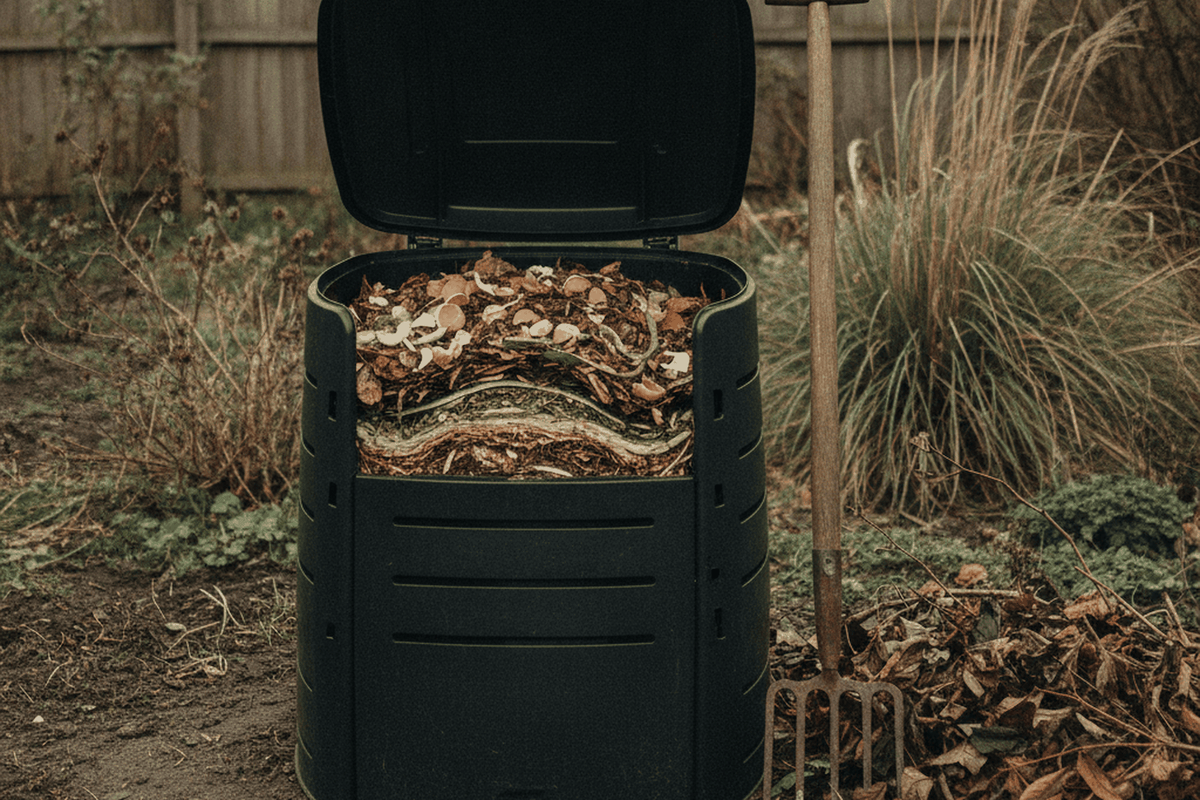
Layer two to three parts browns to one part greens, keep the pile about as damp as a wrung-out sponge, and give it air, by spinning the drum or forking the pile every week or two. Heat means it is working; a sour smell means too many greens or too little air, and a pile that does nothing is usually too dry or too brown. Finished compost is dark, crumbly, and smells like earth, with none of the original ingredients recognizable. Cornell's composting resource pages are the reference we point people to when they want the science. When a batch is done, spread an inch or two over your beds and work it in; that digging-in step is exactly the job a sharp spade was born for, and our essential garden tools list covers the rest of the shed.

Frequently asked questions
Is a compost tumbler better than an open pile?
For speed, cleanliness, and pest resistance, yes: a tumbler aerates the whole batch with a spin and seals food scraps away from animals. An open pile wins on capacity and cost, and handles a whole yard's leaves at once. Many gardeners run both, feeding scraps to the tumbler and bulk yard waste to the pile.
Do compost bins attract rats?
Open bins can, if meat, dairy, oily food, or exposed fresh scraps invite them. An elevated, sealed tumbler removes both the access and most of the smell, which is why we recommend one anywhere wildlife is a concern. In open bins, stick to yard waste and raw fruit and vegetable scraps, and bury fresh additions under a layer of browns.
How long does it take to make compost?
A well-fed tumbler can finish a batch in roughly six to eight weeks in warm weather. A static pile typically takes six months to a year, faster if you turn it regularly. A worm bin produces harvestable castings in about three to four months. Cold weather slows everything; the microbes are still there, just working at winter pace.
Which type of compost bin is best?
A dual-chamber tumbler is the best type for most households: sealed against pests, quick to turn, and steady output. A ring or open bin is the best type for volume, since a full leaf drop outruns most tumblers. A worm bin is the best type indoors. Match the type to what you produce, not to a single winner.
Should a compost bin be in full sun or shade?
Sun for a tumbler or sealed bin: the dark walls absorb heat and a warm pile breaks down faster, with afternoon shade in a hot southern summer so it does not dry out. An open ring bin is happier in part shade, where it holds moisture. Either way, put it on level ground near the kitchen door.
Are compost bins worth it?
If you garden, yes. A bin turns waste you already produce into the soil amendment you would otherwise buy by the bag, improves whatever soil you fold it into, and cuts the volume of trash you set out weekly. The habit only sticks when the bin fits your situation, which is exactly why we picked by job rather than naming one winner for everyone.
What is the best compost bin for a small garden?
A dual chamber tumbler on a frame, because it takes up little more floor space than a trash can and stays closed next to a patio. Skip a wide open ring bin in a small yard. If the only outdoor space is a balcony or paving, a stacking worm bin runs indoors and needs no ground at all.
What is the cheapest way to start composting?
A circle of wire fencing or four pallets wired at the corners costs almost nothing and composts perfectly well, as long as you keep meat and dairy out and turn it occasionally. Among bought bins, an expandable ring costs far less per gallon than any tumbler, because there is no mechanism to pay for.
Can you compost grass clippings?
Yes, but clippings are a wet green and they mat into slimy layers if you add a thick load at once. Mix them with two to three times their volume of browns such as dry leaves or shredded cardboard, or add them in thin layers. A tumbler handles clippings better than an open pile, because every spin breaks the mat apart again.
Do I need both a kitchen compost bin and an outdoor one?
In practice, yes. A kitchen caddy is not a composter; it is the holding container that gets scraps from the counter to the bin without a trip outside every evening. The composting happens in the outdoor bin. Pairing a caddy with a tumbler is what keeps the habit alive through a cold, wet week in February.
The bottom line
Start with the Miracle-Gro dual chamber tumbler and an OXO caddy to feed it; that pair covers most households end to end. Add a GEOBIN if your trees out-produce your drum, or go Worm Factory if your composting has to live indoors. Whichever you choose, the payoff arrives the same way: a barrow of black, crumbly compost, a freshly dug bed, and a garden that eats from its own kitchen. Finished compost moves by the cartload, and our best garden carts guide compares carts by rated load and by bags that fit.
Disclosure: some links in this guide are affiliate links to Amazon. This is at no extra cost to you, and it never changes our honest, use-based recommendations.
Product prices and availability are accurate as of the date/time indicated and are subject to change. Any price and availability information displayed on Amazon.com at the time of purchase will apply to the purchase of this product.