
As an Amazon Associate we earn from qualifying purchases. Some brands also pay us when you click or buy, so those links are ads. Full disclosure below
For most homeowners the best axe for splitting wood is a splitting axe, not a maul, and the best splitting axe is the Fiskars X27, a 36 inch wedge that opens seasoned rounds under 12 inches in one stroke. Shorter users want the 28 inch X25. The best splitting maul is the 8 pound Fiskars Pro IsoCore, for knotty rounds.
Splitting is not chopping. A felling axe cuts across the grain with a thin edge. A splitting tool works along the grain as a wedge: the round fails because the head forces the halves apart, not because the edge slices them. So head shape matters more than sharpness, and a light axe you swing fast often beats a heavy maul you can only heave, because impact energy climbs with the square of head speed and only in step with head weight. This page is one stop on our fall yard cleanup tools checklist, which puts every fall job in order.
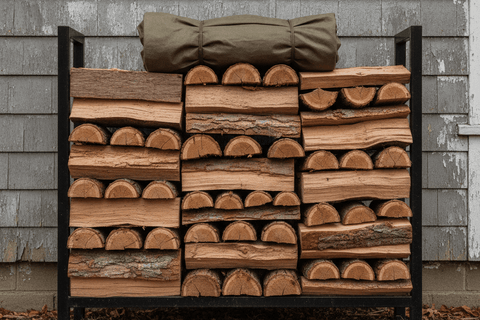
Wood either cooperates or it does not. Straight-grained oak, ash, maple, and cherry pop open cleanly. Elm, sycamore, sweetgum, and anything within a foot of a knot is stringy and wants mass behind the edge. Most species also split easier green or frozen than half dry. Split now and stack loose, off the ground and covered on top, because hardwood needs six to twelve months to reach the 20 percent moisture a stove wants. Ground contact is what undoes that seasoning, and our firewood rack picks cover the frames that hold a stack up and let air through it.
Before the list: we make digging tools, not axes, so nothing here is ours. Each pick is judged on head geometry, handle length, the size of round it is honestly for, and what the Amazon listing states.
Best splitting axes and mauls at a glance
| Tool | Length | Head weight | Best for | Where to buy |
|---|---|---|---|---|
| Fiskars X27 Super Splitting Axe (best overall) | 36 in | Not listed | Most rounds, and taller users | Check price on Amazon |
| Fiskars X25 Splitting Axe | 28 in | Not listed | Medium rounds, shorter users | Check price on Amazon |
| Fiskars Pro IsoCore Splitting Maul | 36 in | 8 lb | Knotty rounds, with shock control | Check price on Amazon |
| Truper 30956 Splitting Maul | 36 in | 8 lb | A forged maul you can rehang | Check price on Amazon |
| Helko Werk Saxon Heavy Log Splitting Axe | 31 in | 6 1/4 lb | Traditional hickory handle | Check price on Amazon |
| Estwing Fireside Friend | 14 in | Not listed | Kindling, nothing to overstrike | Check price on Amazon |
Splitting axe or splitting maul: which one do you need?
An axe, for most people, most of the time. A modern splitting axe carries a thin, fast wedge on a long handle, and on straight-grained rounds under about 12 inches it opens the wood in one stroke while weighing half what a maul does, so you can keep swinging it. A maul earns its keep on the rounds that make an axe bounce: knots, crotches, and elm.
| Tool | Best on | Where it struggles |
|---|---|---|
| Splitting axe, 28 to 36 in | Straight-grained rounds under about 12 in | Bounces off knots, crotches, and stringy elm |
| Splitting maul, 6 to 8 lb | Big, knotty rounds, and driving a steel wedge | Slow, tiring, and overkill on clean wood |
| Kindling hatchet, 12 to 16 in | Kindling and small splits worked on a block | Anything you have to swing hard at |
| Cast iron kindling splitter | Kindling with no swing and no exposed edge | Rounds bigger than its opening |
| Steel splitting wedge, driven with a maul | A round the maul alone will not open | Never drive it with the poll of an axe |
| Hydraulic log splitter | Volume, green wood, and rounds nothing else opens | Cost, storage, setup time, and noise |
A steel wedge needs the right hammer. Gränsfors Bruk's guide to choosing a splitting axe says its splitting maul is the one splitter in its range meant for striking a splitting wedge, and that its splitting axes should not strike a wedge or be used as one. The USDA Forest Service's ax manual, An Ax to Grind, says the same of any single-bit ax: never pound a steel wedge with its poll, which is not tempered for pounding and can deform or throw chips of steel. The Fiskars X27 and X25 are splitting axes, not mauls, so the maul is the one to drive a wedge with.
The honest test is how much wood you burn. Under about two cords a year, an axe and a steel wedge cover everything. Above four cords, price out hydraulic log splitters rather than buying a bigger maul. When the pile outgrows an axe, our best log splitters guide covers the machines, and our best chainsaws guide covers bucking the trunk to stove length.
Which splitting maul is best for your wood?
Choose it by the wood. Gränsfors Bruk's guide to choosing a splitting axe says larger, thicker or more knotty pieces of wood often need a heavier tool, that its splitters differ mainly in head weight and handle length, and that its own splitting maul is meant for very thick and knotty wood. On this page that is the work of the two 8 pound mauls. Pick 3, the Fiskars Pro IsoCore, is the maul named at the top of this page: its listing gives an 8 pound head riveted in place on a 36 inch IsoCore shock-absorbing handle. Straight-grained rounds under about 12 inches rarely need a maul at all, as the table above shows.
The table sets side by side the tools on this page that their makers call mauls or heavy splitters, from their Amazon listings.
| Tool | Head weight | Length | Handle | Head, per listing |
|---|---|---|---|---|
| Fiskars Pro IsoCore Splitting Maul (pick 3) | 8 lb | 36 in | IsoCore shock-absorbing | Forged steel, riveted in place |
| Truper 30956 Splitting Maul (pick 4) | 8 lb | 36 in | Hickory, rubber overstrike guard | Drop forged, bevel edged striking face |
| Helko Werk Saxon Heavy Log Splitting Axe (pick 5) | 6 1/4 lb | 31 in | Grade A American hickory | Hand forged C50 carbon steel, 53 to 56 HRC |
| Estwing Fireside Friend (pick 6) | Not listed | 14 in | Shock reduction grip | One piece of forged steel |
The Estwing is a one handed maul made for kindling by the stove, and the Helko sits below the 8 pound mauls by head weight. Steer by the wood: an 8 pound head for big knotty rounds and wedge work, a lighter head for straight grain you can split all afternoon.
What length and head weight should you buy?
Handle length is set by your height and by the block you split on, not by the size of the wood.
- Under about 5 foot 10. A 28 inch axe. A 36 inch handle makes you stand back far enough that the head lands past the sweet spot or short of it, and accuracy is most of splitting.
- About 5 foot 10 and taller. A 36 inch axe or maul. More arc means more head speed for the same effort, which is the whole trick.
- Head weight. Splitting axe heads sit near four pounds and mauls run six to eight. Heavier stops helping where your form falls apart.
- Block height. Split on a wide round that puts the target near knee height. Splitting on the ground wastes the blow and dulls the edge on stones.
The longer handle is also the safer one. With 36 inches of reach, a miss carries past the round into the block or the dirt beyond it, while a short handle on a low round can bring the head back toward your shin. Stand square to the block, feet about shoulder width apart, and aim at the far edge of the round rather than its center.
How do you split wood safely with an axe or maul?
Two public safety sources cover the basics: the USDA Forest Service's ax manual, An Ax to Grind, and the BC Forest Safety Council's sheet on chopping wood safely. Both start with what you wear. The Forest Service manual says to always wear safety glasses or goggles and stout leather boots at least 8 inches high, and calls gloves a good idea for splitting firewood, where you handle a lot of splintered wood. The BC sheet lists protective eyewear, a hard hat, safety gloves and steel toed boots.
- Use a block. The BC sheet says an elevated block on a level surface keeps the axe farther from your feet and makes it less likely to hit the ground, and that a good block is sturdy, broad, heavy and cut evenly at both ends. Stand the round on end on it and strike from the top.
- Set your feet. The Forest Service manual says to make sure your footing is secure, with your weight even and both feet about shoulder width apart. The BC sheet says to keep your legs well apart and that a slight bend in the knees before the strike can help.
- Swing straight down. Lift the axe behind your head or over your shoulder and bring it down onto the top of the round; the BC sheet says never to swing it around your body. The Forest Service manual says to start with a gentle swing to judge your distance, and to aim the first blow at a crack or check already in the wood.
- Clear the swing. The manual says to chop only when you are well clear of other people and to make sure no branches or brush are in the way. The BC sheet adds: keep children out of the immediate area.
- Know when to stop. The BC sheet's last tip is to quit when you are tired, because that is when injuries happen.
For a knotty round, the Forest Service manual says to start the split at the outside edges and slab off the sides.
How much should a splitting axe cost?
A mid-range price buys every serious option on this page. Go much cheaper and you are usually buying a stamped head on a handle that will not survive its first overstrike, the swing where the handle rather than the head hits the edge of the round. Go well above it and you are paying for a forged head and a hickory handle you can rehang forever, which is a real thing to want, not a performance upgrade.
When to cut, split, and stack firewood, by region
Firewood is bought in the fall and burned in the winter, but it is made in late winter and spring. Wood dries from the split faces and the ends, so a round left whole all summer is still wet in October.
| Region | Best time to split | Drying time it needs |
|---|---|---|
| Northeast and Upper Midwest | Late winter to early spring, while rounds are frozen | 9 to 12 months for oak, about 6 for ash and maple |
| Mid-Atlantic and transition zone | February through April | 6 to 12 months, stacked in afternoon sun |
| Pacific Northwest | Spring, top covered before the fall rains | About 12 months, roofed with open sides |
| Mountain West and Southwest | Any dry stretch, spring is easiest | 4 to 6 months in dry air, softwoods faster |
| South and Gulf Coast | Winter, when the humidity finally drops | 9 to 12 months, humidity slows everything |
Limbing and bucking come first, and neither is an axe job. A pruning saw handles what you drag out of the brush pile, a pole saw takes overhead limbs off before the tree comes down, and a chainsaw cuts the trunk to stove length.
Are kindling splitters worth it?
If you light a fire most nights of the winter, yes. A cast iron kindling splitter is a ring with a fixed blade inside it. You set a split on the blade and strike the top of the wood with a mallet or the poll of a maul, so the edge never moves and your hands stay out of the path of a swing. It is the safest way to make kindling.
The Kindling Cracker Original has a 6.5 inch opening. The Kindling Cracker King XL opens 9 inches, which matters if you feed it halves rather than quarters. Where they lose: they make kindling and nothing else, they are heavy and want a stump to sit on, and if you burn a fire a week the Estwing below does the same work for much less.
The best splitting axes and mauls, by job
Six tools, six different jobs. Most households need one axe and, eventually, one maul.
1. Fiskars X27 Super Splitting Axe, 36 in: best splitting axe overall
The Fiskars X27 is the default answer, and the listing states its job plainly: taller users on large logs. The head is a low-friction wedge bonded into a hollow composite handle rather than wedged into it, so there is nothing to work loose or rehang. It is light for its reach, which is the point: you get maul-class force from head speed instead of head mass, and you are still swinging an hour after a maul would have put you on the stump. Where it loses: 36 inches is too long for anyone much under 5 foot 10 to place accurately, and a thin wedge still skates off elm and off knots.
2. Fiskars X25 Splitting Axe, 28 in: best for medium rounds and shorter users
The Fiskars X25 is the same idea at 28 inches, listed for medium to large logs. The shorter handle costs you arc and buys back control, the trade almost everyone under about 5 foot 10 should take. The X25 and the X27 are one design at two lengths, so buy on your height. Where it loses: less head speed means it stalls on rounds past about 14 inches where the X27 would carry through, and a short handle gives a miss a shorter path to your leg.
3. Fiskars Pro IsoCore 8 lb Splitting Maul, 36 in: best splitting maul for knotty rounds
The Fiskars Pro IsoCore is listed as an 8 pound maul on a 36 inch handle, and its shock control is the real feature, not the marketing. IsoCore puts an insulating layer between the steel core and the grip, which matters more on a maul than on any other striking tool, because a mishit with eight pounds moving ends the afternoon. The flat poll also drives a steel wedge, the escape hatch for a round that will not open at all. Where it fits: eight pounds is made for big, tough rounds; for a night of clean ash, the lighter splitting axes above do the job.
4. Truper 30956 8 lb Splitting Maul, 36 in: a forged maul you can rehang
The Truper 30956 maul is the traditional answer: a drop forged head with a bevel edged striking face on a 36 inch hickory handle, and a rubber overstrike guard on the shaft where a miss lands. A replaceable handle turns a break into an evening with a new haft and a wedge instead of a new tool, and that striking face drives a steel wedge into the round nothing else will open. Where it loses: it has none of the IsoCore's shock damping, so your elbows feel every mishit, and a hickory handle wants to live indoors rather than against the woodshed.
5. Helko Werk Saxon Heavy Log Splitting Axe, 31 in: a traditional hickory splitter
The Helko Werk Saxon is here for the buyer who wants the old pattern and knows why: a hand forged C50 carbon steel head, listed at 53 to 56 HRC, hung on a 31 inch grade A American hickory handle with a linseed oil finish. Helko calls it a heavy splitting axe, lists a 6 1/4 pound head, and reserves it for large rounds and difficult logs. At 31 inches it sits between the 28 inch X25 and the 36 inch tools, which suits a mid-height splitter. The heel of the blade carries a small hook for moving logs, and it ships with a leather sheath and a 1 oz bottle of Helko's Axe Guard oil for the head. Where it loses: hickory needs dry storage and an occasional wipe of oil, one bad overstrike makes it a repair project, and it is a splitting axe, not a maul, so drive steel wedges with a maul instead.
6. Estwing Fireside Friend, 14 in: best for kindling
The Estwing Fireside Friend is forged as one piece of steel from edge to grip, 14 inches long, with a shock reduction grip. One-piece construction solves the failure that kills short splitting tools, since an overstrike on a hatchet normally lands the handle on the edge of the round and snaps it. Here there is no handle to snap. It lives by the stove. Where it loses: at 14 inches it is too short and too light for splitting full rounds, so treat it as a kindling tool.
How to choose the best axe for splitting wood
- Match the handle to your height. Under about 5 foot 10, buy 28 inches. Taller, buy 36. Accuracy beats mass on every round that is not knotted.
- Buy the axe first, the maul second. An axe you can swing all afternoon does more work than a maul you can swing for twenty minutes.
- Decide whether you rehang or replace. A forged head on hickory is a tool for your kids. A bonded composite handle is lighter, and its head is molded or riveted in place, so there is nothing to rehang.
- Keep the edge blunt on purpose. A splitting bit wants a stout bevel, closer to a chisel than a knife, and it needs cleaning far more than it needs sharpening. The end-of-season routine in our guide to cleaning, sharpening, and storing garden tools covers it.
One last thing, from the digging side. If this firewood came from a tree you took down, the stump is still out there, and it is the same lesson in a different tool: let the geometry do the work instead of swinging harder. Our D-handle garden spade digs with up to 80 percent less effort than a standard shovel, which is why it carries the work in our guide to removing a tree stump.
Frequently asked questions
Is a splitting axe better than a maul?
For most homeowners, yes. A splitting axe weighs about half what a maul does and moves faster, and since impact energy rises with the square of head speed, a fast axe opens straight-grained rounds under about 12 inches while tiring you far less. Keep a maul for knots, crotches, and elm.
Is a heavier axe better for splitting wood?
Not usually. Impact energy climbs with the square of head speed and only in step with head weight, so a four pound axe you swing fast beats an eight pound maul you can only heave. Mass wins on knots, crotches, and elm, where a fast thin wedge just bounces.
What size splitting axe do I need?
Buy handle length by your height. Under about 5 foot 10, a 28 inch axe places the head accurately. At 5 foot 10 and above, a 36 inch handle gives more arc, more head speed, and a safer miss, because the head carries past the round rather than back toward your leg.
What is the best type of axe handle for splitting wood?
It depends on whether you want to repair it or replace it. A bonded composite handle is lighter, absorbs shock, and cannot be rehung if it breaks. Hickory can be replaced for a few dollars and a wedge, but it wants dry storage and it is the part that breaks on an overstrike. One piece steel has no handle to break off the head, and the Estwing Fireside Friend adds a shock reduction grip.
Do you need to sharpen a splitting axe?
Rarely, and never to a knife edge. A splitting bit works as a wedge, so it wants a stout bevel that survives dirt and knots. Clean off rust and sap, file out any nicks, and stop there. If the axe is bouncing, the problem is usually the wood or your aim.
Can you split wood with a regular axe?
You can, but it will stick. A felling axe has a thin bit made to cut across the grain, so it buries itself in a round and stops instead of forcing the halves apart. The wedge profile of a splitting axe is the entire difference.
Is it easier to split wood green or seasoned?
Green or frozen is usually easier for the same species, which is why late winter is the classic time to be at the block. Half dry wood is the worst case, since it has lost the moisture that helps it fracture but has not yet checked and cracked. Split it green, because wood dries from the split faces.
Is a 6 or 8 pound splitting maul better?
It depends on the wood more than on the maul. Gränsfors Bruk's splitting guide says larger, thicker or more knotty pieces of wood often need a heavier tool, which is the work an 8 pound head is for. On straight-grained rounds, a lighter head you can swing fast and place accurately often opens them as well, because impact energy rises with the square of head speed. By their listings, picks 3 and 4 carry 8 pound heads and the Helko Werk Saxon (pick 5) a 6 1/4 pound head.
What makes a splitting axe or maul high quality?
Quality is not something a listing can settle, so we do not name a single winner. What a listing can tell you is how the head is made and how it is fixed to the handle. All six picks here list a forged steel head. The three Fiskars tools mold or rivet the head in place on a shock-absorbing handle, the Truper and the Helko Werk Saxon hang a forged head on a hickory handle, and the Estwing is one piece of forged steel. The Helko listing is the only one here that states a hardness, 53 to 56 HRC. Past that, fit decides more than build: the handle length for your height and the head weight for your wood.
The bottom line
Buy the Fiskars X27 if you are about 5 foot 10 or taller and the X25 if you are not, and add the IsoCore maul the first time a round refuses to open. Keep the Estwing by the stove for kindling. Split early, stack it off the ground with the top covered, and let the wood dry through the summer so the stove gets what it wants in January.
Disclosure: Our commissions do not change what we recommend or what you pay.
Product prices and availability are accurate as of the date/time indicated and are subject to change. Any price and availability information displayed on Amazon.com at the time of purchase will apply to the purchase of this product.