As an Amazon Associate we earn from qualifying purchases. Some brands also pay us when you click or buy, so those links are ads. Full disclosure below
The best pole saw for most yards is a cordless 10 inch model on a telescoping shaft, like the EGO Power+ PS1000, which reaches up to 13 feet and is rated for up to 100 cuts per charge. If your limbs are thin and you prune once a year, a manual pole saw does the same work, and when the job outlasts a battery, a gas pole saw earns its place.
Pole saw listings lead with reach, and reach is the number that decides the least. Reach tells you which branches you can touch. Bar length and cutting diameter decide whether anything happens once you get there, and weight at full extension decides how long you last before you come down. Below are six pole saws for six real jobs, including the best cordless pole saw for most yards, with the specs each maker publishes. This page is one stop on our fall yard cleanup tools checklist, which puts every fall job in order.
Best pole saws at a glance
| Pole saw | Best for | Why it wins | Where to buy |
|---|---|---|---|
| EGO Power+ PS1000, 10 inch, tool only (best overall) | Regular pruning on a lot with mature trees | Reach up to 13 feet, up to 100 cuts per charge, carbon fiber shaft, LED cut line | Check price on Amazon |
| Greenworks 40V PS40B210, 8 inch | A complete cordless kit on a budget | Battery and charger in the box, 11 foot maximum reach, automatic oiler | Check price on Amazon |
| Jameson LS-Series 18 foot kit | High limbs, quiet work, no batteries | 18 foot reach on three 6 foot fiberglass poles, 16 inch Barracuda tri-cut blade, low-profile saw head | Check price on Amazon |
| Husqvarna 122LKP gas, 21.7cc | Long sessions and one engine for several jobs | Reach up to 12 feet, X-CUT chain, automatic oiling, detachable shaft that takes click-on attachments | Check price on Amazon |
| CRAFTSMAN V20 CMCCSP20M1, 8 inch | Occasional trimming | Reach up to 14 feet with the extension pole, 4.0Ah battery and charger in the box, branch hook | Check price on Amazon |
| Fiskars 8 to 12 foot 2-in-1 tree pruner | Clean pruning cuts plus a saw for the thick ones | Manual, with a pruner head and a 15 inch saw on an aluminum pole under five pounds | Check price on Amazon |
What is the best pole saw?
For most homeowners it is the EGO Power+ PS1000, a 10-inch cordless saw on a telescoping carbon fiber shaft rated for up to 13 feet of reach and up to 100 cuts per charge, sold as a tool only. If you own no cordless platform yet, the Greenworks 40V kit is the cheaper start.
That answer flips as soon as you count how often you prune. A homeowner who takes down four or five limbs a year is buying a battery, a charger, and a maintenance habit for a job a manual saw finishes in an afternoon. The Jameson LS-Series kit reaches 18 feet on three 6-foot fiberglass poles, against 14 feet for the powered saws here as sold, or 17 feet if you add EGO's extension pole, and it never needs a charge.
Tree size decides the rest. Ornamentals, fruit trees, and young shade trees are pole saw work. A mature oak with limbs 25 feet up and 6 inches thick is a certified arborist's job, whatever the reach figure on the box says.
Pole saw vs pole pruner: the difference that matters
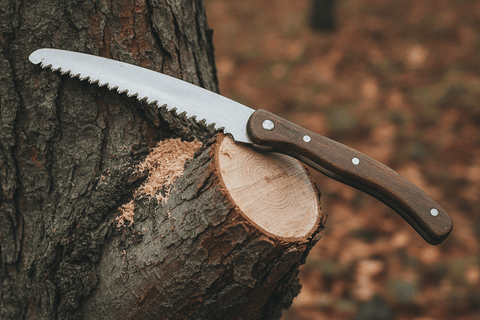
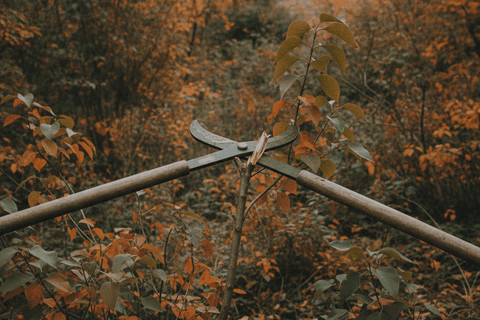
The two tools look alike on a shelf and do different work. A pole saw puts a chainsaw bar or a curved hand saw on the end of a pole and cuts by sawing, so it handles thick limbs and leaves a rougher face. A pole pruner puts a bypass cutting head up there, closes it with a rope or a chain drive, and takes a branch off in one clean pass.
Clean matters, because a smooth cut at the branch collar seals over and a torn cut invites decay. Most of what a homeowner removes overhead is thin enough for a pruner head. Buy a saw for storm damage and structural limbs, a pruner for shaping and fruit wood, and a 2-in-1 pole if you want one tool to cover both.
1. EGO Power+ PS1000: best cordless pole saw overall
A pole saw is a chainsaw held at arm's length above your head, so the shaft matters as much as the motor. EGO builds this one on a telescoping carbon fiber shaft that extends to a total reach of up to 13 feet, or up to 17 feet with the EP1000 extension pole sold separately. The 10-inch bar runs a quarter-inch pitch chain at speeds up to 20 meters per second off a brushless motor. For trunk and firewood work at ground level, see our best chainsaws guide.
The detail that separates it from cheaper saws is the LED cut line indicator, which EGO says is the first on a pole saw. Look up into a canopy on a bright day and the bar disappears into shadow, so a lit cut line replaces a guess. EGO rates the saw at up to 100 cuts per charge with a recommended 2.5 Ah battery, sold separately, and it runs on any EGO 56V ARC Lithium pack. Tool-free chain tensioning, a quick-adjust handle, and a shoulder strap hook finish it. Find it on Amazon.
Where it loses: this is a tool-only listing, so a battery and charger add real money unless you already own EGO 56V packs, and the 13 feet is EGO's total reach figure, not the length of the shaft.
2. Greenworks 40V PS40B210: best value cordless pole saw
Everything you need to cut a branch is in this box: an 8-inch bar and chain, a three-piece aluminum shaft that extends up to 9 feet for an 11-foot maximum reach, a 2.0 Ah 40V battery, and a charger. Nothing here is sold separately, which is the whole argument for it.
The shorter bar is honest about the job: water sprouts, storm-damaged limbs, and the low branches that make mowing under a tree annoying. An automatic oiler and a quick chain adjustment keep upkeep short. Greenworks says it starts instantly with no gas, oil, or emissions, so there is no fuel to mix and no starter rope to pull. Find it on Amazon.
Where it fits: Greenworks lists it for storm cleanup, pruning and trimming, and branches in hard to reach areas, with an 8-inch bar and an 11-foot maximum reach.
3. Jameson LS-Series 18 foot kit: manual pole saw for high limbs
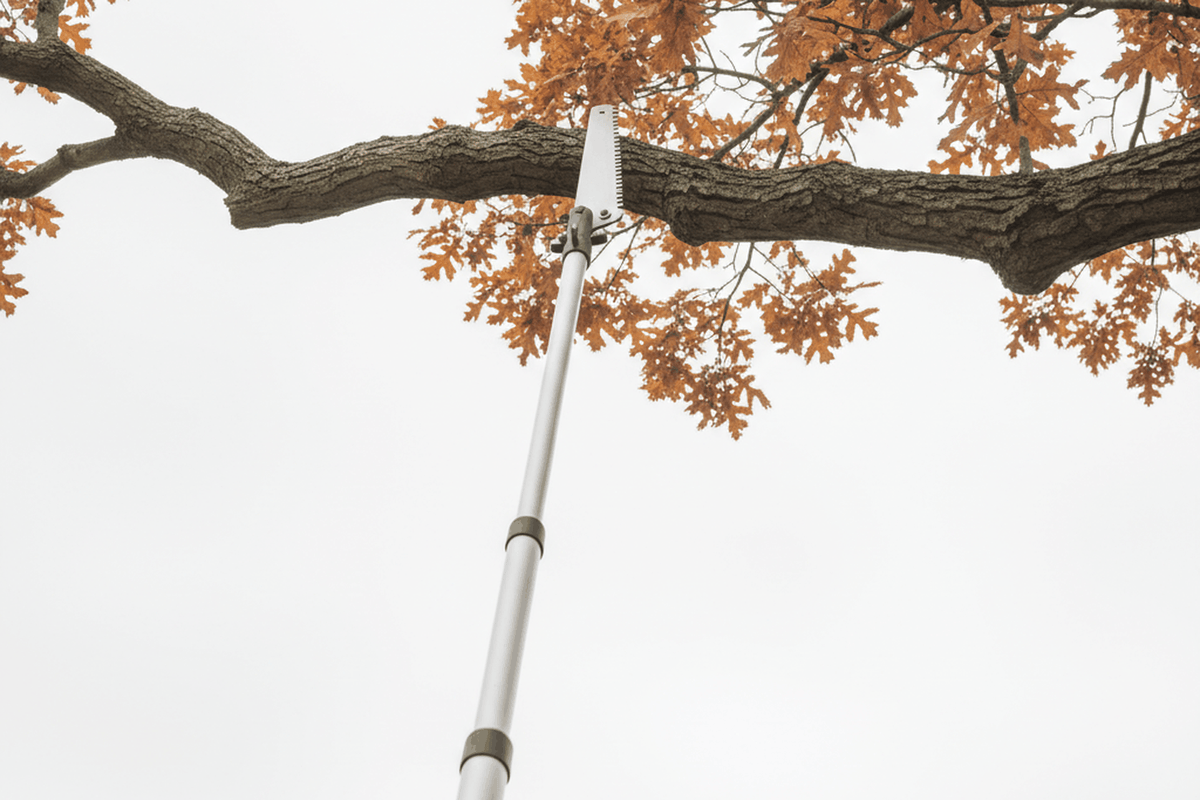
Manual pole saws win on height and on the two things a battery cannot give you, silence and no runtime limit. This Jameson kit reaches 18 feet on three 6-foot fiberglass poles, against 14 feet for the powered saws on this page as sold, and Jameson says that reach is for extended trimming without a ladder.
The head is a 16-inch Barracuda saw blade with a tri-cut edge, on a low-profile saw head that Jameson says moves easily through dense foliage. The poles are light-duty fiberglass with a hollow core and a 1/10-inch wall, joined by aluminum ferrules and external leaf spring locking buttons, and the kit comes with the base pole, an extension pole, a saw head extension pole and the blade. Jameson pitches it at landscapers, arborists and homeowners alike. Find it on Amazon.
Where it loses: every cut is arm work, so a dozen limbs turns into a real afternoon, and Jameson lists the poles as light-duty and gives no cut capacity for the blade.
4. Husqvarna 122LKP: gas pole saw
Gas earns its place when the job outlasts batteries. The 122LKP runs a 21.7cc engine with a Husqvarna X-CUT chain and automatic bar oiling, and Husqvarna lists reach at up to 12 feet.
The reason to choose it over a cordless saw is not power, it is the shaft. Husqvarna sells this as a multi-purpose tool with a detachable shaft that accepts click-on attachments, including an edger and a hedge trimmer sold separately, so one engine covers several jobs. Smart Start is Husqvarna's easier-pulling starter system. Find it on Amazon.
Where it loses: 12 feet of reach is modest for the money, and you take on mixed fuel, a carburetor, and real noise.
5. CRAFTSMAN V20 CMCCSP20M1: best pole saw for occasional trimming
Once or twice a year, you want a saw that arrives ready to cut. The CRAFTSMAN V20 kit reaches up to 14 feet with its extension pole and ships with a 4.0Ah battery and a charger, so there is nothing else to buy.
The 8-inch bar sits on an angled head for cutting precision, a branch hook helps pull cut limbs free, and the soft grip on the extension makes the pole easier to steer. CRAFTSMAN rates the 4.0Ah pack at up to 325 cuts per charge on 2 inch by 2 inch pine, the listing gives the saw as 6 pounds, and CRAFTSMAN backs it with a 3 year limited warranty. Find it on Amazon.
Where it loses: CRAFTSMAN publishes no cutting capacity, and its 325 cuts are on 2 inch pine, smaller than the limbs most people buy a pole saw for, so treat the count as a ceiling, not a promise.
6. Fiskars 2-in-1 tree pruner: best pole pruner and saw combo
A pruner leaves a cleaner face than a chain does, and this Fiskars pole carries both: a chain-drive pruner head for clean cuts on the thin stuff and a 15-inch double-grind saw for anything the head cannot close on.
The aluminum pole extends from 7.9 to 12 feet and weighs less than five pounds, the number that decides whether you finish the row. Fiskars puts a low-friction coating on the blades so sap and debris are less likely to gum them up, and a double locking system holds the extension where you set it. It also handles cuts low enough that bending or kneeling is the real problem. Find it on Amazon.
Where it loses: the pruner head only closes on branches its jaws fit around, so a thick limb means switching to the saw blade, and Fiskars publishes no cut capacity for the head.
Which pole saws telescope, and how far do they reach?
Five of the six picks here extend, and how each one extends changes what its reach number means. EGO lists the PS1000's carbon fiber shaft as telescopic, with a total reach of up to 13 feet (17 feet with its EP1000 extension pole, sold separately). The Greenworks shaft comes in three aluminum pieces that extend to 9 feet, for an 11 foot maximum reach, and the Fiskars pole adjusts from 7.9 to 12 feet and holds with a double locking system. The CRAFTSMAN reaches up to 14 feet with its extension pole, and the Jameson LS-Series reaches 18 feet on three 6-foot fiberglass poles joined by leaf spring locking buttons. The gas Husqvarna 122LKP is listed with a detachable shaft that takes click-on attachments and up to 12 feet of reach, and its listing does not describe that shaft as telescoping.
Reach and length are not the same number. EGO's PS1000 operator's manual gives the saw's own length as 7.64 to 9.58 feet without the extension pole, while its listing gives a total reach of up to 13 feet, so EGO's reach figure counts more than the tool itself. Greenworks publishes both, a 9 foot shaft and an 11 foot maximum reach. Jameson lists its 18 feet of reach alongside the three 6-foot poles that make it, and Fiskars lists the pole as extending from 7.9 to 12 feet. Read each figure in the table below for what it measures.
The table lines up what each pick's own Amazon listing states, with EGO's operator's manual filling in two cells its listing leaves blank. Where a cell says not stated, the source is silent on it, which is not the same as a no.
| Pole saw | Power | Shaft | Stated reach or length | Bar or blade | Stated cut capacity | Weight |
|---|---|---|---|---|---|---|
| 1. EGO Power+ PS1000 | Cordless, EGO 56V ARC Lithium; battery and charger not included | Telescopic carbon fiber | Total reach up to 13 ft; up to 17 ft with the EP1000 extension pole, sold separately | 10 in. bar and chain | Limbs up to 8 in. in diameter (manual) | 9.37 lb without battery pack and chain sheath (manual) |
| 2. Greenworks 40V PS40B210 | Cordless, 40V; 2.0Ah battery and charger included | 3-piece aluminum, extends up to 9 ft | 11 ft maximum reach | 8 in. bar and chain | Not stated | 7.8 lb |
| 3. Jameson LS-Series 18 foot kit | Manual | Three 6 ft hollow core fiberglass poles, leaf spring locking buttons | 18 ft reach | 16 in. Barracuda tri-cut saw blade | Not stated | 7.4 lb |
| 4. Husqvarna 122LKP | Gas, 21.7cc | Detachable, takes click-on attachments | Reach up to 12 ft | Not stated; X-CUT chain | Limbs up to 8 in. thick | 13.1 lb |
| 5. CRAFTSMAN V20 CMCCSP20M1 | Cordless, V20; 4.0Ah battery and charger included | Pole extension with a soft grip | Reach up to 14 ft with the extension pole | 8 in. bar on an angled head | Not stated | About 6 lb |
| 6. Fiskars 2-in-1 tree pruner | Manual | Extendable aluminum, double locking | Extends from 7.9 to 12 ft | Chain-drive pruner head and 15 in. double-grind saw | Not stated | Under 5 lb |
How to choose a pole saw
Five decisions cover almost all of it.
- Buy reach for your tallest target, not your average one. Check what each number counts. Greenworks publishes a 9 foot shaft and an 11 foot maximum reach, while EGO and CRAFTSMAN publish reach only, and every figure is a maximum measured straight up.
- Match a battery platform you already own. A tool-only saw plus a pack from your shelf beats a kit on a new platform, and every tool you add later gets cheaper.
- Read cutting diameter, not bar length. BLACK+DECKER lists 6 inches on the 8-inch bar of its LPP120, the Husqvarna 122LKP listing gives a limb thickness of up to 8 inches, and EGO's PS1000 manual says that saw is designed for limbs up to 8 inches in diameter. Treat an unpublished number as unknown, not generous.
- Weight ends sessions before power does. A saw held at full extension works your shoulders, not your arms. Fiskars publishes under five pounds; the listings give the CRAFTSMAN 6, the Greenworks 7.8 and the Husqvarna 13.1, and EGO's gives none.
- Decide powered or manual by frequency. A few limbs a year is manual work. A dozen limbs every spring is worth a motor, and so is wood thick enough that each hand cut takes minutes overhead.
Whatever you buy, never work near a power line. Treat every pole as conductive, and if a branch is near one, call your utility company instead. Stand to the side of the limb, never directly beneath it, undercut first so the bark does not tear, then finish from above just outside the branch collar. Keep the small stuff on the ground with pruning shears and a pair of hedge shears, and if the tree is new, our guide to planting a tree covers the first cuts a young canopy needs.
How do you trim a tree with a pole saw?
Work from the ground, from the bottom of the tree up, and take heavy limbs off in pieces. EGO's operator's manual for the PS1000 sets out a plan for limbing and pruning: decide where each branch will fall before you cut, never stand directly under the branch you are cutting, remove long branches in several stages, and cut the lower branches first so the ones above have room to fall. The same manual says not to cut from a ladder and to keep bystanders at least 50 feet away. Limbs thick enough to burn are firewood once a chainsaw cuts them to stove length, and our best splitting axes and mauls guide picks the axe or maul that splits them.
For a limb with real weight, the manual's basic cutting procedure takes three cuts. Make a shallow first cut on the underside, about a quarter of the limb's diameter, close to the trunk or main limb. Make the second cut from the top, farther out than the first, and carry it through until the limb drops. Then make the final cut close to the trunk. Cut just outside the branch collar, as the section above describes. EGO's manual says not to make the flush cut next to the trunk until much of the limb is cut off to reduce the weight, and that following the proper cutting procedure prevents stripping the bark from the main limb.
EGO puts the typical working angle at 60 degrees or less between the shaft and the ground, and notes that the first cut, from under the limb, gets harder as the shaft stands more upright. On power lines its manual is specific: do not operate within 50 feet of overhead electrical lines. For gear, it calls for safety glasses or goggles with side shields, ear plugs or ear muffs, an approved safety hard hat, gloves and non-slip safety footwear, and head protection whenever the saw works overhead, because falling debris can cause serious injury. If the bar gets pinched in a cut, the manual says to stop the motor and remove the battery, lift the limb to free the saw if you can reach it from the ground, and call a professional if it stays trapped.
Frequently asked questions
How high can a pole saw reach safely?
Published reach figures run from about 11 to 18 feet, and safe reach is lower. Keep both feet on the ground, never on a ladder with a powered saw, stand outside the drop zone, and stop when the head wanders because your arms are tired. Above roughly 20 feet, hire a certified arborist.
Is a cordless or gas pole saw better?
For home yards, cordless. Battery saws need no fuel mixing and no starter rope, and the strongest cordless picks here reach 13 and 14 feet against 12 feet for the gas saw. Gas still wins on all-day runtime and on a detachable shaft that takes an edger or a hedge trimmer, both sold separately.
Can you use a pole saw near power lines?
No. Treat every pole saw as conductive, including fiberglass and carbon fiber models, because wet or dirty poles conduct too. EGO's PS1000 manual says not to operate within 50 feet of overhead electrical lines. If a branch is anywhere near a service drop or a utility line, call your utility company and let them clear it.
How thick a branch can a pole saw cut?
Bar length is not cut capacity. BLACK+DECKER lists a 6-inch maximum cutting diameter on its 8-inch bar, and most makers publish nothing at all. A pruner head like the Fiskars closes only on branches its jaws fit around. Cut what you can hold the bar square against, and leave thicker limbs for a chainsaw on the ground.
Is a manual or powered pole saw better?
Frequency decides. If you prune a few limbs a year, a manual saw is quieter, reaches higher, and has nothing to charge or maintain, though every cut is arm work. If you clear a dozen limbs every spring, a powered saw finishes in a fraction of the arm work.
Which pole saw brand should you buy: EGO, DeWalt, Husqvarna or Stihl?
This guide's picks include EGO and Husqvarna saws and no DeWalt, Stihl or Milwaukee model, so it names no brand winner. For a cordless saw, the battery you already own decides most of it: the EGO PS1000 runs on any EGO 56V ARC Lithium pack, the Greenworks on 40V and the CRAFTSMAN on V20, and a saw that takes the packs on your shelf needs no second platform. The Husqvarna 122LKP is a 21.7cc gas saw on a detachable shaft. Past that, compare any two brands on the facts in the table above: what the reach figure measures, bar length, stated cut capacity and weight.
How do the cordless pole saws here compare for tall trees?
Read reach and runtime together. EGO lists the PS1000 at a total reach of up to 13 feet (17 feet with its EP1000 extension pole, sold separately) and up to 100 cuts per charge on a recommended 2.5Ah battery, also sold separately. CRAFTSMAN lists up to 14 feet with its extension pole and up to 325 cuts per charge from the 4.0Ah pack in its kit, a count to read with the caveat under pick 5. The Greenworks kit reaches up to 11 feet and ships with its 2.0Ah battery and charger. For limbs past those figures, the sections above point to a longer manual pole or a certified arborist.
The bottom line
Buy the EGO Power+ PS1000 if you want one saw for years of pruning and you already own or will buy EGO 56V batteries. Buy the Greenworks 40V kit if you want a complete cordless saw with the battery and charger in the box, the Jameson LS-Series kit if your limbs sit higher than the 14 feet the powered saws here reach, and the Fiskars 2-in-1 if most of your cuts are thin enough for a pruner head. Then keep the rest of the yard in shape with our guide to the best hedge trimmers.
A word on who wrote this: we are Spear Head Spade, a family business in New Jersey. We sell double-patented spades and one long-handled hoe, with over 600,000 sold. Tree work usually ends at ground level, so if a stump is what is left, our guide to removing a tree stump picks up there. The digging half of that job is ours, and the tool for it is the 40 inch D-grip spade.
Disclosure: some links in this guide are affiliate links to Amazon. This is at no extra cost to you, and it never changes our honest recommendations.
Product prices and availability are accurate as of the date/time indicated and are subject to change. Any price and availability information displayed on Amazon.com at the time of purchase will apply to the purchase of this product.