As an Amazon Associate we earn from qualifying purchases. Some brands also pay us when you click or buy, so those links are ads. Full disclosure below
The best log splitter for anyone burning two cords or more is the Landworks 20 ton portable gas splitter, with a 2 stage Bucher pump, a listed 7.5 second cycle and capacity for 20 in logs up to 16 in across. We checked every pick on Amazon on October 19, 2026.
Tonnage is the number every listing shouts, and it matters least once you clear about 20 tons. What decides whether you finish the pile is cycle time, how big a round the beam accepts, and whether the heavy ones reach it without being lifted. This page is one stop on our fall yard cleanup tools checklist, which puts every fall job in order.
One thing before the list: we make digging spades, not log splitters, so nothing here is ours. Each pick is judged on rated tonnage, listed log capacity, cycle time and power type, all traced to Amazon listing features pulled on October 19, 2026.
Best log splitters at a glance
| Pick | Listed force | Power | Max log | Cycle time | Best for | Our verdict | Where to buy |
|---|---|---|---|---|---|---|---|
| 1. Landworks 20 ton portable gas splitterBest log splitter overall | 20 ton | Gas, 7HP | 20 in long x 16 in diameter | 7.5 seconds | Two to four cords a year | The machine we would buy first: 20 tons splits nearly everything a chainsaw cuts for a stove, and a 7.5 second cycle lets the pile, not the machine, set your pace. | Check price on Amazon |
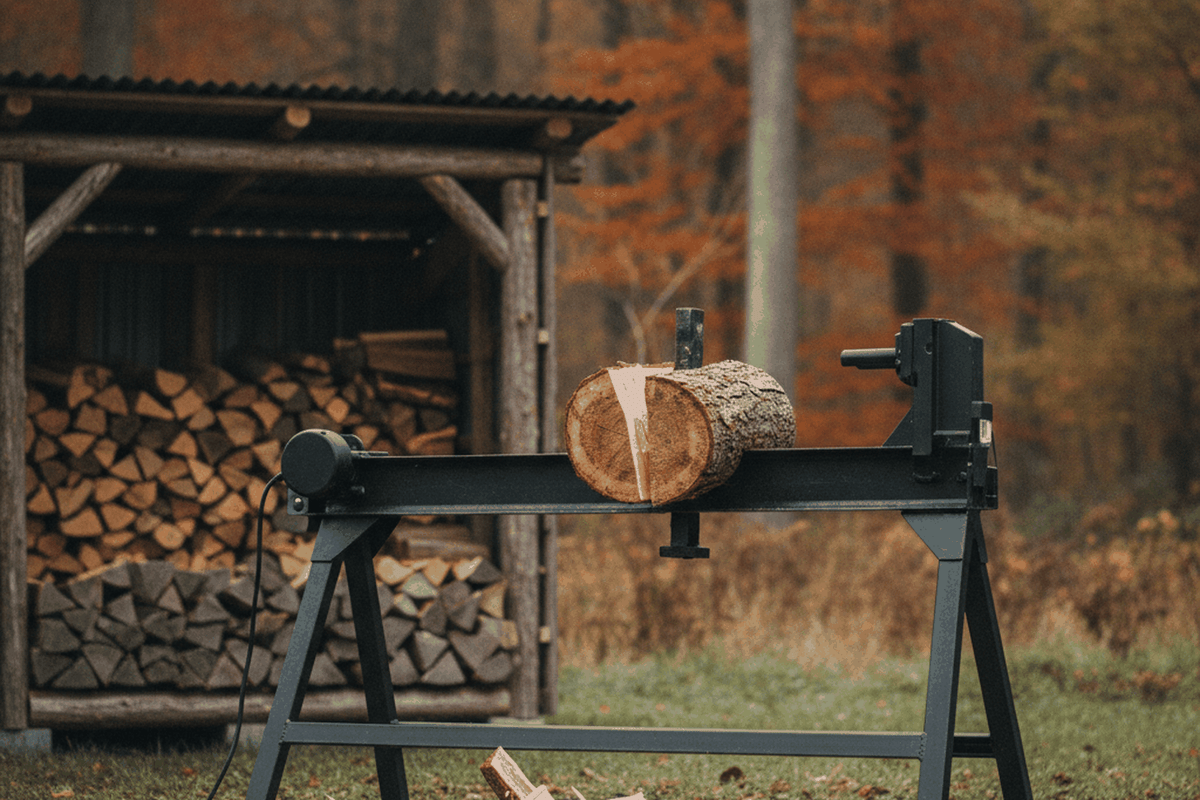
| 2. BILT HARD 6.5 ton electric with standBest electric for a cord or two | 6.5 ton | Electric, 120V 15 amp | 20.5 in long x 9.8 in diameter | Not listed | A cord or two, no bending | The pick for a cord or two of seasoned wood, because its stand lifts the machine to a 33 in working height instead of leaving you bent at the waist all afternoon. | Check price on Amazon |
| 3. PROYAMA 7 ton electricSeven tons and a cross wedge | 7 ton | Electric, 15 amp | 20.5 in long x 10 in diameter | Not listed | More than a cord or two, no gas | Half a ton more listed force than the 6.5 ton BILT HARD, for rounds up to 10 in across, in seasoned wood where gas is not an option. | Check price on Amazon |
| 4. Sun Joe 10 ton manual hydraulic splitterNo gas, no cord | 10 ton | Manual, two speed hand pump | 18 in long x 8 in wide | Not listed | A cord or less, no outlet nearby | A two speed hand pump builds up to 10 tons with no engine, motor or cord, for a cord or less where there is no outlet. | Check price on Amazon |
| 5. Lunanniu 10 ton double flywheel splitterKinetic option | 10 ton | Electric, 110V 16 amp | 18.5 in long x 15 in diameter | 2 seconds | Volume of easy splitting wood | The kinetic option: a listed 2 second cycle clears straight grained wood as fast as you can set rounds on the beam, but a knot stops it. | Out of stock on Amazon on October 18, 2026 |
| 6. BILT HARD 27 ton towable gas splitterFor big knotty rounds | 25 ton in the bullet, 27 on the title | Gas, 7HP 209cc OHV | 24 in long | 13 seconds | Big knotty rounds, vertical mode | The machine for rounds you cannot pick up: it converts from horizontal to vertical, so big rounds roll to the wedge instead of being lifted. | Out of stock on Amazon on October 18, 2026 |
What is the best log splitter?
The best log splitter overall is the Landworks 20 ton portable gas machine: a 7HP gas engine on a 2 stage Bucher gear pump, a listed 7.5 second cycle, and 16 in diameter capacity. Buy it when you burn two cords or more and can run a gas engine outdoors.
The best log splitters, by job
1. Landworks 20 ton portable gas: best log splitter overall
Best log splitter overall
Best for: Two to four cords a year
Landworks 20 ton portable gas splitter
- Listed force: 20 ton
- Power: Gas, 7HP
- Max log: 20 in long x 16 in diameter
The machine we would buy first: 20 tons splits nearly everything a chainsaw cuts for a stove, and a 7.5 second cycle lets the pile, not the machine, set your pace.
The Landworks 20 ton portable gas splitter (ASIN B099BCVFP9) is the machine we would buy first. Listing features cite a 7HP gas engine driving a 2 stage Bucher hydraulic gear pump, a 20 ton rating and a rapid auto return on the ram. They also give logs up to 20 in long and 16 in in diameter, a 7.5 second cycle, 10 in transport wheels under a horizontal full beam and a 130 lb weight. That is the sweet spot from two cords a year up: 20 tons splits nearly everything a chainsaw cuts for a stove, and 7.5 seconds lets the pile, not the machine, set your pace. Where it loses: hydraulic fluid is not included and the listing recommends AW32, a gas engine means outdoor use only, and on a horizontal beam you lift every round up to it.
2. BILT HARD 6.5 ton electric with stand: the best electric for a cord or two
Best electric for a cord or two
Best for: A cord or two, no bending
BILT HARD 6.5 ton electric with stand
- Listed force: 6.5 ton
- Power: Electric, 120V 15 amp
- Max log: 20.5 in long x 9.8 in diameter
The pick for a cord or two of seasoned wood, because its stand lifts the machine to a 33 in working height instead of leaving you bent at the waist all afternoon.
The BILT HARD 6.5 ton electric with stand is the pick for the far larger group splitting a cord or two of seasoned wood. Features list 6.5 tons from a 15 amp motor, with logs up to 9.8 in in diameter and 20.5 in long. They also name two hand safety controls, 5.7 in transport wheels, and a stand that lifts the machine to a 33 in working height. That stand is why it beats its own standless twin: a splitter on the ground means an afternoon bent at the waist. Where it loses: 9.8 in is a hard diameter ceiling, no cycle time is listed, and 6.5 tons will stall in a knotty green oak round.
3. PROYAMA 7 ton electric: seven tons and a cross wedge
Seven tons and a cross wedge
Best for: More than a cord or two, no gas
PROYAMA 7 ton electric
- Listed force: 7 ton
- Power: Electric, 15 amp
- Max log: 20.5 in long x 10 in diameter
Half a ton more listed force than the 6.5 ton BILT HARD, for rounds up to 10 in across, in seasoned wood where gas is not an option.
The PROYAMA 7 ton electric (ASIN B0CGDHY345, model PES-70) is the electric for more wood where gas is not an option. Its listing gives 7 tons from a 15 amp motor, with logs up to 10 in in diameter and 20.5 in long, and its title names a cross wedge. Features also cite two hand controls, 5.5 in never flat wheels with an onboard handle, and a 34 in stand the machine can run on or without. That is half a ton more listed force than the 6.5 ton BILT HARD above, on rounds a little wider, which is the reason to pick it once the pile outgrows a cord or two and gas is out. Where it loses: the listing features give no cycle time and no warranty term, so ask the seller before you buy; the title names a cross wedge without saying how it mounts, so read the manual; and 7 tons is still a seasoned wood machine that can stall in a knotty green oak round.
4. Sun Joe 10 ton manual hydraulic: no gas, no cord
No gas, no cord
Best for: A cord or less, no outlet nearby
Sun Joe 10 ton manual hydraulic splitter
- Listed force: 10 ton
- Power: Manual, two speed hand pump
- Max log: 18 in long x 8 in wide
A two speed hand pump builds up to 10 tons with no engine, motor or cord, for a cord or less where there is no outlet.
The Sun Joe 10 ton manual hydraulic splitter (ASIN B00VPJAPS2, model LJ10M) is for splitting where there is no outlet and no wish to run an engine: a cabin, the far end of a property, or a few rounds at a time. You work a two speed hand pump, and the listing gives 10 tons of force from the pump alone, with no gas or electric source, logs up to 18 in long and 8 in wide, a solid steel frame, rear wheels, a log cradle that keeps splits from dropping and a spring that returns the ram. Sun Joe's own product page lists an 87 lb build and a full two year warranty. That makes it the quiet, fuel free choice for a cord or less. Where it loses: every stroke is pumped by hand, so it is slow next to any powered machine here, and 8 in wide is the smallest log capacity on this page, so measure your rounds first.
5. Lunanniu 10 ton double flywheel: the kinetic option
Kinetic option
Best for: Volume of easy splitting wood
Lunanniu 10 ton double flywheel splitter
- Listed force: 10 ton
- Power: Electric, 110V 16 amp
- Max log: 18.5 in long x 15 in diameter
The kinetic option: a listed 2 second cycle clears straight grained wood as fast as you can set rounds on the beam, but a knot stops it.
Out of stock on Amazon on October 18, 2026
The Lunanniu 10 ton double flywheel splitter (ASIN B0CRP4H7XS) is the kinetic option, and kinetic machines trade force for speed. Features cite a 110V 60Hz 2HP 16 amp copper wire motor and a double flywheel system with a 2 second cycle time. Logs go up to 18.5 in long and 15 in in diameter on a low profile frame that makes heavier rounds easier to load, with 8 in wheels and a carry handle. Two seconds against the Landworks' 7.5 is the whole argument: on straight grained wood it clears a pile as fast as you can set rounds on the beam. Where it loses: a flywheel spends its energy in one stroke, so a knot stops it where 20 tons of hydraulic pressure would keep pushing, it weighs a listed 138 lb, the listing features name no warranty, and its listed 16 amp motor is above a 15 amp circuit's rating, so plan a 20 amp circuit. When we checked on October 18, 2026, it was out of stock on Amazon, and so were the 7 ton and 12 ton Lunanniu versions sold alongside it, so we do not link it for now. Until it is back, the Landworks above lists a 7.5 second cycle if you can run gas, and the BILT HARD 6.5 ton with stand suits seasoned wood near an outlet.
6. BILT HARD 27 ton towable gas: for big knotty rounds
For big knotty rounds
Best for: Big knotty rounds, vertical mode
BILT HARD 27 ton towable gas splitter
- Listed force: 25 ton in the bullet, 27 on the title
- Power: Gas, 7HP 209cc OHV
- Max log: 24 in long
The machine for rounds you cannot pick up: it converts from horizontal to vertical, so big rounds roll to the wedge instead of being lifted.
Out of stock on Amazon on October 18, 2026
The BILT HARD 27 ton towable gas splitter (ASIN B0G4W5864N) is the machine for rounds you cannot pick up. Features list a 7HP 209cc OHV engine and horizontal to vertical conversion, so big rounds roll to the wedge instead of being lifted. They also give a 7 in hardened steel wedge, a 13 second cycle and logs up to 24 in long. It tows on a 2 in ball coupler with 16 in DOT tires, and both oils come in the box. One note worth flagging: the title says 27 ton and the first feature bullet says 25 tons, so treat 25 as the number you own. Where it loses: the 13 second cycle is nearly twice the Landworks', and it is more machine than you need under four cords. When we checked on October 18, 2026, it was out of stock on Amazon, and we found no other Amazon listing for this BILT HARD 27 ton towable, so we do not link it for now. No other machine on this page converts to vertical; for rounds you can lift onto the beam, the Landworks 20 ton above is the other gas machine here.
How we picked
We picked from Amazon listings only, verifying titles, features and stock for every ASIN on this page on October 19, 2026. Picks 5 and 6 were out of stock on Amazon on October 18, 2026, so we do not link them for now. On October 19, 2026 we re-picked 1 to 4. A numbered pick must show in stock on Amazon and sold new. Picks 5 and 6 were still out of stock that day. Buy in September or October: gas machines thin out once the first cold week lands, and vertical models go first.
Two things are worth saying plainly. BILT HARD holds two of the six machine slots because it has the widest in-stock Amazon lineup across this page's price band, not because we favor it. And the SuperHandy and Landworks 20 ton listings give the same 7HP Bucher pump platform, the same 20 by 16 in log capacity and the same 130 lb weight. We slotted one of the two: the SuperHandy until October 19, 2026, when Amazon showed it in limited stock, and the Landworks since. The two hand splitters below were added and checked the same way on 2026-09-28. The same day, picks 4 and 5 changed because their machines are currently unavailable on Amazon: the BILT HARD 14 ton electric, which listed 16 in diameter capacity on 120V power, and the CWKISS 7 ton double flywheel kinetic, which listed a 2 second cycle.
| What you are splitting | Rounds you can feed | Machine on this list |
|---|---|---|
| A few rounds at a time, no outlet nearby | Up to 8 in across | 10 ton hand pump (Sun Joe) |
| Seasoned softwood and small hardwood, one to two cords a year | Up to about 10 in across | 6.5 or 7 ton electric (BILT HARD with stand, or PROYAMA) |
| Seasoned hardwood with some knots, two to four cords | Up to 16 in across | 20 ton gas (no electric we link is rated for 16 in rounds) |
| Green oak and elm, crotch wood, four cords and up | Rounds too heavy to lift | 27 ton towable, in vertical mode (out of stock on Amazon on October 18, 2026, so not linked for now) |
Hand splitters for kindling and stubborn rounds
None of the six machines above makes kindling well, and even a 20 ton splitter meets the odd round that a hand tool finishes faster. These two do the jobs the machines skip, with no engine, no cord and nothing to store but the tool.
Kindling Cracker Original: best for kindling
The Kindling Cracker Original is a cast iron ring with a fixed wedge inside it. You stand a piece of wood in the 6.5 in opening and strike the top with a mallet, a hammer or even another piece of wood, and the wedge does the splitting while the ring keeps your hands away from it. The listing describes one solid casting with no welds, no moving parts and no blade to sharpen, with bolt holes for mounting it to a stump or workbench and a base that also stands on its own. Where it loses: the 6.5 in opening caps what it takes, so it is a kindling and small split tool, not a way through stove rounds.
Estwing Sure Split Wedge: best for the round that stops the maul
The Estwing Sure Split Wedge is a 5 lb solid steel wedge. The listing says fins on each side push the wood outward as it is driven in and a hand sharpened edge helps it seat in a split you have started, and it says to drive the wedge with a hand sledge or maul into logs that are hard to split with an axe alone. Wear safety glasses, and never strike it with the back of an axe. That makes it the answer to the knotty or twisted round the maul bounces off, and the backup when one piece is not worth starting a machine for. Estwing lists it as made in Rockford, Illinois. Where it loses: it is slow, so it is for the few rounds that refuse, not for working through a cord.
What about WEN, Champion, Troy-Bilt and Sun Joe?
Those are the brands readers search first, and two of the four returned no sellable machine in our Amazon search on 2026-09-14. A WEN search returned only a splitter cover and a foot pedal switch. Troy-Bilt returned nothing sellable at all. Champion and Sun Joe are live, with caveats.
Champion's in-stock machines sit outside this page's band: an 8 ton compact gas unit, which our 20 ton pick beats on force, and a 40 ton PRO grade. Sun Joe's LJ602E 5 ton electric gives up 1.5 tons to the 6.5 ton BILT HARD, and its LJ10M is a two speed hand pump, not a powered splitter, which is why it is pick 4 for splitting with no outlet.
What is the best log splitter for home use?
For most homes it is the BILT HARD 6.5 ton electric with stand (pick 2). It runs from a standard 120V outlet, its stand sets the beam at a 33 in working height, and a cord or two of seasoned wood a year is the job it is sized for. Before tonnage, settle three things: how much wood you burn, how far the woodpile sits from an outlet, and how wide your biggest rounds are.
Two cords or more, rounds wider than about 10 in, and a place to run a gas engine outdoors point to the Landworks 20 ton gas splitter (pick 1) instead. A woodpile with no outlet nearby and only a few rounds at a time points to the Sun Joe 10 ton hand pump (pick 4), which needs no fuel and no cord. The table compares the four machines we link on what matters around a house, from their Amazon listings.
| Machine | Power | Noise and exhaust, per listing | Working height | Moving it |
|---|---|---|---|---|
| Landworks 20 ton gas (pick 1) | 7HP gas engine, no electricity needed | Recommended for outdoor use only, with ventilation | Horizontal beam, no stand listed | 10 in transport wheels |
| BILT HARD 6.5 ton electric with stand (pick 2) | 15 amp motor, standard 120V outlet | No exhaust in use, quieter than gas | 33 in on the included stand | 5.7 in transport wheels |
| PROYAMA 7 ton electric (pick 3) | 15 amp motor | No fumes or emissions, listed as quieter | 34 in stand, or run it without | 5.5 in never flat wheels and an onboard handle |
| Sun Joe 10 ton manual hydraulic (pick 4) | Two speed hand pump, no gas or electric | No engine or motor | Not listed | Rear wheels |
Noise and exhaust are why an electric suits a woodpile near the house or the neighbors: both electric listings say they run with no exhaust and more quietly, while the Landworks listing recommends its gas engine for outdoor use only, with ventilation. Working height is the other home question. A splitter on its stand saves bending over every round, but it does not lift the round for you, so the heaviest pieces still go up to the beam by hand.
How many tons does a log splitter need?
Most homeowners who split two cords or more need 20 to 25 tons, and almost nobody needs 35. Under a cord of seasoned wood, 6.5 tons is enough. Tonnage buys knots, crotch wood, green timber and big diameters, which is why small electrics stall the first time somebody feeds them oak.
- 6.5 tons handles seasoned, straight grained rounds up to about 10 in across, the honest job for the 6.5 and 7 ton electrics here.
- 10 to 16 tons is the middle ground. The Sun Joe hand pump reaches 10 tons on rounds up to 8 in wide. Green oak at 16 in is a different question.
- 20 tons is where a splitter stops being fussy. The Landworks takes 16 in rounds and lists a 7.5 second cycle to go with them.
- 25 to 27 tons buys crotch wood, elm, and rounds so heavy the vertical mode matters more than the extra force.
- Above 30 tons is production equipment. If you are not selling firewood, you are buying tonnage you will not use.
What is the best gas log splitter?
The best gas log splitter we link is the Landworks 20 ton (pick 1), with a 7HP engine on a 2 stage Bucher pump, rounds up to 16 in across and a listed 7.5 second cycle. It is also the only gas machine we link right now, because the BILT HARD 27 ton towable (pick 6) was still out of stock on Amazon when we checked on October 24, 2026.
Gas earns its place on three kinds of job. Volume: at two cords a year or more, a 7.5 second cycle keeps up with the pile. Size: the electrics we link list rounds up to 9.8 and 10 in across, and the Landworks lists 16 in. Distance: a woodpile at the far end of a property, past where an outlet and a short cord reach. If none of those fits your yard, an electric is quieter, makes no exhaust and needs no fuel, which is why the home pick above is electric.
Heavy duty splitting at home comes down to the wood. Seasoned hardwood with some knots, up to 16 in across, is 20 ton work, and the Landworks covers it. Green oak, elm, crotch wood and rounds too heavy to lift belong to the 25 to 27 ton towable class with a vertical mode, and until pick 6 is back in stock we link no machine in that class.
What is the best electric log splitter?
The best electric log splitter for most people is the BILT HARD 6.5 ton with stand, because its stand lifts the work off the ground and saves your back over a full afternoon. If you want half a ton more force and a cross wedge, the PROYAMA 7 ton is the other electric we link; check its manual for the circuit it needs first.
Electric splitters win on three things the spec sheets undersell: they start every time, they run indoors with ventilation, and they store over summer with no fuel to stabilize and no carburetor to gum. They lose on force and on cycle time.
Are kinetic log splitters worth it?
Kinetic splitters are worth it when your wood is easy and your pile is large. A flywheel machine like the Lunanniu lists a 2 second cycle against the Landworks gas machine's listed 7.5 seconds, so the pile moves as fast as you can load it. They are not worth it for knotty hardwood, where force beats speed.
A hydraulic splitter builds pressure slowly and holds it, so it can sit against a knot and keep pushing. A kinetic splitter spins two flywheels up and dumps that energy into the ram at once, which stops dead when the wood will not yield. That is why a 10 ton kinetic feels quicker than a 16 ton hydraulic until it meets a crotch.
Is it cheaper to rent or buy a log splitter?
Renting wins once, for a single storm cleanup. Buying wins from the second season on, and it wins on scheduling more than on money: an owned splitter lets you work an hour at a time across a fall, while a rental forces the whole pile into one weekend you have already paid for.
Rental yards charge by the half day or the full day, and the published rates we found on 2026-09-14 varied widely from yard to yard, so get a local quote. Divide the machine's price by that day rate and you have the number of rental days it has to replace. Add the trailer trip and the owned machine wins sooner than that.
How do you choose a log splitter?
Choose by the wood in your yard, not the wood you imagine. Measure the biggest round you actually handle, count your cords, then pick tonnage for that. Match power type to where the work happens, and buy the vertical mode only if you genuinely cannot lift the rounds you split.
- Measure a round before you shop. The 9.8 in ceiling on the BILT HARD electric sounds generous until you tape a real oak round and find 13 in.
- Cycle time is the number you feel. Seven and a half seconds against twenty is a morning versus a day on the same stack.
- Check what is in the box. The Landworks listing says hydraulic fluid is not included. The 27 ton BILT HARD says both oils are included.
- Plan the outlet or the fuel. Electrics want a circuit of their own and a short heavy gauge cord. Gas wants fresh fuel and somewhere to keep a can.
- Buy before the cold. September stock is deep. Vertical and towable machines go scarce first.
What maintenance does a log splitter need?
Gas splitters want fresh fuel with stabilizer, a fall oil change, and a hydraulic fluid check before the first cold morning. Electrics want little beyond a clean beam and a cord that is not coiled while it runs. Both want the wedge free of pitch and the ram wiped down before storage.
Store a gas machine with the fuel treated or drained, and keep any splitter under cover, because a season of rain on a hydraulic ram ruins seals. If the stack lives outdoors, our best firewood racks guide covers rain covers and the off the ground question.
Where does a log splitter stop and a hand tool start?
A splitter is the wrong tool for kindling, for a single round by the fire pit, and for anything you would finish faster with a swing than with a walk to the garage. Keep a maul, the Kindling Cracker or the Estwing wedge for those jobs, and keep the machine for the pile.
Our best splitting axes guide covers the hand tool half of this work, and the best chainsaws guide the step before it, because nothing gets split until it is bucked to length. Our best chainsaw sharpeners guide keeps that saw cutting. Before the splits go in the stove, our firewood moisture meter guide shows how to check they are dry enough to burn, and its top pick, the Tavool Digital Pin Moisture Meter, is the one Bob Vila tested and named best for wood. Once the splits are burning, our guide to the best ash vacuum covers cleaning out the stove or fireplace. For a wood stove, our stove fan guide covers moving its heat into the room. The rest of the firewood year is dirt work, and that is where we live: clearing the stump the tree left behind is a spade job first, which our how to remove a tree stump guide walks through. Spear Head Spade makes one double patented digging spade, and the spade finder says which size fits your soil.
Frequently asked questions
Is a 25 ton log splitter enough for oak?
Yes for nearly all of it. A 25 ton machine splits seasoned and green oak at the diameters a homeowner handles, and the honest limit is not force but geometry: a crotch or a heavy knot will stop any machine below production tonnage. Use the vertical mode for rounds too heavy to lift.
Should you buy a horizontal or vertical log splitter?
Buy horizontal if you can lift your rounds onto the beam, which covers most seasoned stove wood. Buy a machine that converts to vertical once the rounds are too heavy to lift, because vertical mode lets you roll them to the wedge. The BILT HARD 27 ton lists both positions.
Can you leave a log splitter outside over winter?
Better not. A hydraulic ram and a gas engine both suffer a season of standing rain, and seals are what fail first. Store the machine under cover with the fuel treated or drained, and keep electrics dry rather than under a tarp that traps damp.
Are log splitters dangerous?
They deserve respect. The BILT HARD 6.5 ton and PROYAMA 7 ton electrics list two hand controls, and the other machine listings say nothing about them, so read the manual before the first round. Keep everyone clear of the beam, never steady a round while the ram travels, and wear eye and hand protection as the listings instruct.
Do you need a special outlet for an electric log splitter?
Usually not, but it needs a serious circuit. The BILT HARD 6.5 ton lists standard 120V household power. The PROYAMA 7 ton lists a 15 amp motor and its listing features name no voltage or plug, so check its manual for the outlet and circuit it needs before you buy. The 10 ton Lunanniu lists a 110V 16 amp motor, above a 15 amp circuit's rating, so plan a 20 amp circuit for it. Either way, run a splitter on a dedicated circuit with a short heavy gauge cord.
Should you buy a log splitter or split by hand?
Split by hand under about a cord a year. A maul is quieter, needs no fuel, no outlet and no storage, and gets the job done on straight rounds. Past a cord, or once knots and 14 in oak enter the pile, a splitter stops being an indulgence, and our splitting axe guide covers the hand tool side.
Is a 20 ton log splitter big enough?
For most home firewood, yes. Twenty tons covers seasoned hardwood with some knots at two to four cords a year, and the Landworks 20 ton lists rounds up to 20 in long and 16 in across. Step up to 25 or 27 tons only for green oak, elm, crotch wood or rounds too heavy to lift, where a vertical mode matters more than the extra force. No electric we link comes near 20 tons: the two electrics list 6.5 and 7.
Do you need a log splitter with a log lift?
Only if your rounds are too heavy to lift onto the beam. None of the four machines we link lists a log lift, and a stand is not one: the BILT HARD's 33 in stand saves bending, but every round still goes up to the beam by hand. For rounds you cannot lift, a vertical mode lets you roll them to the wedge instead. On this page only the BILT HARD 27 ton lists one, and it was out of stock on Amazon when we checked on October 24, 2026, so measure your biggest rounds and look for a log lift or a vertical mode in a towable machine's listing before you buy.
The bottom line
Buy the Landworks 20 ton if you burn two cords or more and can run gas outdoors, the BILT HARD 6.5 ton with stand if you split seasoned wood near an outlet, and the BILT HARD 27 ton towable only if the rounds are too heavy to lift (it was out of stock on Amazon when we checked on October 18, 2026). Do not buy tonnage for wood you do not have.
Disclosure: Our commissions do not change what we recommend or what you pay. Prices and availability were checked in October 2026 and can change.
Product prices and availability are accurate as of the date/time indicated and are subject to change. Any price and availability information displayed on Amazon.com at the time of purchase will apply to the purchase of this product.