As an Amazon Associate we earn from qualifying purchases. Some brands also pay us when you click or buy, so those links are ads. Full disclosure below
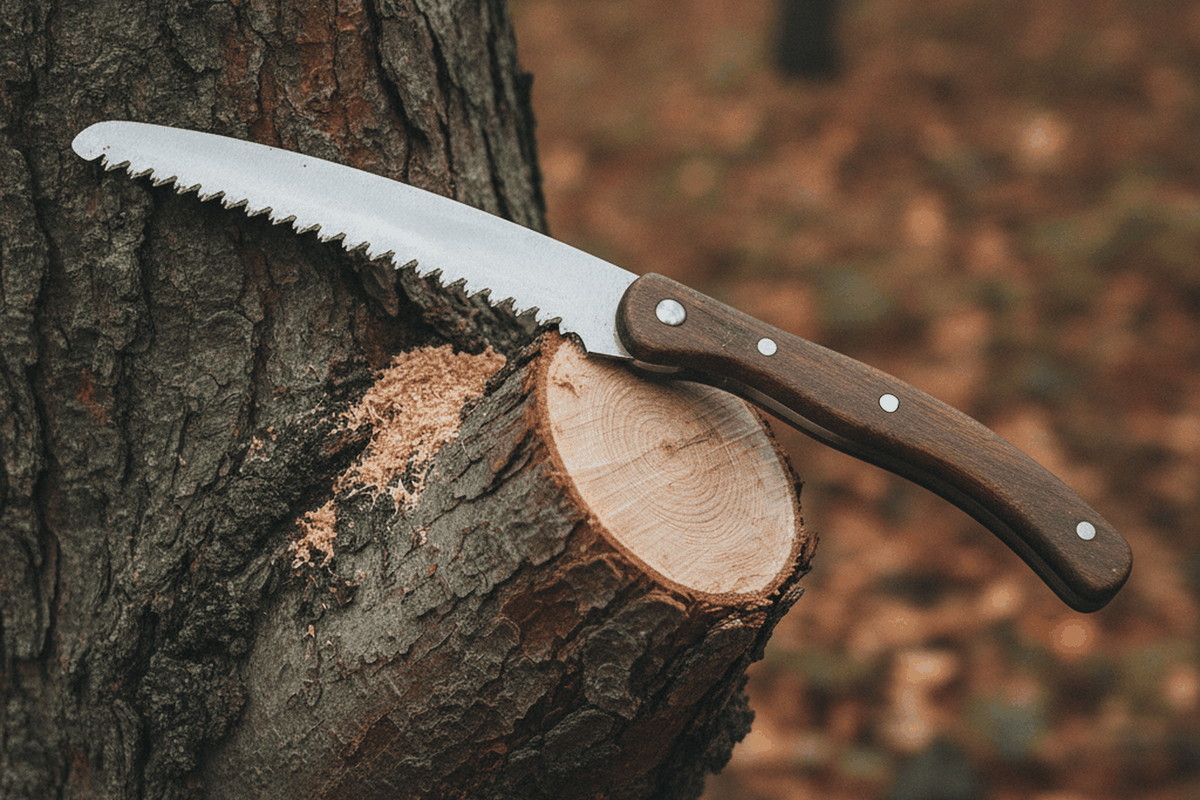
The best pruning saw for most gardeners is a folding saw with impulse hardened teeth and a blade close to 7 inches, and our pick is the Silky PocketBoy, because it lives in a pocket and still cuts limbs a lopper cannot close on. A fixed blade saw is faster on big wood.
A pruning saw is the tool that ends arguments with a branch. Loppers stall somewhere around 2 inches of green wood, and leaning harder on the handles past that point buys you a torn cut or a bent blade. A saw does not care how thick the limb is or how long it has been dead. It only cares that you can get the blade onto the wood, which is why blade length, blade shape, and whether the thing folds matter more than anything else on the spec sheet. This page is one stop on our fall yard cleanup tools checklist, which puts every fall job in order.
Best pruning saws at a glance
| Saw | Best for | Type | Blade | Where to buy |
|---|---|---|---|---|
| Silky PocketBoy 170 (best overall) | Everyday pruning you carry with you | Folding | 6.75 inches, medium teeth | Check price on Amazon |
| Silky ZUBAT 330 | Long sessions and thick limbs | Fixed blade with sheath | 13 inches, large teeth | Check price on Amazon |
| Corona RazorTOOTH 7 inch folding | A saw in every jacket pocket | Folding | 7 inches, razor teeth | Check price on Amazon |
| Zenport S148 root saw | Roots and underground stems | Fixed blade root saw | Curved and serrated | Check price on Amazon |
| Corona RazorTOOTH 13 inch | The thickest limbs you should cut by hand | Fixed blade, pistol grip | 13 inches, curved | Check price on Amazon |
What is the best pruning saw?
The best pruning saw for most people is a folding model with a blade of about 7 inches and impulse hardened teeth, such as the Silky PocketBoy. It folds into a pocket, opens to cut limbs well past lopper range, and cuts on the pull stroke, so the blade stays in tension instead of buckling under your push.
Pruning saw vs loppers: when to stop squeezing
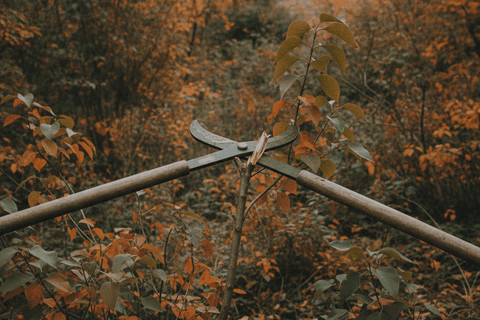
Loppers and a pruning saw split the work at roughly 2 inches of green wood. Below that line loppers win on speed, because one stroke finishes the cut and leaves a clean face. Above it they are the wrong tool, and forcing them is how a rated pair comes home with blades that no longer meet. Our loppers guide covers the squeezing half of the job. Below the loppers sit hand pruners, rated to about an inch of green wood, and our best pruning shears guide picks a pair by job.
Diameter is not the only trigger. Dry, dead, seasoned wood is far harder than green wood of the same thickness, so a two year old deadfall at an inch and a half can already be a saw job. So is any cut where the handles cannot open, which is most of what you meet in a tight crotch or against a trunk. A saw needs only a few inches of clearance for the blade and your knuckles. Past about 4 in, a hand saw gives way to a chainsaw, and our best chainsaws guide covers the homeowner class. For a cordless saw at that size, our battery chainsaw guide sorts battery and corded electric saws by job, down to a 12 inch compact.
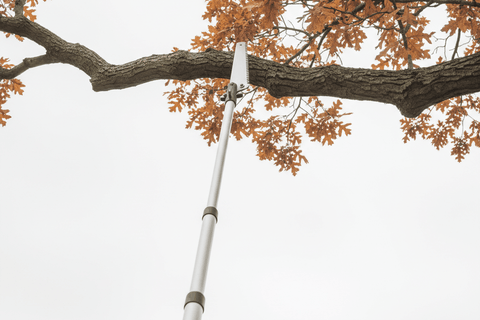
The other honest limit is at the top. Anything you would need to be on a ladder for, or that is heavy enough to swing when it releases, is a job for a pole tool or for someone insured. Our pole saw guide covers the reach case.
The best pruning saws, by job
1. Silky PocketBoy 170: best folding pruning saw
The Silky PocketBoy is the saw that ends up on the belt and stays there. The blade is 6.75 inches, or 170 mm, with a medium tooth pattern at 8.5 teeth per inch, hard chrome plated and taper ground, with impulse hardened, non set teeth. The listed cut capacity is 3.4 inches, which covers the great majority of pruning cuts a home gardener ever makes.
Two details separate it from the folding saws in the checkout aisle. It locks in two open positions, so you can run the blade in line for a normal cut or angled for flush work against a trunk, and it comes with a flip lock belt case, which is the difference between a saw you carry and a saw you go back to the shed for. Where it loses: the blade is straight rather than curved, so it does not pull itself into a thick limb the way the fixed blade saws below do, and it is real money for a blade this size.
2. Silky ZUBAT 330: best fixed blade pruning saw
When pruning stops being a few cuts and becomes a morning, a fixed blade is the upgrade. The Silky ZUBAT runs a 13 inch, or 330 mm, curved blade with large teeth at 6.4 per inch and a listed cut capacity of 6.5 inches, which is more limb than most people should be taking down by hand anyway. The long stroke does the work, so you make fewer passes and your arm notices at the end of the day.
It weighs about 0.65 pounds in the hand and 1.1 pounds with its sheath, and the sheath is the point: a fixed blade needs somewhere safe to live between cuts, and this one hangs on a belt. The electroless nickel plating is there for wear and rust resistance, which matters on a blade you will use in wet spring wood. Where it loses: it costs enthusiast money, and a sheathed 13 inch blade is a commitment to carry compared with a folder.
3. Corona RazorTOOTH 7 inch folding saw: best budget folding saw
Most people do not need a premium blade to have a saw within reach. The Corona RazorTOOTH folding saw costs little, carries an aggressive 7 inch blade built to move through green wood quickly, and locks closed in its own handle so it can ride in a jacket pocket or a garden bag without finding your fingers.
Think of it as the second saw that makes the first one unnecessary half the time. Leave it in the truck, the shed, and the garden cart, and the branch that would have waited for a trip back to the garage gets cut on the spot. Where it loses: Corona does not publish a tooth count or a cut capacity for this saw, so you are buying the blade pattern and the price rather than numbers you can compare, and there is no belt case.
4. Zenport S148 root saw: best root saw
Roots are a different material and they need a different blade. The Zenport S148 is inexpensive and uses a curved, serrated blade made for thick roots and underground stems, and the listing names the jobs exactly: transplanting trees, dividing perennials, and digging in compacted soil. The curve is what lets it work in a hole, where you are sawing toward yourself in a space too tight to swing anything straight.
Do not use a good pruning saw for this. Soil is full of grit and stones, and a few minutes in the dirt will take the edge off a blade you paid for its fineness. A dedicated root saw is the cheap insurance that keeps your pruning blade sharp. Our guide on cutting through roots when digging draws the same line from the spade side: a sharp spade slices roots under an inch as you dig, loppers or a pruning saw take one to three inches, and anything thicker is a root saw job. Where it loses: it is a single purpose tool, and Zenport publishes no blade length or tooth count for it, so there is nothing to compare it against on paper.
5. Corona RazorTOOTH 13 inch: best for thick limbs
For the biggest cuts a homeowner should make from the ground, blade length and a handle you can drive with your whole arm beat finesse. The Corona 13 inch RazorTOOTH is rated to cut limbs up to 7 inches in diameter, using three sided razor teeth on a chrome plated SK5 high carbon steel blade, with impulse hardened teeth and a pistol grip designed for single hand use.
The curved blade and the pistol grip work together: the curve bites on the pull, and the grip lets you pull from the shoulder rather than the wrist. It is the cheapest way to be genuinely equipped for storm cleanup and mature shrub renovation. Storm cleanup ends with limbs on the ground, and what happens to them next is splitting rather than sawing, which our splitting axe picks cover. If the limb is attached to a stump you are trying to be rid of, our guide on how to remove a tree stump picks up where the saw ends. Where it loses: an unsheathed fixed blade of this size wants a wall hook or a scabbard, and it is too much saw for pencil thick prunings.
How to choose a pruning saw
Four choices decide whether the saw suits your pruning.
- Folding or fixed. Folding saws are safe to carry and always with you, which is most of their value. Fixed blade saws are longer, stiffer, and faster on big wood, and they need a sheath. If you buy one saw, buy the folder.
- Blade length against your biggest cut. A blade should be comfortably longer than the branch is thick, because short strokes in a deep cut waste most of the blade. Around 7 inches covers ordinary pruning and 13 inches covers limbs.
- Tooth count for the wood. Coarse teeth, roughly 6 or 7 per inch, clear sawdust fast in green wood. Finer teeth, around 8 to 10, cut slower and leave a smoother face on dry or dense wood. Medium is the honest default for a single saw.
- Curved vs straight pruning saw blades. A curved blade pulls itself into the wood on the back stroke, which is why the fixed blade saws sized for thick limbs and overhead cuts are curved. Straight blades are common on compact folders, where they sit flatter against a trunk for a flush cut and give up little at pocket saw sizes.
Frequently asked questions
Should I buy a folding or fixed blade pruning saw?
Buy folding if you are buying one saw. A folder rides in a pocket or a belt case, so it is there when you find the branch, and a 7 inch blade handles the great majority of home pruning. Move to a fixed blade when your cuts are regularly thick enough that stroke length starts limiting you.
What tooth count should a pruning saw have?
Around 6 to 7 teeth per inch for green wood and thick limbs, and 8 to 10 for dry, dense wood and finer cuts. Coarse teeth clear wet sawdust that would pack a fine blade solid. If you want one saw for everything, a medium pattern near 8 teeth per inch is the safe pick.
Do pruning saws cut on the push or pull stroke?
Most modern pruning saws cut on the pull stroke. Pulling keeps a thin blade in tension so it tracks straight instead of buckling, which lets manufacturers use a thinner, sharper blade with a narrower kerf. Let the saw do the work on the way back and stop pushing hard on the return.
How do you cut a large limb without tearing the bark?
Use three cuts. Undercut the limb about a foot from the trunk, a third of the way through. Make the second cut an inch farther out from above until the limb drops, which takes the weight off. Then cut the remaining stub just outside the branch collar, the swollen ring at the base.
Can you sharpen a pruning saw?
Usually not. Most pruning saws use impulse hardened teeth, where the tips are induction hardened and far too hard for a file to touch, so the blade is designed to be replaced rather than sharpened. Better saws sell replacement blades. Traditional unhardened saw teeth can be filed, but they are now the exception. What every saw does need is a dry blade and a clean sheath, which our guide to cleaning, sharpening and storing garden tools walks through.
The bottom line
Buy one good folding saw and you have covered most of what pruning asks. The Silky PocketBoy is the one to own if you prune every season, and the Corona folder is the sensible version of the same idea for a fraction of the price. Add the 13 inch fixed blade when limbs become a regular job, and add a cheap root saw the first time you find yourself sawing in a hole. Below about 2 inches of green wood, none of this applies and loppers are faster.
A quick word on us: Spear Head Spade is a family business in New Jersey. We sell the double-patented digging spade the site is named for, with over 600,000 sold. Saws that go under the soil are really root work, and our tool for that is the long handle garden spade.
Disclosure: some links in this guide are affiliate links to Amazon. This is at no extra cost to you, and it never changes our honest, use-based recommendations.
Product prices and availability are accurate as of the date/time indicated and are subject to change. Any price and availability information displayed on Amazon.com at the time of purchase will apply to the purchase of this product.