The best lawn edger depends on the edge. For bed lines and curves, the best manual lawn edger is a sharp digging spade, which cuts the vertical line and lifts the wedge in one pass. For long runs along concrete, a powered edger is faster, and the cordless Greenworks 40V is the one to buy.
Disclosure: some links in this guide are affiliate links to Amazon. As an Amazon Associate, Spear Head Spade earns from qualifying purchases. This is at no extra cost to you, and it never changes our honest, use-based recommendations.
Most edger guides treat edging as one job. It is two. Cutting a bed line into soil and cutting a lawn back off concrete are different motions, and the tool that is excellent at one is usually mediocre at the other.
Bed edges and hard edges are two different jobs
A bed edge is a line cut into soil between lawn and planting bed. There is nothing hard to run a wheel along, the shape is usually curved, and the cut has to be deep enough that grass roots cannot bridge it, which means about four to six inches. That is spade work: you cut the line, make a relief cut, and lift out a wedge of soil and sod. Our guide to cutting and keeping a clean bed edge covers the technique in full, and it is worth reading before you buy anything.
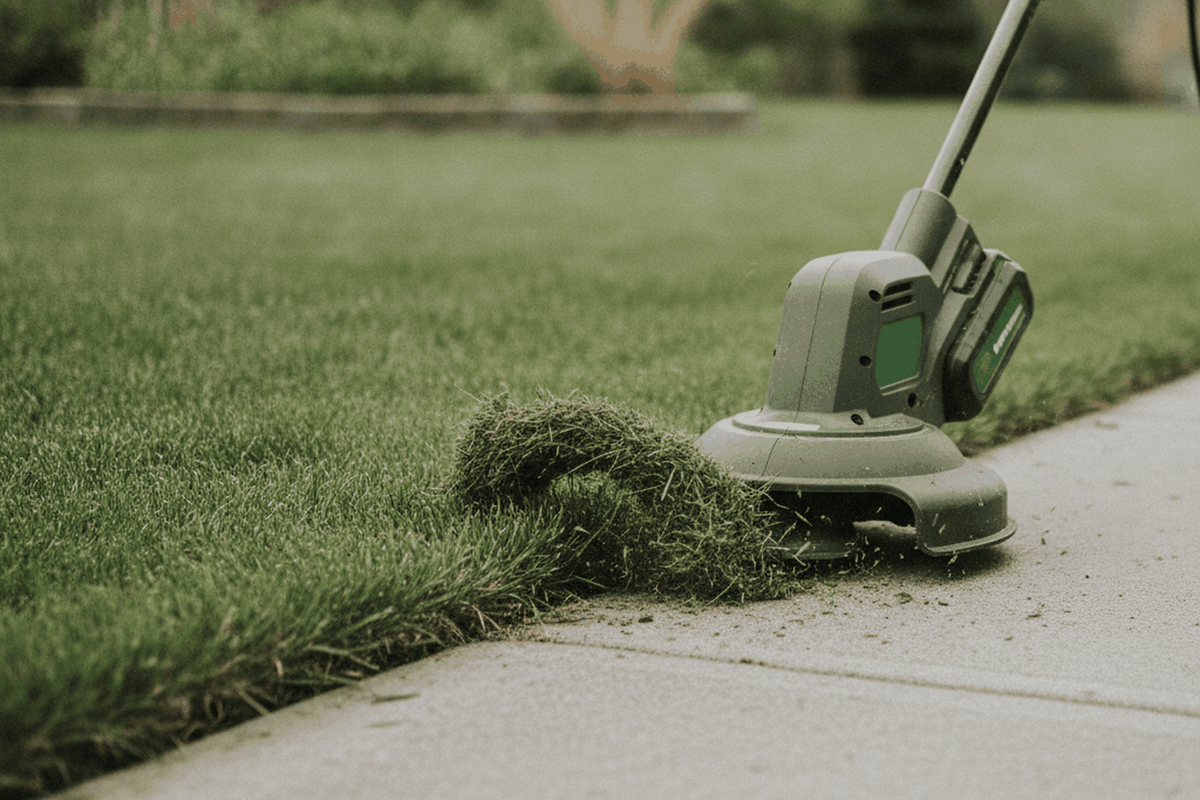
A hard edge is the seam where turf meets a sidewalk, driveway, patio, or curb, in concrete or asphalt. The line is already fixed by the paving, the run is long and straight, the grass has usually crept over the surface, and the soil there is compacted and often bone dry. That is a machine job. A powered edger cuts a shallow groove of consistent depth for a hundred feet at walking pace.
If you have both, own a spade and one powered edger.
Edger vs trimmer: what each one is for
An edger cuts down into the ground. Its blade spins on a vertical plane and slices a groove at the boundary, which is what produces the clean shadow line you see on well-kept lawns. A string trimmer cuts grass across the top. Turned on its side it knocks the fringe off a sidewalk, but the line follows the ground rather than a set depth, so the result is ragged. An edger establishes the line, a trimmer maintains it.
If you already own a trimmer, that is the budget way to edge. The limits are real: no depth setting, a cut that rises and falls with every dip in the ground, and scalped turf on the high spots. Use it to tidy a seam that exists, and cut the seam itself with an edger or a spade.
What to look for
- Blade depth and adjustment. Most powered edgers cut about one to two inches deep, which is all a hard edge needs, though some adjust deeper. Look for depth settings you can change without tools, and start at the shallowest. A deep first pass in dry ground bogs the motor and throws soil everywhere.
- A guide wheel and a cutting line indicator. The wheel rides the concrete and holds the blade at a constant depth and distance, which keeps the groove parallel to the walk instead of snaking.
- Wheels that match the surface. Four wheels and a wide stance are steadier over a long driveway run, and riding up on a curb is a walk-behind feature rather than a stick edger one.
- Power source. Cordless suits typical suburban runs and is quiet enough to use early. Corded is the cheapest route to real cutting power if you stay near an outlet. Gas belongs on long commercial runs and hard, dry seams.
The best lawn edgers
Match the tool to the edge, not to the price.
| Edger | Best for | Type | Price | Where to buy |
|---|---|---|---|---|
 Spear Head Spade, D-handle (best for bed edges)
 |
Bed lines, curves, new beds, and every other digging job | Manual spade, 40 inch D-handle | See site | spearheadspade.com |
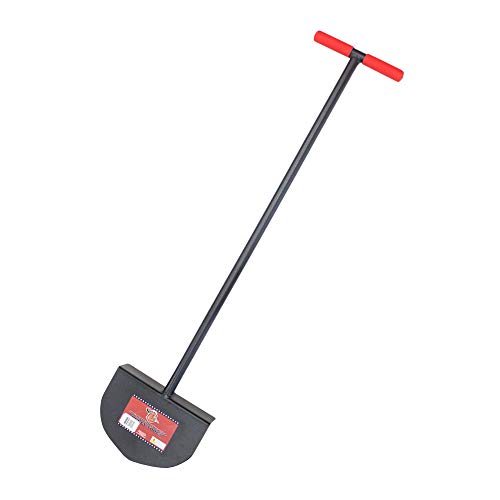 Bully Tools 12-gauge manual lawn edger, 38 inch Bully Tools 12-gauge manual lawn edger, 38 inch |
Long formal bed borders, crispest possible line | Manual half moon | About $42 | amazon |
 Walensee wheel rotary edger Walensee wheel rotary edger |
Refreshing an existing seam along a walk | Manual rotary | About $38 | amazon |
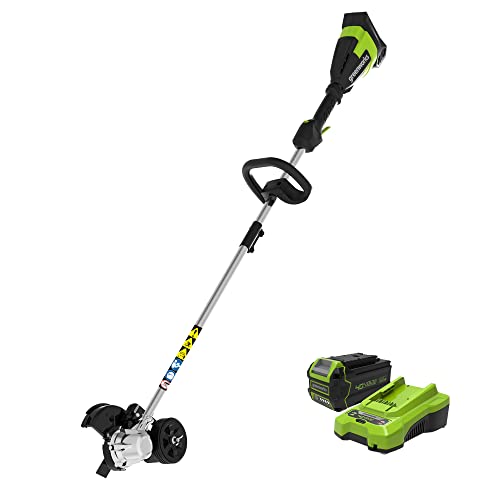 Greenworks 40V 8 inch cordless edger Greenworks 40V 8 inch cordless edger |
Most home lawns with sidewalks and a driveway | Cordless, battery included | About $190 | amazon |
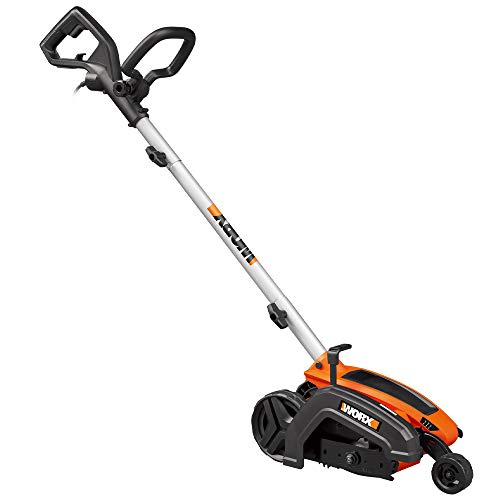 WORX WG896 12 amp electric edger WORX WG896 12 amp electric edger |
Best value in a powered edger | Corded, 7.5 inch blade | About $90 | amazon |
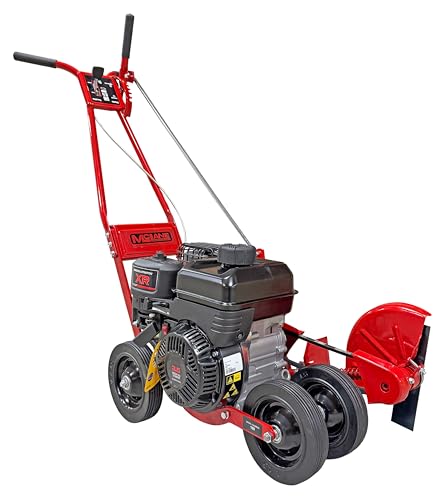 McLane 100-5.50GT-7 gas walk-behind edger McLane 100-5.50GT-7 gas walk-behind edger |
Long concrete runs, curbs, and crews | Gas walk-behind | About $950 | amazon |
1. Spear Head Spade, D-handle: best lawn edger for garden beds
For bed lines, the tool that cuts the edge should also lift the wedge and then plant what goes in the bed. Our D handle garden spade is a 40 inch spade, it is double patented, and the blade is curved like a shovel to carry material while the edge is pointed and sharpened like a spade, so it cuts the line and then lifts the wedge out without a second tool. In edging that matters at the relief cut, where the wedge stays attached on both sides until a blade goes under it.
Put your weight on the foot rest rather than stamping, keep the blade vertical, and overlap each cut. That is also why it suits curves: you are working in short cuts along a hose line, not steering a machine that wants to go straight. Over 600,000 sold, and it takes up to 80% less effort than a standard shovel. If you would rather work upright, the 58 inch long handle version does the same job standing taller. What it will not do is groove a hundred feet of driveway.
2. Bully Tools 12-Gauge Manual Lawn Edger: best manual half moon edger
The Bully Tools 12-gauge manual lawn edger, about $42, is the purpose-built crescent blade, very good at its one motion. The listing specifies a 12-gauge extra-thick steel edge for cutting through soil, roots, and ground cover, all-steel construction, a 38 inch overall length for reach and leverage, and a steel T-style grip.
Where it loses: it cuts and nothing else. There is no way to scoop the loosened wedge out or dig the hole you are edging around, so it lives beside a spade rather than instead of one. Buy it for long formal borders you re-edge twice a season.
3. Walensee Wheel Rotary Edger: best for refreshing an existing seam
A rotary edger is a serrated cutting wheel behind a roller that you push along a walk. The Walensee wheel rotary edger, about $38, has chrome-plated alloy steel blades with a serrated profile, a 2.4 inch wide roller for stability on uneven ground, and a stainless handle that sets at 40.2, 54.7, or 69.7 inches, so taller users can run it high.
This is the quiet, no-battery way to keep a sidewalk edge you already have: roll the wheel on the concrete and let the cutter follow the seam. Where it loses: it follows a line rather than establishing one, and it needs soil with some give. In dry, packed clay it skids.
4. Greenworks 40V 8 inch Cordless Edger: best cordless edger for most yards
The Greenworks 40V 8 inch cordless electric lawn edger, about $190, is the practical default for a lawn with a walk and a driveway. It runs a brushless motor and an 8 inch steel blade, the depth adjusts without tools, and Greenworks states it is designed to stay stable on uneven and sloped ground. The 4.0 Ah 40V battery and charger are in the box. Cordless matters here, because edging is a slow walk along a fixed line and a cord is the wrong thing to drag across it.
For the stick edger form factor, with the motor at the top of a long shaft, the EGO Power+ ME0820, about $219, pairs a power head on a carbon fiber shaft with an 8 inch edger attachment, a guide wheel and depth knob for up to three inches of depth, and IPX4 weather resistance. It takes any EGO 56V ARC Lithium battery, sold separately. Its power head takes the other EGO multi-head attachments, which is the argument for a stick edger. On a smaller budget, the Craftsman CMCED400D1, about $170, is an 8 pound 20V wheeled edger with a 7.5 inch cutting width, an integrated edge guide, and a stated 1,000 feet of edging per charge.
5. WORX WG896 Electric Edger: best value powered edger
If an outlet and an extension cord are not a problem, the WORX WG896 is the most cutting power per dollar here at about $90. A 12 amp motor spins the 7.5 inch blade at 4,700 revolutions per minute, there are three depth settings at 1, 1.25, and 1.5 inches, and a cutting line indicator helps hold the groove straight. The shaft adjusts for height and ends in a D-grip handle.
Where it loses: it ships with a one foot pigtail cord, so an extension cord is required rather than optional, and managing it along a driveway is the whole downside. There is also no battery to run flat.
6. McLane 100-5.50GT-7 Gas Walk-Behind Edger: best gas edger
The McLane 100-5.50GT-7 gas powered walk-behind edger, about $950, is the premium option here and the tool a crew buys. It runs a 5.50 gross torque engine with a single lever blade clutch and depth control, and the precision machined cutter head carries a 2 by 9 inch spring steel blade. The wheel spacing lets the curbside tires drop below the pavement so it rides a curb cleanly, and the blade tilts to almost any angle, so it cuts vertically or trims flat.
Where it loses: it costs several times what any other pick here costs, and the price is only the start. Add the weight, the storage space, and the gas maintenance, none of which a homeowner needs for two hundred feet of sidewalk twice a year. Buy it for long curb runs and daily commercial use. For gas at a lower price, the Wild Badger Power 31cc walk-behind gas edger, about $200, lists a 9.5 inch two-tooth steel blade, five cutting depths, a full-crank 31cc 4-cycle engine, and three handle heights.
How to get a clean line, whichever tool you buy
Edge when the soil is moist but not saturated. Dry ground gives a ragged line and fights the blade, and waterlogged soil smears and collapses. A day or two after rain is close to ideal, and on a hard edge, watering the strip the day before is worth the trouble.

Make the first pass shallow and follow a guide. On concrete, let the guide wheel do the work rather than steering by eye. In a bed, lay a garden hose down for curves or stretch a string line for straight runs, then cut to it. Sweep the groove out at the end. If you are cutting a new bed out of turf, start with our guide to removing sod, and if the lawn along the edge is compacted enough to fight the blade, our lawn aeration guide covers the fix.
Common questions
What is the difference between an edger and a trimmer?
An edger cuts down into the soil with a blade on a vertical plane, which creates the clean groove between lawn and pavement. A string trimmer cuts grass across the top with a spinning line and is meant for trimming height along walls and fences. An edger establishes the line, a trimmer maintains it.
How often should you edge a lawn?
Cut a bed edge once or twice a season, in early spring and again mid season when growth is strongest. Refresh a hard edge along walks and driveways every three to six weeks in the growing season, or every second or third mow. The first cut of the year is the real work.
Can you edge with a string trimmer?
You can tidy an existing edge with one by turning it on its side, and many people do. What you cannot do is establish a new edge, because the line follows the ground instead of holding a set depth, so it scalps and wanders. Cut the groove with an edger or a spade first.
Should you buy a manual or a powered edger?
Buy manual if your edges are garden beds and curves, where a spade cuts the line, lifts the wedge, and does the rest of the digging. Buy powered for long straight runs of sidewalk, patio, or driveway, where a machine holds one depth from end to end. Yards with both want one of each.
How deep should you edge?
About four to six inches for a cut bed edge, because anything shallower lets grass roots bridge the gap within a season. One to two inches is right along concrete or asphalt, which is all the seam needs, though some machines adjust deeper. Start at the shallowest setting and add depth only if you need it.
The bottom line
Buy for the edge you actually cut. Beds and curves are spade work, and the Spear Head Spade D-handle cuts the line, lifts the wedge, and stays useful for every other job in the bed. Sidewalks and driveways are machine work, where the Greenworks 40V is the sane default and the WORX WG896 is the value pick. Gas is for long concrete, and a half moon or rotary edger is a specialist beside a spade, not a replacement.