As an Amazon Associate we earn from qualifying purchases. Some brands also pay us when you click or buy, so those links are ads. Full disclosure below
The essential garden tools are a sharp digging spade, bypass pruners, a hand trowel or hori hori knife, real gloves, and a way to water. Those five do ninety percent of garden work. A hoe, a rake, a kneeling pad, and a cart round out a full kit; everything else is job-specific.
Walk any garden center and you will see forty tools that all claim to be essential. Most gardeners actually reach for the same five, and the rest hang in the shed as expensive decoration. This is the full gardening tools list we would hand a neighbor starting a first garden: what you truly need, what belongs on the wall once your garden grows, what to skip, and the order to buy it all in if you are starting from zero.
One thing before the list: we make three of the tools on this page, so expect bias and check the reasoning. The deal is the same one we offer in all our guides. Every tool here is judged on whether a real gardener reaches for it weekly, and most of the entries below are things we do not sell and never will. Where another company makes the best version, we name them.
The best garden tools at a glance
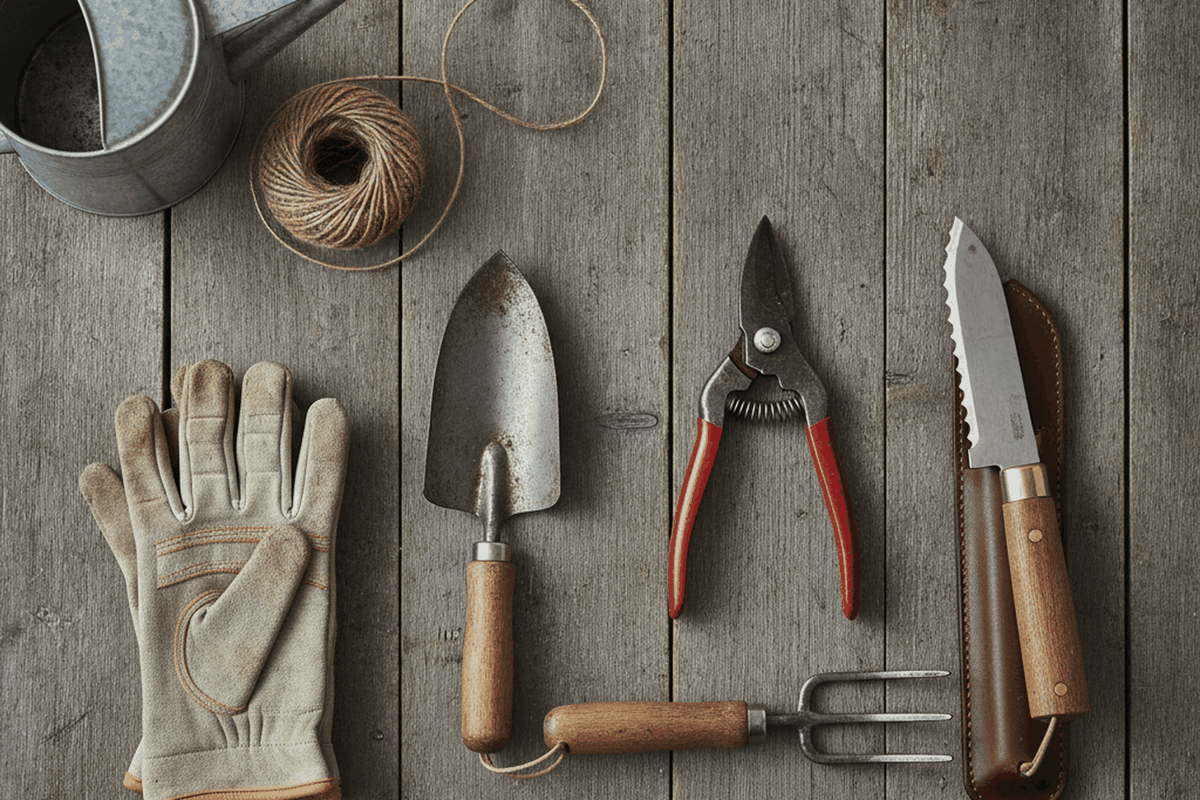
Here is the full list of gardening tools worth owning, tiered by when to buy: five bare essentials first, four full-kit tools as the garden grows, three job-specific tools only when their job shows up.
| Tool | What it does | Tier | Good makers |
|---|---|---|---|
 Digging spade Digging spade
|
Breaks ground, cuts roots, edges beds, plants everything | Bare essential | Spear Head Spade (ours); Bully Tools, Fiskars for round points |
| Bypass pruners | Clean cuts on live stems up to finger thickness | Bare essential | Felco, Fiskars, Corona |
| Hand trowel or hori hori | Close planting, transplants, container work | Bare essential | Nisaku, Wilcox, DeWit |
| Garden gloves | Protect hands from thorns, blisters, and soil bacteria | Bare essential | Foxgloves, Showa, Bionic |
| Watering wand or can | Gentle water where roots need it | Bare essential | Dramm, Haws |
| Weeding hoe | Standing weeding, cultivating, furrowing | Full kit | Spear Head Hoe (ours), stirrup hoes |
| Bow rake and leaf rake | Level soil, clear debris | Full kit | Ames, Bully Tools, Fiskars |
 Kneeling pad Kneeling pad |
Saves knees on ground-level work | Full kit | Spear Head kneeler (ours), any thick foam pad |
| Garden cart or wheelbarrow | Moves soil, mulch, and plants without your spine | Full kit | Gorilla Carts, True Temper |
| Loppers and a pruning saw | Branches too thick for pruners | Job-specific | Fiskars, Corona, Silky |
| Round point shovel | Scooping loose soil and sand | Job-specific | Bully Tools, Fiskars |
| Digging fork | Lifting root crops, turning compost | Job-specific | Radius Garden, DeWit |
What are the must have garden tools? The five bare essentials
1. A digging spade that actually cuts
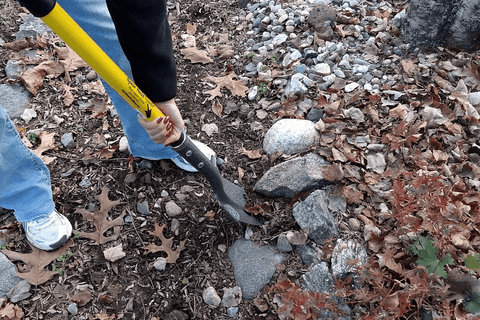
Every garden task starts with opening the ground, which is why the spade is the one tool worth spending real money on first. Ours is the Spear Head Spade: the first hybrid spade and shovel, curved like a shovel to carry soil and pointed and sharpened like a spade to cut. The blade is tempered carbon-manganese steel, the same steel used for railroad rails, pre-sharpened at the factory to a 35 degree bevel along the entire edge, and digging takes up to 80% less effort than a standard shovel. It was named Best Shovel/Spade of 2025 by Better Homes and Gardens, holds a 4.9 star average across more than 500 reviews on our site, and carries a limited lifetime warranty, a one-time replacement if your tool ever breaks. $60 in the 40" D-grip size; if you are between sizes, the 30 second spade finder settles it. For the full ranking including the jobs where a different shovel wins, our best shovels for digging guide goes deep.
2. Bypass pruners
The tool that lives in your back pocket. Bypass pruners cut live stems cleanly, the way scissors do, where cheap anvil pruners crush them and invite disease. The Felco 2 is the buy-it-once benchmark with every part replaceable, so it costs more up front and less per decade than a string of cheap pairs; Fiskars and Corona make solid pruners for less. Buy bypass, keep them sharp, and do not leave them in the rain. Our best pruning shears guide ranks the options by hand size and budget.
3. A hand trowel, or better, a hori hori knife
Close work needs a hand-scale tool: transplants, containers, bulbs, and the weed growing against a stem. A one-piece stainless trowel from Wilcox, or a forged-steel one from DeWit, will not fold at the neck the way bargain-bin trowels do (our trowel guide ranks the ones that survive). The upgrade most gardeners never regret is a Japanese hori hori knife: one tool that digs, cuts roots, divides small perennials, and measures planting depth on the blade (our hori hori guide picks the right one). Pair it with our dividing perennials guide and fall splitting becomes an afternoon.
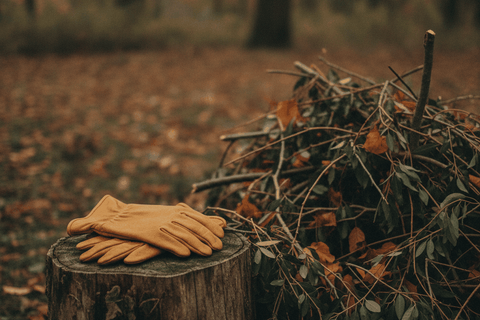
4. Real garden gloves
Gloves are the essential everyone skips until the first blister or thorn. One pair does not cover everything: a snug synthetic pair (Showa and Foxgloves are favorites) for planting and weeding, and a leather gauntlet pair for roses, brambles, and firewood. Our gardening gloves guide ranks both kinds by job. Cheap cotton gloves soak through in ten minutes; spend a little more.
5. A way to water gently
Seedlings get washed out by hose blasts and hanging baskets dry out daily, so controlled water is an essential, not an accessory. A Dramm watering wand on the hose covers beds and baskets; a two-gallon can (Haws if you want one that pours properly for decades) covers everything beyond the hose; our watering can guide picks by use. This is the cheapest of the five essentials; do not overthink it, but do start with a hose that does not fight you, and our garden hose guide settles that in one read. Indoors, a houseplant collection wants the same gentle water, and our plant lover gift guide covers a long-spout indoor watering can and a soil moisture meter.
The full kit: tools that earn their hook as the garden grows
6. A weeding hoe
The first season you plant more than a bed or two, standing weeding stops being optional. Ours is the Spear Head Hoe, a draw hoe with a pre-sharpened stainless steel blade and a rake on the back of the head, on a 60 inch handle, sold on Amazon. For big open plots a stirrup hoe is the faster sweep; our best weeding tools guide matches each weeding tool to its job, and the garden hoe types guide sorts draw, Dutch, and stirrup patterns if you want the whole taxonomy.
 Ranked picks by shape are in our best garden hoes for weeding.
7. A bow rake and a leaf rake
Two rakes, two jobs, no substitutes. The stiff-tined bow rake levels soil, spreads mulch, and clears stones from a new bed; flip it tines-up and the flat back screeds a seedbed level, which is the half of the tool most people never use. The fan-shaped leaf rake gathers without gouging. Ames, Bully Tools, and Fiskars all make sturdy versions, and our rake guide picks one of each. Buy the bow rake first; it is the one that partners with the spade when you build a bed. Flipped over, it also pushes topdressing into a bumpy lawn, which our yard leveling guide covers.
8. A kneeling pad
The cheapest tool on this list is the one your body thanks you for. Ours is a $10 cushioned foam kneeler that weighs under a pound and hangs from a cut-out handle; whatever you buy, thick foam beats thin foam and any pad beats bare knees on gravel (our kneeler and knee pad guide compares pads, seats, and strap-ons). Our ergonomic gardening guide covers the rest of the joint-saving toolkit.
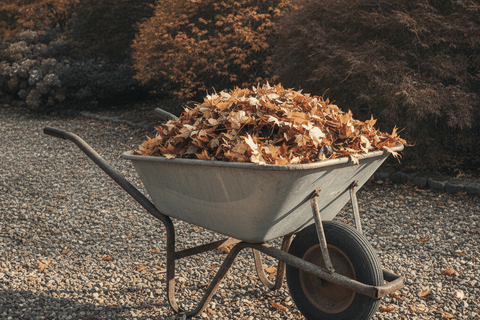
9. A garden cart or wheelbarrow
Nobody budgets for a cart until the first yard of mulch arrives on the driveway. A four-wheel garden cart (Gorilla Carts is the name everyone lands on) hauls more with less balance than a classic wheelbarrow and doubles as a rolling bench. If your paths are narrow, the single-wheel barrow still turns tighter; our wheelbarrow and cart guide compares them by job.
Job-specific: buy these when the job shows up
10. Loppers and a pruning saw
When a branch is thicker than your thumb, pruners hand off to loppers; thicker than your wrist, the pruning saw takes over (Silky is the saw the pros carry). Buy them the day you inherit a shrub line, not before.
11. A round point shovel
Honesty from a spade company: digging pure sand with no rocks or roots, a standard round-head shovel is the better scoop. It also moves loose soil out of a hole faster once the spade has broken the ground. The Bully Tools 14-gauge and the Fiskars long handle digging shovel are well-built versions; it is pick number two in our digging shovel ranking.
12. A digging fork
For lifting potatoes and dahlias without slicing them, turning compost, and loosening a bed without inverting it, the four-tine digging fork is the specialist. Radius Garden if your wrists want the round ergonomic grip, DeWit if you want forged steel that will pry. If your soil is heavy clay, dig with the spade and reserve the fork for harvest.
What you can skip
Three things garden centers love and sheds regret. A gas tiller is overkill under about a thousand square feet; a spade and a bow rake build the same bed and the soil life thanks you. Claw-style twist cultivators promise effortless weeding and deliver sore wrists; a sharp hoe does the job standing up. And the nine-piece boxed tool set is the classic false economy, which the last question below gets into.
What makes a garden tool worth buying?
- One-piece or reinforced construction. Tools fail at the joint: trowel necks fold, wooden handles snap at the collar. Solid-forged hand tools and steel reinforced handles survive the pry.
- An edge that arrives sharp and stays sharp. Most digging and cutting tools ship blunt. A sharpened tool does the work; a dull one makes your back do it.
- Weight you can swing for an hour. The strongest tool you cannot lift all afternoon is the wrong tool. Try the motion before you buy, or check the listed weight against something you own.
- Repairability. The best brands sell replacement parts. A tool with a lifetime of spares (or a limited lifetime warranty, a one-time replacement if your tool ever breaks, which is how we back ours) costs less per decade than any bargain bin.
How do you build a garden tool kit from zero?
Starting a garden from nothing? Build the garden starter kit in this order and every dollar works from day one. First month: spade, gloves, trowel, and a watering can, with our $60 spade as the anchor, and code DIGIN10 takes 10% off the spade. First season: add bypass pruners the week anything needs deadheading, and the hoe the week weeds outpace your fingers. First year: bow rake for the second bed, kneeling pad the first time you spend a Saturday planting bulbs, cart when the first mulch delivery lands. Skip the shed-filler kits that bundle nine hand tools; three of them get used and the caddy takes the credit.
Frequently asked questions
What tools do I need to start a garden?
Five things: a sharp digging spade, garden gloves, a hand trowel, bypass pruners, and a watering can or hose wand. That handful plants beds, containers, shrubs, and trees, and handles the first season's maintenance. Add a weeding hoe and a bow rake as the garden grows; rent or borrow anything you will use once.
What is the most used garden tool?
For most gardeners it is a tie between bypass pruners, which live in a pocket year-round, and the digging spade, which starts every planting, edging, dividing, and transplanting job. The spade earns the bigger investment because it takes the physical abuse: a sharp, hardened blade turns digging from punishment into a push.
How much should I spend on garden tools?
Enough to buy each of the five bare essentials once, in a version that lasts decades. A serious spade and a good pair of bypass pruners take the biggest share; the trowel, gloves, and watering gear cost less each. Cheap versions of all five get replaced every season or two, which is the expensive way to garden.
Are garden tool sets worth it?
Usually not. Boxed sets optimize for piece count, so you get nine mediocre tools where three good ones would serve: the trowels fold, the pruners crush stems, and the caddy outlives everything in it. Spend the same money on one excellent spade, one real pair of pruners, and one solid trowel instead.
The bottom line
Five tools do most of the gardening: spade, pruners, trowel, gloves, water. Buy the best version of each once, add the full-kit pieces as your garden asks for them, and let the job-specific tools wait for their jobs. Start with the spade that cuts, from a family business in New Jersey with over 600,000 sold, and browse the whole lineup when the kit starts growing. Shopping for someone else? This list doubles as our gifts for gardeners guide, and when the clippings pile up, the compost bin guide closes the loop.
Disclosure: some links in this guide are affiliate links to Amazon. This is at no extra cost to you, and it never changes our honest, use-based recommendations.
Product prices and availability are accurate as of the date/time indicated and are subject to change. Any price and availability information displayed on Amazon.com at the time of purchase will apply to the purchase of this product.