As an Amazon Associate we earn from qualifying purchases. Some brands also pay us when you click or buy, so those links are ads. Full disclosure below
The best garden tiller for most home gardeners is a corded electric machine like the Sun Joe TJ604E, which cuts a 16 inch row up to 8 inches deep and never needs gas. Breaking new ground out of sod or hard clay will stall it, and a rear tine tiller is the one that will not. If your beds sit beyond an extension cord, a cordless cultivator does the same work on a battery, and an established bed does better with a garden fork than with any tiller.
A tiller is also the garden machine people most often buy and least often need. It earns its keep twice: when you turn ground that has never been a garden, and when you mix a large load of compost into a bed for the first time. Running one every spring works against you, because it breaks apart the structure the season built and lifts weed seed into the light. This guide settles tiller vs cultivator, picks the machine for each real job, and says where a fork or a spade wins.
Best garden tillers and cultivators at a glance
| Machine | Best for | Why it wins | Where to buy |
|---|---|---|---|
| Sun Joe TJ604E 16 in. corded (best overall) | Opening a bed and mixing a heavy load of compost | Tills 16 inches wide and 8 inches deep, with no gas to store | Check price on Amazon |
| Greenworks 40V 10 in. cordless | Working away from an outlet | Up to 45 minutes per charge, and the battery and charger are included | Check price on Amazon |
| Earthquake MC33 mini tiller | Weeding between established rows | A 33cc gas engine goes where a cord will not reach | Check price on Amazon |
| Earthquake Victory rear tine tiller | Breaking new ground and hard clay | Counter rotating tines cut 16 inches wide, 10 inches deep | Check price on Amazon |
| Earthwise TC70025 7.5 in. corded | The smallest budget and beds | A 7.5 inch width and 6 inch depth | Check price on Amazon |
| Meadow Creature raised bed garden fork | No-till beds and yearly loosening | Nine inch tines open the soil without turning it over | Check price on Amazon |
What is the best garden tiller?
The best garden tiller for most home gardens is the Sun Joe TJ604E, a corded electric machine that tills a 16 inch row up to 8 inches deep. It has the power to open a bed and mix in a heavy load of compost. For sod or compacted clay, step up to a rear tine tiller.
That assumes the job is opening or resetting a bed, not running a machine over the same ground every April. The cord is the whole trade. If your beds sit further out than an extension cord reaches, the Greenworks 40V does the same work on a battery.
Tiller vs cultivator: which one do you need?
A cultivator stirs the top few inches of soil that is already loose, which is what mixing compost and cutting down weed seedlings need. A tiller has the power and depth to break ground that has never been cultivated. Most machines sold as small electric tillers are really cultivators.
The two words get blurred on purpose, so read the numbers rather than the name on the box. Anything working 6 to 16 inches wide and 5 to 8 inches deep is a cultivator whatever the listing calls it, and that is the right size for bed work. Powered rear wheels and counter rotating tines mean a real tiller, and that is overkill for anything but new ground.
Front tine vs rear tine tillers
On a front tine tiller the tines sit ahead of the wheels and pull the machine along, so you supply the control and the ballast. On a rear tine tiller the wheels are powered and the tines trail behind, digging without dragging you. That is why rear tine machines handle new ground.
Front tine machines are lighter, cheaper, and fit in a shed corner, and they are fine in soil already broken once.
When a tiller is the wrong tool
Tilling every year is a habit, not a technique. Each pass shatters the aggregates that let water and air move through soil, disrupts the fungal networks and earthworms doing that work for free, and lifts buried weed seed into the light that triggers it. The bed looks perfect the day you finish and crusts over after the first hard rain. Between passes, a mulch, a layer of cardboard or a paper mulch roll keeps that seed in the dark, and our weed barrier guide covers which one suits which bed.
Established beds do better with tools that loosen without inverting. A fork or a broadfork pushed in and rocked back opens channels for roots and water while leaving the layers where they are. Feed the surface instead: compost and a winter cover crop build the structure a tiller keeps undoing. Our guides to improving clay soil and cover crops for home gardens cover both, and building a raised bed skips the argument entirely.
For cutting and turning a new bed by hand, the tool that does the work is a spade rather than a machine. The Spear Head Spade is the first hybrid spade and shovel: the blade is curved like a shovel so it carries soil, and sharpened to a point like a spade so it slices roots and sod instead of stopping on them. It is double-patented, it has a foot rest so you can put your weight behind the cut, and it takes up to 80% less effort than a standard shovel, with over 600,000 sold. The 40 inch D-handle model is the one most people reach for to edge a new bed and turn it over. If that bed is lawn now, our guide to removing sod by hand has the cut order.
How to choose a garden tiller
Four decisions cover almost every buyer.
- Match the machine to new ground or bed work. Opening and amending a bed needs a cultivator: 6 to 16 inches wide, 5 to 8 inches deep. New ground out of sod or clay needs a rear tine tiller, and for one job renting is usually cheaper.
- Corded, cordless, or gas. Corded is cheapest and lightest and always starts, as long as the bed is within reach of an outlet. Cordless buys range and costs run time and money. Gas is for beds far from the house and soil that needs more torque.
- Width and depth are the real spec. A narrow head steers between rows and takes more passes. A 16 inch head clears ground faster and fights you in tight beds. Depth matters less than people think: 6 to 8 inches is the working root zone for almost everything.
- Weight decides whether you use it. A machine you can carry one handed gets used, and one you wrestle down two steps stays in the shed.
One rule outranks all four: never till wet soil. Squeeze a handful, and if it packs into a sticky ball that smears when you rub it, wait. It should crumble when you poke it.
The best garden tillers and cultivators, by job
1. Sun Joe TJ604E 16 in. corded electric: best garden tiller overall
The Sun Joe TJ604E is the machine most gardeners should buy. The 13.5 amp motor drives six steel tines through a 16 inch row up to 8 inches deep, a full bed width in one pass and deeper than any vegetable needs. There is no fuel to stabilize and no starting ritual.
Three position wheel adjustment sets how deep the tines bite, so one setting works compost into the surface and another opens a hardened bed, and the handle folds for wall storage. Where it loses: the cord, and it will not break sod.
2. Greenworks 40V 10 in. cordless: best cordless cultivator
The Greenworks 40V does the same class of work as a corded cultivator and unties you from the house. The 4.0Ah battery and charger are included, run time is up to 45 minutes on a charge, and a full recharge takes 120 minutes, which is one long session in a bed.
The tilling width adjusts from 8.25 to 10 inches, narrower than the Sun Joe on purpose, because a narrow head steers between planted rows without eating them, and 6 inch rear wheels make it easy to move around a bed. Where it loses: it costs more than the Sun Joe, and 45 minutes is a real constraint on a big plot.
3. Earthquake MC33 mini tiller: best small gas cultivator
The Earthquake MC33 is the answer when the beds are far from the house and the soil is loose enough that a full rear tine machine is overkill. The 33cc two cycle Viper engine and gear drive transmission put real torque in a small frame, and run time is however long you keep pouring fuel.
What sells it for row work is the control: the overhand handle keeps it from bouncing and skating, so the tines take out the weeds and not the row. Where it loses: it is a cultivator, so it hops across unbroken sod, and it brings the mixed fuel and winter storage an electric avoids.
4. Earthquake Victory rear tine tiller: best tiller for new ground
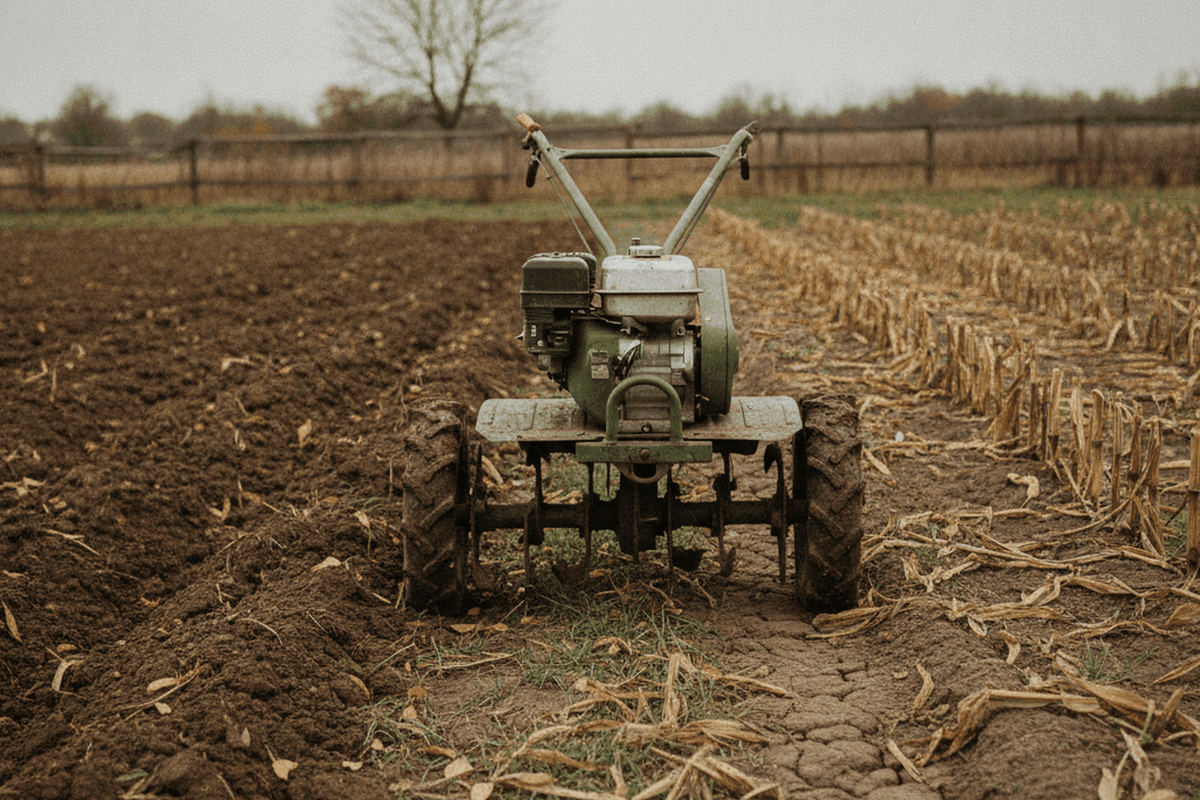
The Earthquake Victory is the machine for the one job the others cannot do. Counter rotating tines turn against the wheels, so instead of skating over hard ground they chew down into it, and a 209cc four cycle engine keeps them turning through clay and root. It cuts a 16 inch row up to 10 inches deep, and the adjustable drag stake holds it there.
Take the turf off first rather than tilling live sod in, because chopped grass roots come back up through the new bed. Instant reverse turns it around at a fence line without shifting, and the three position handlebar lets you walk beside the machine so your footprints stay out of the seedbed. Where it loses: it costs far more than everything else here, so price a rental first.
5. Earthwise TC70025 7.5 in. corded: best budget tiller
The Earthwise TC70025 is the least machine that still does something useful, and for many gardens that is the right buy. A 2.5 amp motor spins four steel tines through a 7.5 inch row up to 6 inches deep, which suits flower borders, narrow raised beds, and the strip along a fence where a 16 inch head will not fit.
It is light enough to carry one handed and lift over a bed frame, and a single lever switch starts it. Where it loses: the smallest motor here wants soil already broken and moist, not dry clay, and every pass covers half the width of the Sun Joe.
6. Meadow Creature raised bed garden fork: best fork for no-till beds
The last pick has no engine, because for an established bed that is the right answer. The Meadow Creature raised bed garden fork puts 9 inch tines on a 12 inch head and weighs 8 pounds. You push the tines in and lever the handle back, and the soil cracks open along its own lines without the layers turning over.
The 12 inch head is what makes it a bed tool, narrow enough to work down a 4 foot frame in overlapping bites instead of fighting the sides. Where it loses: the handle is a single 25.5 inch shaft, so you work bent over with less leverage than a full size two handled broadfork.
Frequently asked questions
What is the difference between a tiller and a cultivator?
A cultivator stirs the top few inches of soil that is already loose, which is what you want for mixing compost into a bed or knocking down weed seedlings. A tiller has more power and depth and is built to break ground that has never been cultivated. Most machines sold as small electric tillers are really cultivators.
Do I need a tiller for a small garden?
Usually not. For beds under a few hundred square feet, a spade and a garden fork do the same work in an afternoon, cost far less, and leave the soil structure intact. Rent or borrow a tiller for the one day you break new ground, then keep a fork for everything after that.
Is a front tine or rear tine tiller better?
Rear tine tillers are better for new ground and heavy clay, because the wheels drive the machine and the tines only dig. Front tine machines are lighter, cheaper, and easier to store, and they work well in soil that has already been broken. Choose rear tine only if you are starting from sod or compacted ground.
Can you till wet soil?
No. Tilling wet soil smears the particles into dense clods that dry hard and stay that way for a season or more, and the damage is worst in clay. Squeeze a handful: if it packs into a sticky ball that holds its shape, wait. It should crumble when you poke it.
How deep should you till?
Six to eight inches covers almost every home garden job, which is the root zone for vegetables and annual flowers. Going deeper mostly brings up subsoil and buried weed seed. Reserve the 10 inch settings on a rear tine machine for the first pass over ground that has never been a garden.
The bottom line
Buy the Sun Joe TJ604E to open a bed and mix the first heavy load of compost into it, the Greenworks 40V if that bed is out of cord range, and the Earthquake Victory only for breaking ground out of sod or clay, after pricing a rental. Then use it as little as you can: one pass to start a bed, and a fork every year after.
Disclosure: some links in this guide are affiliate links to Amazon. This is at no extra cost to you, and it never changes our honest, use-based recommendations.