As an Amazon Associate we earn from qualifying purchases. Some brands also pay us when you click or buy, so those links are ads. Full disclosure below
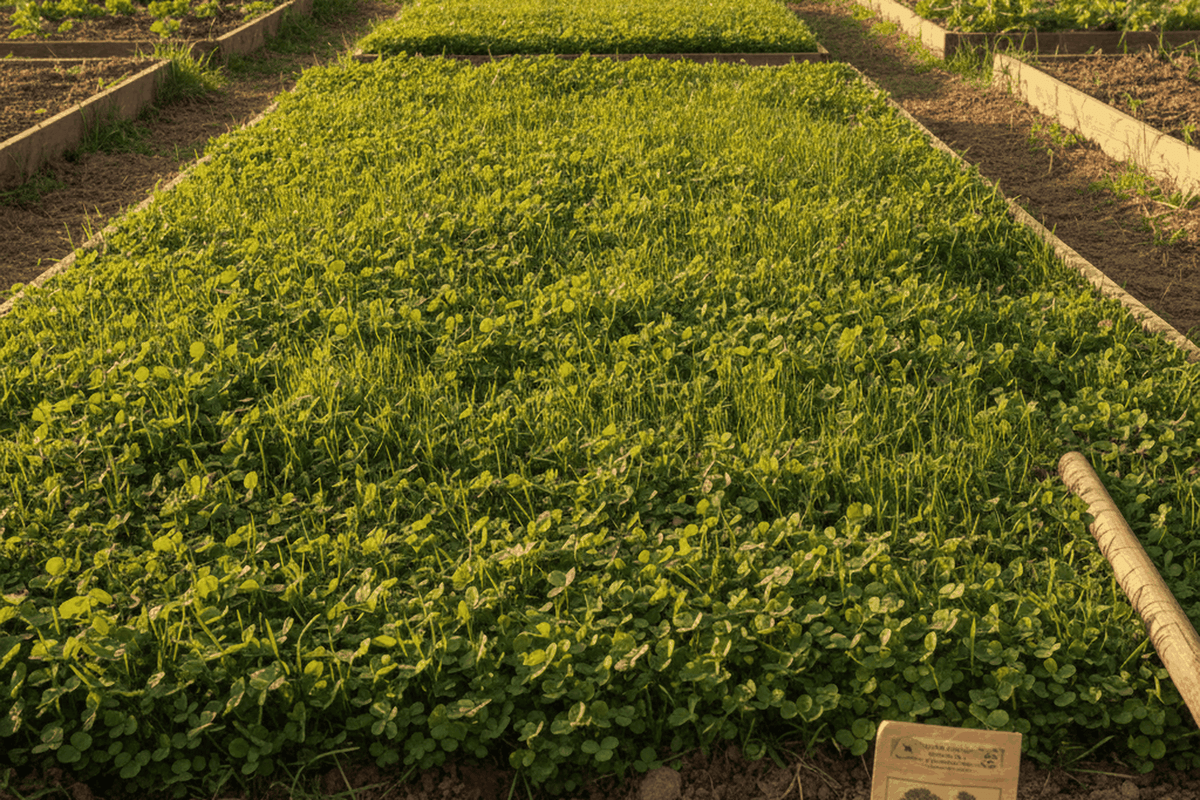
A cover crop is a plant you grow to feed and protect the soil rather than to harvest. For most gardens, sow four to six weeks before your first frost: crimson clover or field peas for nitrogen, oats if you want winter to kill it for you. Winter rye goes in latest and does the most for compacted, weedy ground.
Who we are: Spear Head Spade is a family business in New Jersey, and we sell the double-patented digging spades this blog keeps mentioning, with over 600,000 sold. The bed you are sowing into has to be opened first, and the D-handle garden spade is our tool for that.
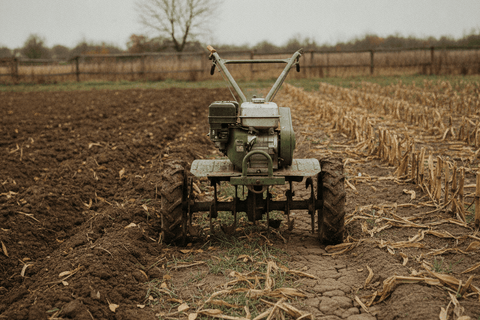
Most of what is written about cover crops is aimed at farms, measured in acres and terminated with a tractor. Scaled to a few raised beds it is simpler, and the hard part is deciding in September how you plan to kill the crop in April. Pick for that and the rest is broadcasting seed. If you are closing the garden down anyway, our garden winterizing checklist covers the other jobs in the same window.
What a cover crop does
Four jobs, and no single crop is best at all of them.
- It holds the soil. Bare ground over winter loses its surface to rain and wind and slumps into a crust. Roots hold structure in place and the top growth breaks the impact of rain.
- It feeds the soil. Every cover crop is organic matter you work back in. Rye and oats put down a dense root network that leaves channels behind when it decomposes, which is why they help on compacted or heavy ground. There is more of this in our clay soil guide.
- It smothers weeds. A thick stand takes the light and space winter annual weeds would otherwise use. Rye goes further and releases compounds that suppress small weed seeds as its residue breaks down.
- Legumes fix nitrogen. Clover, vetch and peas host bacteria on their roots that pull nitrogen out of the air and leave it in the soil. The nitrogen becomes available to the next crop when you cut the legume down and it decomposes, which is where the old name green manure comes from.
Grains give you biomass and weed control. Legumes give you nitrogen. A mix of the two is the usual answer, and premixed no-till blends of rye, radish and clover sell for that reason.
Fall cover crops for home beds, compared
| Crop | Sow by | Winter hardiness | What it does | How to kill it in spring |
|---|---|---|---|---|
| Winter rye (cereal rye) | Latest of all, up to about the first frost | Very hardy, regrows in spring | Huge root mass, holds soil, adds organic matter, suppresses weeds | Mow or cut at ground level before it sets seed, then chop it in or crimp it flat under mulch |
| Crimson clover | 4 to 6 weeks before first frost | Hardy to roughly zone 6, winter-kills colder | Fixes nitrogen, flowers early for pollinators | Cut at first bloom and work it in, or let a hard winter do it |
| Hairy vetch | 4 to 6 weeks before first frost | Hardiest of the common legumes, overwinters in the North | Fixes the most nitrogen of the common choices | Hardest to kill. Mow at bloom and crimp under mulch, and never let it set seed |
| Oats | 4 to 6 weeks before first frost | Winter-kills in cold zones, overwinters in the mild South and West | Fast cover, holds soil, dies down into a mulch mat | Winter does it. Rake the residue aside in spring |
| Field peas (Austrian winter peas) | 4 to 6 weeks before first frost, at the early end | Winter-kills in cold zones, overwinters in mild ones | Fixes nitrogen, easy to pull or turn | Winter-killed in the north. Elsewhere cut at bloom |
| Daikon or tillage radish | 4 to 6 weeks before first frost | Winter-kills in cold zones | Deep taproot pushes through compacted layers and scavenges nutrients | Frost kills the top and the root rots in place, leaving open channels. Expect a sulfur smell |
| Buckwheat (the summer exception) | Not for fall. Sow after last frost through midsummer | Killed by the first light frost | Fast summer smother crop, takes up phosphorus and releases it as the residue breaks down | Mow about a week into bloom, before any seed sets |
If you want one recommendation: oats for a first try, since winter terminates them and there is nothing to undo. Winter rye if the bed is compacted or weedy and you are willing to deal with it in spring. Crimson clover or field peas if the bed is going into heavy feeders like tomatoes, squash or corn next season. Daikon radish where a fork hits a hard layer a few inches down.
Two to be careful with. Hairy vetch is the hardest of these to get rid of, and it volunteers for years if it sets seed. Winter rye that reaches knee height is a real job to cut and clear.
Timing, by region
The rule is four to six weeks before your average first frost, which is enough time for the stand to establish before growth stops. Find your frost date and count backward.
- Upper Midwest, New England, mountain west. Late August into mid September. Rye can go in through early October, even a week or two past a light frost.
- Mid-Atlantic and central states. Mid September into early October, with rye through late October.
- South and the mild west coast. October into November. Overwintering legumes do well here because they are not killed back, so crimson clover and Austrian winter peas are strong choices.
Sowing late is the most common mistake and it mostly costs you biomass rather than the whole planting. Winter rye is the crop that forgives it, because it germinates in soil down near 40 degrees and will put on growth in any warm spell through winter. Oats sown late may get a few inches up and then winter-kill, which still leaves you a thin mulch and a bed that did not erode.
How to sow a cover crop, step by step
1. Clear the bed
Pull the spent crop and the standing weeds and get the surface open. Seed needs to reach soil, and a bed still carrying a dead tomato vine and a mat of chickweed gives you a patchy stand. Keep diseased material out of the bed.
2. Loosen the top inch
Scratch up the surface so seed has something to settle into. You are not digging the bed, only breaking the crust and any weed seedlings in the top inch. A hoe pulled across the surface does this in a couple of minutes per bed. Ours is the Spear Head Hoe, sold on Amazon, with a 60 inch handle that keeps you upright and a stainless pre-sharpened blade that cuts weeds cleanly at the root instead of tearing them. The rake on the back of the head covers the seed and firms the bed in steps 4 and 5.
3. Broadcast at the rate on the bag
Cover crop seeds are sold by the pound with a sowing rate printed on the bag. Use that rate. Scatter the seed by hand in two passes at right angles, or run a hand spreader for even coverage, and our fertilizer spreader picks cover the handheld and push models that keep a rate honest across a bed. Two light passes beat one heavy one. Going over the rate wastes seed and gives you a stand so thick it flops over; going well under leaves gaps that winter weeds take.
4. Rake the seed in
Most cover crop seed wants shallow burial, roughly a quarter to a half inch. Rake lightly so seed is mixed into the loose surface rather than sitting on top, which is what stops birds and rain from taking it. Large seed like field peas can go deeper, about an inch.
5. Press it down
Firm the surface so seed is in contact with soil. Walk the bed, tamp it with the back of the rake, or lay a board down and step on it. Seed lying in an air pocket does not germinate reliably, and this step separates a thick stand from a thin one.
6. Water, and keep watering until it is up
Water in after sowing and keep the surface damp until the seedlings emerge, usually four to ten days depending on the crop and soil temperature. Fall rain often handles this; a dry September does not. A cover crop that never germinated is the one failure worth going out of your way to prevent.
Terminating it in spring
This is the half of the job that decides whether you do it again next year.
Cut before it sets seed. The timing that matters is flowering. Cut grains at the boot stage, when the seed head is still inside the stem, and cut legumes at first bloom, which is when a legume has the most nitrogen in it. Past flowering the stems go woody, the plant pulls nitrogen into the seed, and you have volunteers next season.
Then choose one of two paths. Chop the residue into the top few inches with a hoe or turn it under with a fork, which is the fastest way to get it decomposing. Or leave it on the surface as a mulch, crimped flat, and plant transplants straight through it. The no-till version keeps soil structure intact and holds moisture; the incorporated version breaks down faster and clears the bed sooner.
Wait two to three weeks before planting. Fresh residue ties up soil nitrogen while microbes work on it, and rye residue in particular can suppress small seeds. That window is short for a young legume and longer for a heavy stand of mature rye. If you want to plant immediately, use transplants rather than sowing seed.
Or let winter do it. Oats, field peas and daikon radish die at a hard freeze and collapse into a flat mat by March. Rake the residue aside, plant, and put it back as mulch. For a first year this is the whole appeal, and it is why the beginner pick is a winter-killed crop.
Raised beds and small plots
A raised bed is a good candidate and an awkward one. Good, because the soil sits bare all winter and the bed is small enough to sow in two minutes. Awkward, because there is no room to swing a tool, so anything you cannot pull out by hand becomes a chore.
What works in beds:
- Choose winter-killed crops. Oats, field peas and daikon radish, or a blend of them. You get the cover and the roots without a spring fight.
- Cover the edges. A small bed is mostly edge, and the thin strips a spreader leaves at the sides are where winter weeds get in. Sow to the bag rate, then finish the perimeter by hand.
- Sow around what is still growing. Broadcast between rows of fall brassicas or garlic and the cover fills in as they finish. Keep it thin over garlic so it does not compete.
- Cut, do not dig. In a bed the no-till path is easier. Shear the top growth at soil level, leave it as mulch, and let the roots decompose where they are. New beds are covered in our raised bed guide.
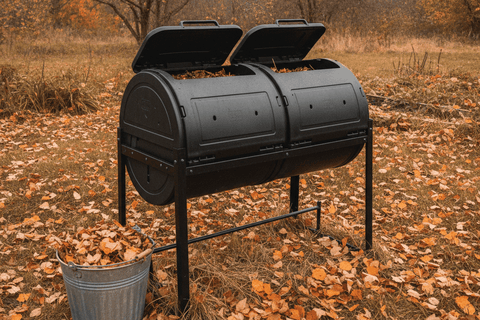
For a single small bed, a cover crop and a thick layer of finished compost do overlapping jobs, and compost is less work. The cover crop wins on rooting depth, weed suppression, and nitrogen if you sow a legume. If you are weighing the compost side, our compost bin guide covers the containers and our guide to the best compost tumblers covers the drums.
Tools for this job
What it takes to get seed in the ground this fall and clear the residue in spring.
Our own tool, sold on Amazon. The 60 inch handle keeps you upright while you loosen the top inch before broadcasting, and the rake on the back covers the seed and firms it in. In spring the stainless pre-sharpened blade cuts the stand down at ground level and chops the residue into the top few inches.
Check price on AmazonOutsidepride crimson clover seeds, 5 pounds
Nitrocoated and inoculated per the listing, which is what a nitrogen fixer wants. At the listing's 1/2 to 3/4 pound per 1,000 square feet, five pounds sows about 6,700 to 10,000 square feet, more than most home gardens need.
Check price on AmazonMountain Valley Seed Co no-till winter rye cover crop seeds, 5 pounds
The crop you can still sow when everything else is too late, and the one that does the most for compacted, weedy ground.
Check price on AmazonScotts Whirl hand-powered spreader
A hand crank spreader gives you even coverage in two light passes, which is the difference between a closed stand and a patchy one.
Check price on AmazonRadius Garden PRO digging fork
For the depth work a hoe is not meant for: lifting the winter-killed mat off a bed and loosening established rye roots before you plant.
Check price on AmazonCommon questions
When should you plant cover crops in fall?
Four to six weeks before your average first frost for most crops, which is roughly late August into September in the north and September into October further south. Winter rye is the exception and can go in later, even after a light frost, because it germinates in cool soil.
What is the best cover crop for beginners?
Oats. They germinate fast, grow thick enough to hold soil and shade out weeds, and then winter kills them anywhere the ground freezes hard, so you never have to work out how to terminate them. In spring you rake the flattened residue aside and plant.
Do you have to till cover crops in?
No. You can cut the top growth at ground level, leave it on the surface as mulch and plant through it, which is the usual no-till approach in home beds. Chopping the residue in with a hoe, or turning it under with a fork, speeds decomposition, but it is a choice, not a requirement.
Can you plant cover crops in raised beds?
Yes, and beds are one of the best places for them, since that soil otherwise sits bare and exposed all winter. Choose a winter-killed crop such as oats, field peas or daikon radish so you are not fighting established rye roots in a confined bed come spring.
What is the easiest cover crop to kill?
Oats and field peas, because a hard freeze kills them for you and leaves a flat mat of residue. Daikon radish is nearly as easy, since frost kills the top and the taproot rots in place. Winter rye and hairy vetch are the hardest to terminate by hand.
The bottom line
Pick the crop by how you intend to kill it. Oats, peas or radish if you want winter to do the work, rye if the bed needs the roots, a legume if next year wants nitrogen. Sow four to six weeks before frost, rake the seed in, press it down and water it up. The hoe that opens the surface in September is the one that cuts the stand down and chops the residue in come April; ours is in our guide to hoe types and what each one is for.
Disclosure: some links in this guide are affiliate links to Amazon. This is at no extra cost to you, and it never changes our honest, use-based recommendations.