As an Amazon Associate we earn from qualifying purchases. Some brands also pay us when you click or buy, so those links are ads. Full disclosure below
The best gardening gloves for most people are coated grip gloves like the Wells Lamont PU coated 3 pack: a thin knit shell dipped in polyurethane or nitrile that keeps fingertip feel for seed-scale work and shrugs off wet soil. Thorny jobs call for leather gauntlets that cover the forearm, and heavy hauling calls for real leather. Nobody needs one perfect pair; most gardeners need two.
Gloves are the tool gardeners replace most and think about least, which is how so many sheds end up with one stiff leather pair that fits nobody and a pile of holed cotton ones. The fix is matching the coating and the cut to the job. This guide picks the best gardening gloves for each kind of work, using only what the products actually are, not what the marketing photos imply. This page is one stop on our fall yard cleanup tools checklist, which puts every fall job in order.
Best gardening gloves at a glance
| Glove | Best for | Material | Where to buy |
|---|---|---|---|
| Wells Lamont coated grip, 3 pack (best overall) | Everyday weeding, planting, and potting | Knit shell, PU coated palm | Check price on Amazon |
| COOLJOB rubber coated, 6 pairs | Burning through pairs all season | Breathable knit, rubber coated | Check price on Amazon |
| HANDLANDY rose pruning gauntlets | Roses, brambles, anything with thorns | Thorn resistant with long cuffs | Check price on Amazon |
| WZQH leather work gloves | Hauling, digging, firewood, rough work | Leather | Check price on Amazon |
| Showa Atlas 370, 4 pack | Wet soil and rainy-day work | Nitrile coated knit, the nursery classic | Check price on Amazon |
What are the best gardening gloves?
For the work most gardens actually serve up, thin coated grip gloves beat everything else. The coating gives grip and keeps moisture off your palms, the knit back breathes, and the fit is close enough to pick up a seedling or a dropped screw. The Wells Lamont PU coated 3 pack is our best overall because it nails that formula from a brand that has made work gloves for over a century, and three pairs means a dry pair always exists. The one thing no coated knit glove does is stop a thorn, which is why the gauntlets below exist.
Best gardening gloves for women and for men
Check the cut before the size, because some glove listings are cut for one hand shape. For women, both coated grip picks are already women's cuts: the Wells Lamont 3 pack for everyday work and the COOLJOB 6 pair pack as the budget buy, and the Womanswork Digger in our own shop is cut for women's hands. For men, COOLJOB's men's pack is the same coated knit in larger sizing, two pairs to the pack. The specialist picks fit either: the HANDLANDY gauntlets are sized for men and women, and the WZQH leather gloves are listed for men or women.
The best gardening gloves, by job
Five picks, each the best garden gloves for a different kind of day.
1. Wells Lamont coated grip 3 pack: best gardening gloves overall
The Wells Lamont women's PU coated grip gloves cover the everyday season: weeding, transplanting, deadheading, hauling pots. The polyurethane palm grips wet stems without getting slimy and is thin enough that small seeds stay findable. Buying a 3 pack is the honest move for a consumable, one pair drying while another works. Sizing is the only real variable, and this listing is a women's cut; men's sized coated gloves are the same idea in a larger pattern. Where they lose: thorns and hot mulch go straight through a thin coating.
2. COOLJOB 6 pair pack: best budget gardening gloves
If gloves at your house get left in the rain, chewed by the dog, and loaned to helpers, buy them the way you buy socks. The COOLJOB 6 pair pack of rubber coated knit gloves costs less than one premium pair and keeps a fresh set within reach all season. Like the top pick, this listing is a women's cut; COOLJOB's men's pack is the same idea in larger sizing. They are a step down in fit and finish from the Wells Lamont, and that is the correct trade for gloves that lead a hard, short life.
3. HANDLANDY gauntlets: best gardening gloves for roses and thorns
Every coated knit glove loses to a rose. The HANDLANDY rose pruning gloves answer with thorn resistant construction and long gauntlet cuffs that protect the forearm you reach into the bush with, which is where rose scratches actually happen. They are sized for men and women and pair naturally with real bypass pruners; our pruning shears guide covers that half of the job. The tradeoff of any gauntlet is dexterity: fine work feels remote through thick protection, so put them on for the thorny hour, not the whole day.
4. WZQH leather gloves: best for heavy and rough work
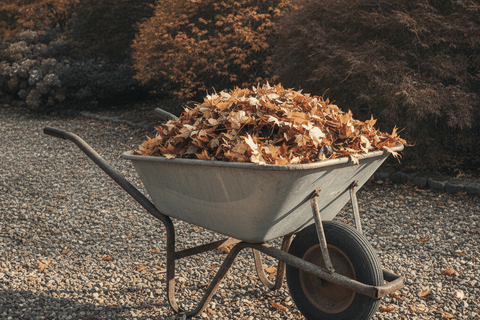
Some days the garden is really a job site: hauling stone, splitting root balls, moving brush. The WZQH leather work gloves are built for that tier, leather that takes abrasion a coated knit never will, listed for gardening and welding alike, which tells you the duty class. Leather's costs are stiffness until broken in and a dislike of soaking wet, so keep them for the rough work and let the coated pairs handle the soil. For moving that stone and soil, our wheelbarrow guide picks a barrow or cart by the job.
5. Showa Atlas 370: best gardening gloves for wet work
Ask around a commercial nursery and the Showa Atlas 370 keeps coming up: a nitrile coated knit glove that people who garden for a living buy by the box. Nitrile stays grippy in wet soil and resists the punctures and oils that wear other coatings, and the 4 pack keeps spares in the shed. It is not waterproof, the knit back will wet through in real rain, but for damp spring soil it is the standard for a reason. For winter work, our best heated gloves guide compares battery pairs by measured hours of heat.
How to size gardening gloves by model
Glove sizes are not universal. As Wells Lamont's own sizing guide puts it, you might wear a medium in one brand and a large in another, and the size runs on our picks differ a lot, so size from the exact model you are buying rather than from habit. Going by each listing's own size options, the Wells Lamont women's 3 pack comes in Small and Medium only, the COOLJOB women's pack in Small, Medium and Large, and COOLJOB's men's pack in Small through X-Large. The HANDLANDY gauntlets run X-Small to X-Large, and the WZQH leather gloves come in six sizes, X-Small to XX-Large. The Showa Atlas 370 pack we link is the Medium 4 pack, and the listing shows no other size options.
To find your size, wrap a soft tape measure around your dominant hand at the widest part of the palm, just below the knuckles, with the thumb left out. Compare that number with the size options and any size chart shown for the model you want, not with a general chart. When the pair arrives, close your hand around a tool handle: the fingertips should be snug, with no loose fabric bunching in the palm and nothing pinching across the knuckles. If your size is above a Medium, note that the Wells Lamont women's pack stops at Medium, while the COOLJOB women's pack goes up to Large and the men's pack to X-Large.
Compare gardening gloves: sizes, materials and care
This table lines up what each glove's own Amazon listing states about sizes, materials and care, for the five picks plus the COOLJOB men's pack named above. Sizes are the size options shown on each listing, and some sizes may only come in certain colors. Where a cell says not stated, the listing is silent on it, so go by the care label sewn into the glove.
| Glove | Sizes on the listing | Shell or lining | Palm | Wrist and cuff | Care on the listing |
|---|---|---|---|---|---|
| 1. Wells Lamont women's coated grip, 3 pack (413MF) | Small, Medium | Seamless polyester shell | PU coated | Ribbed elastic wrist | Not stated |
| 2. COOLJOB women's, 6 pairs (F132D08) | Small, Medium, Large | Knit base | Foamed latex coating, thicker fingertips | Long cuff | Gentle machine cycle or hand wash, air dry only |
| COOLJOB men's, 2 pairs (F132DM) | Small to X-Large | Seamless polyester knit | Micro foamed latex coating | Long cuff, elastic wrist | Gentle machine cycle or hand wash, air dry only |
| 3. HANDLANDY rose gauntlets (1601) | X-Small to X-Large | Pigskin leather back | Pigskin, padded, reinforced fingertips | Cowhide gauntlet cuff | Not stated |
| 4. WZQH leather work gloves | X-Small to XX-Large | Split cowhide, cotton fiber lining | Split cowhide, reinforced | Adjustable wrist | Not stated |
| 5. Showa Atlas 370, 4 pack (NT370) | Medium (this listing) | Nylon knit liner, breathable back | Nitrile coating | Not stated | Not stated |
Two patterns stand out. Only the two COOLJOB listings give washing directions, and both leather picks start at X-Small, which helps smaller hands that still need thorn or abrasion protection.
Gloves from our own shop
We also sell two Womanswork gloves ourselves. They are not ranked against the picks above; each one covers a specific job.
Womanswork Digger gloves: for planting by hand
Womanswork cuts the Digger for women's hands and reinforces the fingertips top and bottom, so the glove holds up when you dig with your hands. The maker lists padded micro suede palms, a longer cuff with a hook-and-loop wrist closure to keep soil out, and a machine washable build. It is the glove for setting transplants into ground the spade has already opened.
Womanswork Arm Saver gloves: for roses and brambles
The Arm Saver runs long up the forearm, and Womanswork says the extra-long cuff guards against scratches, insect bites and sun, with a pull cord to cinch it on your arm. The palms are synthetic leather, reinforced at the thumb and forefinger, on a cotton twill glove with a touch of spandex for flexibility. It is built for the same thorny pruning jobs as the gauntlets above.
How to choose gardening gloves
- Coating decides the feel. Nitrile is tough and grippy in the wet. Polyurethane is thinnest, best for fine work. Latex rubber grips well dry but wears faster. All three breathe through the knit back; full rubber gloves do not.
- Leather is for abrasion, not soil. It outlasts everything against rock, wood, and brush, and it is the wrong glove for wet weeding.
- Thorns need coverage, not just thickness. A gauntlet cuff protects the forearm; a tough palm alone protects half the problem.
- Fit beats material. A glove that slides makes blisters and drops tools. Snug at the fingertips with no loose fabric at the palm is the test.
- Plan to wash and replace. Wells Lamont's care guide says to hand wash its coated gloves with water only and hang them to dry, and coated knits still die by season's end. That is normal; buy multipacks and stop mourning them.
- Wash by the label for your model. Care rules differ by maker and material, so the sewn-in label and the listing for your exact pair come before any general rule, including the one above. Of our picks, only the two COOLJOB listings give washing directions; the Wells Lamont, Showa, HANDLANDY and WZQH listings state none, so follow the label on those and do not borrow one brand's rules for another.
Frequently asked questions
What gloves do professional gardeners use?
Mostly thin nitrile coated knit gloves bought in multipacks, with the Showa Atlas line as the recurring nursery favorite. Professionals treat gloves as a consumable: close fit for real dexterity, replaced the moment the coating wears through, with leather kept aside for rough hauling days.
Are nitrile or leather gloves better for gardening?
Nitrile for soil, leather for abuse. Nitrile coated knits stay grippy in wet dirt, fit close enough for seeds and seedlings, and breathe. Leather wins the moment the job turns to stone, brush, or lumber, and loses in wet soil where it soaks and stiffens. Most gardeners genuinely need one of each.
How should gardening gloves fit?
Snug at the fingertips with no spare fabric bunching in the palm. A loose glove slides against your skin, and that sliding, not the work itself, is what raises blisters and drops tools. If you are between sizes, Wells Lamont's sizing guide says to think about when and where you will wear them, since cold weather can make hands slightly smaller and heat and humidity make them swell; for year-round use, it says sizing up slightly often works better than sizing down.
Do thornproof gardening gloves actually work?
Good gauntlet-style pairs stop the common scratch and most casual pokes, and the long cuff protects the forearm, which is where rose damage usually lands. No fabric glove makes you invincible to a direct press on a large thorn, so technique still matters: grip canes between the thorns and let the gauntlet catch the accidents.
What size gardening gloves should I buy?
Buy by the size options and any size chart shown for the exact model, because size runs differ by brand. Measure around your dominant hand at the widest part of the palm, below the knuckles and without the thumb, then match that number to the model's chart. On our picks, the Wells Lamont women's pack stops at Medium, the COOLJOB women's pack goes to Large, the COOLJOB men's pack and the HANDLANDY gauntlets go to X-Large, and the WZQH leather gloves go to XX-Large.
Can you machine wash gardening gloves?
Some you can, and the care label on your exact pair decides. Both COOLJOB listings allow a gentle machine cycle or a hand wash in mild detergent, no hotter than 104°F (40°C), without non-fabric-safe bleach, and air drying only, never electric heat. The Wells Lamont, Showa Atlas 370, HANDLANDY and WZQH listings give no washing directions, so follow the label sewn into those gloves.
Are coated gardening gloves breathable?
Several coated picks say so. The Wells Lamont listing describes a breathable polyester shell, the COOLJOB listings a breathable knit base, and the Showa Atlas 370 listing a breathable back of the hand over a nylon liner. Among the leather picks, the HANDLANDY listing calls its pigskin breathable, and the WZQH listing does not mention breathability.
The bottom line
Buy the coated grip multipack for the daily season and add one specialist: gauntlets if your garden has thorns, leather if it has heavy work. Gloves also make one of the safest presents in our gifts for gardeners guide, and the rest of the kit worth owning is ranked in our essential garden tools list. Wet ground asks the same question of your feet as it does of your hands, and our guide to gardening shoes and clogs answers it.
About the shop behind this guide: we are Spear Head Spade, a family business in New Jersey, and our double-patented spades are built for clay and roots, with over 600,000 sold. Gloves come out most often for weeding, and our guide to the best weeding tools covers what should be in the other hand. Gloves earn their keep fastest on a full day of digging, and our tool for that is the 40 inch D-grip spade.
Disclosure: some links in this guide are affiliate links to Amazon. This is at no extra cost to you, and it never changes our honest recommendations.
Product prices and availability are accurate as of the date/time indicated and are subject to change. Any price and availability information displayed on Amazon.com at the time of purchase will apply to the purchase of this product.