As an Amazon Associate we earn from qualifying purchases. Some brands also pay us when you click or buy, so those links are ads. Full disclosure below
The best pruning shears for most gardeners are a quality bypass pair like the Felco F-2: sharp enough to cut live stems cleanly, rebuildable part by part, and comfortable for a full afternoon. A budget bypass covers light deadheading, a ratchet pair rescues weaker hands, and loppers take over past a thumb's thickness.
Pruners are the most personal tool in the shed. A spade gets grabbed for a job; pruning shears live in your hand for hours at a stretch, and a bad pair announces itself in torn stems, crushed bark, and a sore forearm by lunch. The difference between a great pair and a frustrating one is not the steel alone, it is how the cutting action, the capacity, and the grip match the pruning you actually do. This guide picks the best pruners by job, hand pruners through loppers, and is honest about where each one stops. When a branch is past what hand pruners should cut, our loppers guide picks up where these leave off.
Best pruning shears at a glance
| Tool | Best for | Cutting action | Capacity | Where to buy |
|---|---|---|---|---|
| Felco F-2 (best overall) | Serious gardeners who prune every season | Bypass, every part replaceable | About 1 inch | Check price on Amazon |
| Fiskars Bypass Pruning Shears | Light deadheading on a budget | Bypass | 5/8 inch | Check price on Amazon |
| EZ Kut Ratchet Pruner | Arthritis and weaker hands | Ratcheting anvil, cuts in stages | Up to 1.5 inches | Check price on Amazon |
| BLACK+DECKER 20V MAX Cordless Pruner | Long pruning sessions and tired hands | Powered, battery included | Up to 1 inch | Check price on Amazon |
| Fiskars 32" PowerGear2 Loppers | Branches beyond pruner range | Geared bypass, two-handed | 2 inches | Check price on Amazon |
| Fiskars Micro-Tip Pruning Scissors | Roses, herbs, and precision deadheading | Fine-point snip | Soft stems only | Check price on Amazon |
What are garden shears?
For most gardeners the right garden shears are a pair of bypass hand pruners, and the Felco F-2 (pick 1) is the pair this guide leads with. Garden shears, garden clippers, hand pruners and secateurs are the names this one-handed tool goes by on store shelves. Felco sells the F-2 as garden clippers and hand pruners, and Fiskars sells its bypass pair (pick 2) as garden clippers.
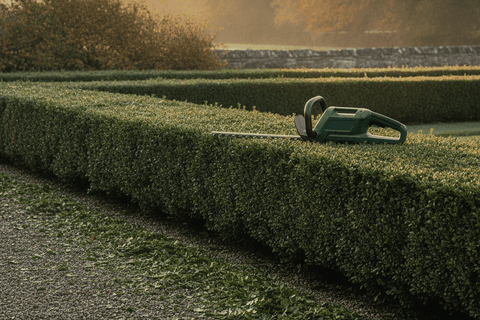
Garden scissors and garden snips are the smaller tool: short, fine blades for soft stems rather than woody growth. The Fiskars Micro-Tip (pick 6) is the pick for that job. Its listing calls it pruning scissors and garden snips, names flower stems, herbs and buds as its work, and puts a sheath in the box with its stainless steel blades. Hedge shears are a third tool again, two-handed with long straight blades, made for shaping a hedge rather than cutting single stems.
Bypass vs anvil pruners
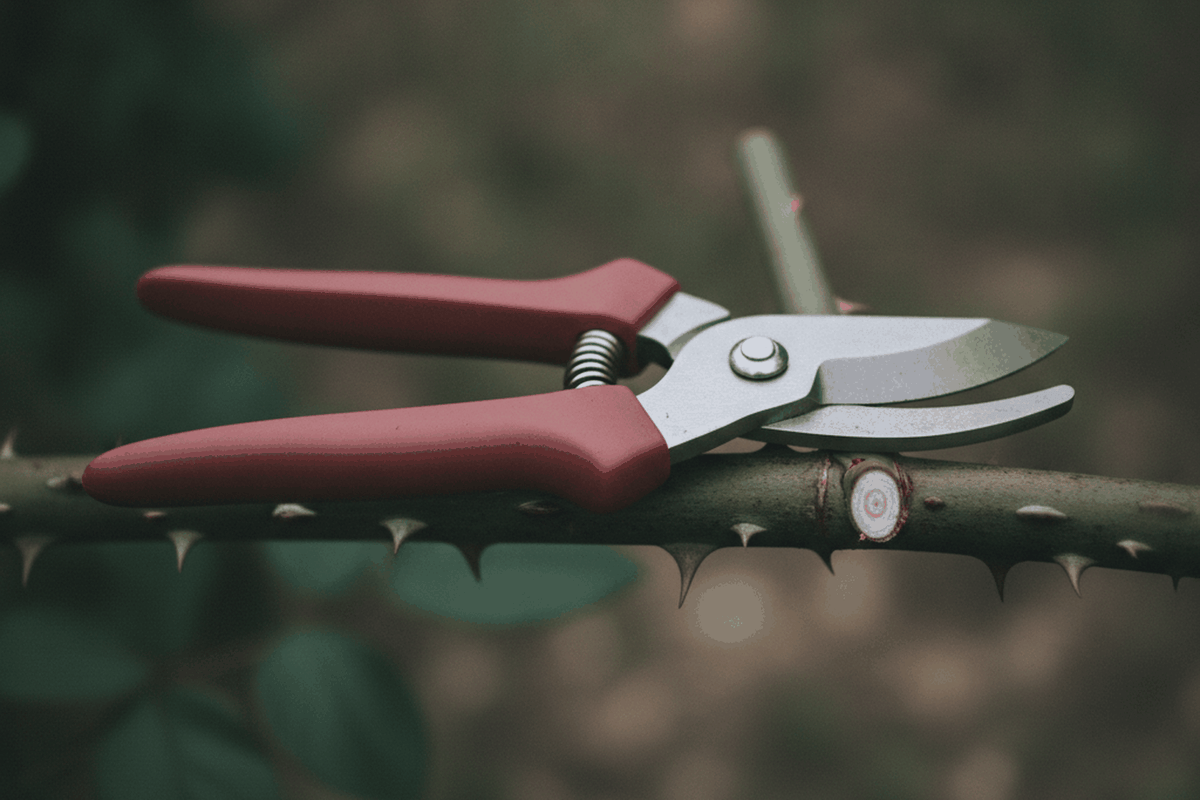
Use bypass pruners on live wood and anvil pruners on dead wood. A bypass pair cuts like scissors, one sharpened blade sweeping past a counter blade, leaving a clean wound the plant seals over quickly. An anvil pair closes a blade onto a flat plate, which crushes living tissue but concentrates force where dead wood makes that fine.
That is the whole rule, and its one exception proves it. Ratchet pruners are almost always anvil designs, because a ratchet needs something solid to press the branch against, and for weaker hands the extra leverage is worth a slightly rougher cut. The EZ Kut ratchet below is that case. Otherwise reach for bypass by default: roses, shrubs, fruit trees, and anything you expect to keep growing all heal faster from a clean scissor cut. Anvil pruners earn their keep in winter cleanup, taking out deadwood and spent canes, where crushing costs the plant nothing.
Which pruners are ratchet and anvil designs?
The ratchet pruner here is the EZ Kut (pick 3), and it doubles as the anvil pick, because its ratchet presses the branch against an anvil. Its listing states an SK5 hardened carbon steel blade, a cast aluminum body, a safety lock and cuts of up to 1.5 inches, the highest stated capacity among the hand pruners on this page. The same listing pitches the ratchet at users with arthritis or weak hands.
Grip matters as much as the mechanism when your hands are the limit. The EZ Kut listing names a non-slip cushioned handle with shock-absorbing pads, and the Felco F-2 listing names a non-slip coating and an angled head meant to ease hand and wrist strain. If squeezing at all is the problem, the BLACK+DECKER (pick 4) does it on battery power: its listing states a 1 inch cut capacity and up to 900 cuts per charge. Away from a ratchet, an anvil pair is a deadwood tool, and live stems still want bypass, as the section above explains.
What makes a pair of pruning shears worth buying?
Four things separate shears that last decades from shears that end up in the junk drawer.

- Bypass for living wood, anvil for dead wood. The best bypass pruners cut like scissors, one sharpened blade sweeping past a counter blade, and leave the clean cut that living stems need to heal. Anvil shears close a blade onto a flat plate, which concentrates force but crushes soft tissue on the way through. Prune live plants with bypass; save anvil pruners for deadwood cleanup, where crushing does not matter.
- Believe the capacity number, not your grip. Hand pruners top out at about an inch of green wood, and most are happier below that. Forcing a pruner through an oversized branch twists the blades out of alignment, and a misaligned bypass never cuts cleanly again. When a branch makes you lean, it is lopper work.
- Replaceable parts are the whole buy-once argument. A premium pruner is not better steel alone, it is the fact that the blade, the spring, and every bolt can be replaced individually. A cheap pair is disposable the day its spring flies into the grass; a rebuildable pair outlives the gardener's dog, then the gardener's fence.
- Care is five minutes, not a project. Wipe sap off after each session, oil the pivot occasionally, and sharpen only the beveled face of the blade. Sharpening the flat back face of a bypass blade ruins the mating action, which is the most common way a good pruner is destroyed at home.
Compare pruning shears: action, capacity, blade and parts
This table lines up what each pick's own Amazon listing states, so the six can be compared on the points that separate them. Where a cell says not stated, the listing is silent on it, which is not the same as a no.
| Tool | Cutting action | Stated cut capacity | Blade | Body and grip | Replaceable parts | Warranty |
|---|---|---|---|---|---|---|
| 1. Felco F-2 | Bypass | Up to 1 in. | Hardened carbon steel | Forged aluminum handles, non-slip coating | Every part | 1 year; handles: lifetime |
| 2. Fiskars Bypass Pruning Shears | Bypass | 5/8 in. | Precision-ground steel, low-friction coating | All-steel construction, non-slip grip, safety lock | Not stated | Lifetime |
| 3. EZ Kut Ratchet Pruner | Ratcheting anvil | Up to 1.5 in. | SK5 hardened carbon steel, non-stick coating | Cast aluminum, cushioned handle, safety lock | Not stated | Not stated |
| 4. BLACK+DECKER 20V MAX Cordless Pruner | Powered | 1 in. | Not stated | Cordless, battery and charger included | Blades, tool-free change | 2 year limited |
| 5. Fiskars 32" PowerGear2 Loppers | Geared bypass lopper | Up to 2 in. | Fully hardened steel, low-friction coating | SoftGrip handles | Not stated | Full lifetime |
| 6. Fiskars Micro-Tip Pruning Scissors | Micro-tip snip | Not stated (flower stems, herbs and buds) | Stainless steel | SoftGrip handle, easy action spring, sheath included | Not stated | Lifetime |
Only the Felco F-2 listing says every part can be replaced, and the F-6 compact version and the Felco lopper mentioned in the picks below say the same of theirs. The BLACK+DECKER lists a tool-free blade change, and the other four listings do not mention replacement parts. If a pair that keeps its edge is the point, the Fiskars bypass and Micro-Tip listings both claim blades that stay sharp with heavy use, and the Felco F-2 listing says its parts can be sharpened as well as replaced.
The best pruning shears, by job
The right pair depends on what you prune, how often, and what your hands have to say about it. A pair of gardening gloves that actually fits changes that last answer more than most people expect. These are the six best garden pruners worth owning.
1. Felco F-2: best pruning shears overall
The Felco F-2 has been the default pruner of professional gardeners, orchardists, and nursery crews since 1948, and for many of them it is still the best hand pruners money can buy, and the reasons have not changed: Swiss-made hardened steel that takes and holds a real edge, forged aluminum handles, a wire-cutting notch, and a cushioned stop that saves your wrist at the bottom of every cut. The clinching argument is repairability. Every single part, blade, spring, bolt, and latch, is sold as a spare, so one purchase can genuinely last a lifetime of rebuilds. It is sized for medium to large hands; if yours run smaller, the same company builds the F-6 in a compact version with identical guts. Where it loses: the price stings next to hardware-store pairs, and it is more pruner than a once-a-year deadheader needs.
2. Fiskars Bypass Pruning Shears: best budget pair
If your pruning amounts to deadheading annuals, harvesting peppers, and trimming the odd rogue stem, the classic Fiskars bypass pruner does the job for the price of a seed packet order. The 5/8 inch capacity is honest, the steel blade arrives sharp, and the self-cleaning sap groove keeps it from gumming shut mid-session. What you give up is the long game: parts are not replaceable, the blade alignment cannot be tuned as it wears, and a hard season of overreaching will finish it. Treat it as the pair you buy while deciding whether you are a pruning-shears person, or the pair that lives in the kitchen drawer for herb runs.
3. EZ Kut Ratchet Pruner: best for arthritis and weaker hands
Ratchet pruners change the physics instead of asking for a stronger grip. Squeeze the EZ Kut ratcheting anvil pruner once and the mechanism latches; squeeze again and again, and each stroke advances the blade deeper through the branch, so a cut that would take one hard crush happens in three easy ones. For gardeners with arthritis, tendonitis, or simply less hand strength than their garden demands, this is the difference between pruning and not pruning. The listing states an SK5 hardened carbon steel blade, a cast aluminum body, a safety lock and branches up to 1.5 inches thick, and EZ Kut says it suits medium to large hands best, so small hands may want a test grip first. The trade-offs are inherent to the design: it is an anvil action, so cuts on live stems are less surgical than a bypass, and the multi-squeeze rhythm is slower. As a second pair kept for thick or stubborn wood, it also spares strong hands on long days.
4. BLACK+DECKER 20V MAX Cordless Pruner: best electric pruning shears
Powered pruners went from novelty to legitimate tool once the big battery platforms picked them up. The BLACK+DECKER 20V MAX cordless pruner does the squeezing for you: the listing states a cut about once per second, up to 900 cuts per charge and a 1 inch cut capacity for wet or dry wood, with a tool-free blade change and the battery and charger in the box. This is the pick for long shrub sessions and anyone whose pruning list is measured in hours. Two honest cautions: a powered blade demands real respect for finger placement, and its 1 inch capacity is a hand pruner's, so it saves your hand rather than reaching thicker wood; past that, use the loppers below. DEWALT's 20V MAX pruner, which lists 1-1/2 inches, was our pick until its kit was out of stock on Amazon when we checked on October 10, 2026.
5. Fiskars 32" PowerGear2 Loppers: best loppers for branches over 1 inch
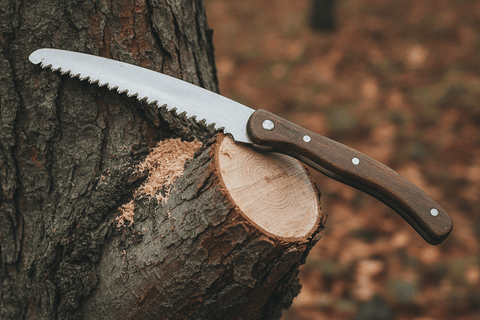
When a branch makes a hand pruner grunt, stop and reach for loppers. The Fiskars 32 inch PowerGear2 uses a cam-shaped gear at the pivot that multiplies your effort exactly where the cut is hardest, in the middle of the stroke, and walks through green branches up to its rated 2 inches without the bounce-and-pray technique thick wood usually invites. The 32 inch handles buy reach into shrub interiors and overhead water sprouts. Loppers are also the honest ceiling of DIY pruning: past 2 inches you are into pruning-saw territory, and past what a saw handles comfortably from the ground you are into calling someone insured. If you prune with Swiss loyalty, Felco makes a lighter precision lopper in the same rebuildable spirit as the F-2.
6. Fiskars Micro-Tip Pruning Scissors: best pruning shears for roses and deadheading
Some cuts are too delicate for a full pruner: reaching into a rose to nick out an inward-facing bud, harvesting basil without bruising the stem, thinning seedlings, deadheading down a border. The Fiskars Micro-Tip scissors put a fine needle point exactly where you aim it, spring back open on their own, and weigh nothing on a belt or in an apron pocket. Rose gardeners will still make structural canes-and-crossers cuts with a bypass pruner, but for the daily grooming that keeps roses blooming, the micro-tip earns its spot. It is a soft-stem specialist; ask it for woody cuts and you will fold the blades.
What are the strongest pruning shears?
Strength in a hand pruner comes down to three listing facts: how thick a branch it is rated to cut, what the blade is made of, and what the body is made of. By stated cut capacity the EZ Kut (pick 3) goes furthest at up to 1.5 inches, with an SK5 hardened carbon steel blade in a cast aluminum body, and its listing title calls it heavy duty. The Felco F-2 (pick 1) is rated to 1 inch with a hardened carbon steel blade and forged aluminum handles, and when a part wears out, its listing says that part can be replaced instead of the whole tool.
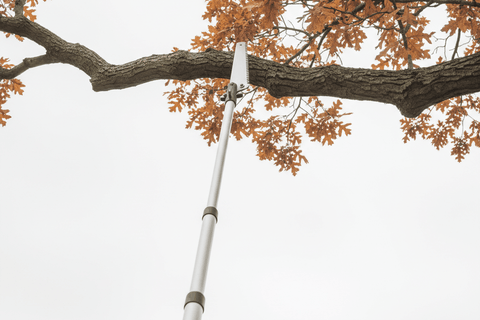
Past a hand pruner's rating, the fix is a bigger tool, not a stronger pruner. The Fiskars PowerGear2 loppers (pick 5) are rated to 2 inches, and a pruning saw takes over beyond that. For a pair that lasts more than one season, buy for the wood you cut most, keep it inside its rating, and check the warranty column in the comparison table above, where the three Fiskars listings, the Felco F-2 and the BLACK+DECKER each state a term. For thick branches that are also out of reach overhead, our pole saw guide picks a saw on a pole by job.
Frequently asked questions
Should I buy bypass or anvil pruning shears?
Bypass, unless you know why you need anvil. Bypass shears cut like scissors and leave the clean wound that living stems heal over quickly. Anvil shears crush as they cut, which is fine on dead wood and useful in ratchet designs for weaker hands, but on live plants a bypass cut is always the kinder one.
What pruning shears do professionals use?
Walk any nursery or vineyard and the answer is overwhelmingly Felco, with the F-2 as the standard issue. The reasons are practical, not sentimental: the steel holds an edge through a full season, the pivot stays tight, and every worn part can be replaced instead of the whole tool. Professionals buy once and rebuild forever.
When should I replace pruning shears instead of sharpening them?
Sharpen when cuts start tearing; replace when the blades no longer meet cleanly. A dull edge is a five-minute fix on the bevel side. But if the blades are bent, gapped, or nicked deep enough that stems fold between them, a budget pair is done, and a rebuildable pair needs a new blade rather than more sharpening.
What size branches can hand pruners cut?
About one inch of green wood at the top end, and comfortably less for most pairs; budget models are honest at 5/8 inch. Wood harder or thicker than that belongs to loppers, which handle up to about 2 inches, and then to a pruning saw. Forcing a pruner past its capacity is how blades twist out of alignment for good.
Are Felco pruners worth it?
For anyone who prunes every season, the case for a Felco is that it is built to be rebuilt. The F-2 listing states a hardened carbon steel blade, forged aluminum handles and parts that can each be replaced or sharpened, so a worn blade or a lost spring means a new part rather than a new pruner. If you deadhead a few times a year, that matters less, and the Fiskars bypass pair (pick 2), rated to 5/8 inch, covers that kind of pruning.
What is the difference between forged and bypass pruners?
They describe different things, so a pruner can be both. Bypass is the cutting action: one sharpened blade sweeps past a counter blade like scissors, which leaves the clean cut live stems need. Forged describes how the handle metal was shaped, by pressing or hammering it into form; the EZ Kut listing, by contrast, names cast aluminum. The Felco F-2 is an example of both: its listing names a bypass blade and forged aluminum handles.
What are the best pruning shears for roses?
Roses take two tools. For canes and crossing stems, use a bypass pruner: the Felco F-2 (pick 1) is rated to 1 inch and the Fiskars bypass pair (pick 2) to 5/8 inch. For deadheading and the small cuts inside the bush, the Fiskars Micro-Tip (pick 6) reaches where a full pruner will not, and its listing is written for flower stems, herbs and buds. Keep anvil pruners off live canes, since they crush the stem as they cut.
The bottom line
Most gardeners are fully equipped with two purchases: one good bypass pruner sized to their hands and one pair of loppers for everything thicker. Start with the Felco F-2 if you prune every season, or the budget Fiskars if you are still finding out, and add the ratchet, the powered pair, or the micro-tips only when your hands or your pruning list vote for them. Long sessions are kinder with good technique too; our ergonomic gardening guide covers the grip and posture side. A formal hedge is a shearing job rather than a pruning job, which our best hedge shears guide covers. And for the rest of the shed beyond pruning, our essential garden tools list ranks what actually earns its hook on the wall.
Who we are: Spear Head Spade is a family business in New Jersey, and we sell the double-patented digging spades this blog keeps mentioning, with over 600,000 sold. A pruner is only as good as its last cleaning, which is what our guide to cleaning, sharpening and storing garden tools covers. If a digging tool is the next thing you need, our spade finder narrows our three spades to one.
Disclosure: some links in this guide are affiliate links to Amazon. This is at no extra cost to you, and it never changes our honest recommendations.
Product prices and availability are accurate as of the date/time indicated and are subject to change. Any price and availability information displayed on Amazon.com at the time of purchase will apply to the purchase of this product.