As an Amazon Associate we earn from qualifying purchases. Some brands also pay us when you click or buy, so those links are ads. Full disclosure below
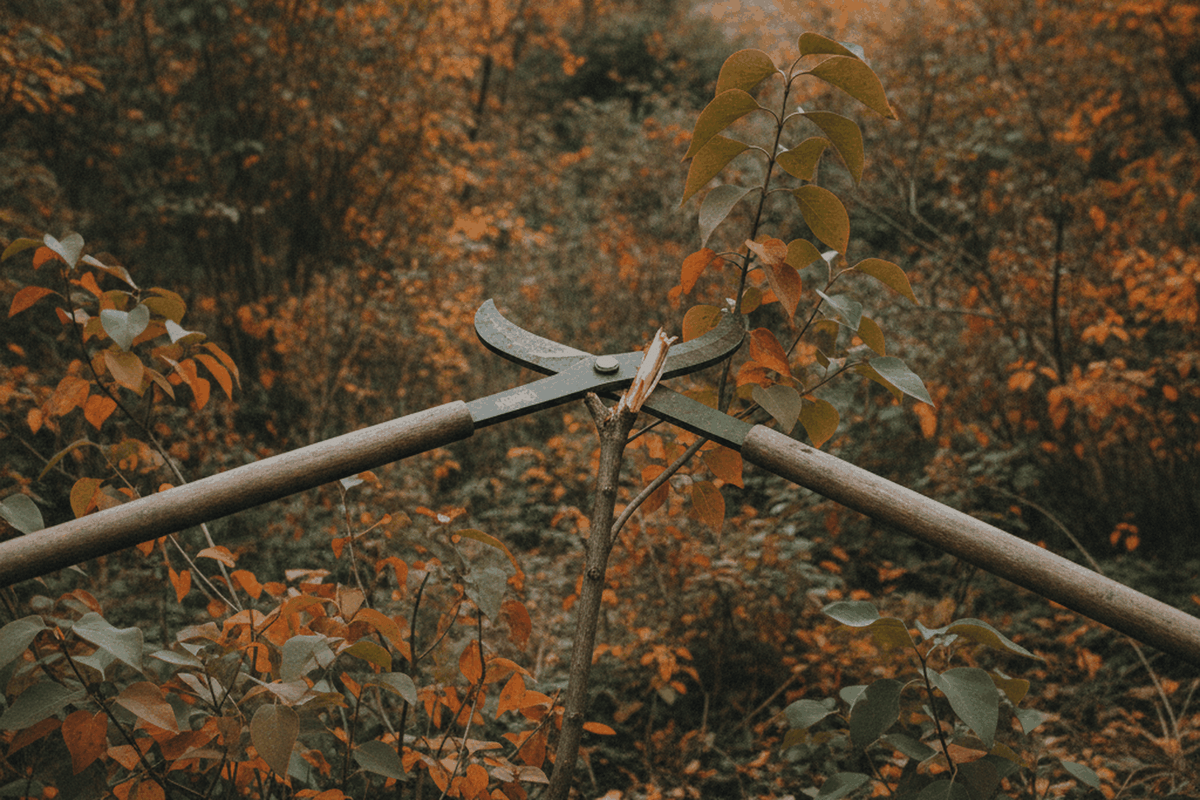
The best loppers for most yards are geared bypass loppers with a 2 inch capacity, like the Fiskars 32 inch PowerGear2, because they cut living branches cleanly and reach into a shrub without a ladder. Thick, dead branches go faster with an anvil head, tired hands do better with a ratchet, and anything past 2 inches belongs to a pruning saw.
Loppers decide whether a pruning job takes an afternoon or a weekend. They cover the gap between hand pruners, which run out of room at about an inch, and a pruning saw, which takes over past two. Match the cutting action and the handle length to the wood in your yard and most of your pruning happens standing up, one squeeze at a time. Get it wrong and you spend the day wrestling branches that a different head would have taken in a second. This page is one stop on our fall yard cleanup tools checklist, which puts every fall job in order.
Best loppers at a glance
| Lopper | Best for | Cutting action | Capacity | Where to buy |
|---|---|---|---|---|
| Fiskars 32 inch PowerGear2 (best overall) | Living wood and shrub interiors | Geared bypass | 2 inches | Check price on Amazon |
| Tabor Tools GG12A 30 inch anvil | Thick, dry, dead branches | Compound anvil | 2 inches | Check price on Amazon |
| Fiskars 32 inch Ratchet Drive anvil | Weaker grip and long sessions | Ratcheting anvil | 2 inches | Check price on Amazon |
| Fiskars 18 inch PowerGear2 | Tight shrubs and close work | Geared bypass | 1.5 inches | Check price on Amazon |
| Corona FL 3470 extendable | Reach without a ladder | Compound bypass, 21 to 33 inch handles | 1.5 inches | Check price on Amazon |
| Corona 30 inch ComfortGEL | Occasional pruning on a budget | Bypass, dual arc blade | 1.5 inches | Check price on Amazon |
What is the best lopper?
The best lopper overall is a geared bypass model around 30 to 32 inches with a 2 inch capacity, such as the Fiskars 32 inch PowerGear2. Bypass blades leave a clean cut on living branches, gearing carries you through the hard middle of the stroke, and that handle length reaches most shrub and low limb work.
Loppers vs pruners: where each tool stops
Hand pruners are a one-hand tool for stems up to about an inch. Loppers are a two-hand tool for branches from roughly an inch to two, and they put a foot or more of handle between your hands and a thorny shrub. That handle is doing two jobs at once: it multiplies your grip into cutting force, and it gets the blade somewhere your fist will not fit.
The common mistake is asking pruners to do lopper work. Forcing a pruner past its rating is how blades twist out of alignment for good, and every cut after that tears instead of slicing. If a stem makes you brace your shoulder into the squeeze, put the pruners down. Our pruning shears guide covers what belongs in the one-hand tool.
The ceiling works the same way at the other end. Loppers rated at 2 inches mean 2 inches of green wood, not seasoned oak, and a branch that makes the handles flex and bounce is a saw job. Knowing both edges of the range is most of what makes a pruning day go smoothly. And once a saw has turned a big limb into rounds you can burn, our best splitting axes guide picks the tool that splits them.
The best loppers, by job
1. Fiskars 32 inch PowerGear2: best loppers overall
Gearing is the feature most worth paying for on a lopper. The Fiskars 32 inch PowerGear2 runs modified gears and a cam mechanism, which multiplies leverage through the middle of the branch, the part of the stroke Fiskars calls the toughest to cut and the point where an ordinary lopper stalls. It is rated at 2 inches, and that rating assumes the live green wood this head is built for.
The 32 inch length is the useful compromise. It reaches into the middle of an overgrown viburnum, takes water sprouts off a low limb without a ladder, and still fits down a row of raspberry canes. The bypass head leaves the scissor cut that living stems seal over, and the coated blade sheds sap instead of gumming shut halfway through a hedge renovation. Where it loses: it is a two-hand tool of real length, so it is awkward for the close, fiddly cuts a compact pair handles easily.
2. Tabor Tools GG12A 30 inch anvil lopper: best for thick, dead branches
Dead wood does not care about a clean cut, and that changes which head you want. The Tabor Tools GG12A drives a hardened carbon steel anvil blade down onto a flat plate with compound action behind it, rated to 2 inches, and the listing is explicit about the job it was built for: dry, dead, woody growth and cut to length work. That last part matters more than people expect, because half of pruning is chopping what you removed into pieces the yard bag will take.
At 30 inches with rubberized grips it is a comfortable winter cleanup tool, and the cutting blade is replaceable rather than a wear item that retires the whole lopper. Keep it for storm damage, spent canes, and the dead interior of an old shrub. Where it loses: an anvil head crushes as it closes, so it is the wrong choice on branches you want to keep growing.
3. Fiskars 32 inch Ratchet Drive: best ratchet loppers for a weaker grip
A ratchet changes the physics instead of asking for a stronger hand. Squeeze the Fiskars Ratchet Drive lopper and the mechanism holds its ground; squeeze again and the blade advances deeper, so one hard crush becomes a series of easy squeezes. For gardeners whose hands, rather than the branch, are the limiting factor, that is the difference between pruning and calling someone.
It is also worth owning with strong hands, because the ratchet spares you on a long day. Deep into a hedge renovation, several light squeezes beat one heavy one. The head is a fully hardened, precision ground anvil blade rated to 2 inches with a low friction coating, on riveted steel handles. Where it loses: the multi squeeze rhythm is slower per cut, and being an anvil design it is not the pair to reach for on living stems.
4. Fiskars 18 inch PowerGear2: best compact loppers for tight shrubs
Short loppers solve a problem long loppers create. Inside a dense shrub, a 32 inch pair spends its time catching on the branches you are trying to keep, and you end up cutting blind. The Fiskars 18 inch PowerGear2 puts the same geared bypass head on a handle you can steer with your wrists, so you can see the collar you are cutting to and place the blade on it.
Capacity drops to 1.5 inches, which is the honest trade for the length, and it covers almost everything a shrub asks. It is also the pair to hand a shorter gardener or anyone who finds full length loppers unwieldy overhead. Where it loses: the short handles give up leverage and reach, so it stalls on the thick stuff a 32 inch pair walks through.
5. Corona FL 3470: best telescoping loppers
Telescoping handles buy reach without buying a ladder, and that is worth a lot on the low limbs of a fruit tree or the back of a border you cannot walk into. The Corona FL 3470 extends from 21 to 33 inches, so it works as a compact pair for close cuts and a long pair for overhead ones, with a compound dual pivot mechanism multiplying force behind the blade.
The head is bypass with a 1-1/2 inch cut, which suits the live pruning most people do with a reaching tool: shaping shrubs, thinning fruit wood, seasonal cleanup. If your reach problem is higher than a 33 inch handle solves, that is a pole tool job and our pole saw guide covers it. Where it loses: extended handles flex more than fixed ones, so the deepest cuts feel less solid than they do on a rigid lopper.
6. Corona 30 inch ComfortGEL: best budget loppers
If your pruning is a few hours in early spring and a cleanup in fall, you do not need a geared pair. The Corona ComfortGEL bypass lopper is the cheapest pick here and still brings the parts that matter: a dual arc bypass blade with a 1-1/2 inch capacity, a non-stick coating, and gel grips with shock bumpers so the end of a stroke does not travel straight into your palms. It measures 30 inches overall on 25 inch trapezoidal steel handles.
It is the pair to buy while you find out how much pruning you actually do, and the one to keep in the truck or lend to a neighbor without wincing. Where it loses: without gearing you supply all the force yourself, so anything near the top of its rating is real work.
How to choose loppers
Four decisions cover it, and none of them is about the brand on the handle.
- Bypass for living wood, anvil for dead. Bypass blades pass each other like scissors and leave a wound the plant seals over. Anvil blades close onto a plate and crush, which costs a dead branch nothing and gets you extra force where you need it.
- Take the capacity literally. A 2 inch rating means 2 inches of green wood. Seasoned, knotty, or dead wood at the same diameter is harder, and forcing it is how blades come out of alignment for good.
- Pick the handle length for where you prune, not the biggest number. Around 30 to 32 inches suits open shrubs and low limbs. Under 20 inches wins inside dense plants. Telescoping handles do both at the cost of some rigidity.
- Buy a mechanism if your hands need one. Gearing, compound action, and ratchets all trade speed or simplicity for less effort per cut. If grip strength is the limiting factor, that trade is the whole point.
Frequently asked questions
What is the difference between bypass and anvil loppers?
Bypass loppers cut like scissors, with a sharpened blade sweeping past a counter blade, and leave the clean wound living branches heal over. Anvil loppers close a blade onto a flat plate, which crushes tissue but concentrates force. Use bypass on anything still growing and anvil on dry, dead wood.
How thick can loppers cut?
Most loppers are rated for 1.5 to 2 inches, and the rating assumes green wood. Compact pairs are honest at 1.5 inches, and full length geared or compound pairs reach 2. Anything thicker, or dry and seasoned at that diameter, belongs to a pruning saw rather than more force on the handles.
Are ratchet loppers worth it?
They are worth it if grip strength is what limits your pruning, and they are a reasonable luxury otherwise. A ratchet breaks one hard squeeze into a series of easy ones, so cuts at the top of the capacity stop being a struggle. The cost is speed, since every cut takes several strokes.
How do you sharpen loppers?
Sharpen only the beveled outside face of the cutting blade, following the angle already ground into it, with a mill file or a diamond hone drawn in one direction. Ten strokes is usually enough. Leave the flat inner face alone, since filing it destroys the mating fit, then wipe the blade with oil.
Should I use loppers or a pruning saw?
Use loppers up to about 2 inches of green wood and a pruning saw above that. Loppers are faster and cleaner within their range because one stroke finishes the cut. A saw does not care how thick or how dry the branch is, and it fits into crotches where lopper handles cannot open.
The bottom line
Most yards are covered by one full length geared bypass pair, and the Fiskars 32 inch PowerGear2 is the one to buy first. Add the anvil pair if you clean up a lot of dead wood, the ratchet if your hands ask for it, and the compact pair once you have fought a dense shrub with long handles one too many times. Above 2 inches, hand the job to our pruning saw picks, and for a formal hedge, shearing is a different tool entirely, which our hedge shears guide covers.
A word on who wrote this: we are Spear Head Spade, a family business in New Jersey. We sell double-patented spades and one long-handled hoe, with over 600,000 sold. Loppers are not part of our own line, but blade care is the same on every tool, and our guide to cleaning, sharpening and storing garden tools covers it. The roots under the same shrub are a different job, and the tool we take to those is the 40 inch D-grip spade.
Disclosure: some links in this guide are affiliate links to Amazon. This is at no extra cost to you, and it never changes our honest, use-based recommendations.
Product prices and availability are accurate as of the date/time indicated and are subject to change. Any price and availability information displayed on Amazon.com at the time of purchase will apply to the purchase of this product.