As an Amazon Associate we earn from qualifying purchases. Some brands also pay us when you click or buy, so those links are ads. Full disclosure below
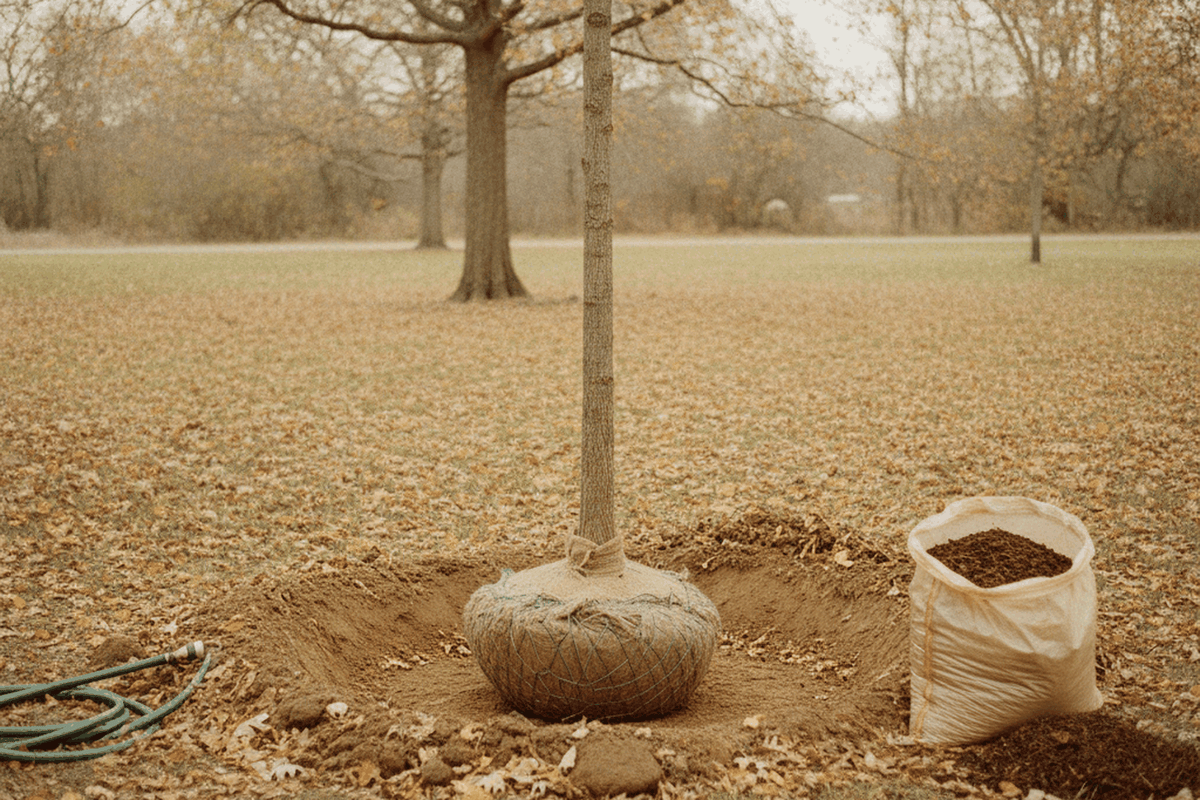
To plant a tree, scrape soil off the root ball until you find the root flare, then dig a hole three to five times the ball's width and no deeper than the flare. Set the tree with the flare level with grade or slightly above, backfill with native soil, water deeply, then mulch, keeping it off the trunk.
Most trees that fail in the first few years were not killed by pests or weather. They were planted wrong, usually too deep, and then spent years slowly declining while everyone blamed the drought. The planting itself takes an afternoon. Getting it right is mostly about two measurements and resisting some advice that sounds generous.
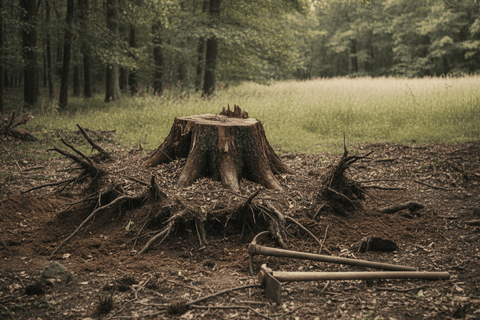
This guide covers when to plant, how to find the depth that actually matters, and the aftercare that decides whether a young tree establishes or just survives. If the new tree is replacing one you took down, our stump removal guide covers clearing the old root plate first. Once the tree is established, our pole saw picks cover the high limbs you will prune from the ground.
When to plant a tree
The best window is when the tree is dormant and the soil is not: fall after leaf drop, or early spring before bud break. Roots keep growing at soil temperatures well below what the canopy needs, so a fall-planted tree spends the whole winter quietly establishing while asking nothing of its leaves.
Fall generally wins in climates with hot summers, because the tree gets months of root growth before it has to support a canopy in July. Spring is the safer choice where winters are severe or where the ground freezes hard early, since a fall planting there may not root in before the soil locks up.
Avoid planting in the middle of summer if you can. It is not impossible, but it commits you to watering diligently through the hardest weeks of the year, and a missed fortnight can undo the whole thing.
The measurement almost everyone gets wrong
Find the root flare before you dig anything. The flare is the point where the trunk widens and the first structural roots branch out. On a healthy tree it is obvious. On nursery stock it is very often buried under several inches of potting soil, because the tree was potted up more than once and each pass added depth.

Scrape soil away from the top of the root ball with your fingers until you find that flare. It is not unusual to remove two or three inches. Whatever you uncover is your true soil line, and it is the reference for everything that follows. Measure from the flare to the bottom of the root ball. That number, not the height of the pot, is your hole depth.
Planting too deep is the single most common way to kill a tree slowly. Bark buried below grade stays damp, and bark is not built for that. The tree may look fine for three or four years before it declines, which is exactly why the cause so rarely gets identified.
How to plant a tree, step by step
1. Dig wide, not deep
Make the hole three to five times the width of the root ball and no deeper than the measurement you just took. Two to three times is the workable minimum in easy soil, but wider genuinely helps, especially in anything compacted. Wide matters because new roots spread laterally through the loosened soil at the edges. Deep actively hurts, because disturbed soil under a heavy root ball settles and the tree sinks below grade.
Slope the sides rather than cutting a clean cylinder. Smooth vertical walls in clay soil can glaze over and behave like the side of a pot, discouraging roots from crossing into native ground.
2. Roughen the walls and check the depth
Score the sides of the hole with your blade so the edge is broken rather than polished. Then set the tree in and lay a straight edge across the hole: a spade handle or a length of timber works. The root flare should sit level with the surrounding grade or slightly above it, never below. In heavy clay or anywhere that holds water, aim for an inch or two proud. For the blade that scores those walls and opens the hole in clay, rock or roots, our best digging shovel guide picks one by job.
Check this before you backfill, not after. Lifting a settled tree to correct depth is far more damage than getting it right the first time.
3. Free the roots
For container stock, look for roots circling the inside of the pot. Tease them outward, and cut cleanly through any that wrap the trunk or circle the ball. It feels destructive and it is the right call: a circling root left in place can girdle the trunk years later.
For balled and burlapped stock, set the tree in the hole first, then remove twine, cut away the wire basket down at least to the middle of the ball, and pull the burlap back off the top. Twine left around the trunk is a slow strangulation, and synthetic burlap never rots.
4. Backfill with what came out
Use the native soil you dug. This is the advice that sounds stingy and is not. A hole backfilled with rich compost creates a pocket of easy soil surrounded by hard ground, and roots tend to stay in the comfortable pocket instead of spreading. The tree ends up effectively container-grown in the earth, less stable and less drought-tolerant.
Backfill in layers, firming gently with your hands or the flat of your foot as you go. Firm enough that the tree does not rock, loose enough that you are not compacting the soil into a brick. Water halfway through to settle the soil and drive out air pockets, then finish filling.
5. Build a berm and water deeply
Form a low ring of soil around the edge of the planting area to hold water over the root ball. Then water slowly and thoroughly. A new tree wants deep, infrequent soaking rather than a daily splash, which only wets the top inch and encourages shallow rooting.
6. Mulch, and keep it off the trunk
Spread mulch over the planting area to a depth of two to three inches, no more, then pull it back so there is a clear gap around the trunk. Mulch piled against bark holds moisture exactly where you spent all that effort making sure moisture would not sit. The volcano of mulch you see in parking lots is a slow way to rot a trunk.
What about staking
Most trees do not need it. A trunk that moves in wind develops taper and strength, and a rigidly staked tree grows thinner and weaker than one left to flex.
Stake only if the tree genuinely cannot stand: a large canopy on a small root ball, a very exposed site, or loose sandy soil. If you do stake, tie low and loose enough that the trunk can still move, use a broad flexible material rather than wire or rope, and take the stakes out after one growing season. Stakes left on for years girdle the trunk and defeat the purpose entirely. A young trunk faces a second threat in autumn, because bucks rub the bark off saplings at exactly this diameter, and our deer repellent picks cover the guards and sprays that keep them off it.
Aftercare, the part that actually decides it
Water is the whole game in year one. A newly planted tree has a root system sized for a pot and a canopy sized for a tree, and it cannot draw what it needs until roots extend into surrounding soil. Water deeply once or twice a week through the first growing season, more in heat, less in cool wet spells. Check the soil rather than following a schedule blindly: dig a finger in at the edge of the root ball, and water if it is dry a couple of inches down.
Hold off on fertilizer. A newly planted tree is putting energy into roots, and pushing top growth with nitrogen works against that. If the soil is genuinely deficient, deal with it in the second year once the tree is established.
Do not prune beyond removing damaged or dead wood. The old advice to cut back the canopy to compensate for root loss has been out of favor for decades: leaves are what fund root growth, and removing them slows establishment. For those few cuts on small branches, a sharp bypass pruner leaves the clean cut a young tree seals over, and our pruning shears guide picks one by job.
Tools for this job
One spade does most of it, and the rest is only needed in the situations the guide describes.

Spear Head Spade 40 inch D-Handle Garden Spade
One digging spade covers the whole job: cutting the wide hole, scoring the walls, slicing roots and levering the root ball into position.
FCENDS steel tree stake kit with straps
Only for a tree that genuinely cannot stand on its own, tied low and loose with the broad straps rather than wire, and pulled after one growing season.
Check price on AmazonOldcastle cedar mulch, 2 cubic feet
Bagged mulch for the two to three inch layer over the planting area, pulled back so it never touches the trunk.
Check price on AmazonCorona RazorTOOTH 7 inch folding pruning saw
Cuts cleanly through circling roots on a larger root ball and removes dead or damaged wood, which is the only pruning a new tree needs.
Check price on AmazonCommon questions
How deep should you plant a tree?
No deeper than the distance from the root flare to the bottom of the root ball, so the flare sits at or slightly above the surrounding grade. In heavy or wet soil, plant an inch or two high. Deeper than the flare is the most common and most damaging planting error.
How wide should the hole be?
Three to five times the width of the root ball, with sloped sides, and two to three times as an absolute minimum. New roots spread outward rather than down, so width is exactly what you are buying with the extra digging.
Should you amend the soil when planting a tree?
Generally no. Backfill with the native soil that came out of the hole. Heavily amended backfill creates a rich pocket that discourages roots from spreading into the surrounding ground, which leaves the tree less stable and more drought-sensitive.
How often should you water a newly planted tree?
Deeply once or twice a week through the first growing season, adjusting for heat and rainfall, rather than lightly every day. Check the soil a couple of inches down at the edge of the root ball and water when it is dry there.
What tool do you need to plant a tree?
One good digging spade covers it: cutting the hole, scoring the walls, slicing any roots you hit, and levering the root ball into position. Our D handle garden spade is double patented, with a blade curved like a shovel to carry soil and an edge pointed and sharpened like a spade to cut, which is the combination this job actually asks for. If you are digging in root-heavy ground, our guide on cutting through roots covers the technique.
If you are planting into clay
Heavy clay changes how a planting hole behaves: it drains slowly, the walls glaze over, and the tree is far more likely to sit wet. Our guide to improving clay soil covers what genuinely helps, and the two widely recommended amendments that the evidence does not support.
Disclosure: some links in this guide are affiliate links to Amazon. This is at no extra cost to you, and it never changes our honest, use-based recommendations.
Product prices and availability are accurate as of the date/time indicated and are subject to change. Any price and availability information displayed on Amazon.com at the time of purchase will apply to the purchase of this product.