As an Amazon Associate we earn from qualifying purchases. Some links are paid. Disclosure
Our top picks
Best overall
1. Vego Garden 9-in-1 Modular Metal Raised Bed
Best for: Most yards, for a bed set on the ground
Best cedar bed
2. Gardener's Supply Deep Root Cedar Bed
Best for: A wood bed that sits on the ground
Best big bed over good soil
3. Land Guard 8 x 4 Foot Galvanized Raised Bed
Best for: A big, low bed on soil that roots can grow into
The best raised garden bed for most yards is the Vego Garden 9-in-1 Modular Metal Raised Bed, a kit of coated steel panels, 17 inches tall, that bolts together into any of nine layouts from 2 by 2 feet to 5 by 5 feet. BHG names this nine-layout Vego kit its best overall, by its search listing, and so does Popular Mechanics among metal beds. For wood, Wirecutter's top pick, by its search listing, is Gardener's Supply's Deep Root cedar line; Wirecutter's search listing describes the 4 by 8 foot size, and the one linked here is the Gardener's Supply Deep Root Cedar Bed in 2 by 8 feet, cedar boards in aluminum corners with a 14.5 inch planting depth. To garden standing up on a patio or deck, the Best Choice Products Mobile Elevated Planter stands 32 inches tall on locking wheels.
The other three picks cover a big, low bed over decent soil, a self-watering bed for a balcony, and a fabric bed you can fold away. Below, the beds sit side by side in one table, a second table works out how much soil and how many bags each size takes, and a third sets out what university extension services say about metal, cedar, treated wood, fabric and plastic, each named where it appears.
Jump to: Beds side by side | How much soil | What to fill it with | Materials and safety | Height and width | Setting one up
Start here: which raised garden bed for your yard
- Most yards, for a bed set on the ground: Vego Garden 9-in-1 Modular Metal Raised Bed (pick 1), 17 inches deep in nine layouts.
- A wood bed that sits on the ground: Gardener's Supply Deep Root Cedar Bed (pick 2).
- A big, low bed on soil that roots can grow into: Land Guard 8 x 4 Foot Galvanized Raised Bed (pick 3).
- Gardening standing up, or on a patio or deck: Best Choice Products Mobile Elevated Planter (pick 4).
- A balcony or small patio where daily watering is hard: Keter Splendor Self-Watering Raised Bed (pick 5).
- A bed that goes up in an afternoon and folds away when empty: Smart Pots Big Bag Bed (pick 6).
Making one from lumber instead? Our guide to building a raised garden bed covers the dimensions, the lumber and the fill.
| Pick | Material | Size as linked | Soil depth | Best for | Our verdict | Where to buy |
|---|---|---|---|---|---|---|
| 1. Vego Garden 9-in-1 Modular Metal Raised BedBest overall | Coated steel, painted | 9 layouts, 2 x 2 ft to 5 x 5 ft | 17 in | Most yards, for a bed set on the ground | Coated steel panels, 17 inches tall, that bolt into nine layouts, and the best overall pick of BHG (by its search listing) and, among metal beds, Popular Mechanics. | Check price on Amazon |
| 2. Gardener's Supply Deep Root Cedar BedBest cedar bed | Cedar, aluminum corners | 2 x 8 ft | 14.5 in | A wood bed that sits on the ground | From the Deep Root cedar line that is Wirecutter's top pick by its search listing: cedar boards in aluminum corners with a 14.5 inch planting depth. | Check price on Amazon |
| 3. Land Guard 8 x 4 Foot Galvanized Raised BedBest big bed over good soil | Galvanized steel | 8 x 4 ft oval | 12 in | A big, low bed on soil that roots can grow into | An open-bottomed 8 by 4 foot oval of galvanized steel, 1 foot tall, from the Land Guard oval line an NBC Select editor has kept through multiple growing seasons (NBC does not give her size). | Check price on Amazon |
| 4. Best Choice Products Mobile Elevated PlanterBest for gardening standing up | Fir, with a liner | 48 x 24 in, 32 in tall | 8 in | Gardening standing up, or on a patio or deck | A fir planter 32 inches tall on locking wheels, Bob Vila's pick with wheels, with an 8 inch deep box for greens and herbs. | Check price on Amazon |
| 5. Keter Splendor Self-Watering Raised BedBest for a balcony or small patio | Resin, water reservoir | 44.9 x 19.4 in, 29.8 in tall | 11.5 in | A balcony or small patio where daily watering is hard | A 31.7 gallon resin planter on legs with a water reservoir and gauge, The Spruce's best overall by its search listing and Bob Vila's self-watering pick. | Check price on Amazon |
| 6. Smart Pots Big Bag BedBest fabric bed | Fabric | 50 in round | 12 in | A bed that goes up in an afternoon and folds away when empty | A 50 inch round fabric bed that unfolds and fills with no assembly and holds 100 gallons of mix. | Check price on Amazon |
The best raised garden beds, by job
1. Vego Garden 9-in-1 Modular Metal Raised Bed: best overall
Best overall
Best for: Most yards, for a bed set on the ground
Vego Garden 9-in-1 Modular Metal Raised Bed
- Material: Coated steel, painted
- Size as linked: 9 layouts, 2 x 2 ft to 5 x 5 ft
- Soil depth: 17 in
Coated steel panels, 17 inches tall, that bolt into nine layouts, and the best overall pick of BHG (by its search listing) and, among metal beds, Popular Mechanics.
Vego Garden's 9-in-1 kit is a set of steel panels and posts that bolt together into one of nine beds with rounded corners, all 17 inches tall, among them 2 by 8 feet, 3.5 by 6.5 feet and 5 by 5 feet. Vego calls the material VZ 2.0: steel coated with zinc, magnesium and aluminum, then painted, which it says lasts more than 20 years, and it calls the coating food-safe and USDA-compliant. The beds have no bottom, a rubber strip covers the top edge, and Vego says the kit goes together in under 40 minutes with the wrench that comes with it. By Vego's figures, the 2 by 8 foot layout holds 23 cubic feet of soil and the 5 by 5 foot layout 35.
Why it is the pick: two testers put this kit first. BHG names the Vego Garden kit its top raised garden bed because it can be set up nine different ways, by its search listing. Popular Mechanics makes the same nine-layout kit its best overall metal bed after its digital designer, Hunter Young, grew in one in her backyard for a year, in rain and through all four seasons. Young liked "the rubber lip that came with it to prevent the top edge from being sharp" and called it a good bed for a renter. Wirecutter's pick for harsh weather is Vego's larger 10-in-1 Jumbo kit at the same 17 inch height, by its search listing.
Good to know: Popular Mechanics lists one con, that the bed has to be built panel by panel. At 17 inches it takes a lot of soil: by our arithmetic, the 2 by 8 foot layout needs 16 bags of 1.5 cubic feet (see how much soil). Vego suggests a mix of 60 percent topsoil, 30 percent compost and 10 percent potting soil, and says to leave rocks out of the bottom, since they raise water saturation rather than improve drainage. For what extension services say about zinc and coated steel next to vegetables, see materials and safety.
2. Gardener's Supply Deep Root Cedar Bed: best cedar bed
Best cedar bed
Best for: A wood bed that sits on the ground
Gardener's Supply Deep Root Cedar Bed
- Material: Cedar, aluminum corners
- Size as linked: 2 x 8 ft
- Soil depth: 14.5 in
From the Deep Root cedar line that is Wirecutter's top pick by its search listing: cedar boards in aluminum corners with a 14.5 inch planting depth.
Gardener's Supply makes its Deep Root beds from 1 inch cedar boards, pre-cut to length, that slip into four powder-coated aluminum corners and screw in place, with a 14.5 inch planting depth in every size. The linked listing is the 2 by 8 foot bed, which Gardener's Supply says holds 480 quarts, or 18.7 cubic feet, of mix. On its own site the same line comes 2, 3 and 4 feet wide, and the 4 by 8 foot bed holds 40 cubic feet by its figure. Gardener's Supply suggests the depth for deep-rooted plants such as tomatoes and blueberry bushes.
Why it is the pick: by its search listing, it is Wirecutter's top pick. Wirecutter says it "tested six premade kits and built one DIY bed at a local school," and its search listing describes the Deep Root bed as 4 by 8 feet and nearly 15 inches deep. Angela Judd of Growing in the Garden put up two 2 by 6 foot Deep Root beds: the pre-cut boards were straight, both beds went together in under an hour, and she likes that the aluminum corners can be used again if the cedar ever needs replacing.
Good to know: in our Amazon searches on October 30, 2026 we found the 2 foot wide sizes, not the 4 foot one Wirecutter describes. For a larger cedar bed, BHG names a Greenes Fence cedar bed its best large raised garden bed, by its search listing. Level the ground first, as Judd advises. On how long cedar lasts, Oregon State University Extension says cedar and redwood resist decay and outlast pine and fir, while the University of Georgia Extension notes some question about cedar's life when it sits in direct contact with soil. The Amazon listing gives the 2 by 8 foot bed's capacity as about 20 cubic feet; we use the maker's 18.7.
3. Land Guard 8 x 4 Foot Galvanized Raised Bed: best big bed over good soil
Best big bed over good soil
Best for: A big, low bed on soil that roots can grow into
Land Guard 8 x 4 Foot Galvanized Raised Bed
- Material: Galvanized steel
- Size as linked: 8 x 4 ft oval
- Soil depth: 12 in
An open-bottomed 8 by 4 foot oval of galvanized steel, 1 foot tall, from the Land Guard oval line an NBC Select editor has kept through multiple growing seasons (NBC does not give her size).
Land Guard's kit is an oval of corrugated galvanized steel sheet with an open bottom, 8 feet long, 4 feet wide and 1 foot tall. By the listing, the sheet averages 0.78 millimeters thick and reaches 1.56 at its thickest, the bed holds 28.56 cubic feet of soil, and it takes about 5 minutes to assemble. Popular Mechanics notes that the corrugated sides and oval shape are meant to hold up against the push of wet soil. The same bed comes 4 by 2 and 6 by 3 feet, and in silver plus several colors.
Why it is the pick: on ground that roots can grow down into, a foot of depth is enough for a big vegetable bed. Penn State Extension's York County Master Gardeners call 4 by 8 feet by 1 foot deep a popular size, deep enough for annual plant roots and roomy enough for six to eight large tomato plants. NBC Select senior editor Nikki Brown has two Land Guard oval beds (NBC does not give her size): "I've had these beds through multiple growing seasons and they're holding up beautifully," she says, and she finds them light, easy to put together, and handy for clipping on netting against squirrels. By its search listing, Wirecutter found the Land Guard kit (it names no size) "just as easy to assemble as the other high-quality metal beds."
Good to know: Popular Mechanics, which chose it from research rather than a hands-on test, lists one con: assembly is tedious. Utah State University Extension says a raised bed shallower than 12 inches should have no bottom so roots can reach the soil below, which this one has, and the University of Minnesota Extension says the taller the bed, the more often it needs water, so a 1 foot bed asks less of you than a 2 foot one. Any raised bed still dries out faster than the ground, Minnesota adds.
4. Best Choice Products Mobile Elevated Planter: best for gardening standing up
Best for gardening standing up
Best for: Gardening standing up, or on a patio or deck
Best Choice Products Mobile Elevated Planter
- Material: Fir, with a liner
- Size as linked: 48 x 24 in, 32 in tall
- Soil depth: 8 in
A fir planter 32 inches tall on locking wheels, Bob Vila's pick with wheels, with an 8 inch deep box for greens and herbs.
This is a fir planter box on legs and four locking wheels, 48 inches long, 24 wide and 32 tall, with a storage shelf 15 inches off the ground. Best Choice Products gives the planter an 8 inch depth and a 100 pound weight capacity, and includes a liner that keeps the soil off the wood; four holes let water drain out. The linked listing is the acorn brown version; the maker sells the same planter in natural, gray, pink, white, sage and black.
Why it is the pick: it puts the soil at standing height and moves to the sun. Bob Vila's testers, who assembled 12 raised beds, named it their pick with wheels: the slats and sides "fit like a glove," the wheels rolled smoothly and locked securely, and they kept garden tools and a big bag of potting mix on the shelf. The University of Minnesota Extension lists a more comfortable working height as one reason to garden in a raised bed, and says 27 inches is generally comfortable for wheelchair users. The listing Bob Vila links is model SKY5732, which Best Choice Products sells on the same product page as the SKY6625 linked here.
Good to know: it is a shallow box. Bob Vila puts the planting bed at about 9 inches deep, and the University of Maryland Extension says beds on hard surfaces need at least 8 inches for greens, beans and cucumbers, and 12 to 24 inches for peppers, tomatoes and squash, so plan on greens, herbs and flowers. Bob Vila says the fiber liner "probably wouldn't be reusable after a few months" and suggests buying fiber mulch to cut new liners. Fir is not a long-lived wood outdoors: Utah State University Extension says fir and other untreated lumber rot and break down within a few years. Bob Vila notes it would be hard to move by hand once full of wet soil, which is what the wheels are for.
5. Keter Splendor Self-Watering Raised Bed: best for a balcony or small patio
Best for a balcony or small patio
Best for: A balcony or small patio where daily watering is hard
Keter Splendor Self-Watering Raised Bed
- Material: Resin, water reservoir
- Size as linked: 44.9 x 19.4 in, 29.8 in tall
- Soil depth: 11.5 in
A 31.7 gallon resin planter on legs with a water reservoir and gauge, The Spruce's best overall by its search listing and Bob Vila's self-watering pick.
Keter's Splendor is a 31.7 gallon resin planter on legs with a woven rattan look, 44.9 inches wide, 19.4 deep and 29.8 tall by the listing. A reservoir under the soil holds water, a gauge shows when it needs filling, and a drain plug lets out any excess; Keter gives the planting depth as 11.5 inches and the reservoir as roughly 8 gallons. Keter says the resin will not rust, peel or rot and backs the bed with a limited 2-year warranty, and the listing says it works indoors and out.
Why it is the pick: a reservoir stretches the time between waterings, which is what a planter on a hot balcony needs. By its search listing, it is The Spruce's best raised garden bed overall, and the reviewer's favorite has provided more than five years of use. Bob Vila calls it its best self-watering bed: setup took minutes, with legs that snap on, and the floating indicator shows plainly when to refill. Its tester adds, "My parents have had this exact planter sitting in full Florida sun for over five years," with very little fading.
Good to know: it is a small bed. Keter gives its capacity as 31.7 gallons, about 4.2 cubic feet if all of it were soil (our arithmetic); Bob Vila grew a compact herb garden of cilantro, basil and parsley in it. Bob Vila's two cons are that plastic will not appeal to everyone and that the bed is smaller than an in-ground style one. For winter outdoors, Keter suggests opening the drain plug so water does not collect inside.
6. Smart Pots Big Bag Bed: best fabric bed
Best fabric bed
Best for: A bed that goes up in an afternoon and folds away when empty
Smart Pots Big Bag Bed
- Material: Fabric
- Size as linked: 50 in round
- Soil depth: 12 in
A 50 inch round fabric bed that unfolds and fills with no assembly and holds 100 gallons of mix.
The Big Bag Bed is a round, flat-bottomed bed of stiff fabric that you unfold and fill, 50 inches across and 12 inches tall, giving 13.5 square feet to plant in, by Smart Pots. Smart Pots says it holds 100 gallons, which its own chart puts at 13.37 cubic feet, about half a cubic yard. Water drains through the fabric, so Smart Pots suggests a plastic sheet or tray under it on a wooden deck. The smaller sizes are a 36 inch Junior and a 24 inch Mini.
Why it is the pick: it is the only pick with no assembly at all, and the only one that folds flat when empty. Smart Pots says you can have it "filled and planted in about an hour." Gardening Products Review grew a dense winter crop of arugula, sorrel, scallions and greens in one for six months in the Southwest, and three javelinas fighting in it one night did it no major harm. Its editor has left one outdoors through Connecticut winters, full of frozen potting mix, and found it "no worse for wear the next spring." The reviewer also saw them in use on a Quebec City rooftop garden, where they are emptied and folded away for winter.
Good to know: choose the spot first, since the reviewer found it could not easily be moved once full and had to level a patch of sloping yard for it. The middle of the 50 inch bed was a stretch to reach, and the reviewer would pick the 36 inch Junior next time. Fabric lets water through: moisture weeps out the sides, and in the heat and very dry air of a Southwest summer the black sides ran hot and the soil dried too fast, so the reviewer keeps it for the cool season there. The University of Minnesota Extension adds that grow bag fabric is usually made from plastic, that little research exists on microplastics getting into the soil from it, and that grow bags are best handled like containers rather than raised beds.
How we chose these
We compared the raised beds in Amazon's catalog by what their makers and listings say: material and coating, size, soil depth, whether the bottom is open, how much soil the bed holds and how it goes together. Then we read the reviews by testers who set the beds up and grew in them: Bob Vila, Popular Mechanics, Veranda, NBC Select, Growing in the Garden and Gardening Products Review. Wirecutter, BHG and The Spruce test raised beds too, but their articles would not load for us, so for them we cite only the pick labels and the lines their search listings show.
Our floor, for the picks and for the notes under Also considered: in stock on Amazon and sold new by Amazon or the seller named on the listing, when we checked on October 30, 2026. Each pick met it. Specs come from the maker pages and listings, named where they appear. Advice on materials, soil, depth and setup comes from land-grant extension services at Minnesota, Oregon State, Maryland, Iowa State, Utah State, Georgia and Penn State, each named where it appears.
Also considered: beds that missed the list and why
Vego Garden 10-in-1 Jumbo and the taller Vego beds. Wirecutter's pick for harsh weather, by its search listing, is the 17 inch 10-in-1 Jumbo, a bigger kit in the same steel, and Vego also sells 26 and 32 inch tall beds for gardening with less bending. Pick 1 is the 9-in-1 kit that BHG (by its search listing) and Popular Mechanics chose; the Jumbo adds layouts, and the taller beds suit anyone who would rather stand.
Birdies modular metal beds. Wirecutter's article includes a Birdies large modular metal bed, by its search listing. We did not find a Birdies bed in our Amazon searches on October 30, 2026.
Sunnydaze galvanized bed. Bob Vila's pick for backyards, a hexagonal galvanized bed with a 16 inch depth. The listing Bob Vila links was out of stock on Amazon on October 30, 2026.
Veikous large cedar bed. Bob Vila's best overall, a cedar bed on legs that measures 70.8 by 31.4 inches and 28.5 inches high. We could not match that model to an Amazon listing with confidence, so it is not linked here.
Back to the Roots fabric raised bed. Veranda's testers found Back to the Roots' fabric grow bag bed light, durable and a good starter garden. The Back to the Roots fabric raised bed we found on Amazon was listed with only limited stock on October 30, 2026, short of our floor; pick 6 covers fabric beds.
Keter Urban Bloomer. A 12.7 gallon elevated self-watering planter, which Veranda's testers found kept its color through a steamy summer. Pick 5 is the larger Keter, at 31.7 gallons.
Best Choice Products 30 inch elevated planter. Veranda's starter pick is a 30 inch tall Best Choice Products fir planter. Pick 4 is the 32 inch version on wheels that Bob Vila tested.
Composite kits. Frame It All's composite raised bed kits met our floor, but none of the tests we read covered them. See the materials table for what the University of Georgia Extension says about composite lumber.
The beds side by side: material, size, depth and soil
The makers describe their beds in different terms, so here is what each maker page or listing gives, side by side, with the source noted where it is not the maker's own page.
| Pick | Material | Size as linked | Soil depth | Bottom | Soil it holds |
|---|---|---|---|---|---|
| 1. Vego Garden 9-in-1 | Coated steel (zinc, magnesium and aluminum), painted | 9 layouts, 2 x 2 ft to 5 x 5 ft | 17 in | Open | 6 to 35 cu ft by layout; 23 cu ft at 2 x 8 ft |
| 2. Gardener's Supply Deep Root | Cedar, aluminum corners | 2 x 8 ft | 14.5 in | Open | 18.7 cu ft |
| 3. Land Guard 8 x 4 | Galvanized steel, 0.78 mm average (listing) | 8 x 4 ft oval | 12 in | Open | 28.56 cu ft (listing) |
| 4. Best Choice Products Mobile | Fir, with a liner, on locking wheels | 48 x 24 in, 32 in tall | 8 in | Closed, 4 drain holes | Up to about 5.3 cu ft (our arithmetic, from the outside size) |
| 5. Keter Splendor | Resin, water reservoir | 44.9 x 19.4 in, 29.8 in tall (listing) | 11.5 in | Closed, drain plug | 31.7 gallon capacity; at most about 4.2 cu ft (our arithmetic) |
| 6. Smart Pots Big Bag Bed | Fabric | 50 in round | 12 in | Fabric, drains through | 100 gallons, 13.37 cu ft |
What it shows: picks 1 to 3 have open bottoms, so roots can carry on into the ground below; picks 4 and 5 are closed boxes that drain through holes or a plug, for patios and decks; pick 6 drains through its fabric. The Vego and Gardener's Supply beds are the deepest here, at 17 and 14.5 inches. The Vego kit's biggest layout holds the most soil, 35 cubic feet, and picks 4 and 5 hold the least, about 5 cubic feet or less.
How much soil does a raised bed take?
More than most people expect. The arithmetic: length times width times depth, all in feet, gives cubic feet, and a depth in inches divided by 12 gives feet. Divide the cubic feet by the bag size for the number of bags, rounding up, since a part bag still has to be bought, and by 27 for cubic yards, since a cubic yard is 3 feet on each side. For a round bed, use 3.14 times the radius squared in place of length times width. Bagged mixes come in several sizes; Sun Gro, for one, sells its Black Gold mix in 1, 1.5 and 2 cubic foot bags. All figures below are our arithmetic.
| Bed | Arithmetic | Cubic feet | Bags of 1.5 cu ft | Bags of 2 cu ft | Cubic yards |
|---|---|---|---|---|---|
| 2 x 4 ft, 12 in deep | 2 x 4 x 1 | 8.0 | 6 | 4 | 0.30 |
| 4 x 4 ft, 12 in deep | 4 x 4 x 1 | 16.0 | 11 | 8 | 0.59 |
| 2 x 8 ft, 14.5 in deep (pick 2) | 2 x 8 x (14.5 / 12) | 19.3 | 13 | 10 | 0.72 |
| 2 x 8 ft, 17 in deep (pick 1, 2 x 8 layout) | 2 x 8 x (17 / 12) | 22.7 | 16 | 12 | 0.84 |
| 4 x 8 ft, 6 in deep | 4 x 8 x 0.5 | 16.0 | 11 | 8 | 0.59 |
| 4 x 8 ft, 12 in deep | 4 x 8 x 1 | 32.0 | 22 | 16 | 1.19 |
| 4 x 8 ft, 17 in deep | 4 x 8 x (17 / 12) | 45.3 | 31 | 23 | 1.68 |
| 4 x 8 ft, 24 in deep | 4 x 8 x 2 | 64.0 | 43 | 32 | 2.37 |
| 50 in round, 12 in deep (pick 6) | 3.14 x (25 / 12) x (25 / 12) x 1 | 13.6 | 10 | 7 | 0.50 |
| 48 x 24 in outside, 8 in deep (pick 4) | 4 x 2 x (8 / 12) | 5.3 | 4 | 3 | 0.20 |
| Keter's 31.7 gallon capacity (pick 5) | 31.7 / 7.48 | 4.2 | 3 | 3 | 0.16 |
What it shows: a 4 by 8 foot bed 17 inches deep takes about 45 cubic feet, or 31 bags of 1.5 cubic feet; Vego's own worked example rounds that to 45 cubic feet and 30 bags. Gardener's Supply's own figure for its 2 by 8 foot bed is 18.7 cubic feet, a little under our 19.3, and Vego's for its 2 by 8 foot layout is 23, against our 22.7. For the Keter row, Smart Pots' chart puts 100 gallons at 13.37 cubic feet, so a cubic foot is about 7.48 gallons (our arithmetic). Past about half a cubic yard, Smart Pots suggests buying mix in bulk rather than by the bag, and the University of Minnesota Extension notes that garden centers sell topsoil in bulk by the cubic yard. Moving 30 bags or a cubic yard is wheelbarrow work, and our wheelbarrow guide compares the barrows for it. Expect the level to drop: Penn State Extension's York County Master Gardeners suggest giving a newly filled bed a few days to settle before you plant, and the University of Minnesota Extension says a tall bed filled with layers of sticks, leaves and compost needs more soil added as those break down.
What to fill a raised bed with
For a bed on the ground (picks 1 to 3), the extension services agree on a mix that is mostly real soil. Iowa State University Extension suggests equal parts topsoil, organic matter and coarse sand, or about 70 percent topsoil and 30 percent compost, and says to work the first few inches of mix into the ground below and keep adding and mixing as you fill, so no separate layers form to block water and roots. The University of Minnesota Extension suggests one half to two thirds topsoil with the rest plant-based compost, and warns that too much compost dries out and can shed water, and that potting soil dries out too quickly to work well in a raised bed.
For a bed on a hard surface such as a patio or driveway, the University of Maryland Extension suggests a 1:1 mix of compost and soilless growing mix, with topsoil up to 20 percent of the volume only in beds at least 16 inches deep. Planters on legs, like picks 4 and 5, and fabric beds like pick 6 work more like containers: the University of Minnesota Extension says potting soil suits pots, and that grow bags are best handled like containers. Our potting soil guide compares bagged mixes for planters and works out how much a container takes.
Test before you fill a bed for food. Maryland suggests a lab soil test for pH and nutrients, a lead test when you plan to grow vegetables, and no vegetables where total soil lead is above 400 ppm. Our soil test kit guide compares mail-in lab kits with home kits. If you make your own compost for the mix, our compost bin guide compares the bins.
Metal, cedar, treated wood, fabric or plastic: what the sources say
Questions about zinc, treated lumber and plastic come up with every raised bed. Here is what the extension services and the makers say, each named, side by side.
| Material | How long it lasts, by the source | The safety question, by the source | Picks |
|---|---|---|---|
| Galvanized or coated steel | Minnesota: galvanized steel "is virtually rust-resistant for upwards of 50 years." Vego says its coated steel lasts more than 20 years. | Minnesota: zinc may leach from the coating in highly acidic soil, below pH 5. Maryland: generally safe for food crops, more zinc can be released below pH 6.0, and powder coating is considered non-toxic. | 1, 3 |
| Cedar or redwood | Oregon State: resists decay and lasts longer than pine and fir. Georgia: some question about cedar's life in direct soil contact. | No preservative needed; Maryland lists cedar and redwood among the decay-resistant woods for a vegetable bed. | 2 |
| Untreated pine or fir | Utah State: fir will rot within a few years. Oregon State: untreated Douglas-fir beds showed severe decay after six years. | No preservative in the wood. | 4 (with a liner) |
| Pressure-treated lumber | Oregon State: treated beds mostly intact after six years. | Oregon State: soil copper rose only within 1 inch of the board and not in the vegetables; buy lumber treated for ground contact. Maryland: arsenic-based CCA has not been available for home use since 2004. | None |
| Resin or plastic | Keter says its resin will not rust, peel or rot. | None of the extension pages we read addresses resin planters. | 5 |
| Composite lumber | Georgia: life in contact with soil not thoroughly tested. | Not covered by the sources we read. | None |
| Fabric | Gardening Products Review's editor left one outdoors through Connecticut winters. | Minnesota: usually made from plastic, with little research on microplastics in the soil. | 6 |
On metal, the University of Minnesota Extension says Minnesota's soils are mostly neutral to alkaline, which keeps the zinc coating from breaking down, and that a liner is an option if zinc worries you. It also cautions that "some prefabricated beds sold online have been found to contain lead." The University of Maryland Extension, answering a gardener on Ask Extension, says very small amounts of zinc may come off with weathering without risk to soil or health, and suggests asking the maker about its coating process and impurities. Vego says its coating is food-safe and USDA-compliant.
On treated wood, the sources do not all agree. Oregon State University Extension built beds from copper azole treated Douglas-fir treated for ground contact and tested soil and vegetables for four growing seasons: copper rose only in the inch of soil next to the boards, stayed within the normal range for local soils, and did not rise in the vegetables or herbs. It says to use only lumber treated for residential use and ground contact, and to treat fresh cut ends with a preservative. The University of Maryland Extension says the common modern treatment, micronized copper azole, has no arsenic, and suggests paint, stain or a heavy plastic liner if you are concerned. Utah State University Extension says treated lumber may be used with a plastic barrier between wood and soil "to prevent contaminants leaching into the garden soil," and Penn State Extension's York County Master Gardeners advise untreated lumber instead, saying preservatives "will leach into your bed's soil." Oregon State and Minnesota both say to avoid old lumber and railroad ties.
How tall and how wide should a raised bed be?
Depth depends on what is under the bed. Utah State University Extension says a bed 6 to 12 inches tall, at a minimum, suits the roots of most vegetables, and that a bed shallower than 12 inches should have no bottom so roots can reach the soil below. On a hard surface, the University of Maryland Extension asks for at least 8 inches for greens, beans and cucumbers, and 12 to 24 inches for peppers, tomatoes and squash. Penn State Extension's York County Master Gardeners say 18 to 24 inches needs less watering and gives roots more room, but drains less well, and that the long sides of a deep wooden bed may bow outward as wet soil swells.
Height is also about your back. The University of Minnesota Extension says that for many gardeners a bed only a few inches high is enough, that 27 inches is generally comfortable for a wheelchair user, and that on pavement, raising a bed one or two feet can help reduce heat; it adds that the taller the bed, the more often it needs water. Vego calls its 32 inch beds stand-up gardening beds, and pick 4 puts its soil at about that height on legs.
Width is about reach. You should be able to reach the middle without stepping in, since walking on the soil compacts it, the University of Minnesota Extension says, and Utah State University Extension suggests 3 to 4 feet for a bed you can reach from both sides. Gardening Products Review found the middle of the 50 inch Big Bag Bed a stretch.
Setting a raised bed up: sun, base, critters and water
- Sun. The University of Minnesota Extension says tomatoes, peppers and eggplants want a minimum of 6 to 8 hours of sun a day, while lettuce, baby kale, scallions and radishes manage with less.
- Over grass. The University of Maryland Extension suggests laying plain cardboard or overlapping newspaper in fall or early spring, covering it with 2 to 4 inches of compost, and letting the turf die for 6 to 8 weeks. The University of Minnesota Extension says most beds need no barrier under the soil, and that one is likely to stunt roots.
- Critters. Minnesota suggests hardware cloth across the bottom against mice and chipmunks, and says raised beds make it easy to add netting or fencing against rabbits.
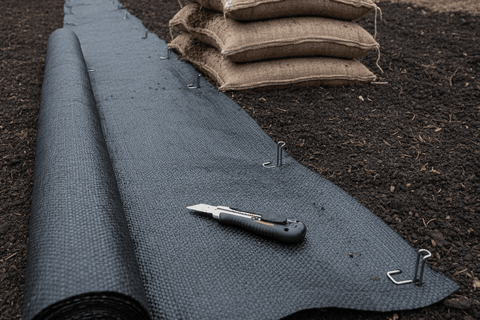
- On a patio. Minnesota suggests a bottom liner that drains, landscape fabric for example, not plastic. Our landscape fabric guide compares the fabrics.
- Clay. Compacted ground is one of Minnesota's reasons to garden in a raised bed. If heavy clay is why you want one, our guide to improving clay soil covers the ground underneath.
- Water. Raised beds dry out faster than the ground, Minnesota says, and a soaker hose or a watering can does the job; water close to the soil to keep splashes off the leaves. Our watering can guide covers cans for beds.
- Rotation. Minnesota suggests several smaller beds rather than one long one, so you can avoid planting the same family, such as tomatoes and peppers, in one bed for 3 to 4 years.
Related guides
An empty bed over winter is a good place for a cover crop, and our cover crops guide covers what to sow and when. Once the soil test is back, our vegetable garden fertilizer guide compares organic, slow-release and liquid feeds.
Frequently asked questions
What is the best raised garden bed?
For most yards, the Vego Garden 9-in-1 Modular Metal Raised Bed: coated steel, 17 inches tall, in any of nine layouts, and the best overall pick of BHG, by its search listing, and, among metal beds, of Popular Mechanics. For wood, Wirecutter's top pick, by its search listing, is Gardener's Supply's Deep Root cedar line; the bed linked here is the 2 by 8 foot Gardener's Supply Deep Root Cedar Bed. For gardening standing up, the Best Choice Products Mobile Elevated Planter is 32 inches tall on wheels.
How much soil do I need for a 4 by 8 raised bed?
About 32 cubic feet at 12 inches deep, 45 cubic feet at 17 inches and 64 cubic feet at 24 inches (our arithmetic: 4 x 8 x depth in feet). At 17 inches that is 31 bags of 1.5 cubic feet, or about 1.68 cubic yards; Vego's own example rounds it to 30 bags.
Are galvanized metal raised beds safe for vegetables?
The University of Maryland Extension calls galvanized beds generally safe for food crops, says more zinc can be released below pH 6.0, and considers powder coating non-toxic. The University of Minnesota Extension says zinc may leach in highly acidic soils below pH 5, and cautions that "some prefabricated beds sold online have been found to contain lead," so ask the maker about its coating.
Is pressure-treated wood safe for a raised vegetable bed?
Oregon State University Extension's four-season study of beds made from ground-contact, copper azole treated lumber found soil copper rose only in the inch of soil next to the boards, and not in the vegetables. Maryland suggests paint, stain or a heavy plastic liner if you are concerned, Utah State suggests a plastic barrier, and Penn State's York County Master Gardeners advise untreated lumber. Oregon State and Minnesota both say to avoid old lumber and railroad ties.
How deep should a raised garden bed be?
A minimum of 6 to 12 inches for most vegetables, according to Utah State University Extension, with no bottom on a bed shallower than 12 inches so roots can reach the soil below. On a hard surface, the University of Maryland Extension asks for at least 8 inches for greens and 12 to 24 inches for tomatoes, peppers and squash.
What should I fill a raised bed with?
Mostly topsoil. Iowa State University Extension suggests equal parts topsoil, organic matter and coarse sand, or about 70 percent topsoil and 30 percent compost, mixed into the ground below. The University of Minnesota Extension warns that potting soil alone dries out too quickly in a raised bed; for planters off the ground, Maryland suggests compost and a soilless mix in equal parts.
How long does a raised garden bed last?
It depends on the material. The University of Minnesota Extension says galvanized steel "is virtually rust-resistant for upwards of 50 years," Oregon State University Extension says cedar and redwood resist decay and outlast pine and fir, and Utah State University Extension says fir and other untreated lumber rot within a few years. Vego says its coated steel lasts more than 20 years.
Disclosure: Some links pay us a commission when you click or buy, and on some pages brands pay us through Amazon's creator program on links to their products. Availability was checked on Amazon on October 30, 2026 and can change.
Product prices and availability are accurate as of the date/time indicated and are subject to change. Any price and availability information displayed on Amazon.com at the time of purchase will apply to the purchase of this product.